Wearable Device Design for Atovio X
Backed by



The Brief
Atovio's first wearable purifier had already proved there was demand. For Atovio X, its new Bluetooth model, co-founder Siddharth Goel wanted to turn Atovio into a design-led brand: a product as considered as the phone it pairs with, a signature Atovio could carry into future products, and a device people would choose to wear all day. The catch: the battery, circuit board and ioniser could not change, the steel back plate had to stay, and the design had to be ready in time for tooling.
A Shape Built to Disappear
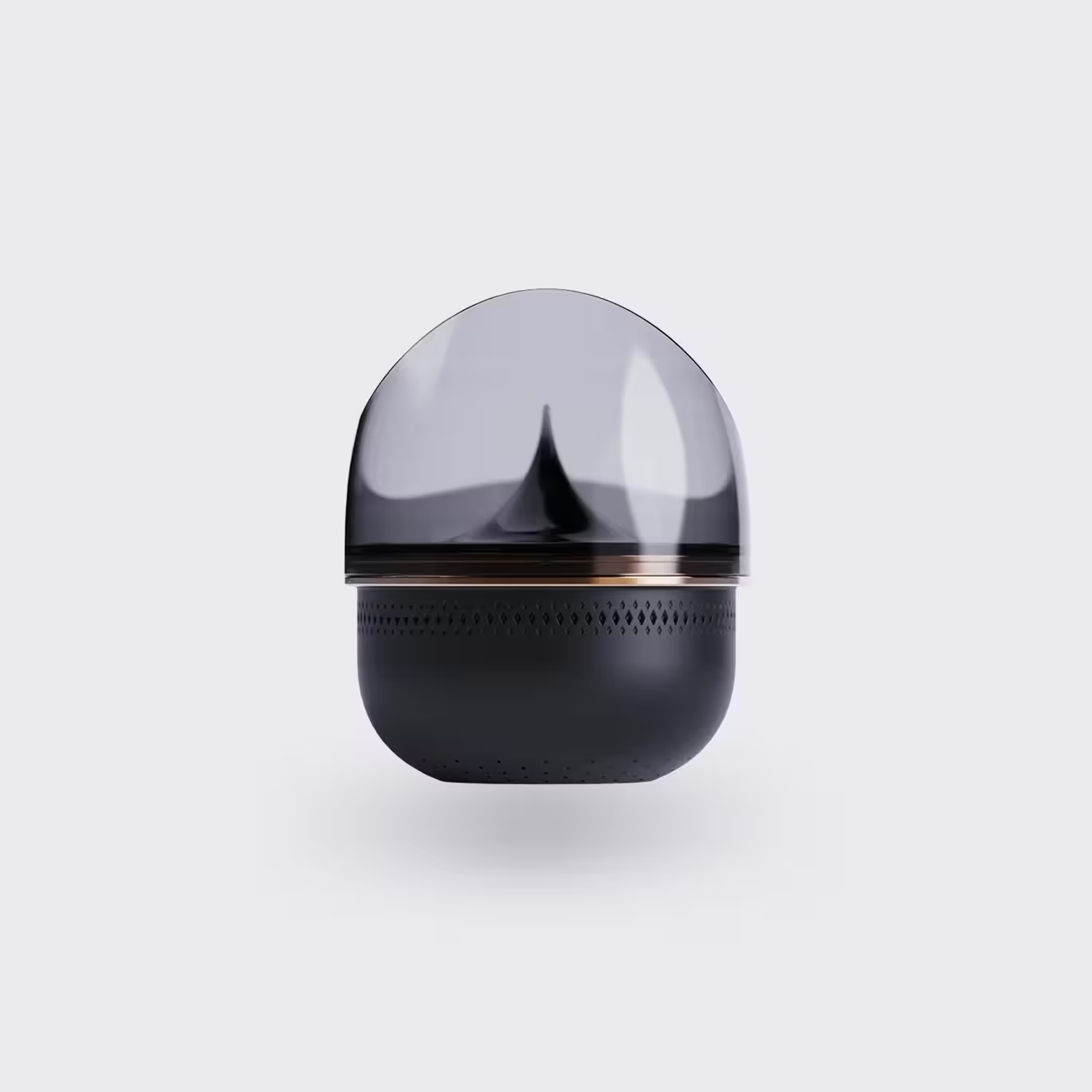
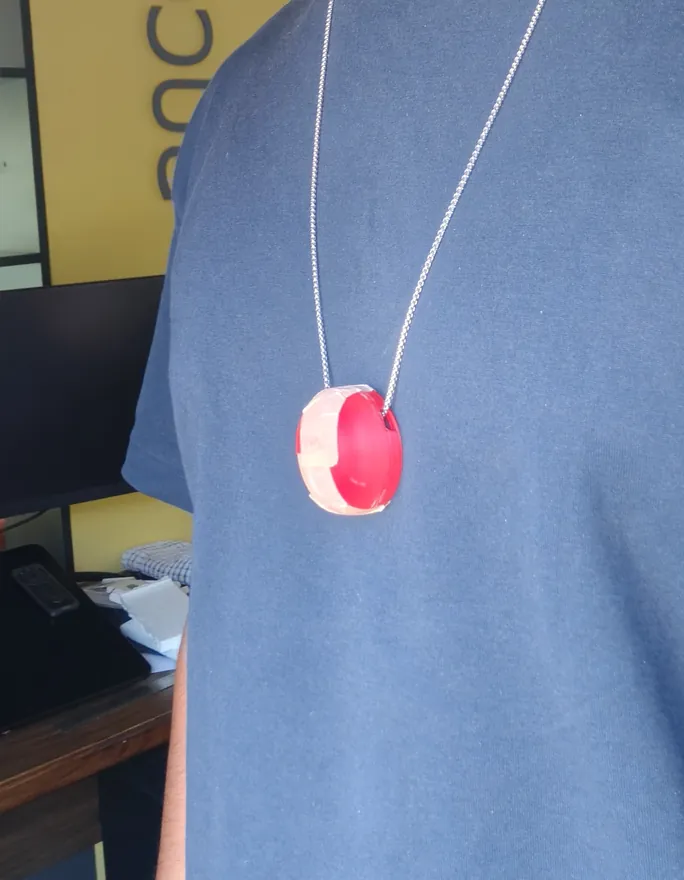
A device people link with pollution shouldn't draw attention to itself, so the team ruled out anything that read as medical, as jewellery or as a gadget. Sketching produced three directions, each printed and checked on the body. The one that won is a small dome inspired by a dew drop, about 45 mm across: calm, natural and a quiet nod to fresh air. It sits close to the chest, over a T-shirt or under a collar, and reads as an object you chose, not equipment you were told to wear.
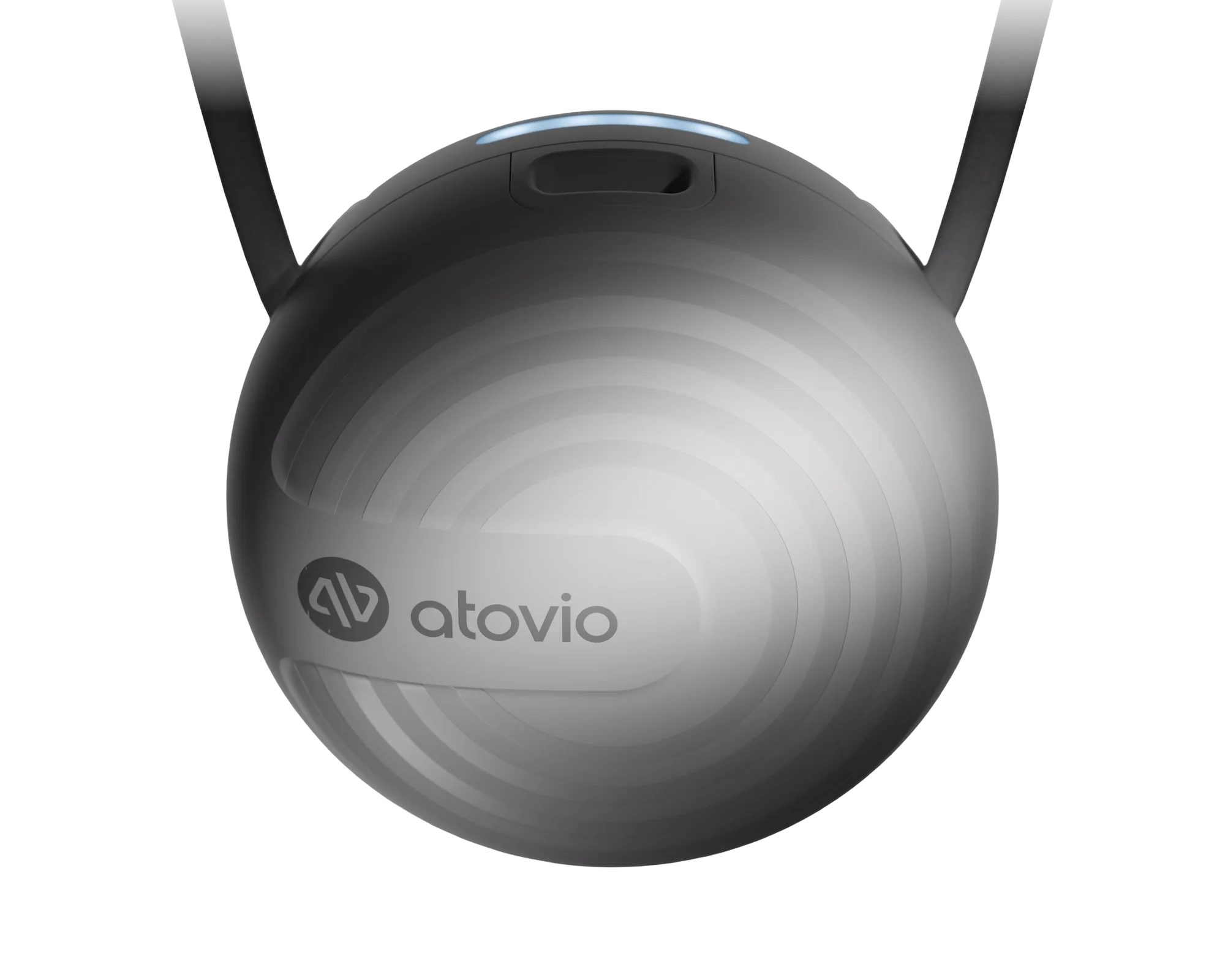
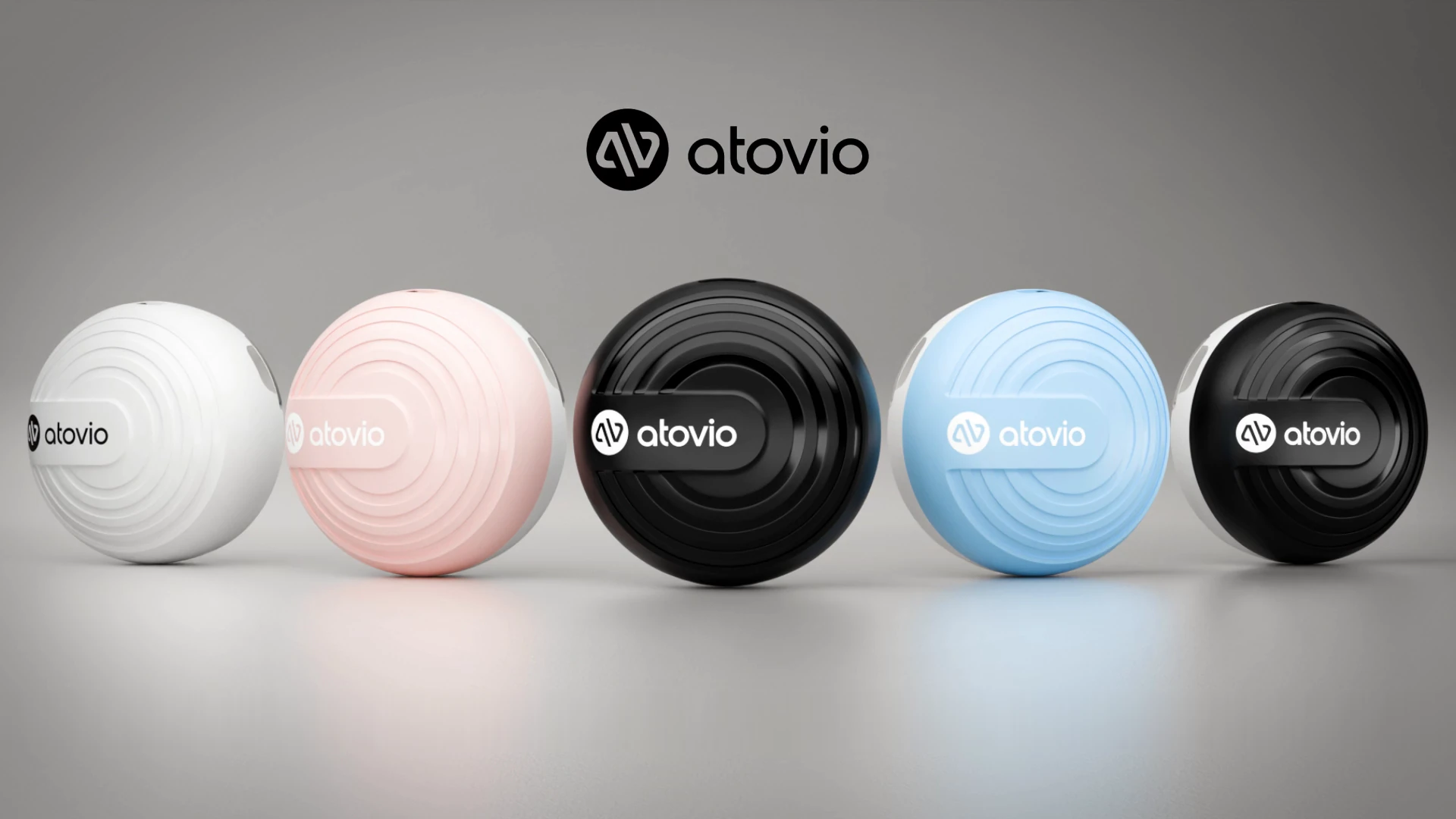
Atovio X, a smart wearable air purifier designed by Analogy in 2026 around a dew-drop form.
How we solved it.
Define Premium Before Drawing It
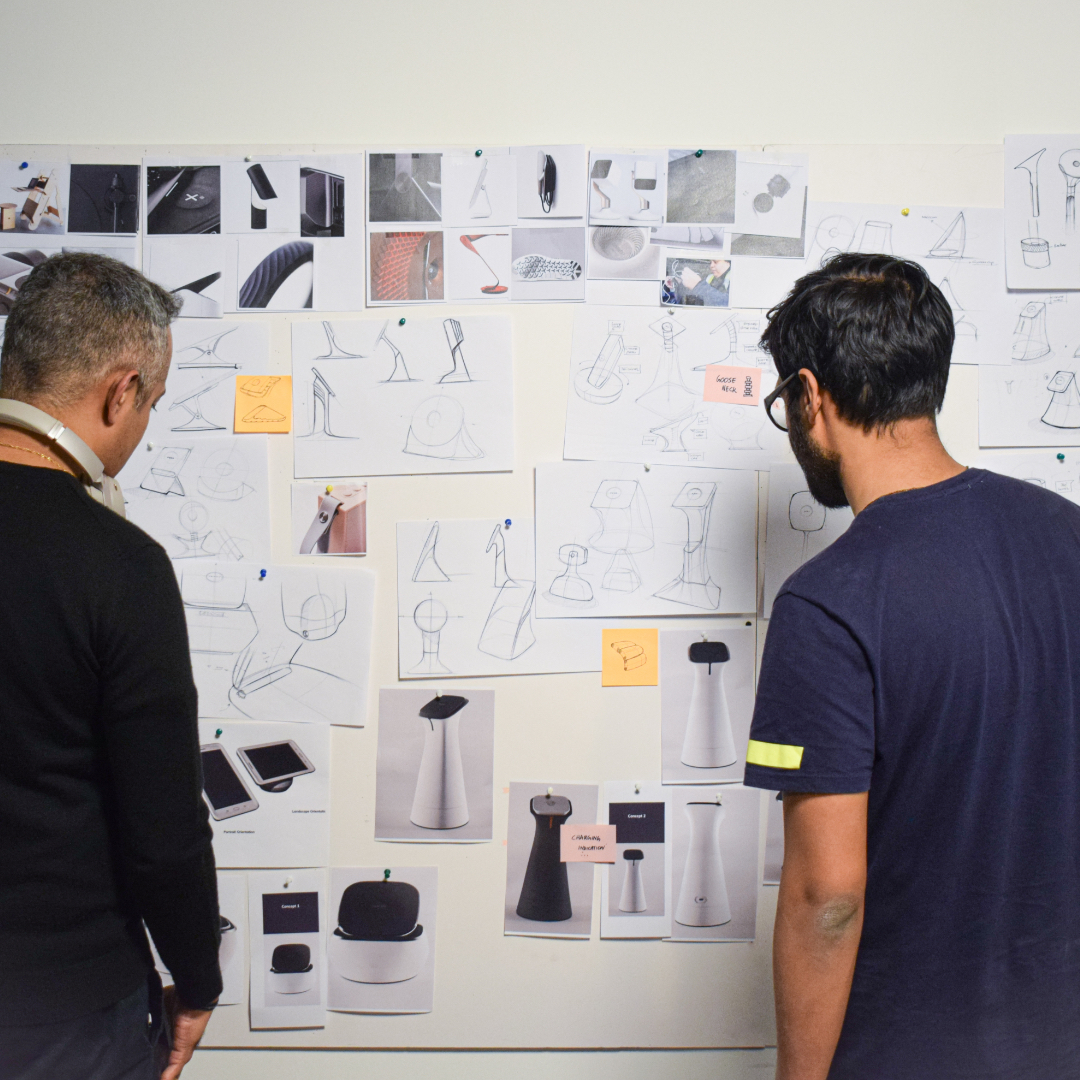
Before sketching, we pinned down what makes a tech product feel premium at this price: contrasting materials, matte against gloss, and light used sparingly. That gave us two directions, one quiet and almost invisible, one more openly technical, and five concepts for Atovio's team to review, from a translucent capsule to a pebble with a rotating clip.
A Shape Built to Disappear
The dew drop won. It was the smallest of the five, and the one Atovio's team said felt like jewellery. A dome about 45 mm across sits flat against the chest instead of swinging, and reads as an object you chose, not equipment you were told to wear. The battery, board and ioniser fit inside unchanged, with the outlet still facing up.

The Back Plate, Made a Feature
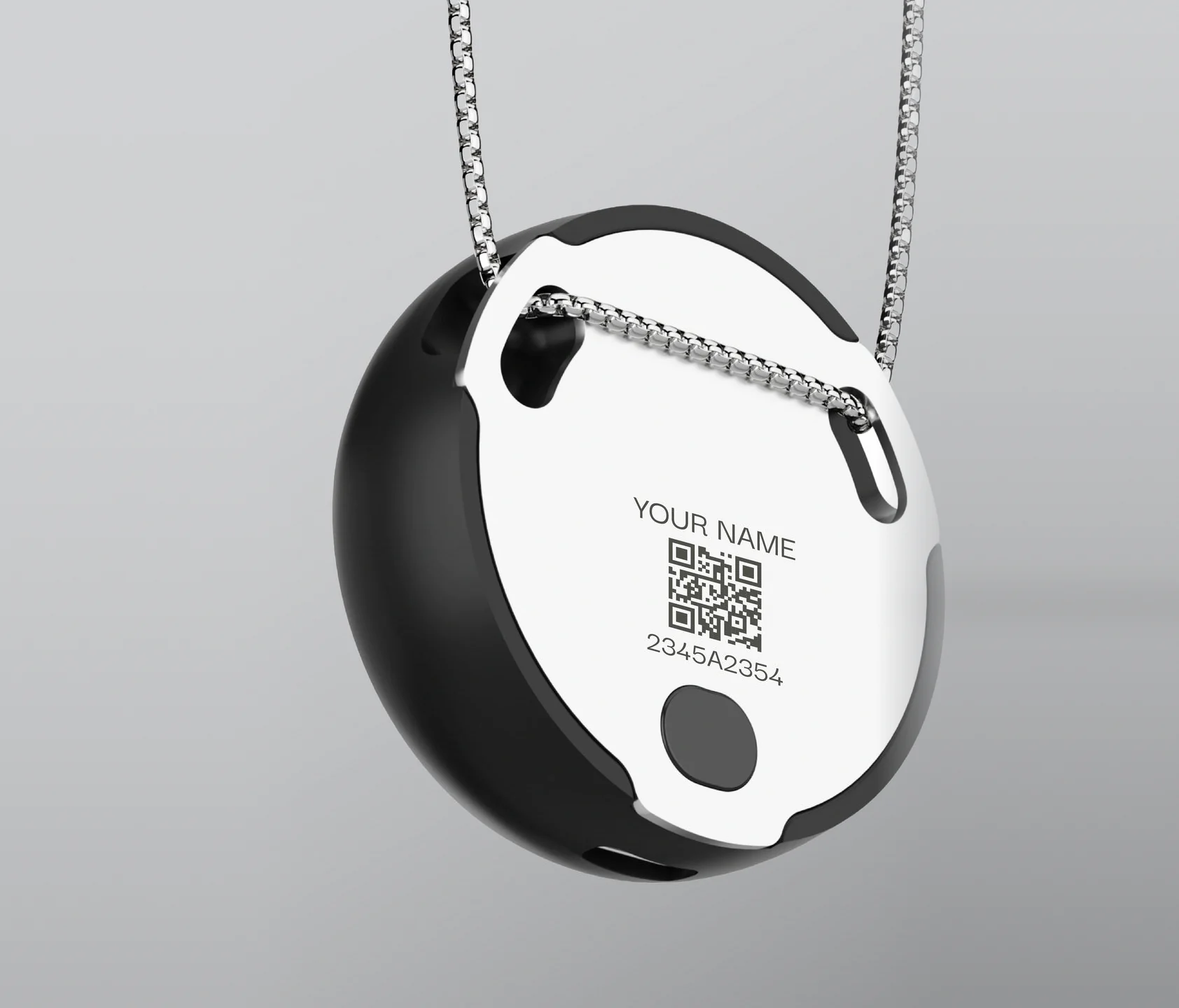
The steel plate that connects the purifier to the wearer could not go, and early feedback said a flat back felt less premium than the curved front. So we made the plate the face of the rear: one clean, simple part with slots for the chain. At launch, Atovio turned that same face into a personalised edition, engraved with names, initials or numbers.
One Line for a Whole Family
A single curve splits the body into two parts and reads as a subtle smile. It gives Atovio a signature it can carry into future products, from other wearables to home purifiers. A product family needs a language, not just a shape.
Our piece on concept sketching in product design shows how early sketches turn into decisions like these.
Read more: Concept design vs detailed design.
The problem
Stand Out in a Look-Alike Market
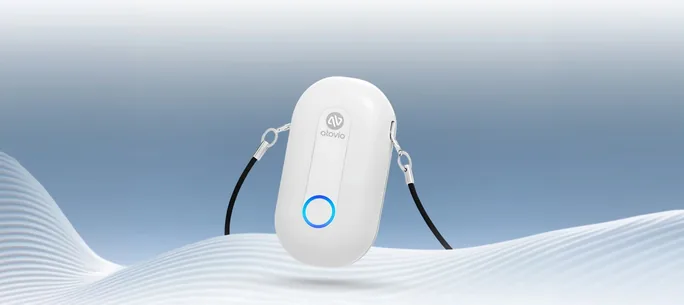
Most wearable purifiers on sale look interchangeable. Atovio X had to look premium and recognisable at a mid-range price, using parts Atovio could mould in its own factory.
Design Around Parts That Can't Change
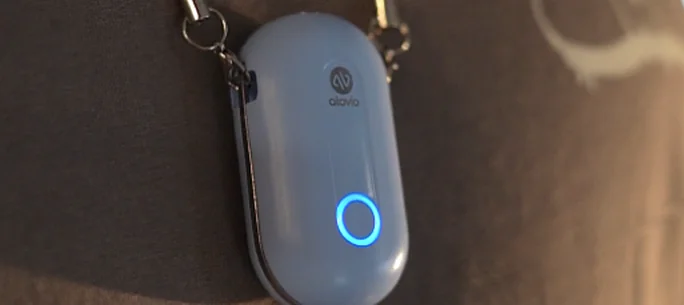
The purifier only works when it touches the wearer, through a steel plate on its back and a conductive lanyard. The ion outlet has to face up towards the nose, and the battery, board and ioniser had to stay exactly as they were.
Stay Put, All Day
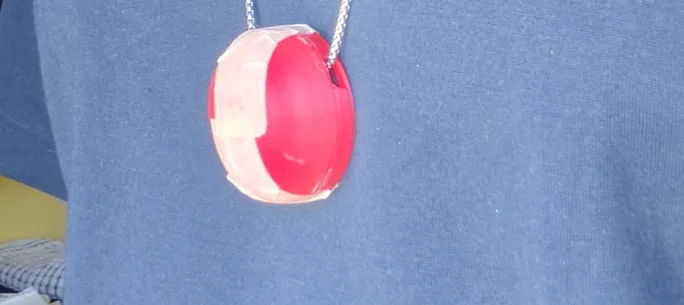
People who wore the first model wanted something smaller and more discreet that didn't swing around on its lanyard. The new one had to sit steady and be comfortable enough to forget about.
Then came the details that decide whether people keep wearing it.
Printed prototypes, weekly check-ins, three rounds of colour and a design ready for Atovio's own factory.
Prototyped on the Body
Several rounds of 3D-printed prototypes were worn and handled, testing weight, how the device hangs, where the button falls under a thumb and how the light reads in daylight. We checked in with Atovio's team every week, so no idea went far without feedback.
Colour From Places Where Air Feels Alive
Colour went through three rounds, from brushed metallic finishes paired with matte plastic to soft single colours drawn from mist, coastal breeze, desert air, mountain dusk and open sky, with surface patterns that suggest moving air. Atovio X launched in five finishes: Obsidian Black, Sapphire Frost, Cosmic White, Coral Pink and Carbon Eclipse.
Ready for the Factory
Atovio moulds its own parts in India, so every surface, split line and finish was designed for its process and its price point from the first CAD model. Atovio received production-ready 3D CAD, assembly drawings, renders and a CMF tech pack. Our guide on how to manufacture your product idea covers this stage in depth.
Learn more about DFM & Manufacturing Readiness.
Key features
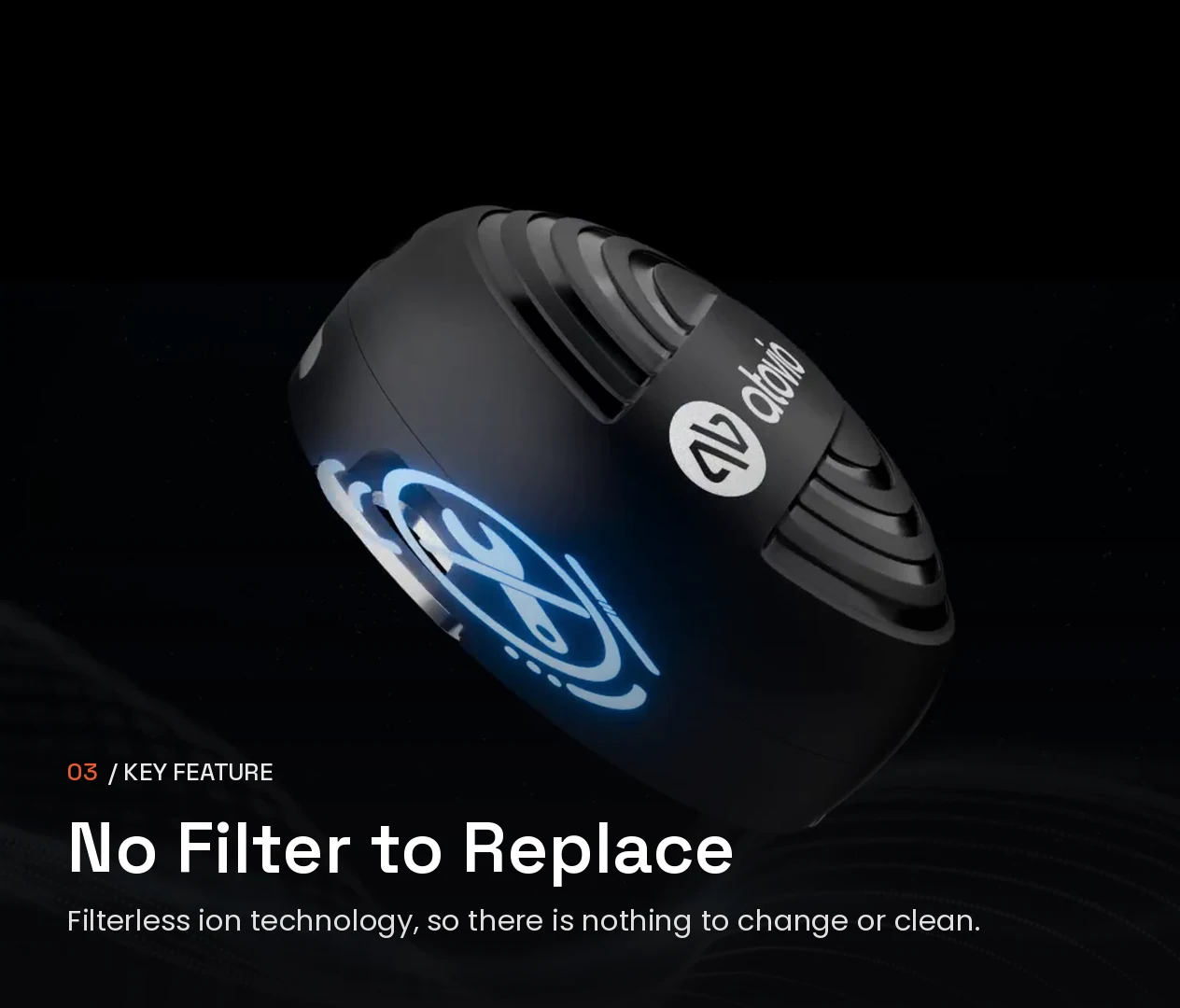
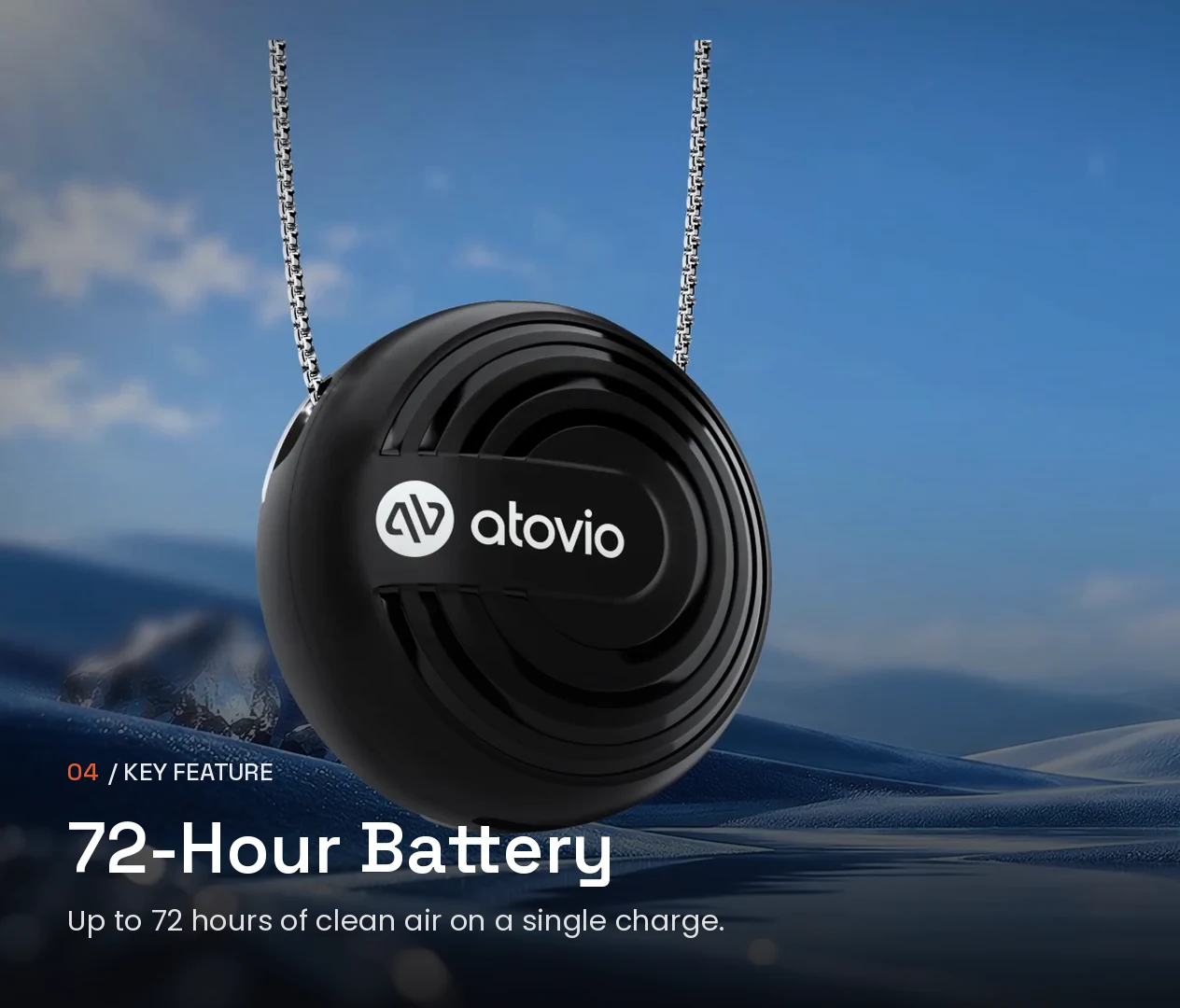
Product Path™
How it came together
A product people choose to wear, delivered in five months.
The outcome.
Atovio went from a capable product that looked like its competitors to a design with its own identity: a dew-drop form, a visible steel back, a colour range drawn from nature and a design language for the products that follow. Analogy delivered production-ready files in five months.
Atovio X went on sale on 8 October 2026 at ₹4,999, in five colours and a personalised edition. It is available on atovio.in and Amazon India.
Wearable device design sits at the centre of our consumer electronics and health and wellness work, alongside the AI glasses designed for Mustard and the world's first massage backpack for EUME.
Read more: The steps of a successful product development process.
Siddharth Goel
Co-Founder, Atovio
“Analogy brought clarity and taste to this category. They helped us build something people genuinely want to wear.”
Read more here
Atovio X is a smart, Bluetooth-connected wearable air purifier designed by Analogy Design in 2026. The wearable device design covered concept strategy, industrial design, prototyping, CMF and design for manufacturing. The final design is a dew-drop form about 45 mm across, with its stainless steel back plate made into a visible feature.
What does wearable device design involve?
Wearable device design, sometimes called wearable technology design, shapes a product that lives on the body all day. It balances size, weight, comfort, how the device hangs or clips on, controls people can use without looking, durability against sweat and knocks, and a form people are happy to be seen wearing, while fitting the electronics and staying affordable to manufacture.
What were the hardest problems in designing Atovio X?
Three stood out: designing around parts that could not change, including a steel plate that must touch the wearer; standing out in a market of look-alike products at a mid-range price; and making a device small and steady enough to wear all day.
What is a wearable air purifier?
A wearable air purifier is a small device worn around the neck or clipped to clothing that cleans the air close to the wearer's face, usually with an ionizer. It is made for people who spend time in polluted cities and want personal protection without a room-sized purifier.
Why did Atovio design a new purifier?
Atovio's first purifier worked well, but its design looked like many other wearables on the market. For Atovio X, its Bluetooth-connected model, Atovio wanted a premium, distinctive product that people would choose to wear every day.
Why is the final design shaped like a dew drop?
Of five concepts, the dew drop was the smallest and the one that felt most like jewellery. A small dome reads as calm and natural rather than medical, and sits flat against the chest instead of swinging.
How long did the Atovio X project take?
About five months in 2026, from kickoff in February through concepts, prototyping, CMF and design for manufacturing.
How does Analogy approach wearable device design for founders?
Analogy uses its Product Path™ framework to guide founders through concept strategy, industrial design, engineering, prototyping, DFM and launch support, reducing risk at every stage before money is committed to tooling.