Prototype & MVP - For Product Validation

Build functional prototypes that de-risk engineering, usability, and manufacturability, before scale.

Explore Market Winners
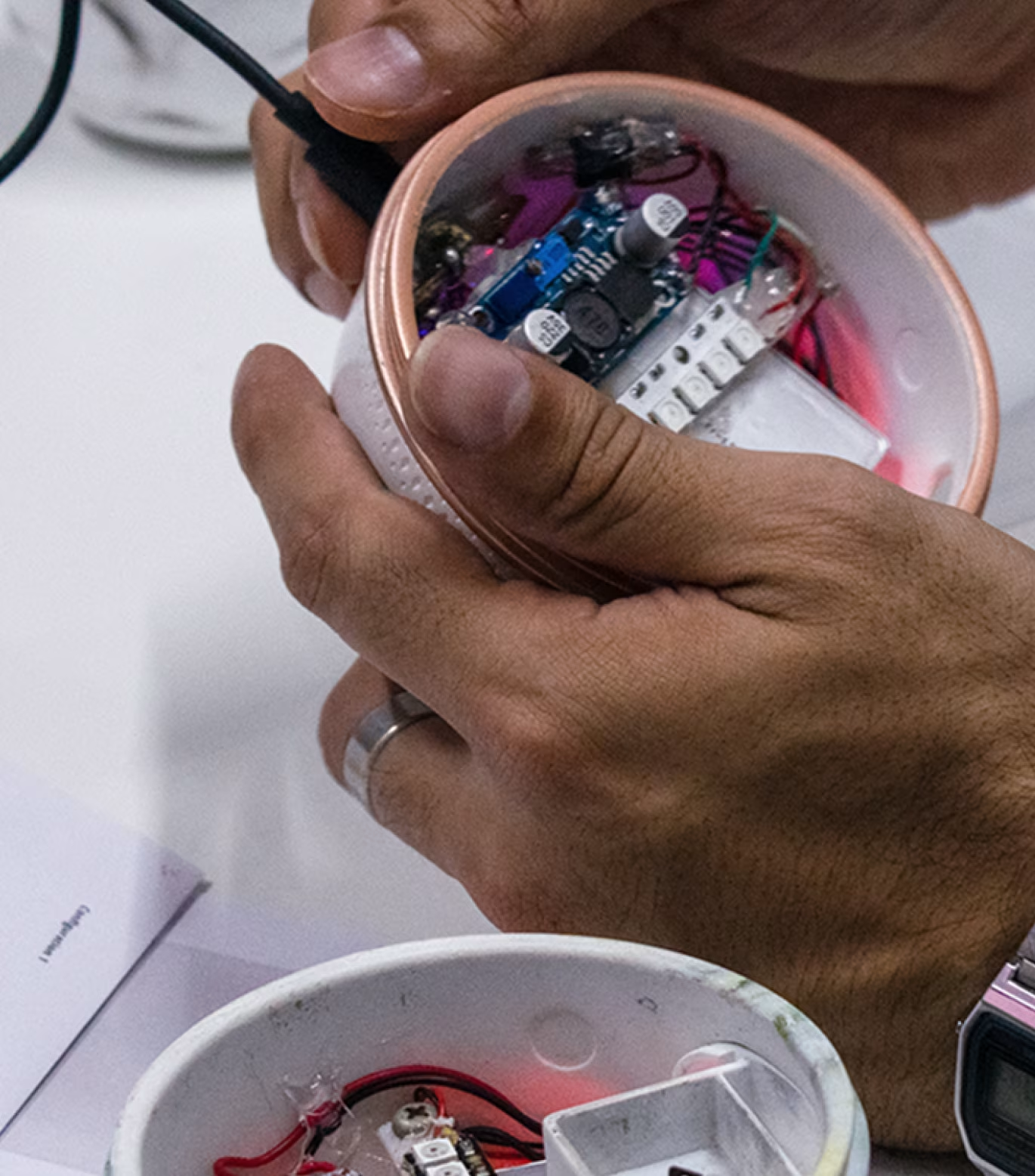
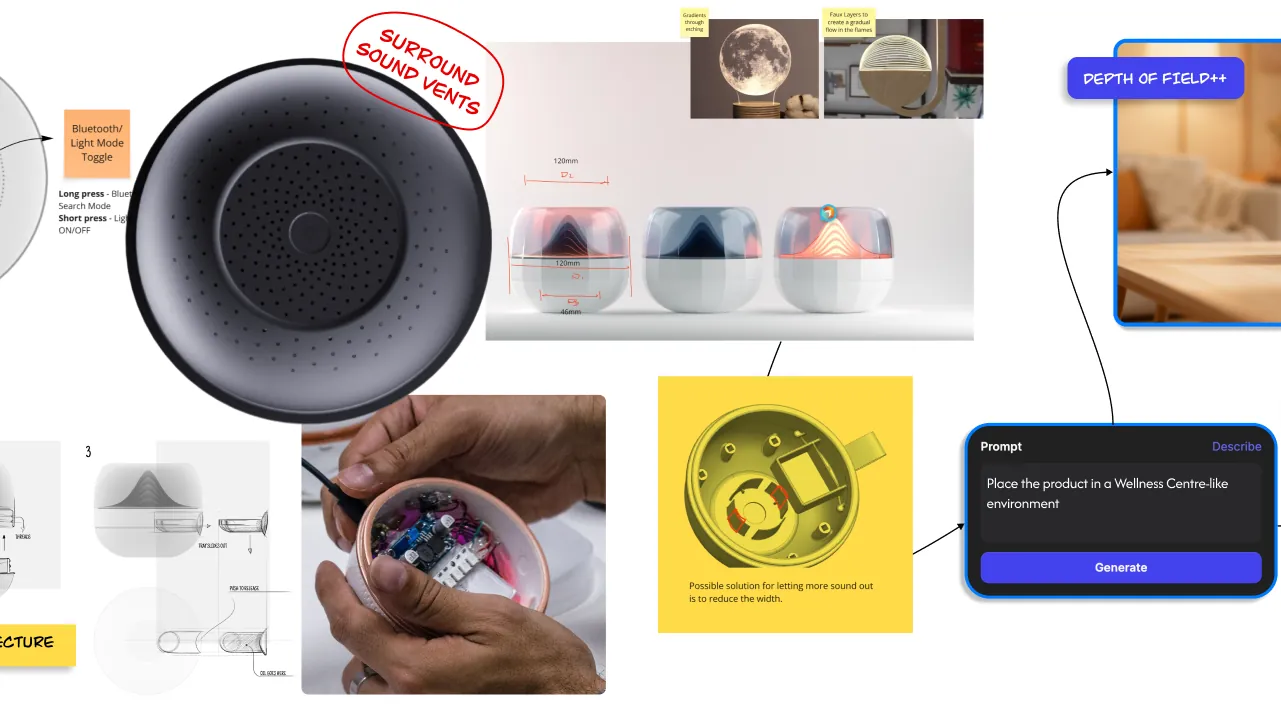
Hands holding and working on a circular electronic device containing circuit boards and wires.
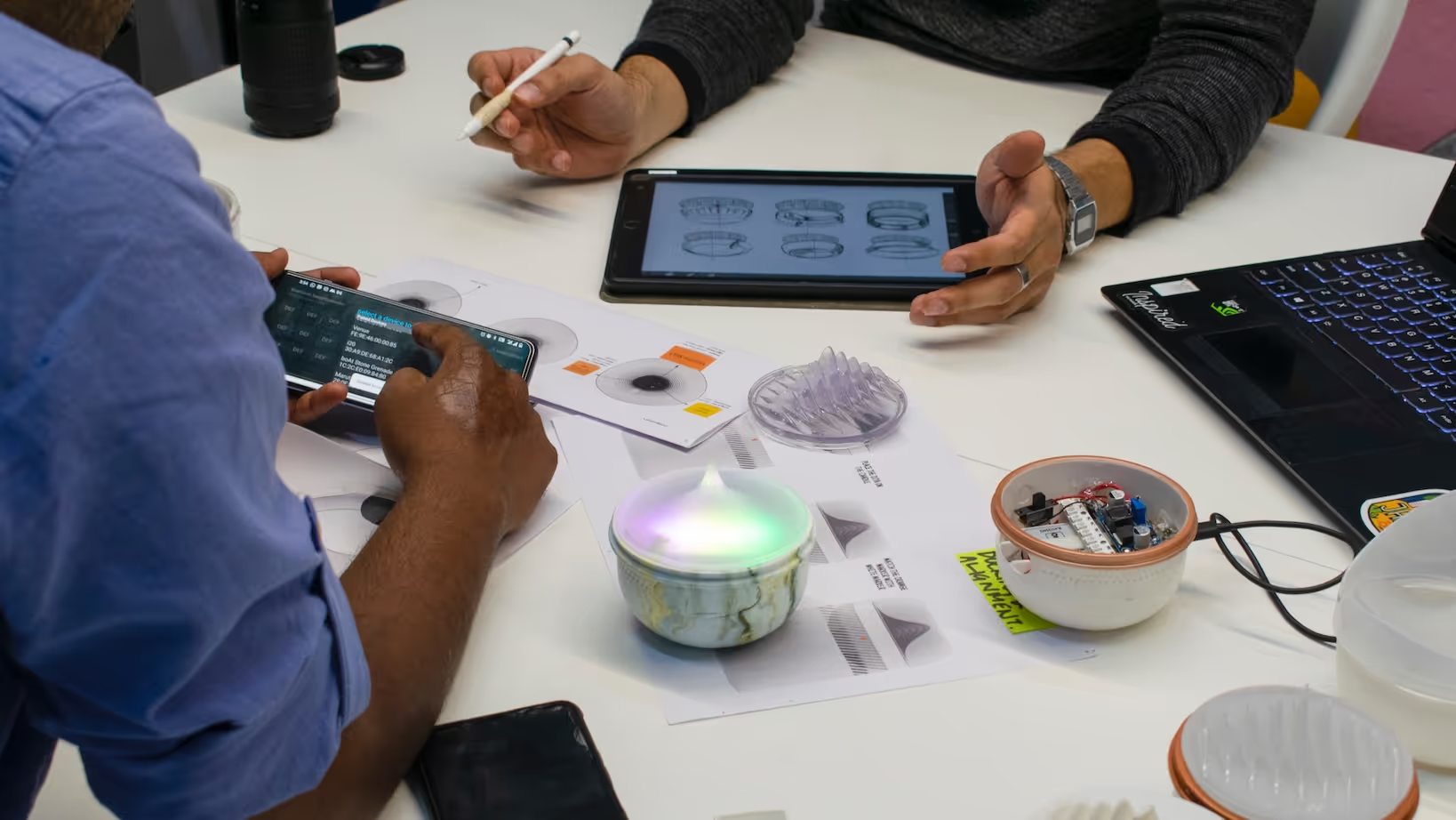
Two people working at a table with printed designs, a tablet showing sketches, a smartphone, and electronic device prototypes.

This Is For Founders
Who Need Validation

When concepts look good on screen, but need to prove themselves in the real world

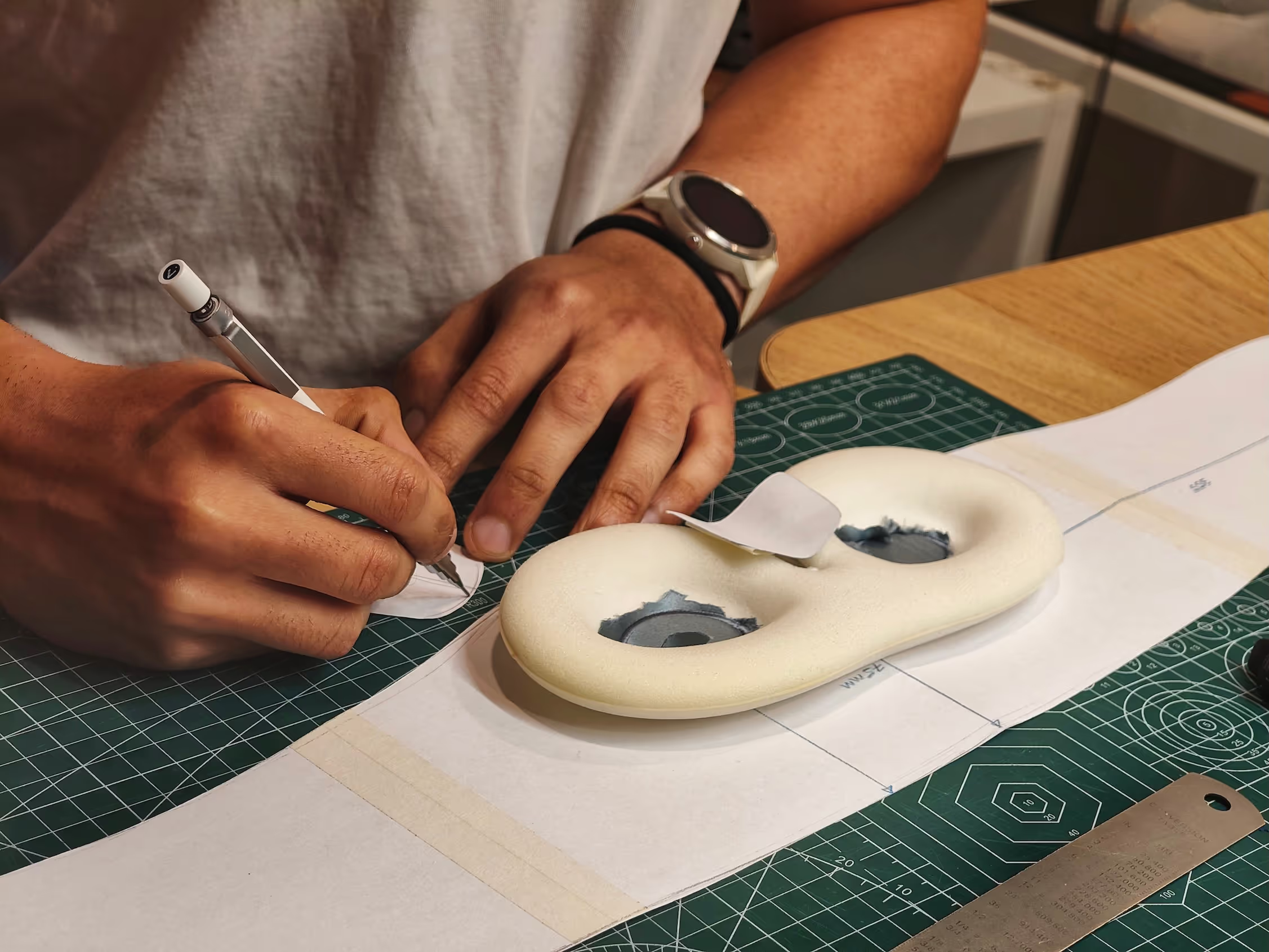
Person tracing a pattern on paper next to a foam shoe insole prototype on a green cutting mat.

The Challenge

The real risk isn’t building a prototype.
 It’s building the wrong one. Founders often rush into prototyping without clarity on function, assembly or scale.
 The result: costly iterations, failed demos and surprises at manufacturing.

Book a Prototype Strategy Session

Get a Consultation
Get a Consultation

This is most suited for

First-time Hardware Founders
Crowdfunding-Focused Inventors
Startup Teams Pre-Funding/Launch
Innovation Labs & Product Cells
The secret to a wildly successful Kickstarter? A prototype that makes backers say, “I need this now!”
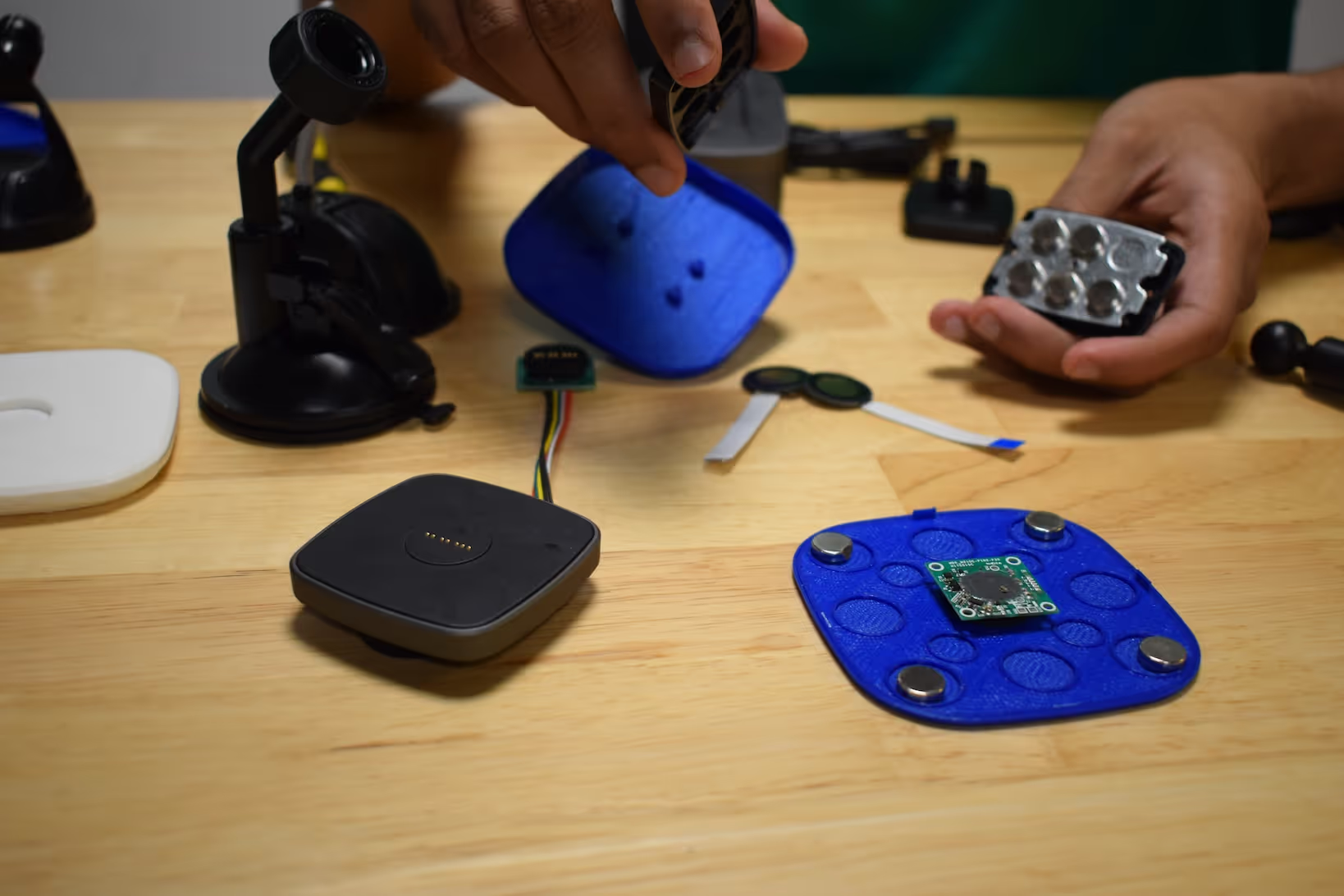
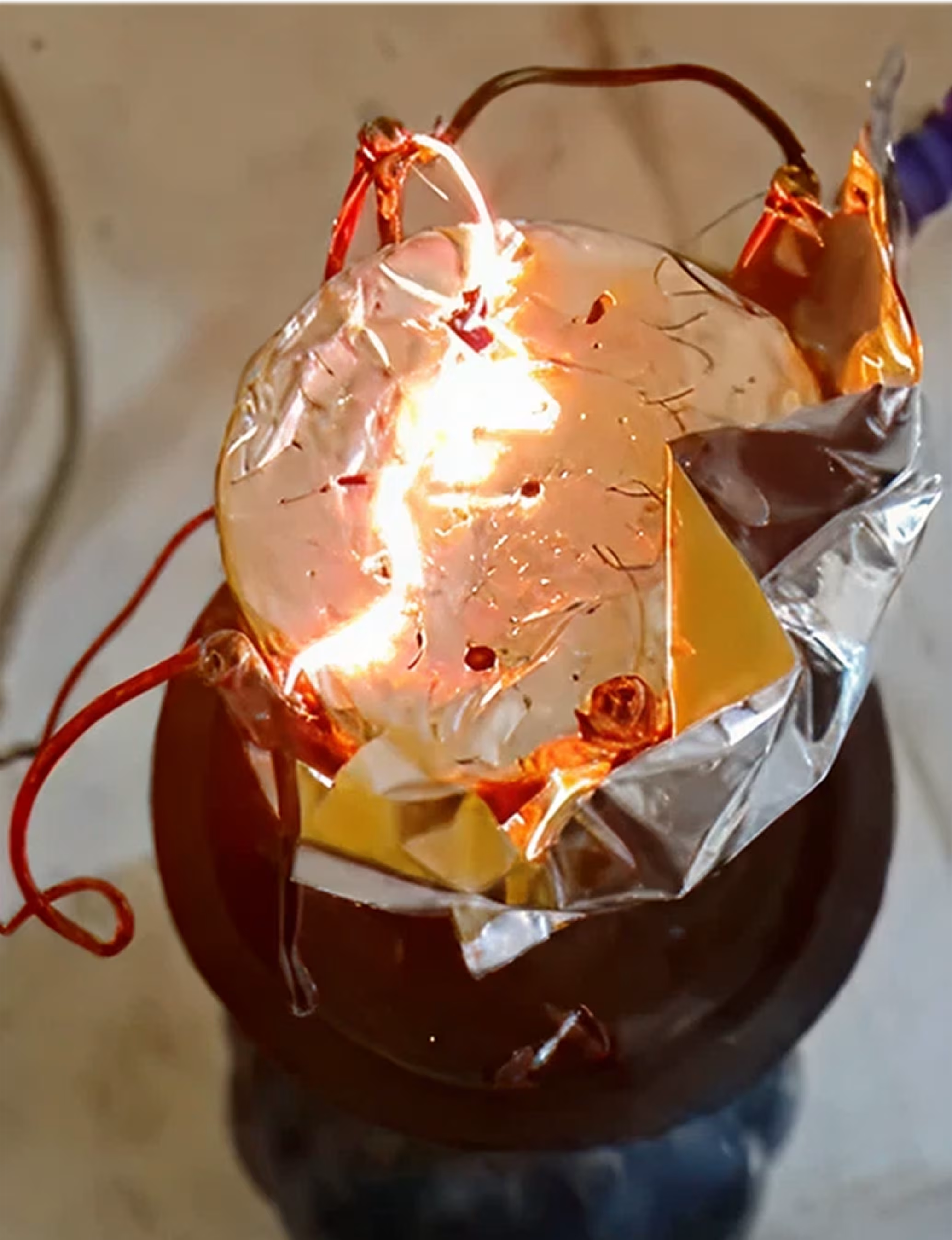
Exploded view of a black electronic device showing its internal circuit boards, lens components, and structured casing parts.Hands assembling electronic components and 3D-printed blue casings on a wooden table.Bright electric arc inside a glass container with red wires and aluminum foil surrounding it.
Product Architecture
  • What it delivers: A working prototype that proves function, interaction and feasibility.
Exploded view of a sleek black electronic device showing its lens, circuit boards, and housing components on a dark background.
Rapid Prototyping
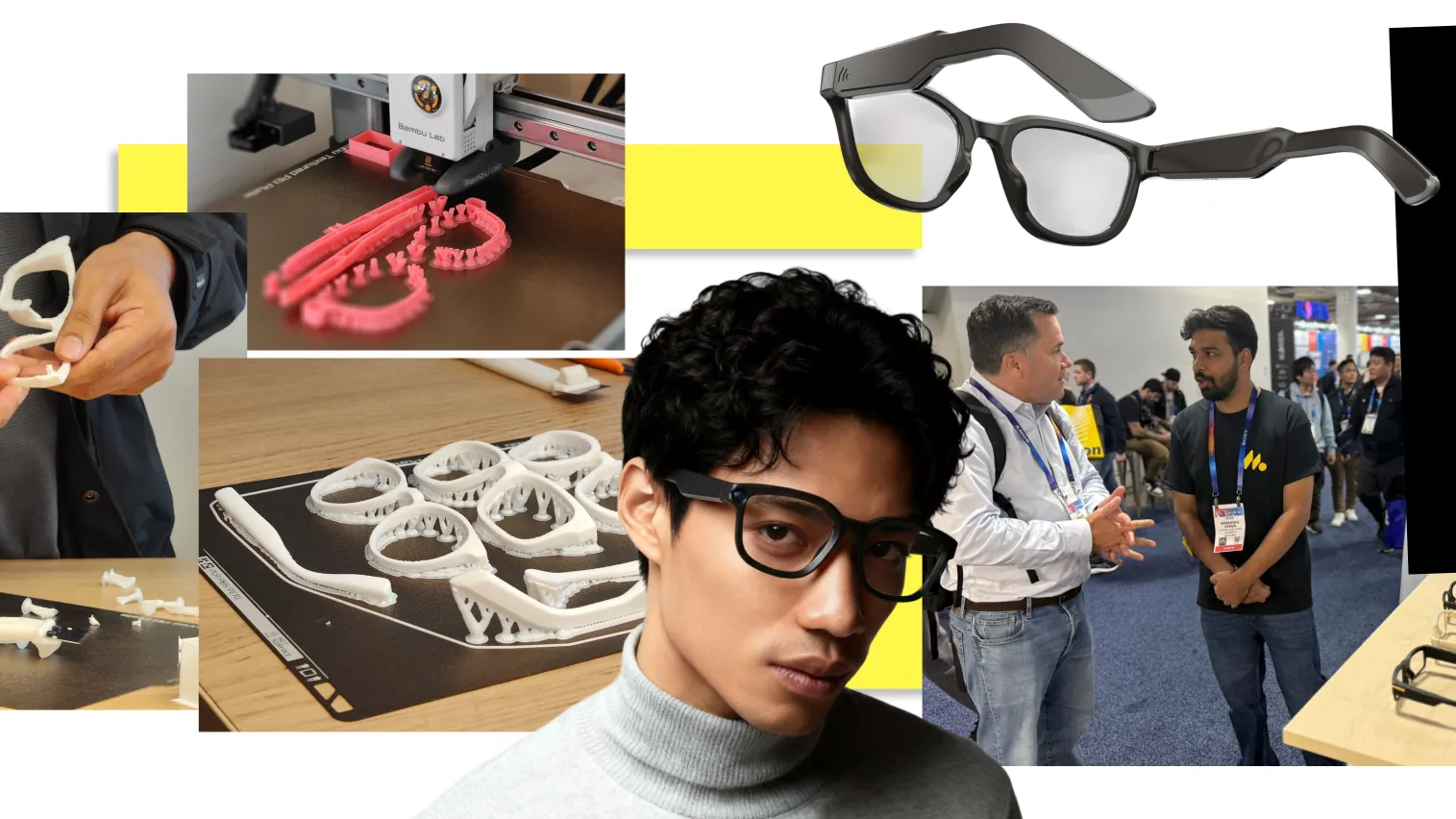
  • What it delivers: Faster learning cycles with fewer costly iterations utilising 3D printing, CNC machining for precision, vacuum casting, soft tooling and sometimes Pre-production runs.
Hands assembling electronic components including circuit boards and blue 3D printed parts on a wooden table.
Testing & Validation
  • What it delivers: Clear learnings that inform tooling, suppliers and manufacturing decisions with Test reports & performance data, User feedback synthesis, Manufacturing feasibility, Cost modelling and BOM refinement
Test your idea
Test your idea
Close-up of a glowing filament inside a light bulb with visible wires and reflective foil wrapping around the bulb base.
Circle Blur

let’s build products DESIGNED FOR SCALING

Start my mvp
Start my mvp

Average Return on Investment Through Product Path™

80+

Functional prototypes built

Establishes hands on execution capability

3–7

Prototype iterations per product on average

Shows learning through iteration not one shot builds

65%

Critical issues identified before tooling

Avoids expensive mistakes later in the process

16 weeks

Average timeline from concept to testable MVP

Realistic speed aligned with hardware constraints

90%

Prototypes tested with real users or environments

Validation beyond internal reviews

40%

Reduction in downstream rework post MVP

Clear impact on cost and timelines
Smiling man with short black hair and a beard wearing a navy blue polo shirt against a dark background.
Himanshu Verma
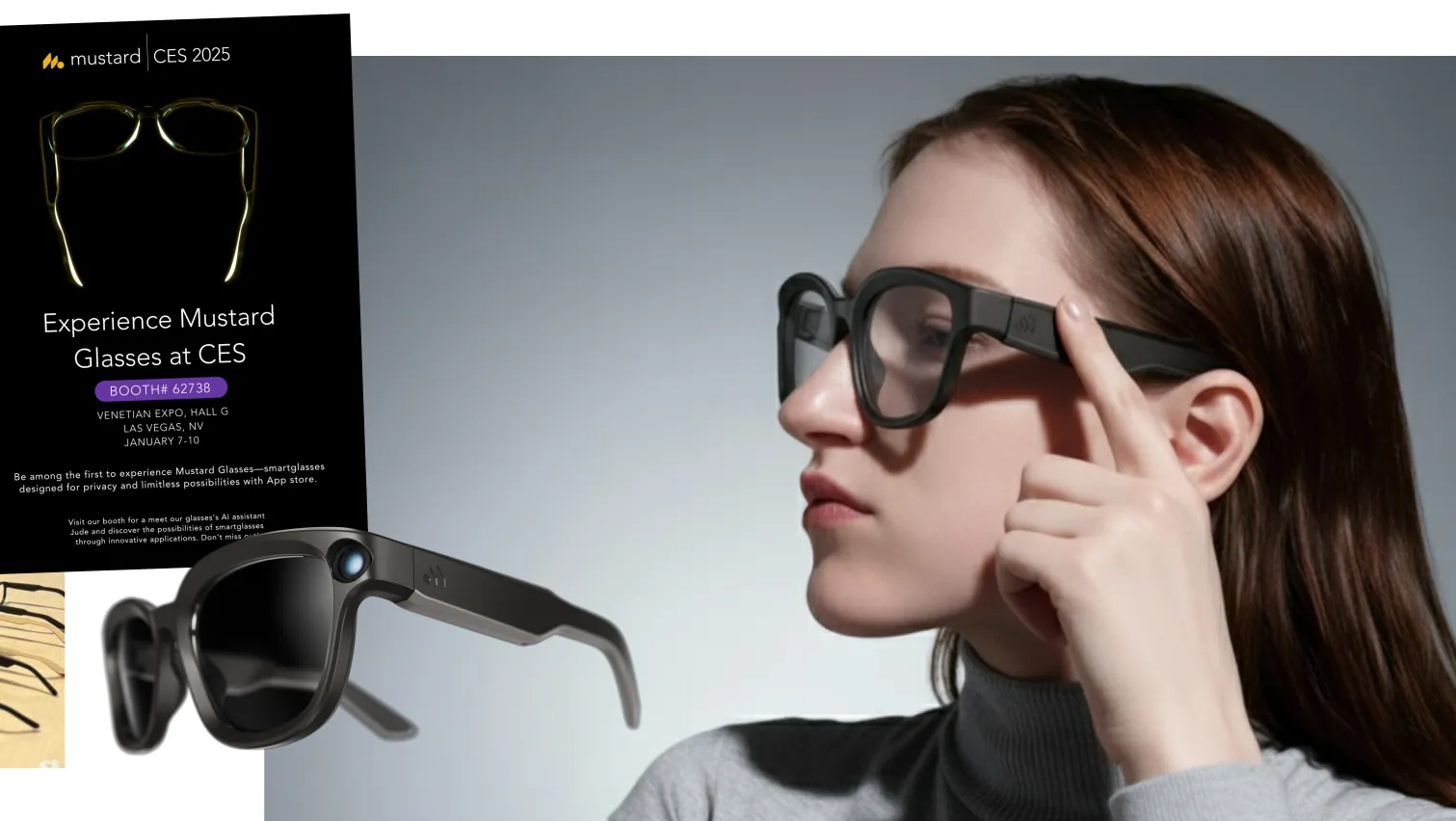
Founder, Mustard Glasses LLP | Acquired by Kaynes Technology
Get in touch
“A talented team with great design thinking skills and fast execution. I had a fabulous time working with them as the speed of execution was mind blowing. In less that 8 months i had a physical product to showcase at CES and it led to our acquisition in less than a year of starting up”
Smiling man wearing a white shirt with the Aditya Scientific logo on a dark gray background.
Naresh Reddy Aerra
Founder & CEO, Aditya Scientific
Get in touch
"Analogy's design flow, user interface, and electronics were expertly crafted, resulting in an inspiring final product. I look forward to more collaborations."
Man with black turban and beard wearing a green and blue checkered shirt against a dark gray background.
Bhupinder Singh
Chief Product Officer, Wildcraft Pvt Ltd
Contact Us
"This journey was a discovery for me and our teams, setting the tone for future products and connecting us with consumers. Thanks to Analogy for their support and excellent work."
Man with dark hair wearing a black suit jacket and white shirt, posed against a plain gray background.
Hari Rao
Founder, Agnisumukh Energy Solutions, Pvt Ltd
Get An Intro >
"Analogy Design crafted a new brand identity and a comprehensive product range for global cuisines. Their iterative approach fostered innovation, allowing us to incorporate global feedback into a unique kitchenware line. The diverse range was strategically designed with users in mind, consistently surpassing our expectations."
Smiling bald man with a gray beard and mustache wearing a white T-shirt, arms crossed, standing against a dark gray background.
Tirthankar Dash
Head of Strategy, Quantum Singapore
Contact us
“The best way to predict the future is to design it, and I can’t think of a founder more ambitious than Vyas or an agency more capable of designing that future than Analogy.”

Client Success Powered By Prototype & MVP Dev.

Learn more about Our Service here

Prototype & MVP: Test, Validate, Build With Confidence

With our Prototype & MVP services, you can test functionality, ergonomics, and user interaction before committing to expensive tooling or mass production. Rapid prototyping methods such as 3D printing, CNC machining, and soft tooling allow you to iterate quickly while maintaining precision and quality. Every prototype is designed to uncover potential challenges and refine your concept into a validated, market-ready product. This makes early validation an investment, not a gamble. By creating functional prototypes early, we validate ideas with real-world testing, user feedback, and technical assessment. This approach ensures that concepts are not just visually compelling, but also feasible, usable, and ready for production. Founders gain confidence in every decision, reducing costly mistakes and accelerating product development.

We specialize in turning early concepts into tangible products that can be tested, refined, and showcased to stakeholders or investors. By combining design intent, engineering insights, and manufacturing feasibility, our Prototype & MVP services provide a clear path from idea to proof-of-concept. Founders gain actionable insights, validated designs, and a roadmap for scaling toward production.

With real prototypes in hand, you move forward with clarity, speed, and confidence.

Prototype & MVP Services By Analogy Design

For founders, the excitement of an idea is often matched by uncertainty. Our Prototype & MVP services help you move beyond questions and assumptions, giving your concept real-world clarity. By building a working prototype, you can validate functionality, identify design flaws, and understand user behavior before committing to expensive tooling or production. Startups gain confidence knowing their product has been tested and refined for the market. Our Prototype & MVP approach is designed for founders who want tangible proof that their idea works. From rapid prototyping to ergonomic and functional testing, our services cover every step needed to bring concepts to life. By integrating electronics, assembly studies, and performance validation, we ensure your MVP is not just a model, but a testable, functional product. This is the most effective way to minimize risk and maximize investor confidence.

Founders building their Prototype & MVP with Analogy can accelerate decision-making and product development. With detailed test reports, user feedback, and manufacturing feasibility analysis, you’ll have all the data needed to refine your product. Whether preparing for crowdfunding, investor pitches, or internal validation, our prototypes turn concepts into actionable insights.

Make your idea tangible, test it rigorously, and move confidently toward market launch.

Why Prototyping And MVP Are Critical Before Scale

Turning an idea into a tangible product starts with validation. Building a prototype & a minimum viable product helps founders test their concepts in the real world, ensuring every feature, design choice, and functionality meets expectations. By creating a working prototype, you can identify potential issues early, refine your design, and gain actionable insights before committing to full-scale production. This approach minimizes risk and accelerates the path from concept to launch. With our unique Prototype & MVP process, founders can simulate real-world usage, gather user feedback, and measure product performance under various conditions. From rapid prototyping and 3D printing to mechanical stress tests and ergonomic validation, our services cover every aspect needed for thorough testing. This ensures that your MVP is not just a model, but a reliable proof of concept ready for investors and early adopters.

Detailed reports, assembly studies, and manufacturing feasibility assessments provide clarity on cost, production, and market readiness. By validating your idea with a working prototype, you reduce uncertainty, save resources, and increase the likelihood of product success.

Prototyping & MVP development enables startups to make informed decisions and secure confidence from stakeholders.

Who Prototype & MVP Services Are Built For

Our Prototype & MVP services are ideal for startups looking to validate their ideas before entering the market. Early-stage founders benefit from building a working prototype to test assumptions, refine designs, and gain investor confidence. By validating concepts early, startups can avoid costly mistakes and accelerate product development with clear, actionable insights. First-time founders also gain immense value from our Prototype & MVP process. Bringing an idea to life for the first time can be overwhelming, but a tangible prototype provides clarity, reduces uncertainty, and helps communicate the vision effectively to stakeholders, partners, and potential customers. It’s the fastest way to move from concept to actionable results. Product managers and inventors who aim to innovate or improve existing products can leverage our Prototype & MVP services to test feasibility and performance. From functional testing to ergonomic validation and assembly studies, our approach ensures that every design decision is informed by real-world data.

This makes your product development process more efficient, reliable, and market-ready.

Prototypes That Convince Backers, Investors, And Users

Nothing sells a Kickstarter like a working prototype. Show backers exactly what they're buying, not just a rendered concept. With a real, functional model in hand, you turn curiosity into confidence and hesitation into excitement. Our Prototype & MVP services bring your idea to life fast: tested, refined, and ready to impress investors and early adopters. Don’t leave your launch to imagination; make it tangible, make it credible, and make it unstoppable. Your idea deserves more than sketches. Book a discovery call now and start building a prototype that convinces, converts, and launches.

At Analogy, we conduct comprehensive functional testing to ensure your product works flawlessly in the real world. We assess every design aspect to ensure it performs reliably under real-world conditions. This includes ergonomic validation, making sure your product is comfortable, intuitive, and user-friendly. By understanding how real users interact with your prototype, you can refine usability and boost satisfaction before full-scale production. User testing is a core part of our functional testing process. We observe how your target audience engages with the prototype, capturing actionable feedback to enhance performance and functionality. Early insights from real users reduce costly redesigns later, ensuring your MVP meets expectations and excites your audience. Mechanical reliability is another cornerstone of our testing. Through mechanical stress testing and electronics integration, we ensure your prototype withstands physical demands and that all electronic components function seamlessly. This process validates durability, performance, and safety. All three are critical factors for both investors and end users.

Finally, we optimize your production readiness with assembly time studies, evaluating how efficiently your product can be manufactured. This insight allows you to refine the design for cost-effective, scalable production without compromising quality.

With our Prototype & MVP services, your product is tested, validated, and ready to impress both backers and stakeholders.

Rapid Prototyping Methods That Accelerate Validation

Rapid Prototyping is the fastest way to turn ideas into tangible, testable products. At Analogy, we use cutting-edge tools and techniques to help founders move from concept to reality with speed and accuracy. Whether you're validating features, testing usability, or preparing for a pitch, rapid prototyping ensures you have something real to evaluate. Long before committing to full-scale production. This early clarity saves time, reduces risk, and accelerates your path to launch. We use 3D printing to quickly create detailed models that capture form, ergonomics, and functional intent. This allows you to explore multiple iterations rapidly, making improvements based on user feedback and performance insights. From early sketches to refined CAD models, 3D printing ensures every version of your idea gets better, faster. This agility is essential for founders pushing toward faster validation and investor-ready prototypes.

For more robust and high-precision components, our process includes CNC machining for precision and vacuum casting. CNC machining delivers extremely accurate parts that reflect production-level quality, ideal for functional testing, stress validation, and investor demonstrations. Vacuum casting is perfect for producing short batches of parts that look and feel like final production. This helps you test materials, finishes, and durability before committing to tooling.

To bridge the gap between prototype and production, we offer soft tooling and pre-production runs that simulate real manufacturing conditions. Soft tooling enables you to produce small batches quickly and cost-effectively, while pre-production runs help you fine-tune assembly, performance, and quality.

With Rapid Prototyping, you will gain a clear roadmap from idea to market-ready product. Validated, refined, and ready to scale.

Data-Driven Validation Backed By Real Testing And Reports

Clear, comprehensive documentation ensures your prototype and MVP are backed by real data. Our validation process captures every insight needed to move confidently into manufacturing or investor discussions. Through structured evaluation and meticulous reporting, you gain a complete picture of how your product performs in real-world conditions. This reduces uncertainty, strengthens decision-making, and accelerates your journey from prototype to production. We provide detailed test reports & performance data so you understand exactly how your prototype behaves under different scenarios. These reports cover functionality, reliability, durability, and stress performance giving you factual proof that your idea works. Backed by solid data, you can confidently present your product to stakeholders, backers, and manufacturers.

Our process also includes user feedback synthesis, where we translate real user insights into actionable improvements. By analyzing behavior, preferences, and pain points, we help you refine your MVP before scaling. In parallel, we assess manufacturing feasibility to determine whether your design is ready for production and identify any changes required for efficient, cost-effective manufacturing. Finally, we support you with cost modelling and BOM refinement to ensure your product is financially viable and optimized for scale. This helps you understand material costs, assembly complexities, and long-term production expenses before committing to tooling. With our complete Prototype & MVP documentation and validation services, you’re equipped with the clarity and confidence needed to build a successful, market-ready product.

From Functional Models To Market-Ready Products

Building products people can’t live without starts with validation, iteration, and real-world testing. Our Prototype and MVP services help founders transform early ideas into functional models that prove feasibility and desirability. Instead of guessing what users want, you can test, refine, and evolve your concept with clarity and confidence. This ensures your product doesn’t just exist, it solves a problem so well that users feel instantly connected to it. With our Prototype and MVP approach, you gain a fast, reliable path from concept to reality. Every prototype is crafted to uncover hidden flaws, refine ergonomics, and ensure functional performance matches your vision. Through rapid prototyping, stress testing, and user feedback cycles, your product becomes sharper with each iteration. This process gives you a competitive edge, helping you launch with a product that has already been proven in real hands, not just on a screen.

Prototyping and MVP prepare you for manufacturing, fundraising, and market entry. Detailed documentation, feasibility analysis, and cost modeling help you make informed decisions at every step. Whether you're planning a Kickstarter, pitching investors, or gearing up for pre-production, your validated prototype becomes a powerful asset.

When you build with intention, insight, and precision, you create products that become indispensable.

When Real Testing Turns Ideas Into Products People Want

Real hands, real reactions, and real opinions expose strengths you didn’t notice and flaws you couldn’t see. This intimate cycle of testing and refinement is what gives great products their edge. It’s how you evolve from a concept with potential to a product with demand, backed by data, insights, and genuine user excitement. Turning an idea into reality becomes a completely different experience the moment you can hold a prototype in your hands. It’s where bold concepts meet real-world truth. Where you finally see how something feels, functions, and behaves outside the screen. A physical product reveals clarity that no pitch deck, drawing, or animation ever can. This is the stage where founders stop imagining possibilities and start discovering what their idea really wants to become. And once your idea has been validated in the real world, everything becomes easier.

Whether its manufacturing decisions, investor conversations, cost planning, and market entry. The path ahead becomes clearer because you’re no longer building in the dark. We’ve helped hundreds of inventors, founders, and companies turn early ideas into world-first products. Now it’s your turn.

Book your strategy call and let’s make your idea impossible to ignore.

Frequently Asked Questions

Here are the answers founders commonly look for. If you can’t find what you’re looking for here, contact us below.

What mistakes should founders avoid in the prototype process?

One common mistake founders make is trying to build a “final” product too early. Prototypes are meant to test assumptions, not showcase perfection. Overbuilding increases cost without increasing learning. Another mistake is skipping real user testing. Internal opinions cannot replace feedback from actual users interacting with a physical product. Ignoring this step often leads to missed usability issues.  A disciplined prototype process saves time, money, and momentum, while shortcuts almost always create delays later.

Founders should also avoid rushing into manufacturing without validating feasibility and costs.

What is the typical prototype process from idea to testing?

The prototype process usually begins with defining what needs to be validated. This is followed by concept development, CAD modeling, and material selection based on testing goals. Each step is focused on learning, not perfection. Once the prototype is built, functional, ergonomic, and usability testing begin. Feedback from these tests drives refinements and iteration cycles. The process may repeat several times depending on complexity.

A successful prototype process is structured, intentional, and iterative. It ensures that by the time testing is complete, the product is clearer, stronger, and closer to being production-ready.

Do prototype materials impact manufacturing decisions?

Yes, prototype materials directly influence manufacturing decisions. The materials used during prototyping affect durability testing, cost estimates, tooling requirements, and production feasibility. Choosing the right materials early prevents surprises later. Prototype materials help simulate how a product will behave in real-world use. They allow teams to test strength, flexibility, weight, and finish before locking in production methods. These insights often lead to design refinements that improve manufacturability.

Using production-representative materials during prototyping also improves cost modelling and supplier discussions. This ensures that decisions made during development align with real manufacturing constraints and opportunities.

How does MVP software support rapid product testing?

MVP software supports rapid product testing by allowing teams to quickly build, modify, and test ideas without heavy development overhead. Founders can validate core assumptions, user flows, and feature priorities in days instead of months. This speed enables faster learning and smarter iteration cycles. By testing with real users early, MVP software helps teams identify friction points and usability gaps. Feedback can be collected, analyzed, and applied almost immediately, allowing continuous improvement. This is especially valuable in the early stages when direction is still flexible.

MVP software also aligns teams around evidence-based decisions. Instead of debating opinions, teams rely on usage data and user behaviour. This clarity helps founders move forward confidently and avoid overbuilding features that don’t deliver value.

What prototype tools are used to build and test physical products?

Physical products are typically built and tested using a combination of digital and fabrication tools. Common prototype tools include 3D printers for rapid iteration, CNC machining for precision parts, and vacuum casting for small-batch testing. These tools help simulate real production behavior early. For functional testing, additional tools such as stress rigs, assembly fixtures, and electronics test setups are often used.

These allow teams to evaluate durability, fit, and system integration under real-world conditions. The insights gained here directly influence design improvements. Using the right prototype tools ensures validation goes beyond appearance.

Founders can test performance, usability, and manufacturability together, making the transition to production smoother and less risky.

What is prototype software and how does it support product design?

Prototype software is used to visualize, simulate, and refine product designs before physical fabrication begins. Tools such as CAD and simulation software allow designers to explore form, structure, and basic functionality in a digital environment. This speeds up decision-making and reduces early-stage errors. Prototype software supports product design by enabling quick changes and comparisons. Designers can test multiple variations, analyze dimensions, and check clearances before anything is built. This saves time and cost when moving to physical prototyping.

However, prototype software works best as a starting point, not the finish line. When combined with physical prototypes, it creates a powerful workflow. Digital precision paired with real-world validation.

Prototype software help teams design products that actually work in the hands of users.

Can a prototype service help with investor readiness?

Yes, a professional prototype service plays a critical role in investor readiness. Investors want proof that an idea can move beyond slides and assumptions into something tangible. A functional prototype demonstrates technical feasibility, usability, and execution capability: three things investors care deeply about. With a working prototype, conversations shift from “what if” to “how fast can this scale.” Investors can see, touch, and understand the product without relying solely on explanations. This reduces perceived risk and builds trust in the founding team’s ability to deliver.

A prototype service also prepares supporting assets like test data, feasibility insights, and clear next steps. Together, these elements strengthen your pitch and position you as a founder who has done the hard work before asking for capital.

Can MVP benefit fundraising and pitching?

An MVP significantly improves fundraising and pitching outcomes by validating demand early. Instead of pitching a concept, founders can show traction: real users, real feedback, and real learnings. This makes the story more credible and far more compelling to investors. An MVP helps demonstrate problem-solution fit, which is often more important than polished visuals or projections.

Investors want to see that users care enough to engage, test, or pay. Even limited traction can dramatically improve confidence in the opportunity. By grounding your pitch in real data rather than assumptions, an MVP shifts the conversation toward growth and scalability.

This shows that the founder understands the market and is building with intention, not hope.

How do MVP services reduce product development risk?

MVP services reduce product development risk by helping founders test ideas before committing to large budgets or manufacturing decisions. Instead of building a full product based on assumptions, you create a focused MVP that validates core functionality and user demand. This early validation prevents costly mistakes and late-stage redesigns. By building and testing incrementally, MVP services uncover usability issues, technical challenges, and feasibility gaps early in the process. Founders gain real-world insights that guide smarter design and engineering decisions. This ensures resources are spent on features that truly matter to users.

Most importantly, MVP services replace guesswork with evidence. Whether you're preparing for investors, crowdfunding, or internal approval, a tested MVP reduces uncertainty and increases confidence. It allows teams to move forward with clarity, not risk-driven hope.

Can MVP software replace physical product validation?

MVP software is excellent for testing workflows, interfaces, and digital logic, but it cannot fully replace physical product validation. For hardware or physical products, real-world factors like ergonomics, durability, and assembly behavior can only be evaluated through physical interaction. Software shows intent. Physical models reveal truth. While MVP software helps simulate user journeys and feature flows, it cannot replicate how a product feels, performs under stress, or integrates with real components.

Issues like balance, grip comfort, material behavior, and mechanical tolerances often surface only when a product is physically tested. The most effective validation strategy combines MVP software with a physical prototype. Software accelerates early learning, while physical validation confirms real-world performance.

They create a complete picture of product readiness.

Which prototype tools are best for early-stage validation?

The best prototype tools for early-stage validation are those that balance speed, flexibility, and realism. Tools like 3D printing enable fast iteration, allowing founders to test form, ergonomics, and basic functionality quickly. These tools make it easier to refine ideas based on real feedback. Early-stage validation also benefits from modular and low-cost prototype tools.

Simple CNC-machined parts, basic electronics kits, and mock assemblies can simulate real usage without heavy investment. The goal at this stage is learning, not perfection. Effective prototype tools help founders fail early and improve fast.

By testing multiple iterations quickly, teams gain clarity on what works and what doesn’t, before committing to expensive production paths.

What is the typical MVP cost for product development?

The typical MVP cost varies widely depending on product complexity, technology, and validation depth. Simple MVPs focused on core functionality may cost significantly less than those requiring custom engineering, electronics, or physical components. There is no one-size-fits-all number. Costs are influenced by factors such as iteration cycles, testing requirements, and the level of refinement needed for validation. An MVP designed only to test assumptions will cost less than one prepared for investor demos or pilot launches.

on A well-planned MVP focuses spending on learning what matters most, ensuring every rupee or dollar spent reduces uncertainty and risk.

The key is not minimizing MVP cost, but optimizing it.

What is the average prototype cost for hardware products?

The average prototype cost for hardware products depends on design complexity, materials, and testing requirements. Early-stage prototypes may be relatively affordable, while functional or production-like prototypes require higher investment. Costs increase as realism increases. Factors such as CNC machining, electronics integration, and multiple iterations significantly affect prototype cost. However, these costs often save money later by preventing expensive tooling mistakes or redesigns.

Viewed correctly, prototype cost is an investment in clarity. Spending at this stage reduces downstream risk, improves decision-making, and increases the likelihood of a smooth transition to manufacturing.

Real PROTOTYPE. Real Feedback. Real Validation.

Reduce risk. Learn faster. Build with confidence to achieve better outcomes with real world results and prototypes.

Plan Your Prototype Dev.