CONCEPT DESIGN FOR Market Validation

Concept Design services guide you during the early stages of product creation.

apply for a concept review
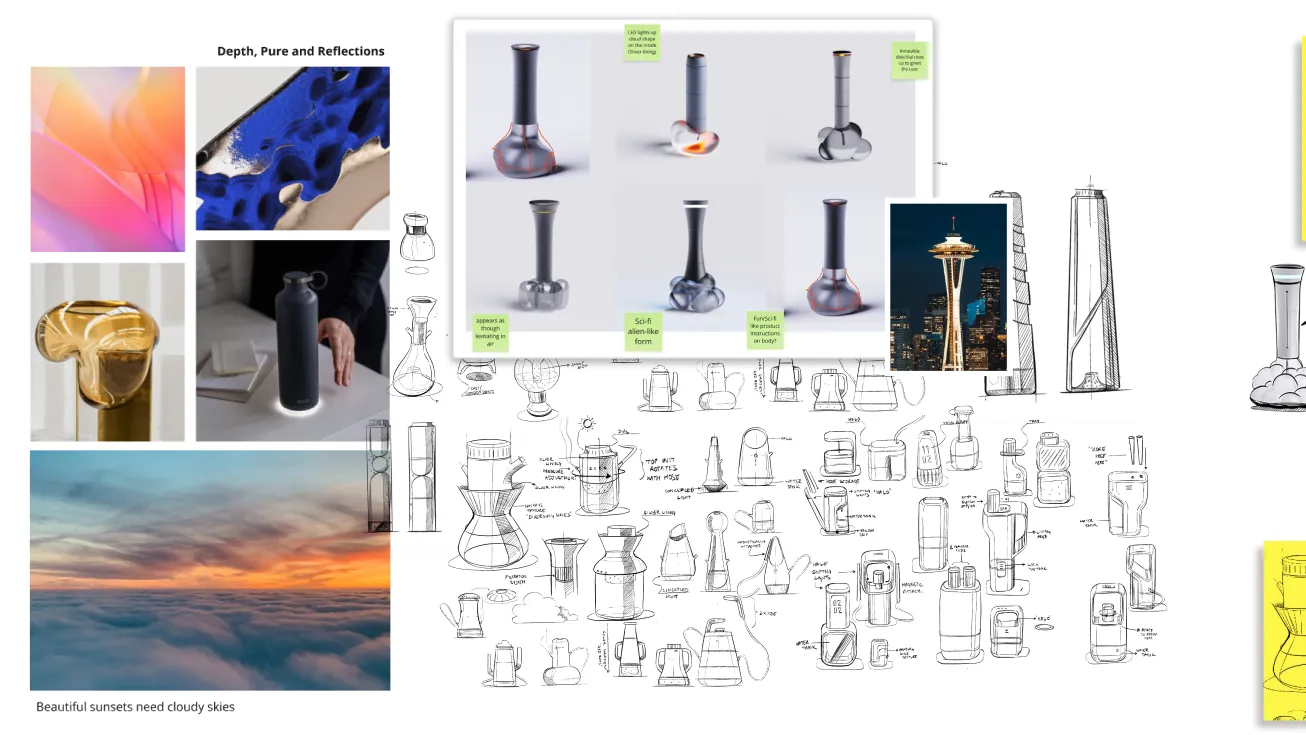
Tall pointed skyscraper rising above dense clouds during sunrise or sunset.
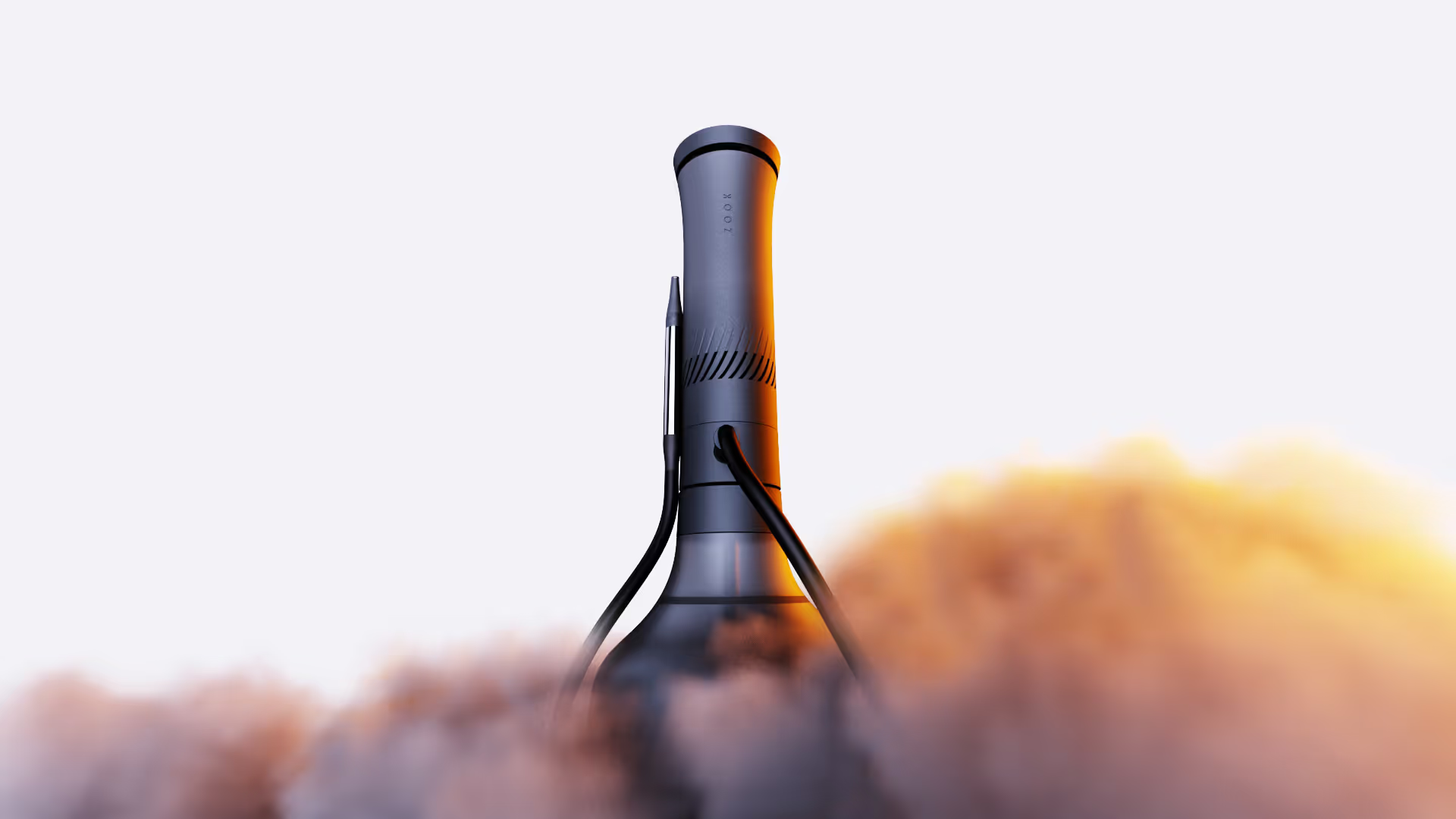
Close-up of a sleek, futuristic rocket launching with smoke and orange light at its base.

This is for
Founders who want clarity

Fast-track your ideas into validated concepts

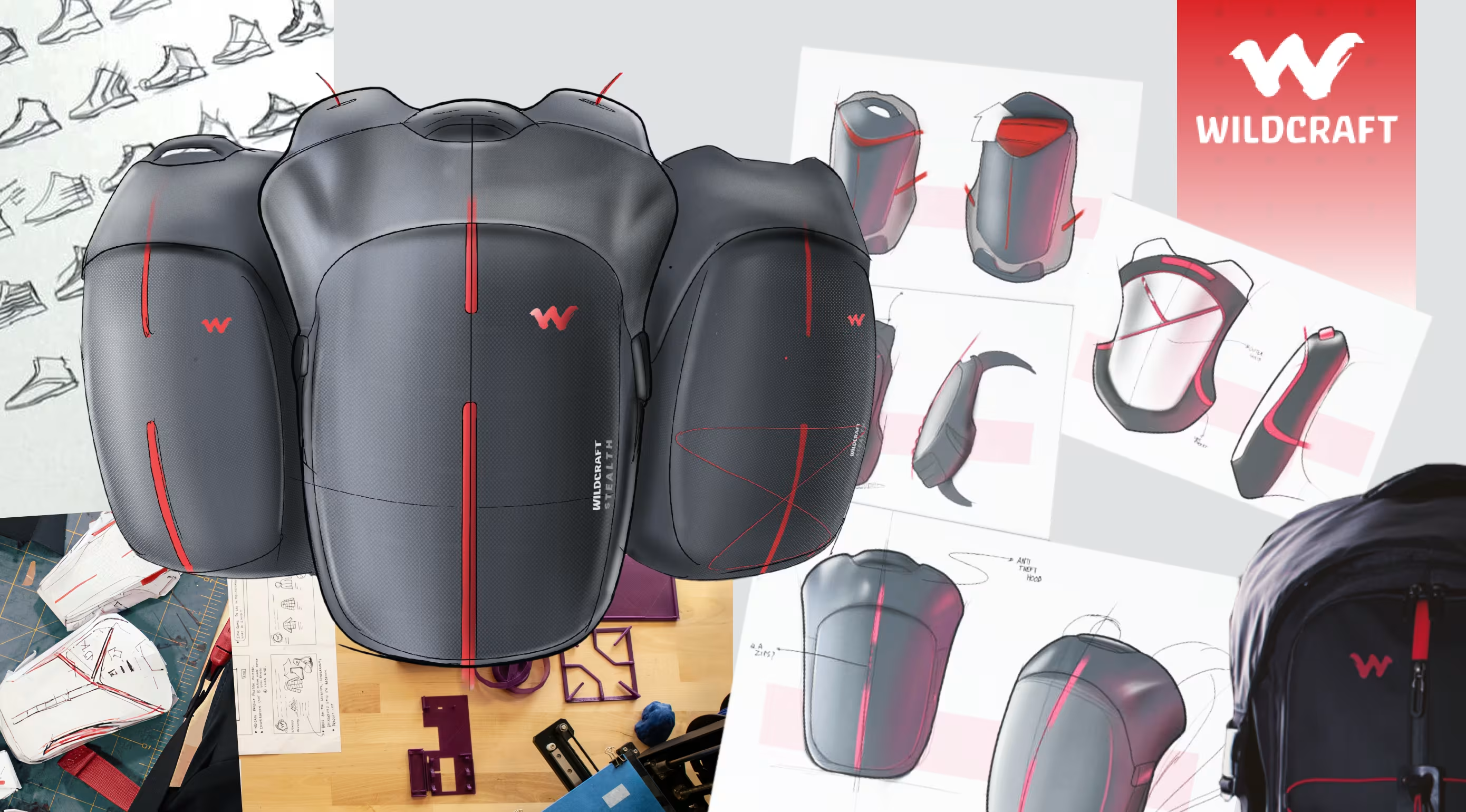
Concept design sketches and 3D renderings of a black and red Wildcraft backpack with detailed annotations and prototype fabric pieces.

The Challenge

Early ideas carry excitement, but also uncertainty. Too many directions. Too little structure. And decisions that feel heavier than they should.

Built for FOUNDERS VALIDATING THEIR FIRST PRODUCT IDEA

Touch Base Today
Touch Base Today

This is most suited for

First Time Founders
Startups validating Ideas
PMs pitching to Leadership
Inventors preparing for Patents
You've identified the problem. You know the solution. Now you need a world-class design team to make it.
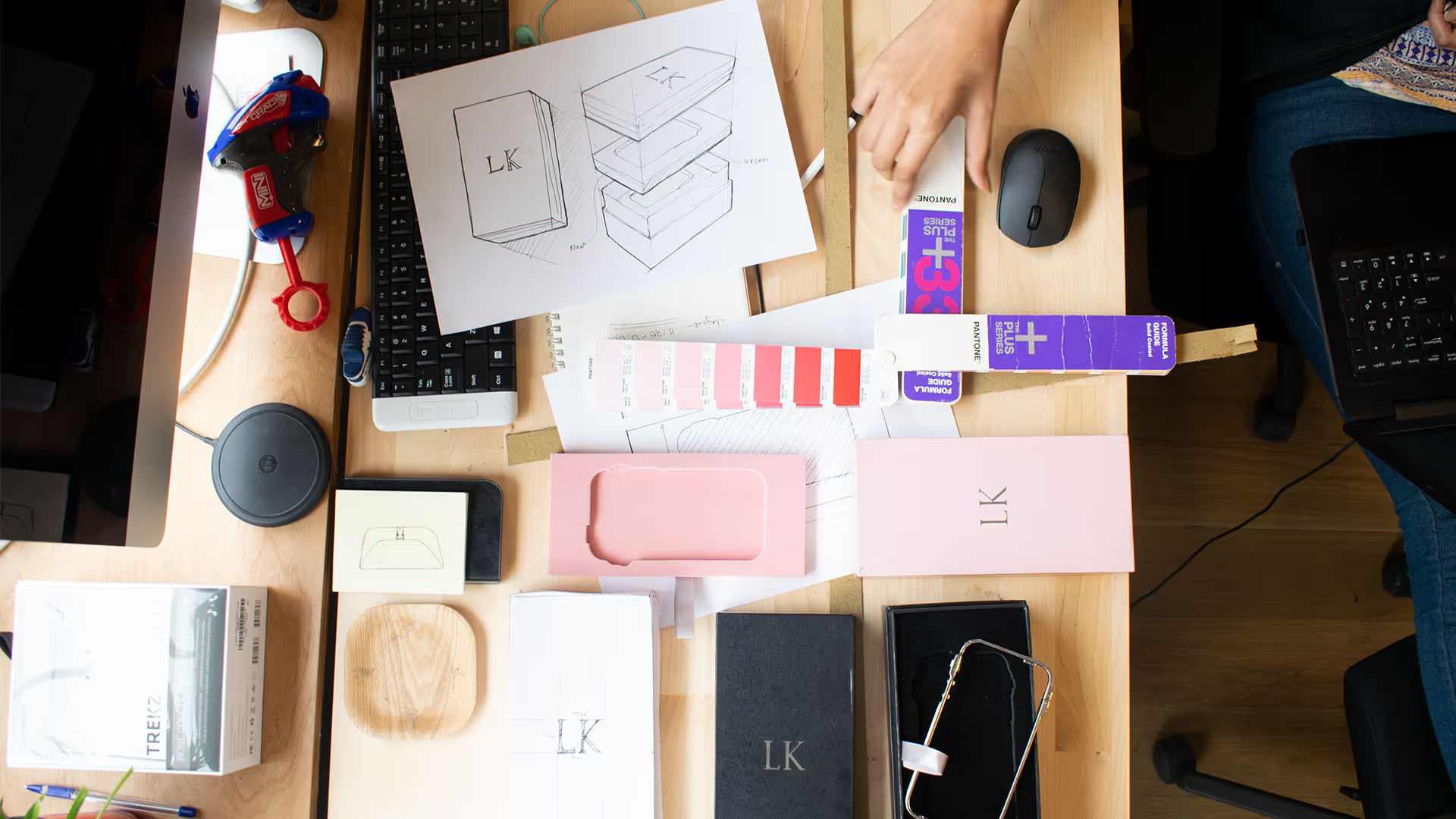
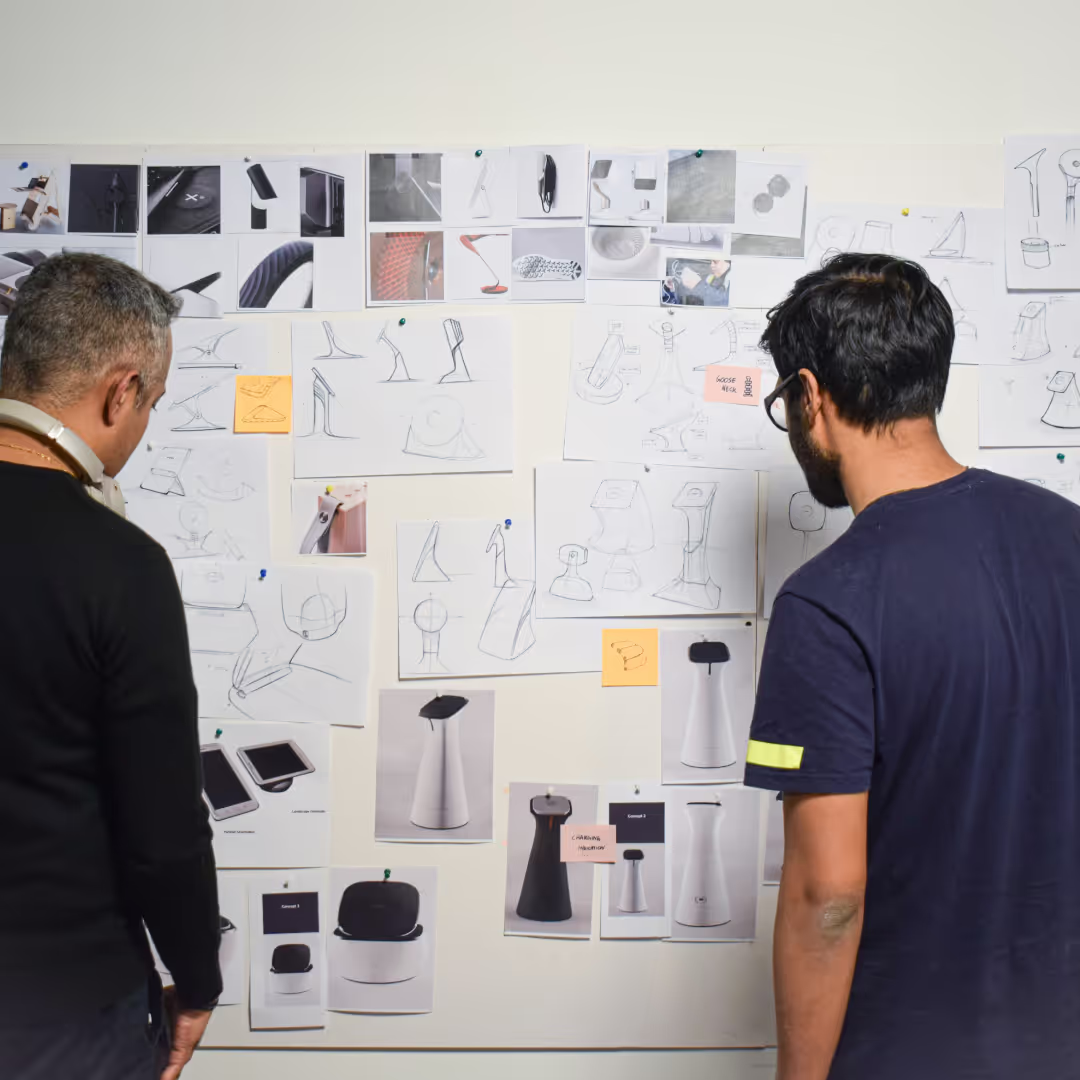
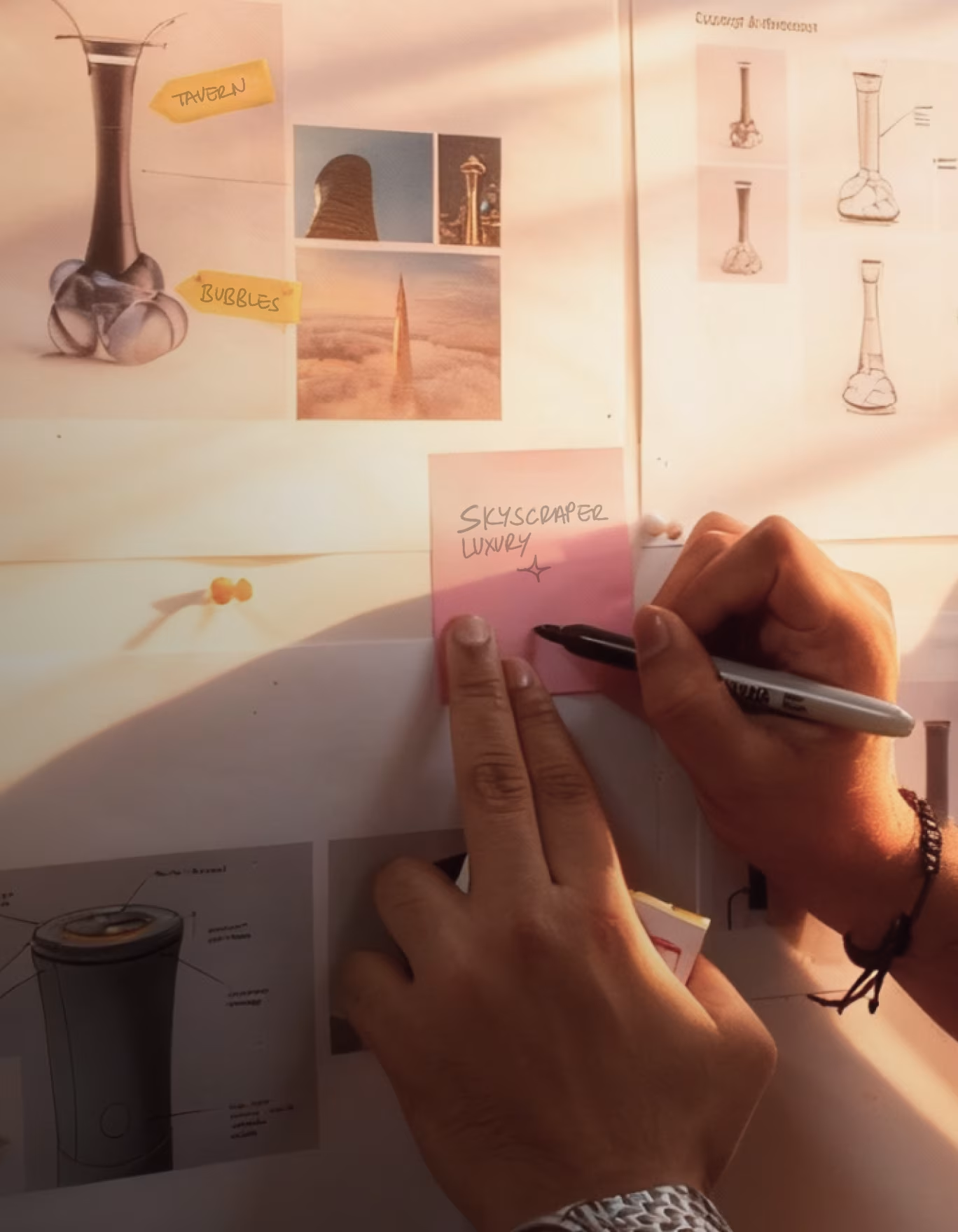
Person writing 'SKYSCRAPER LUXURY' on a pink sticky note pinned to a board with architectural sketches and photos.Top view of a workspace with phone packaging prototypes, color swatches, sketches, a keyboard, mouse, and a hand reaching over the table.Six grayscale speaker grill texture design concepts numbered 1 to 6 above a black speaker with a transparent dome cover.
Discovery & Strategy
  • What it delivers: A clear product direction grounded in user, market and feasibility insights.
Concept Design Service By Analogy Design
Concept Development
  • What it delivers: Multiple concept routes visualised, compared and stress-tested.
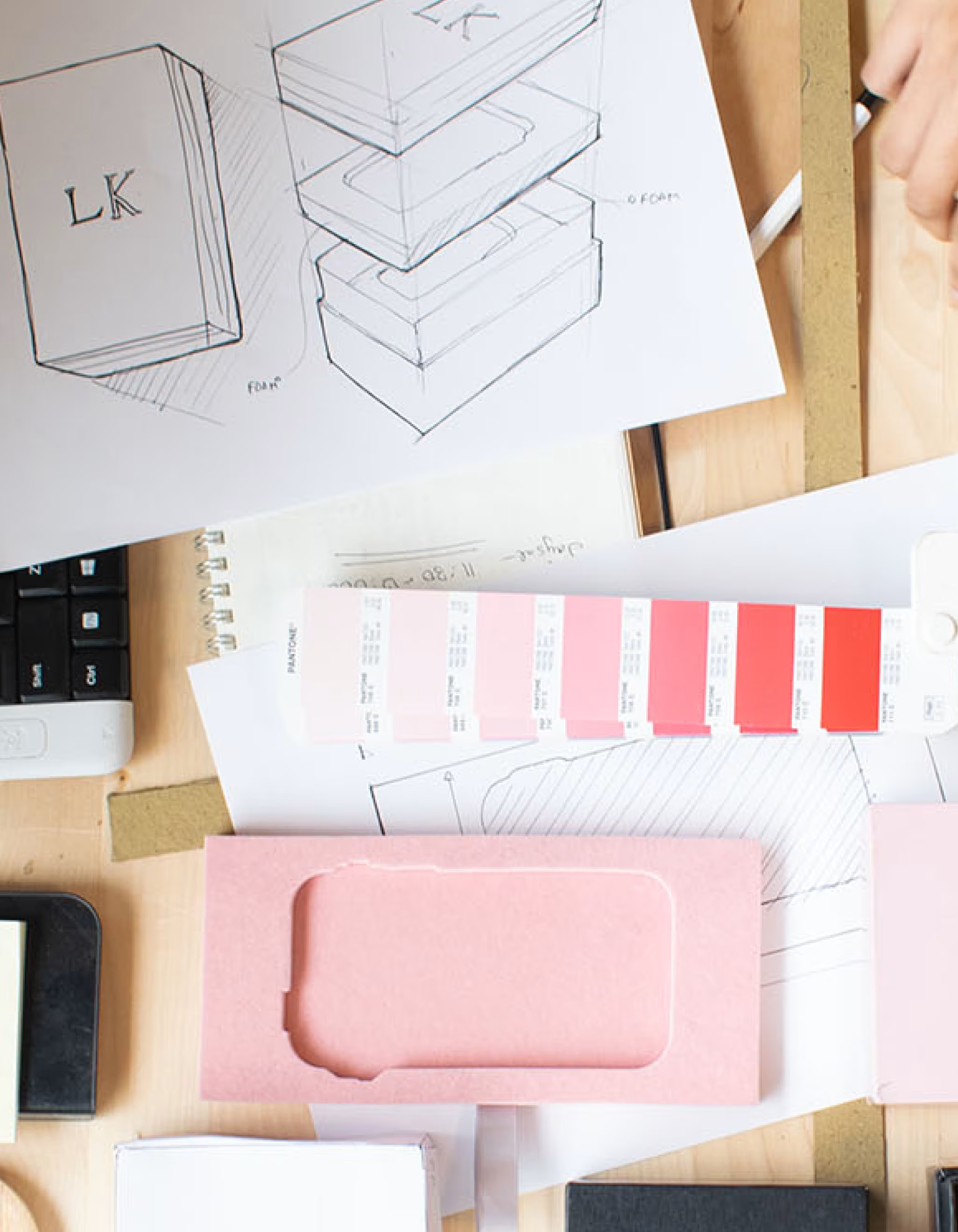
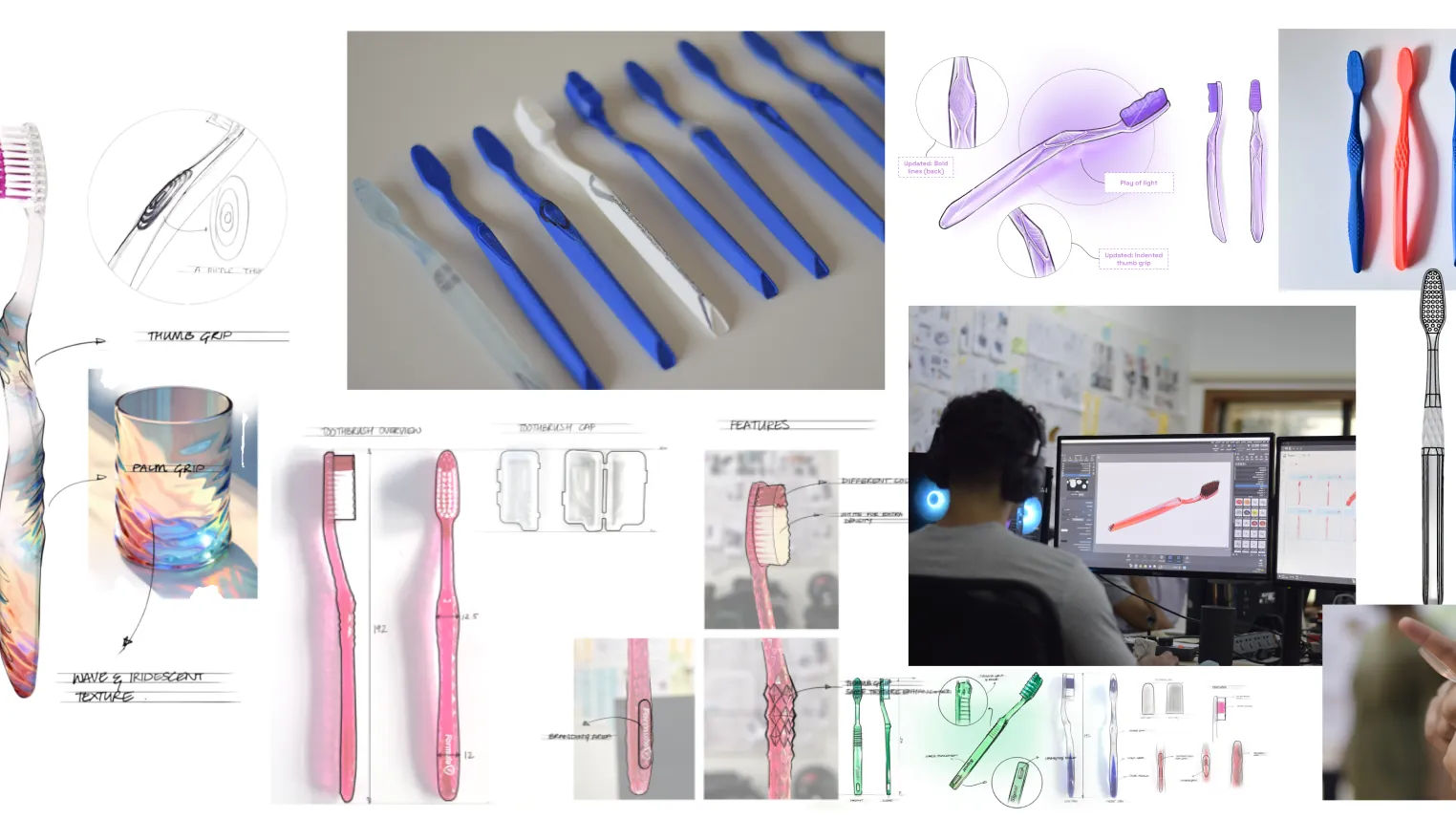
Design Sketches, Color Swatches, Phone Case Molds & More
Concept refinement
  • What it delivers: One concept that’s ready for prototyping and has the highest potential to be manufactured.
start with an idea
start with an idea
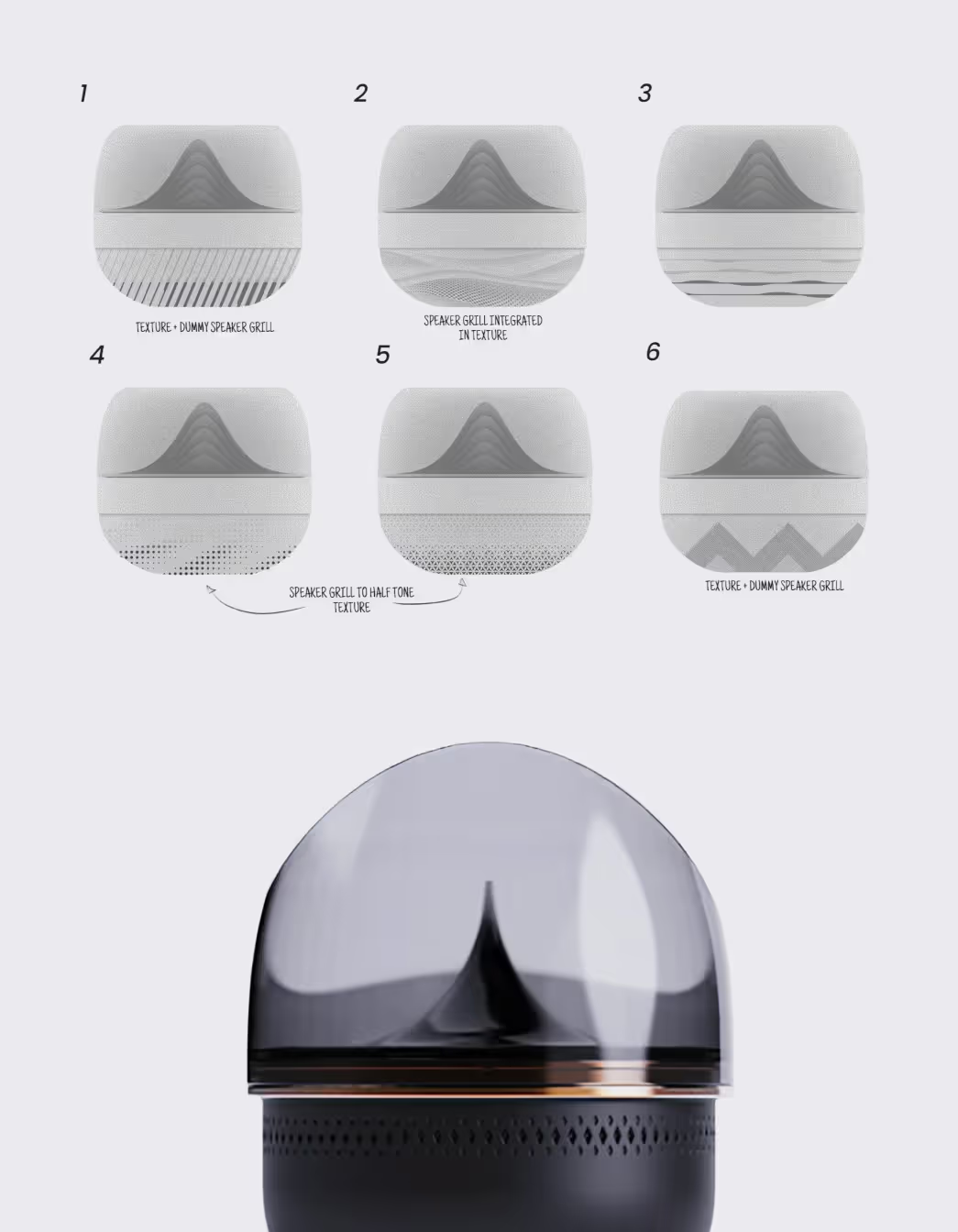
Concept design variations showing six different speaker grill textures and patterns on a compact dome speaker, followed by a final product image with a transparent dome and black perforated base.
Circle Blur

product clarity & value from day one

Review My Product Idea

Proof that clarity early leads to stronger outcomes later

90%

Concepts validated before prototyping

Prevents time and money being spent on the wrong product

3-5

Concept directions explored per project

Encourages divergence before committing to a path

60%

Clients pivot or refine their idea at concept stage

Reflects honest feedback and early clarity

4–6 weeks

Average concept to decision timeline

Balances speed with thoughtful evaluation

100+

CMF and form studies executed

Depth of craft applied with intent

21

Industries researched

Positioning grounded in research not assumption
Man with beard wearing glasses on his head and a black t-shirt, smiling against a dark background.
Sandeep Balaji
Founder & Angel Investor, IncrementumX
Get in touch
“Brilliant bunch of folks who understand design really really well.
And most important are receptive and fun to work with!”
Smiling man with curly dark hair wearing a white shirt against a dark background.
Pushkar Singh
Co-Founder, Tremis Capital
Get in touch
“The team at Analogy is easily the smartest and the most innovative product designers I’ve met. I can’t recommend them highly enough. They have a capability to  understand how to create successful designs better than anyone I’ve met”
Man with dark hair and beard wearing a black t-shirt with colorful text 'ADI MUMBAI 2022' on a black background.
Krishan Jagota
Founder, Fluid
Get in touch
“I love what Analogy does and their approach to design. With global exposure and a new benchmark for Indian companies, they’re the best design studio for PHYGITAL products in India. Expertise, Empathy, and Sharpness, that’s Analogy”
Man with a mustache wearing a white button-down shirt and gray pants standing against a dark gray background.
Sreejith Kumar
Associate Vice President - Design, Borosil
Get in touch
"Analogy's structured design approach and contemporary styling broke traditional norms, delivering a unique product design. Their European-inspired aesthetics are highly recommended for innovative projects."
Man with glasses wearing a dark blue button-up shirt sitting with folded hands against a dark background.
Firoz Meeran
MD, Eastern Condiments
Get in touch
"Analogy collaborated with Eastern Condiments to create a new visual language for their product range. Their responsive designers kept us updated, allowing for regular feedback. The final packaging design was visually appealing and gave us a competitive edge. Analogy is committed to pushing design boundaries and delivering quality service."

Client Success Powered By Concept Design

Learn more about Our Service here

Concept Design: Turning Ideas into Clear Product Direction

Concept Design is the starting point where your idea becomes structured. Through user research, competitive analysis, ergonomic studies, and rapid ideation, we ensure your concept is both innovative and achievable. Every direction we propose is engineered for future prototyping, manufacturing, and market viability. This makes concept design a powerful filter that saves time, reduces costs, and strengthens decision-making. For founders seeking a structured, world-class beginning to their product journey, our concept design process delivers clarity and confidence.

If you’re a founder struggling with uncertainty, too many options, or an unclear product direction, this is where Concept Design gives you structure. Our Concept Design services break down your idea into understandable components like user insights, market positioning, technical challenges, and visual direction. By simplifying the early decision-making process, we help you avoid costly missteps and unnecessary iterations. You walk away with validated concepts supported by clear logic and strong storytelling. This foundation empowers you to pitch, prototype, or raise funds with confidence.

When clarity is your priority, concept design becomes your strongest starting point.

From Assumptions To Insight Before You Build Anything

Turning an idea into a clear, validated direction is the foundation of strong product development. Our Concept Design process helps you move quickly from assumptions to insights, combining research, user understanding, and technical feasibility into one streamlined flow. Instead of guessing whether your idea will work, we help you test the right questions early. This gives you clarity, confidence, and a realistic roadmap before investing heavily in development. With expert guidance, your concept design becomes aligned with market expectations. Our Concept Design services are designed to reduce uncertainty while accelerating decision-making. We study user needs, identify functional opportunities, and translate early thoughts into structured design directions. Through rapid ideation, sketching, and 3D visualization, you see your idea take shape in real, tangible ways.

Every concept is reviewed through the lens of usability, manufacturability, and market relevance, so you know it has a solid foundation. By validating early, you save time, cost, and months of rework later in the process. As your concept evolves, we refine it with precision. We remove ambiguity, strengthening the experience, and ensuring it can move seamlessly into prototyping. You get clarity not just on what the product looks like, but how it works, how it’s built, and why users will care. This makes stakeholder conversations easier and investor discussions more compelling.

With a validated concept in hand, you’re ready to take the next step toward engineering, manufacturing, and eventual launch with complete confidence.

Where Bold Ideas Get the Structure to Scale

Concept Design is where bold ideas first take shape, and this service is crafted specifically for founders who dare to challenge the ordinary. Whether you're building a new category or reinventing an existing one, we help you turn intuition into direction. Our Concept Design services reveal what your idea can become by removing guesswork and clarifying the real opportunity. By blending research, creativity, and early technical insight, we give your concept a foundation that is strong, believable, and future-ready. This is where breakthrough products begin. Every disruptive idea needs structure before it can scale, and that structure is exactly what our Concept Design process delivers.

We help you understand users deeply, map the market landscape, and identify the gaps your product can uniquely fill. Through sketches, strategy, and early 3D visualization, we transform ambiguity into momentum. Each concept is refined with manufacturability, usability, and feasibility in mind, giving you clarity on what truly works. You move forward with confidence, not assumptions.

For dreamers ready to build something real, Concept Design services act as the bridge between inspiration and execution. We align your vision with real-world constraints, ensuring your product can be built, tested, and adopted in the market. With clear direction and validated insights, your concept becomes more than an idea. It becomes a strategic starting point for everything that follows.

The concept design process reduces uncertainty, accelerates decision-making, and gives you a roadmap that feels actionable from day one.

This is how disruptors gain their edge.

Who Concept Design Is Built For And Why It Matters

Startups Validating Their IdeaOur Concept Design services are perfect for startups looking to validate their product idea before heavy investment. Early-stage concepts carry potential, but without structured validation, founders risk costly missteps. We combine research, rapid prototyping, and technical feasibility studies to ensure your idea is grounded in real-world insights. This approach helps startups move confidently from concept to prototype while reducing time and budget risks. By clarifying the opportunity, we set the foundation for successful product launches.

First-Time FoundersFor first-time founders, the journey from idea to market can feel overwhelming. Concept Design simplifies this process by providing a structured framework that balances creativity with practical execution. Founders gain clarity on design direction, user needs, and manufacturing constraints before committing significant resources. Our services ensure that early decisions are informed and aligned with market realities. This reduces uncertainty and accelerates the path to a viable, fundable product.

Product Managers:
Product managers benefit from Concept Design services by gaining a clear roadmap for development. The process helps translate market insights and user research into validated, buildable concepts. By integrating sketches, 3D modeling, and technical feasibility, we equip product managers with tools to make smarter decisions faster. This strengthens internal alignment, reduces iteration cycles, and improves stakeholder confidence. Ultimately, it ensures that product development stays focused, efficient, and outcome-driven.

Inventors:
Inventors looking to transform ideas into tangible products need a process that bridges imagination and execution. Concept Design services provide structured ideation, early prototyping, and validation to turn inventive concepts into practical solutions. We help inventors evaluate feasibility, refine functionality, and visualize the final product in ways that attract investors and manufacturers. This approach ensures concepts are not only innovative but also ready for real-world application. With guided support, inventors can move from inspiration to impact with confidence.

The Three Foundations That Shape a Strong Concept

Concept Design services include 3 primary steps. The first one begins with discovery and strategy, ensuring your idea is informed by real-world insights. We conduct ethnographic research to understand user behaviors, habits, and unmet needs, giving you a clear picture of how your product fits into daily life. User journey mapping allows us to visualize the complete experience, identifying friction points and opportunities to delight users. These insights guide design decisions, making early concepts both relevant and impactful.

By combining qualitative and quantitative research, we reduce uncertainty and validate the core idea before moving forward.

Next, we perform competitive landscape analysis to benchmark your idea against existing products and industry standards. This ensures your concept stands out in the market while identifying gaps and opportunities that can be leveraged. By understanding competitor strengths and weaknesses, our Concept Design services help you position your product strategically, aligning it with market expectations and user needs.

These insights inform design priorities and feature focus, so every concept is purposeful and differentiated.

Finally, technical feasibility studies ensure that concepts are not just desirable, but achievable. We evaluate materials, manufacturing methods, and engineering constraints early to prevent costly iterations later in development. By combining research, mapping, competitive insights, and feasibility studies, founders gain clarity, confidence, and a validated concept ready to advance toward real-world success.

From Sketches to 3D Concepts You Can Believe In

In the Concept Development phase, ideas take shape through structured creativity and technical precision. Concept Design services use rapid ideation sprints to generate multiple solutions quickly, exploring possibilities while keeping the core vision in focus. We complement these sprints with hand sketching & rendering, allowing concepts to be visualized immediately and communicated effectively to stakeholders. This combination ensures that the best ideas rise to the top while maintaining clarity and feasibility. Each concept is assessed for functionality, aesthetics, and user impact before moving to detailed modeling.

Once ideas are shortlisted, we transition to 3D CAD modelling, turning sketches into precise digital prototypes that can be iterated quickly. This stage ensures that all dimensions, mechanics, and interactions are considered before any physical prototype is created. Concept Design services focus on integrating design intent with engineering realities, so concepts are both innovative and manufacturable. By working digitally, we can experiment with variations, materials, and mechanisms without costly physical iterations.

Finally, photorealistic visualization brings concepts to life, helping founders, teams, and investors see exactly how the product will look and feel. This step is essential for communicating design direction and securing early validation or funding. Through this comprehensive Concept Development process, ideas evolve from sketches to fully visualized, validated concepts ready for prototyping and production.

With photorealistic renders, we can test user perception, refine aesthetics, and align the concept with brand vision.

Refining Concepts For Comfort, Cost, And Manufacturability

Concept Refinement is the stage where ideas are honed into practical, production-ready solutions. Concept Design services integrate Design for Manufacturing (DFM) principles to ensure that each concept can be efficiently produced without compromising quality or aesthetics. By optimizing materials, processes, and assembly methods, we reduce production costs and minimize potential manufacturing challenges. This approach ensures your concept is not just visually appealing, but also fully buildable at scale.

We also conduct ergonomic testing & validation to guarantee that products are comfortable, safe, and intuitive for users. From hand-held devices to larger equipment, every interaction is evaluated for usability and human factors. Concept Design services combine these insights with functional refinements, so products are both technically sound and user-centered. This step ensures that the final design delivers a meaningful, effortless user experience.

Finally, we prepare technical drawing packages and handle vendor & supplier identification to streamline the path from concept to production. Detailed drawings communicate all specifications clearly, while trusted vendor relationships ensure smooth sourcing and manufacturing. By addressing these critical details early, founders can move confidently toward prototyping and market launch.

Concept Refinement transforms innovative ideas into validated, manufacturable products ready for real-world success.

Building Product Clarity And Value From Day One

Concept Design ensures that every product begins with clarity and a strong sense of value. From the very first sketches and research insights, concept design helps founders gain a clear understanding of what their product can achieve in the market. By defining functional goals, user needs, and design priorities early, we reduce uncertainty and create a roadmap that guides the entire development process. This clarity saves time, minimizes costly revisions, and ensures that every decision adds measurable value. By focusing on validated concepts and practical feasibility, product clarity is built into every stage of our concept design process. We combine ideation, user research, and technical assessment to reveal opportunities, risks, and differentiators for your product. Founders can see which elements resonate with users and which require refinement before committing to prototyping or manufacturing. This structured approach ensures the product is designed for both market success and real-world functionality.

Creating value from day one also means aligning the product with business goals, target users, and industry standards. Our concept design services help founders understand what makes a product desirable, buildable, and fundable. By embedding clarity and measurable value into early decisions, we provide a solid foundation for future development, funding, and launch.

With this approach, ideas evolve into strong, actionable concepts that are ready to succeed in the market.

Concept Design Is The Foundation Of Success

The foundation of every successful product is a clear, focused concept. Concept Design services simplify the early stages of product creation, turning complex ideas into actionable and understandable directions. By breaking down user needs, market insights, and technical requirements, we ensure founders see the path forward without getting lost in unnecessary complexity. With a clear vision, ideas evolve smoothly into validated concepts that can be prototyped, manufactured, and launched successfully. We use structured processes such as ideation sprints, sketching, and 3D visualization to translate abstract ideas into tangible concepts. This approach allows founders to validate assumptions early, refine design direction, and align the team on shared goals. With clarity at the center, even complex products become manageable, strategic, and ready for execution.

By focusing on simplicity without sacrificing innovation, concept design services empower founders to create products that resonate with users and stand out in the market. Early clarity ensures that resources are invested wisely, reducing costly iterations later in development. Our process integrates user research, technical assessment, and competitive insights to make every concept purposeful and actionable.

Clarity allows for faster decision-making, reduces risks, and ensures that the core value of your idea is preserved throughout development.

Frequently Asked Questions

Here are the answers founders commonly look for. If you can’t find what you’re looking for here, contact us below.

What is a concept design review and when should founders apply for one?

Founders should apply for a concept design review when their idea feels promising but unclear. A concept design review is a structured evaluation of an early product idea by an experienced design team. It examines the concept from multiple angles, including user value, usability, technical feasibility, and market fit. The goal is not to redesign the product, but to bring clarity and direction to uncertain ideas. Founders receive objective feedback before making major decisions.

Through a concept design review, early assumptions are tested and refined. This often happens after identifying a problem and solution, yet before detailed design or engineering begins. A review at this stage helps avoid costly mistakes and unnecessary iterations later. It is especially valuable before pitching to investors or moving toward prototyping.

Key risks are identified, and next steps become easier to prioritize. Founders walk away with actionable insights instead of opinions. This makes a concept design review a smart first step toward confident product development.

Is concept design software enough, or do startups need expert design support?

Concept design software helps startups visualize ideas, but it rarely provides true clarity on its own. Software can generate sketches, models, and visuals, yet it cannot interpret user behavior or business intent. Early product ideas often carry hidden assumptions that tools alone cannot uncover. This is where expert design support becomes essential. Professional designers bring structure, experience, and decision-making frameworks to the process. They know how to ask the right questions, challenge weak assumptions, and align design choices with real-world constraints.For startups, the real value lies in combining concept design software with experienced guidance. Tools accelerate execution, while experts provide direction and confidence. They help transform raw ideas into validated, build-ready concepts. Expert design support also connects concept design to manufacturing feasibility and user validation. This reduces the risk of building something that looks good but fails in the market.Software enables speed, but expert support ensures the right product is being built.

Can concept design tools replace hands-on design expertise?

Concept design tools are enablers, not replacements for design expertise. They assist with speed, accuracy, and visualization, but they do not make decisions. Tools cannot evaluate user emotions, market dynamics, or long-term product viability. These insights come from experience and design thinking.

Hands-on design expertise brings context to every design decision. Designers understand trade-offs between usability, aesthetics, engineering, and cost. They know when to simplify, when to push innovation, and when to validate assumptions. This judgment cannot be automated through software alone.

For startups, relying only on tools often leads to surface-level concepts. Combining tools with expert design guidance leads to deeper validation and stronger outcomes.Tools support execution, while expertise shapes direction.

What is the typical concept design process for new product development?

The typical concept design process begins with discovery and strategic alignment. This phase focuses on understanding the problem, target users, market context, and business objectives. Research methods such as user interviews, journey mapping, and competitive analysis help define clear opportunities. A strong foundation ensures the concept is rooted in real needs, not assumptions. Next comes concept development through rapid ideation and exploration. Designers generate multiple ideas using sketches, early visualizations, and 3D CAD models. These concepts are evaluated, refined, and narrowed down based on feasibility and value. This stage allows teams to explore possibilities without heavy investment.

The process concludes with concept refinement and validation. Selected concepts are detailed further with realistic visuals, ergonomic considerations, and technical inputs. Founders gain a clear, aligned direction that is ready for engineering or prototyping.

A well-defined concept design process sets the stage for efficient product development.

What are the key stages involved in a structured concept design process?

A structured concept design process typically starts with research and discovery. This stage focuses on understanding users, defining the problem, and analyzing the competitive landscape. Insights gathered here guide all future design decisions. Without this step, concepts often lack relevance or clarity. The second stage is ideation and concept generation. Designers explore multiple directions through sketching, rendering, and early 3D modeling. Ideas are compared, refined, and aligned with technical and business constraints. This phase encourages creativity while maintaining practical boundaries.

The final stage is concept refinement and validation. Selected concepts are detailed through visualizations, ergonomic checks, and feasibility reviews. Design for Manufacturing considerations may also be introduced early. Together, these stages ensure the concept design process is structured, efficient, and ready for the next phase.

What concept design software is used by professional product design teams?

Professional product design teams use a combination of concept design software depending on the stage of development. Early ideation often relies on sketching tools and digital drawing software to explore ideas quickly. These tools help translate abstract thoughts into visible forms. Speed and flexibility matter more than precision at this stage. For detailed concept development, teams use advanced 3D CAD software. These tools allow designers to build accurate models, test proportions, and evaluate basic functionality. Photorealistic rendering software is also used to visualize materials, finishes, and form. This helps founders and stakeholders better understand the product concept.

While concept design software is essential, it is only part of the process. Expert judgment, design thinking, and real-world experience shape how tools are used. Software supports the concept, but structured design expertise brings it to life. They ensure concepts are both inspiring and buildable.

What concept design tools are used for ideation, sketching, and visualization?

Concept design tools vary depending on the stage of ideation and exploration. Early stages often use hand sketching, digital sketching tablets, and visual brainstorming tools to generate ideas quickly. These tools allow designers to explore multiple directions without heavy investment. Speed and freedom are key during this phase. For visualization, professional teams use 3D CAD tools to develop accurate forms and proportions. Rendering software helps create photorealistic images that show materials, textures, and finishes. These visuals help founders, investors, and teams understand the product clearly. Visualization tools also support early feedback and iteration.

While concept design tools are powerful, they are most effective when used strategically. Designers choose tools based on the problem, not habit. The right combination of ideation, sketching, and visualization tools creates clarity without overengineering. This balance keeps the concept design process efficient and focused.

What are concept design services and how do they help validate early product ideas?

Concept design services help transform early ideas into structured, testable product concepts. Instead of jumping straight into development, these services focus on clarity, direction, and feasibility. They combine research, strategy, and design to uncover real user needs and align them with business goals. For founders, concept design services reduce guesswork and replace assumptions with informed decisions.

At this stage, validation matters more than perfection. Professional concept design services use user research, competitive analysis, and rapid ideation to test whether an idea is worth building. Early sketches, 3D models, and visualizations allow founders to see their idea clearly and evaluate its value. This helps identify gaps, risks, and opportunities before time and money are committed.

By validating early product ideas, concept design services protect long-term investment. Founders gain confidence in their direction and a strong foundation for further product development. Clear concepts also make it easier to attract stakeholders, investors, and internal teams.

In a nutshell, concept design services turn raw ideas into confident, build-ready product visions.

What should founders look for in a global concept design studio?

Founders should look for a global concept design studio that balances creativity with structure. Beyond visuals, the studio should offer strong research, strategy, and validation capabilities. Experience across industries and markets is a key advantage. This ensures ideas are shaped with broader perspectives in mind. A strong global concept design studio also understands regional user behaviour and manufacturing realities.

Teams that work across geographies bring insights that local-only studios may miss. This is especially important for products targeting international markets. Global exposure improves decision-making early in the concept phase. Equally important is communication and collaboration. Founders should feel guided, not overwhelmed.

A global studio should simplify complexity and provide clear next steps. The right partner becomes an extension of the founder’s team, not just a service provider.

How does global concept design bring diverse perspectives to product innovation?

Global concept design brings together insights from different cultures, industries, and user behaviors. Designers working across regions identify patterns and needs that may not be visible in a single market. This diversity strengthens problem-solving and reduces blind spots. Products benefit from broader thinking early on. Exposure to global markets also influences how concepts are shaped.

Design teams consider usability, accessibility, and expectations across different user groups. This leads to more adaptable and scalable product concepts. Global perspectives help founders avoid designing for a narrow audience. By integrating diverse viewpoints, global concept design encourages innovation that is both creative and grounded.

Ideas are challenged, refined, and improved through varied experiences. This results in concepts that feel relevant, competitive, and future-ready.

Diversity becomes a strategic advantage, not just a creative one.

Great ideas begin with clarity, not complexity

Concept Design helps you prioritize what matters most, focusing on features, usability, and manufacturability that truly impact the end user.

Get A Concept Review