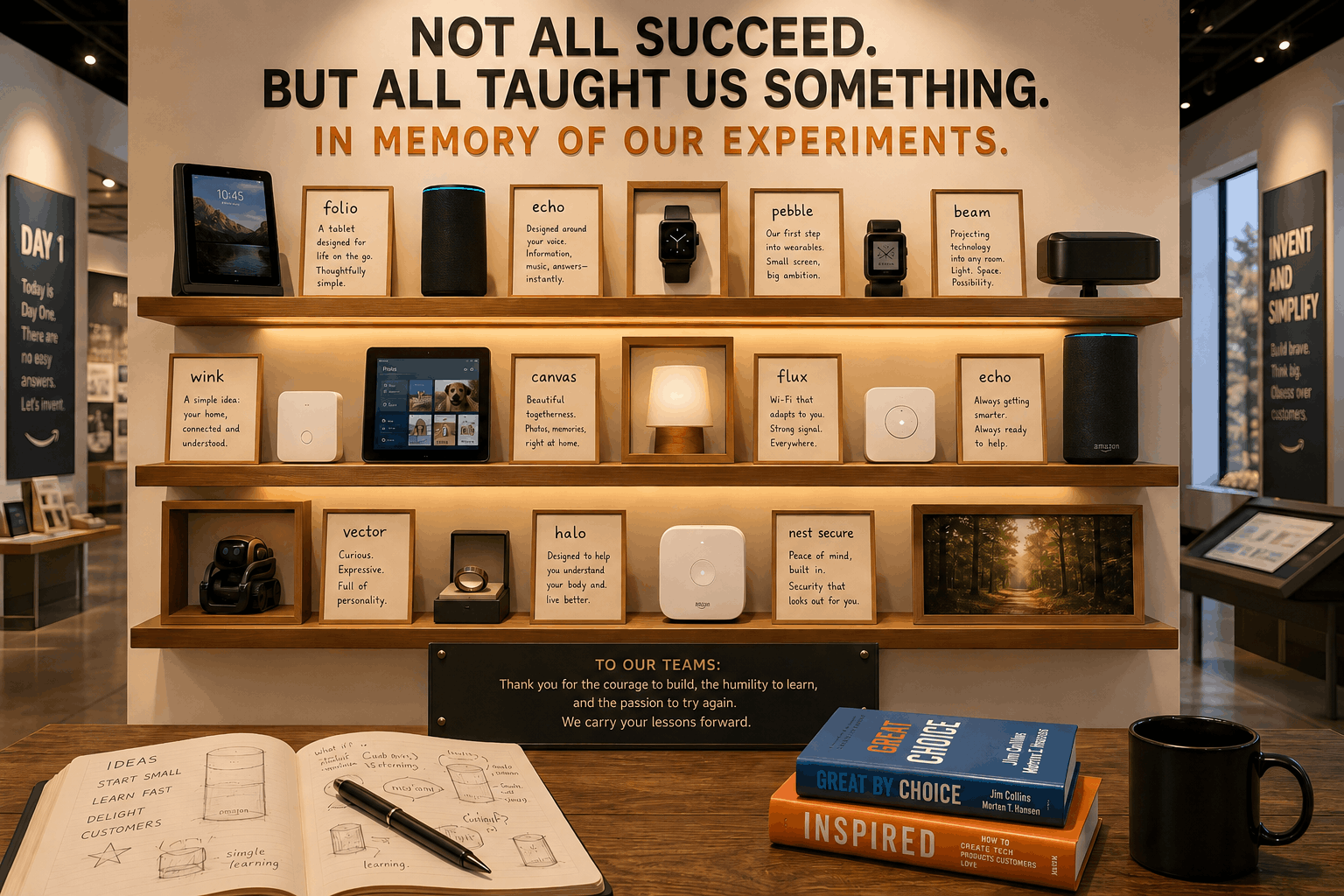
What Is Concept Design?
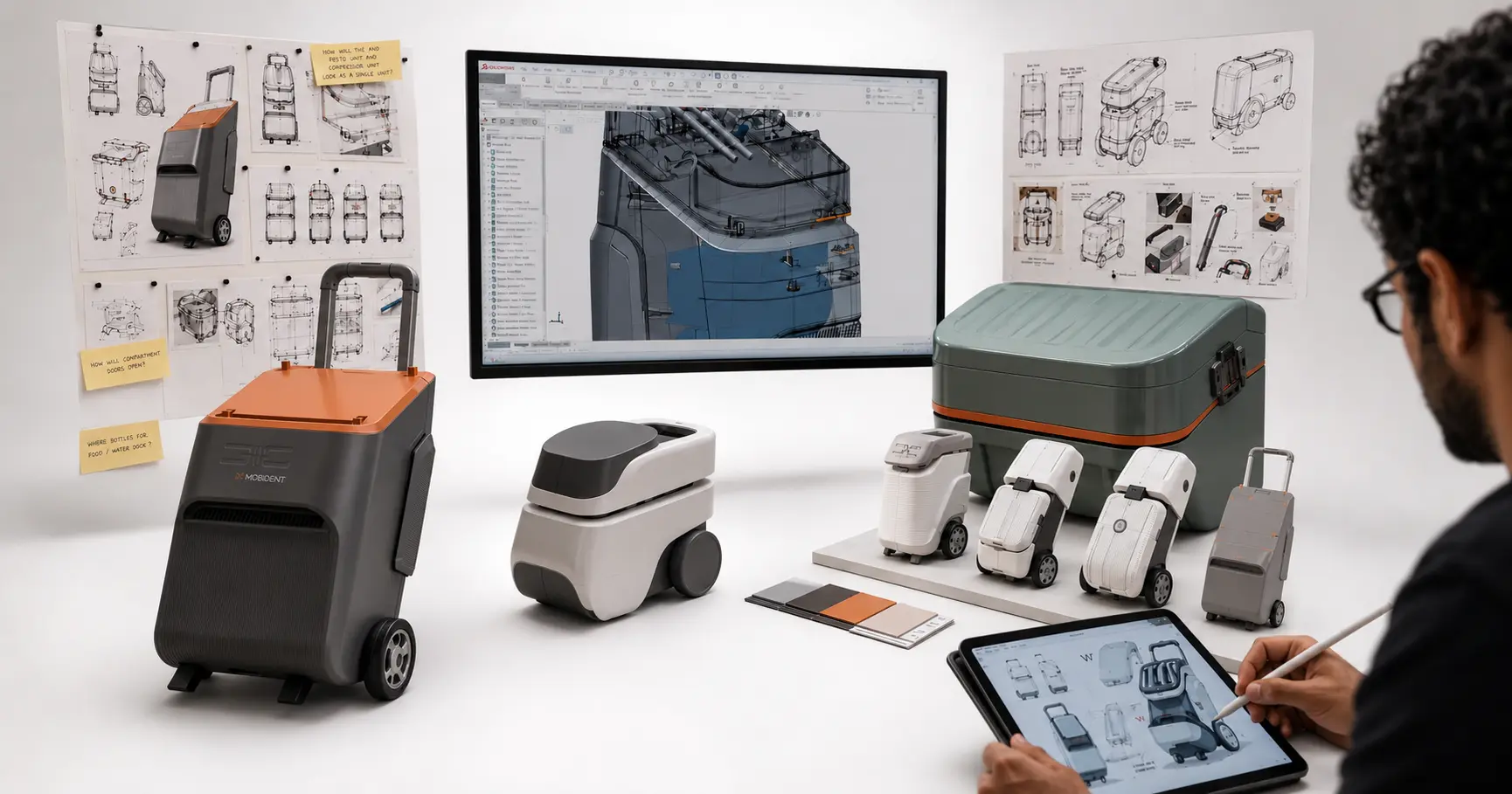
Concept design represents the earliest stage of shaping a product idea into a meaningful direction. Concept design focuses on defining purpose, user experience, form, and value before engineering begins. Designers use concept design to explore possibilities, align business goals, and visualize how a product fits into real life. This stage plays a central role in product innovation and early decision making. Many modern concept design services build on this foundational approach.
History Of Concept Design
The roots of concept design trace back to the early twentieth century with the rise of industrial design. In 1907, Peter Behrens introduced a unified design approach at AEG in Germany, shaping products, graphics, and architecture under one vision. This moment marked the beginning of structured product concept development. Behrens influenced generations of designers by connecting aesthetics with function and industry. His work laid the groundwork for modern concept driven product design.
Concept design evolved further with the Bauhaus movement founded by Walter Gropius in 1919. The Bauhaus philosophy blended art, craftsmanship, and industrial production into a single design language. During the 1930s, Raymond Loewy expanded concept design into consumer markets in the United States. His work emphasized user appeal, simplicity, and commercial success. These pioneers shaped concept design into a strategic discipline used across global product design studios today.
What Is Detailed Design?
Detailed design represents the phase where a selected product concept becomes precise and execution ready. This stage focuses on dimensions, materials, tolerances, mechanisms, and performance requirements. Engineers and designers collaborate to translate visual intent into functional reality. Detailed design supports manufacturability, reliability, and long term product performance. Many engineering design services operate primarily within this stage.
History Of Detailed Design
The history of detailed design developed alongside modern engineering during the Industrial Revolution. In the late eighteenth century, James Watt refined mechanical drawings and specifications for steam engines around 1776. These drawings introduced systematic detailing for repeatable manufacturing. By the nineteenth century, standardized technical drafting became essential in factories and workshops. This shift shaped the foundation of modern engineering documentation.
Detailed design advanced further during the twentieth century with the rise of mass production. Henry Ford’s assembly line system introduced in 1913 demanded precise part definition and repeatable specifications. During the 1960s, computer aided design began transforming detailed design workflows. CAD technology allowed higher accuracy, faster iteration, and better collaboration across teams. Today, detailed design forms the backbone of scalable and reliable product engineering.
Concept Design Vs Detailed Design
Concept design answers whether a product idea deserves further development. Detailed design defines how the product will function, assemble, and scale. When these stages work in sequence, product development becomes more predictable. For founders, clarity between these stages improves decision making. This helps strengthen outcomes for startups and growing companies.
A strong product journey begins with concept design and progresses into detailed design at the right moment. This sequence supports better decision making, clearer collaboration, and stronger outcomes across engineering and manufacturing. Founders who understand this progression gain greater control over cost, timelines, and product quality. Concept design sets the direction, while detailed design delivers execution. Successful products grow when both stages work in harmony.
Concept Design In New Product Development
Concept design forms the foundation of new product development stages. Concept design transforms an early idea into a clear product direction with purpose and intent. At this stage, designers explore user needs, market gaps, and functional possibilities. This work shapes the future of the product before engineering decisions appear. Strong concept design builds confidence for founders and investors alike. During concept design, teams focus on the big picture rather than technical detail. Visual storytelling, mood boards, and concept sketches help communicate ideas clearly. Product strategy consulting often supports this stage to align design with business goals. Early clarity reduces uncertainty and supports faster progress. This phase plays a key role in turning vision into action.
Every successful product begins with a strong concept design phase. It guides later decisions across engineering, prototyping, and manufacturing. Founders gain a shared understanding of what they plan to build and why it matters. This clarity supports smoother collaboration with product design partners. Concept design sets direction for everything that follows.
Some Real Life Examples Of Concept Design
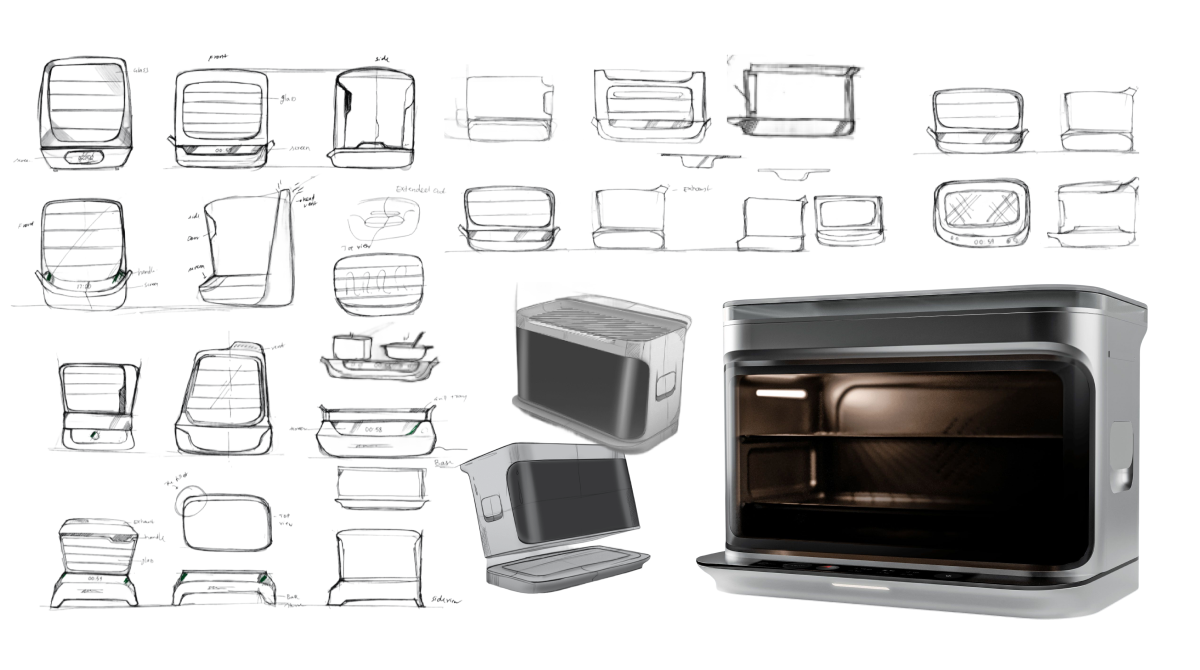
1) Smart Kitchen Appliances:
Designing smart kitchen appliances demanded balancing usability, durability, and visual appeal across diverse product categories and price points. Each product needed to remain manufacturable while meeting modern expectations of performance, quality, and brand differentiation.
They focused on form factor optimisation, component architecture, and material strategy to support scalable manufacturing. Technical decisions were guided by ergonomics, heat resistance, durability, and compatibility with mass production processes.
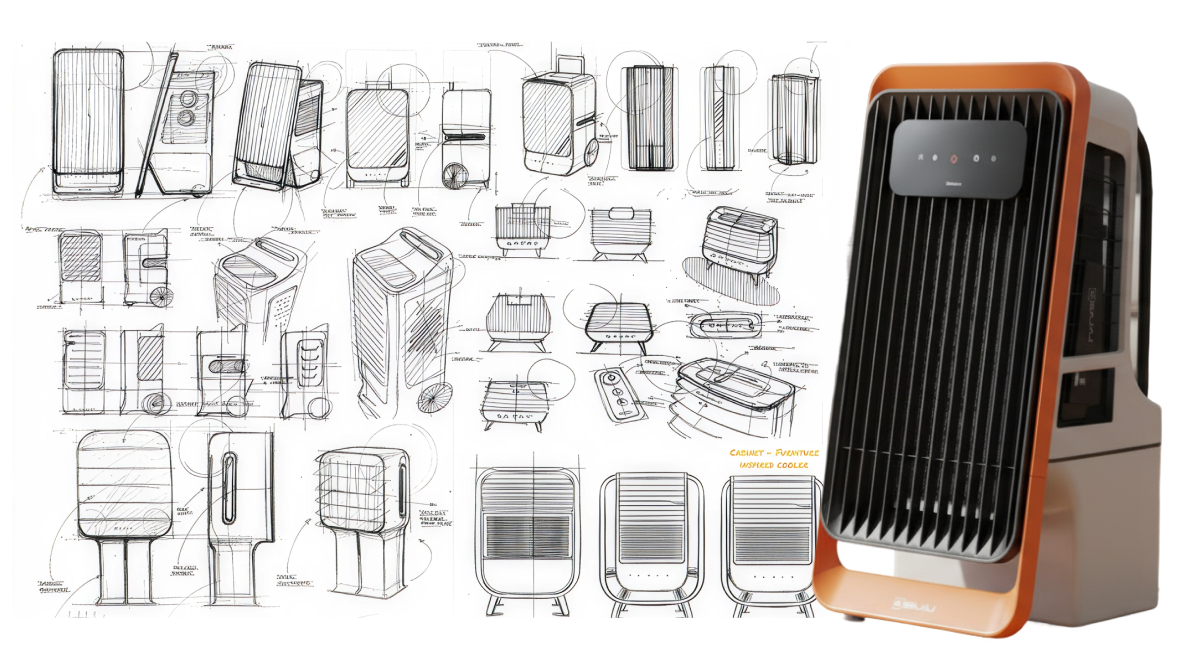
2) Home Appliances:
Designing air coolers and ceiling fans that deliver performance while blending seamlessly into modern Indian interiors was the primary challenge. Bulky forms, cost-heavy tooling, and poor design coherence limited scalability and visual appeal.
The air coolers were shaped around compact proportions, clean lines, and a neutral color palette to suit contemporary interiors. Attention was given to surface refinement, structural integrity, and cooling efficiency to ensure the products felt reliable and refined. Matte finishes and balanced proportions helped the air coolers move beyond purely functional appliances into lifestyle-friendly cooling solutions.
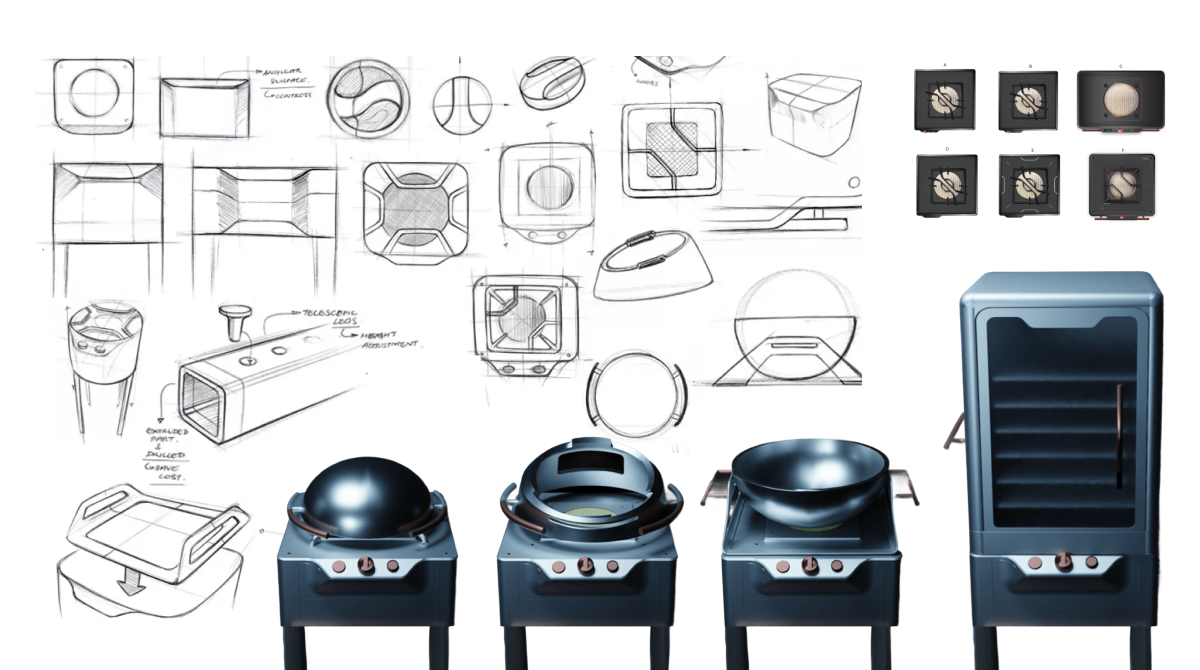
3) Kitchen Stove For Aginisumukh:
Commercial kitchens demanded customization, but manufacturing complexity made scalability expensive and inefficient. Too many SKUs, rising BOM costs, and inconsistent user ergonomics slowed growth.
The project began with focused market research inside working kitchens, observing chefs, operators, and maintenance teams. The team identified critical pain points related to inventory overload, inconsistent interfaces, and physical strain during long operating hours. These insights shaped a human factors driven design process rooted in real-world use.
How Concept Design Shapes Early Product Direction
The concept design process transforms an early idea into a clear and actionable product direction. Concept design brings structure to creativity by aligning user needs, business goals, and design intent. Through research, exploration, and visualization, teams gain clarity on what the product represents and how it delivers value. It supports confident decisions before engineering depth begins. This process sets the foundation for a focused and efficient product development journey.
8 Steps To Turn An Idea Into A Clear Product Direction
- Idea Definition And Product Intent
The journey begins by defining the idea and its intended value. This step clarifies who the product serves and what problem it addresses. - User Understanding And Context Mapping
Teams study user behavior, needs, and real world context. These insights shape meaningful and relevant product direction. - Market And Opportunity Analysis
Designers explore existing solutions and market gaps. This analysis helps position the product with clarity and purpose. - Concept Ideation And Creative Exploration
Multiple ideas take shape through structured ideation sessions. This stage encourages innovation and diverse thinking. - Concept Sketching And Visualization
Sketches and visual concepts translate ideas into tangible form. This step supports alignment and faster understanding across teams. - Concept Evaluation And Direction Selection
Concepts receive evaluation based on usability, value, and feasibility. A single direction emerges with strong potential. - Concept Refinement And Experience Definition
The selected concept gains clarity through refined form, features, and interaction flow. Product intent becomes well defined. - Concept Validation And Design Readiness
Early feedback and validation build confidence in the concept. The product reaches readiness for detailed design and engineering stages.
This output prepares teams for detailed design and engineering while creating clarity across the entire product development journey.
Concept Sketching In The Concept Design Process
Concept sketching in the concept design process plays a vital role in concept design by giving shape to early ideas. It allows designers to explore form, proportions, and user interaction quickly. Sketches communicate intent faster than detailed models and support creative freedom. This stage helps teams visualize multiple product directions with clarity. Concept sketching strengthens alignment across design and business teams.
Through sketching, abstract ideas become visible and easier to evaluate. Designers experiment with layouts, ergonomics, and visual language at this stage. These sketches support discussion and collaboration without heavy technical constraints. Product sketching also helps identify usability opportunities early. This visual approach accelerates early decision making. Concept sketching supports better outcomes before engineering depth begins. It creates a shared understanding of product vision and experience. Teams gain confidence in the selected direction through visual clarity. This step connects creativity with strategy in product design. Strong sketches often guide later design refinement.Concept Sketching In The Concept Design Process.
7 Facts About Concept Sketching That No One Has Heard Before
- Concept sketching functions as a thinking accelerator
In high performing design studios, sketching serves as a cognitive tool rather than a visual output. Designers sketch to externalize incomplete thoughts before logic fully forms. This rapid externalization allows the brain to evaluate multiple futures at once. Many breakthrough product ideas emerge during imperfect sketches rather than polished visuals. Sketching speeds up thinking itself. - Early sketches quietly define engineering boundaries later
Even loose sketches influence later engineering decisions more than teams realize. Proportions, splits, and interfaces drawn early often become psychological anchors for engineers. These anchors guide feasibility discussions and architecture choices subconsciously. A well balanced early sketch reduces friction during detailed design. Concept sketching shapes technical direction long before CAD appears. - Concept sketching captures emotional intent that CAD rarely carries
Sketches communicate softness, tension, friendliness, or precision through line weight and gesture. These emotional cues guide product personality and brand perception. CAD models focus on accuracy, while sketches express feeling and character. This emotional layer often survives into the final product through form language. Concept sketching preserves product soul. - The speed of sketching filters weak ideas automatically
Ideas that require excessive explanation during sketching often lack clarity. Strong concepts express themselves quickly on paper. Designers use this speed as a natural selection mechanism. Concepts that sketch easily tend to communicate value more clearly to users. This silent filtering improves concept quality early. - Sketching reveals hidden usability issues before prototypes exist
Hand sketches expose interaction flaws earlier than digital models. Button placement, grip logic, and user flow appear clearly through quick iterations. Designers sense awkwardness instantly while sketching human interaction. This awareness improves human centered product design. Many usability wins happen before any prototype forms. - Concept sketching creates alignment faster than meetings
A single sketch often replaces multiple discussion rounds. Teams align visually rather than verbally. Stakeholders respond emotionally and intuitively to sketches. This alignment accelerates decision making across product strategy and design. Sketching becomes a leadership tool inside product teams. - Great sketches leave intentional ambiguity
Experienced designers avoid over defining early sketches. Ambiguity invites discussion and collaboration. This openness allows engineering, marketing, and strategy voices to contribute meaningfully. Concept sketching thrives on suggestion rather than completion. This balance strengthens cross functional creativity.
The Role Of Concept Design In Product Success
Concept design plays a defining role in shaping successful products from the very beginning. It connects user needs, business goals, and creative thinking into a single product direction. This stage helps teams understand what the product represents and how it delivers value. Clear concept design brings focus before resources move into engineering and production. Many successful products share a strong concept design foundation.
Through concept design, teams explore possibilities before committing to one direction. Early exploration supports better choices around form, functionality, and experience. Designers evaluate multiple ideas and refine the strongest option with intent. This process strengthens product differentiation and relevance in competitive markets. Concept design influences how users perceive and interact with a product. Strong concept design supports long term product performance and growth. It guides later stages such as detailed design, prototyping, and manufacturing. Teams work with greater alignment and clarity throughout development. Founders gain confidence in product decisions and strategic direction. Concept design acts as the backbone of product success across the entire journey.
Case Study On: Shard Smart Exercise Bike
Redefining Home Fitness Through Concept Design And Product Engineering
Overview
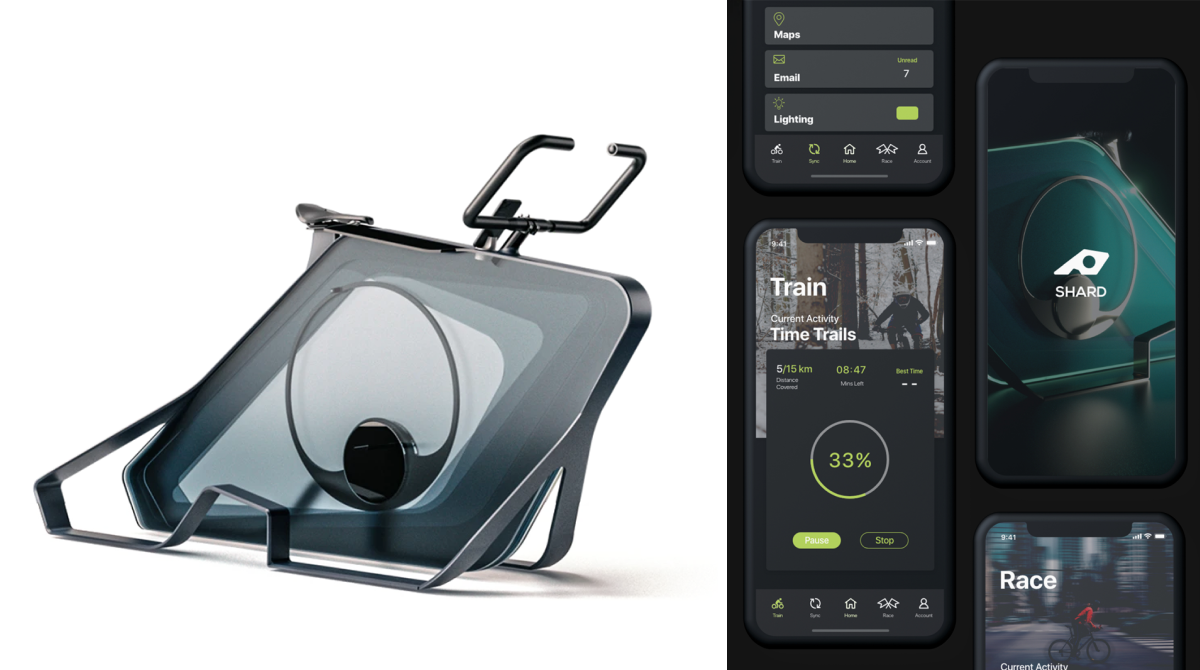
Shard is a smart exercise bike designed to transform the way people experience home fitness. Developed by Analogy Design, the project combined industrial design, UI UX design, mechanical engineering, and product visualization to create an immersive and motivating workout experience. Unlike traditional exercise bikes that dominate interior spaces and rely heavily on screens, Shard was conceived as a refined object that blends seamlessly into modern homes. The result is a product that encourages consistent use through design, psychology, and interaction rather than data overload.
The project was completed over a seven month timeline in 2017 and later received international recognition, including winning the International Bicycle Design Competition and the Industart Award in 2018.
The Challenge
Rethinking Motivation In Home Fitness
Modern exercise bikes often feel bulky, mechanical, and visually intrusive. Many smart fitness products prioritize performance metrics over emotional engagement, leading to short lived user interest. Home interiors suffer visually, and workouts quickly become repetitive. Users struggle to stay motivated, especially without access to personalized training.
A global fitness brand approached Analogy Design with a clear ambition. They wanted to create an exercise bike that motivates users consistently while fitting naturally into home environments. The challenge extended beyond hardware. The product needed to feel personal, immersive, and aspirational without relying on constant screen interaction.
Design Intent
Motivation Through Experience, Not Screens
Analogy Design reframed the problem by focusing on exercise psychology rather than traditional fitness metrics. Research revealed that visual calm, ambient feedback, and emotional connection play a major role in sustaining long term fitness habits. Instead of overwhelming users with numbers, the team envisioned an exercise bike that communicates progress subtly and intuitively.
The concept centered on two distinct modes. Cycling mode delivers an immersive workout experience using ambient light, motion, and responsive feedback. Standby mode transforms the bike into a sculptural light installation, allowing it to blend into home interiors when unused. This dual identity positioned Shard as both a fitness product and a lifestyle object.
Research Driven Concept Design
The foundation of Shard was built through deep research. Analogy Design conducted studies in exercise psychology, ergonomic behavior, and home usage patterns. These insights shaped early concept sketches and product architecture. Ergonomic analysis guided posture, reach, and comfort across different body types. Psychological principles informed how feedback and motivation would be delivered during workouts.
Concept design played a central role in aligning form, function, and emotion. Early sketches explored how light, material, and geometry could communicate movement and energy. Product visualization helped stakeholders experience the concept before engineering refinement began. This clarity allowed the team to move forward with confidence.
Integrated Product Engineering
Shard required close collaboration across multiple disciplines. Mechanical engineering ensured smooth motion, durability, and safety. Sensors such as heart rate monitors and speed trackers were integrated into the system to capture real time data. An analytical algorithm processed this data to adjust workout intensity dynamically.
UI UX design extended the experience beyond the physical product. The Shard mobile app delivers personalized training regimes, adaptive workouts, virtual challenges, and peer comparison features. This approach provided the benefits of personal training without the associated cost. IoT integration connected hardware, software, and user behavior into a cohesive system.
Design And Aesthetics
Fitness Equipment That Belongs At Home
Aesthetics played a defining role in Shard’s success. The bike was designed using premium materials such as glass, brass, and leather to elevate its presence. Every surface and detail was considered to ensure the product felt refined rather than industrial. In standby mode, Shard functions as a light installation, adding value to interior spaces rather than disrupting them.
This approach challenged conventional perceptions of exercise equipment. Shard demonstrated that fitness products could enhance living environments while delivering high performance functionality. Industrial design became a tool for emotional engagement and lifestyle integration.
Key Features And Capabilities
Shard delivers an immersive workout experience through ambient interaction rather than screen dependency. Real time sensor feedback adjusts resistance and training intensity. Cycling mode offers dynamic workouts and virtual racing options to maintain variety and engagement. Standby mode allows the product to exist as a design object within the home.
Product visualization supported communication across teams and stakeholders throughout development. Mechanical engineering ensured performance reliability. UI UX design created intuitive digital touchpoints. Together, these elements formed a seamless and motivating fitness ecosystem.
Impact And Recognition
Shard received international recognition for its innovation and design excellence. It won the International Bicycle Design Competition and the Industart Award in 2018. The project stands as an example of how concept design and research driven product engineering can redefine an entire category.
Industry leaders praised Analogy Design for their deep thinking around technology, market research, and execution. The project strengthened Analogy’s reputation as a studio capable of delivering end to end product innovation across industrial design, engineering, and user experience.
A New Standard For Smart Fitness Products
Shard proves that successful fitness products extend beyond performance metrics. Through concept design, research, and integrated engineering, Analogy Design created an exercise bike that motivates through experience, emotion, and aesthetics. The project highlights the power of early design decisions in shaping long term product success.
By blending industrial design, UI UX, and mechanical engineering, Shard redefined what home fitness equipment can be. It stands as a benchmark for future smart fitness products that aim to inspire lasting engagement.
Ep 2: The Untold Story | 8 Years. 3 Failed Studios. 1 Real Product | Build 2 Create
When Detailed Design Starts In The Product Design Process
Detailed design begins once concept design establishes a clear and approved product direction. At this stage, teams move from exploration to definition. The focus shifts toward structure, dimensions, materials, and functional performance. Clear concept design ensures that detailed design efforts stay aligned with the original intent. This transition marks a key milestone in the product design process.
The handover from concept design to detailed design requires clarity and confidence. Designers and engineers rely on refined concepts, sketches, and visual direction. These inputs guide technical decisions and reduce friction during development. Product architecture and component planning gain structure during this phase. A strong concept foundation supports a smoother shift into engineering depth.
Timing plays a crucial role in starting detailed design. Entering this phase too early increases complexity and revision cycles. Teams benefit when concept validation supports readiness. Clear direction enables focused execution and collaboration. Detailed design thrives when concept design work reaches maturity.
Top 5 Qualities Of A Strong Detailed Design
- Technical Accuracy And Precision
A strong detailed design defines exact dimensions, tolerances, and specifications. This precision supports reliable performance and consistent results during manufacturing. - Manufacturing Readiness
Detailed design considers materials, processes, and assembly methods early. This quality supports smooth transition into prototyping and production stages. - Functional Feasibility
Every component and mechanism works together as intended. Engineering decisions support durability, safety, and real world usage conditions. - Clear Documentation And Communication
Detailed drawings, CAD models, and specifications communicate intent clearly across teams. This clarity supports collaboration between design, engineering, and manufacturing partners. - Alignment With Original Design Intent
Strong detailed design preserves the vision established during concept design. Form, experience, and usability remain consistent through execution.
Why Concept Design Always Comes Before Detailed Design
Concept design establishes the direction that detailed design follows. It defines purpose, experience, and value before technical depth enters the process. Early clarity supports better engineering outcomes later. Concept design allows teams to explore possibilities without heavy constraints. This freedom strengthens decision quality.
When concept design comes first, teams gain alignment across vision and execution. Designers, engineers, and stakeholders share a common understanding of the product. This alignment supports efficiency and clarity. Detailed design then focuses on execution rather than exploration. The process flows with greater confidence.
Products achieve stronger outcomes when concept design leads the journey. Early design thinking shapes usability, differentiation, and emotional appeal. Detailed design builds on these foundations with precision. This sequence supports smoother development and stronger final products. Successful teams respect the order of design stages.
How Concept Design And Engineering Will Shape Future Products
Concept design and engineering will play an increasingly connected role in shaping future products. Early design thinking will guide innovation by aligning user needs, technology, and business goals from the start. Concept design will continue to define product meaning, experience, and differentiation before development depth begins. Engineering will translate these ideas into scalable and reliable solutions. Together, they will drive products that feel purposeful and relevant. Future products will emerge from closer collaboration between designers and engineers. Advances in digital tools, simulation, and rapid prototyping will allow concept ideas to evolve faster into functional systems. Engineering input will influence concept design earlier, improving feasibility and performance. This integration will support smarter decisions around materials, sustainability, and manufacturing. Products will reach the market with greater clarity and confidence.
As markets grow more competitive, strong concept design will become a strategic advantage. Engineering excellence will ensure performance, durability, and scalability across global markets. Products shaped through this partnership will deliver better experiences and long term value. Founders and teams will rely on this combined approach to build meaningful innovation. The future of product development belongs to teams that balance vision with execution.
Some Future Research Areas Shaping Concept Design And Engineering:
1. Human Centered Design And Cognitive Ergonomics
Research in cognitive ergonomics explores how users perceive, understand, and interact with products. Universities and human factors institutes study how form, feedback, and interaction influence behavior and comfort. This research strengthens concept design decisions related to usability and experience.
Suggested sources: Human Factors and Ergonomics Society, MIT Media Lab, Stanford d.school
2. AI Assisted Concept Generation And Design Exploration
Artificial intelligence research increasingly supports early stage concept design. Studies focus on generative design systems, AI sketch interpretation, and concept ideation support. This research helps designers explore broader solution spaces faster.
Suggested sources: Autodesk Research, Google Research, MIT CSAIL
3. Sustainable Materials And Circular Product Design
Material science research continues to influence future product engineering. Studies explore recyclable composites, bio based materials, and circular design strategies. These insights guide early concept design decisions around sustainability and lifecycle impact.
Suggested sources: Ellen MacArthur Foundation, Material ConneXion, Fraunhofer Institutes
4. Design For Manufacturing And Advanced Production Systems
Research in manufacturing engineering examines how early design choices affect scalability and efficiency. Topics include digital manufacturing, Industry 4.0, and adaptive production systems. This research supports stronger alignment between concept design and detailed engineering.
Suggested sources: Fraunhofer IPA, MIT Center for Advanced Manufacturing, Siemens Research
5. Product Experience And Emotional Design Research
Academic research increasingly studies emotional response to products. These studies analyze how form, texture, and interaction influence attachment and long term use. Concept design benefits directly from this research.
Suggested sources: Don Norman Design Lab, Delft University of Technology, Aalto University
6. IoT And Smart Product Systems Research
Research in connected products focuses on interaction models, data driven feedback, and adaptive systems. These insights shape future smart products across fitness, wellness, and consumer electronics.
Suggested sources: IEEE Xplore, MIT IoT Lab, IBM Research
7. Rapid Prototyping And Simulation Technologies
Engineering research continues to advance simulation, digital twins, and rapid prototyping methods. These technologies shorten the path from concept design to validation. Early integration improves design confidence and speed.
Suggested sources: IEEE, Autodesk University, National Institute of Standards and Technology.
Sources And Citations
- ISO Standards for Product Development
- MIT Center for Advanced Manufacturing
- Delft University of Technology - Industrial Design Engineering
- Design Council UK
- Ulrich, K. & Eppinger, S. – Product Design and Development
About The Authors

Vyasateja Rao - Founder, Analogy
Vyasateja Rao is a multi-award-winning product designer with over two decades of experience, and the visionary founder of Analogy, a Bangalore-based industrial and interaction design studio. He specializes in crafting memorable and innovative experiences for both physical and digital products. After earning a Masters in Industrial Design from North Carolina State University in 2007, Vyasateja worked across the United States, Hong Kong, China, Korea, Taiwan, Singapore, and India, collaborating with Fortune 500 companies and leading design studios. His studio has received international recognition, including the Red Dot, IBDC, Singapore Design Award, and multiple patents for product innovation. Vyasateja has designed for global clients such as Panasonic, Unilever, Amazon, Marvel, and Cellairis, blending creativity with manufacturability to create breakthrough products. Beyond design, he mentors aspiring designers, teaching the importance of contrast, surprise, and hidden artifacts in creating compelling experiences.