The Crocs you wear every day were once called one of the world's ugliest shoes.
The Dyson vacuum that became a household favorite came to life after 5,127 prototypes.
The Coca Cola bottle became one of the most recognizable objects in the world because the company wanted a bottle that people could identify instantly.
Every LEGO brick you buy today still connects perfectly with bricks made decades ago because engineers believed great design should last across generations.
The Stanley tumbler spent decades serving construction workers before becoming a global lifestyle phenomenon.
The BIC Cristal pen has sold more than 100 billion units because its design reached a level of simplicity that generations of users appreciated.
Each of these stories begins with an ordinary product. Each story grows through curiosity, experimentation, customer feedback, engineering, manufacturing improvements, and thoughtful decisions. Every redesign represents years of learning, countless iterations, and a deep understanding of how people interact with products.
That is what makes product redesign examples so fascinating. Every successful product carries a hidden history that most customers never see. Behind every iconic design sits a timeline filled with sketches, prototypes, failures, customer insights, manufacturing challenges, and breakthrough moments that changed entire industries.
This blog explores fifty of the greatest product redesign examples in history. You will discover how famous brands transformed everyday products through design evolution, product innovation, engineering improvements, manufacturing excellence, and customer centered thinking. Along the way, you will uncover timeless lessons that founders, entrepreneurs, designers, and product teams can apply while building the next generation of successful products.
Food And Beverage Product Redesign Examples
Food and beverage brands have always competed for shelf attention, customer loyalty, and product recognition. While taste remains important, packaging, usability, sustainability, and emotional connection often determine which product reaches a customer's shopping cart. Some of the world's most recognizable consumer products became iconic because companies redesigned the experience surrounding the product instead of changing the product itself.
These product redesign examples demonstrate how thoughtful design evolution helped brands solve practical challenges, strengthen their identity, improve manufacturing efficiency, and create memorable customer experiences. Every redesign reflects changing lifestyles, technological progress, and a deeper understanding of customer behavior.
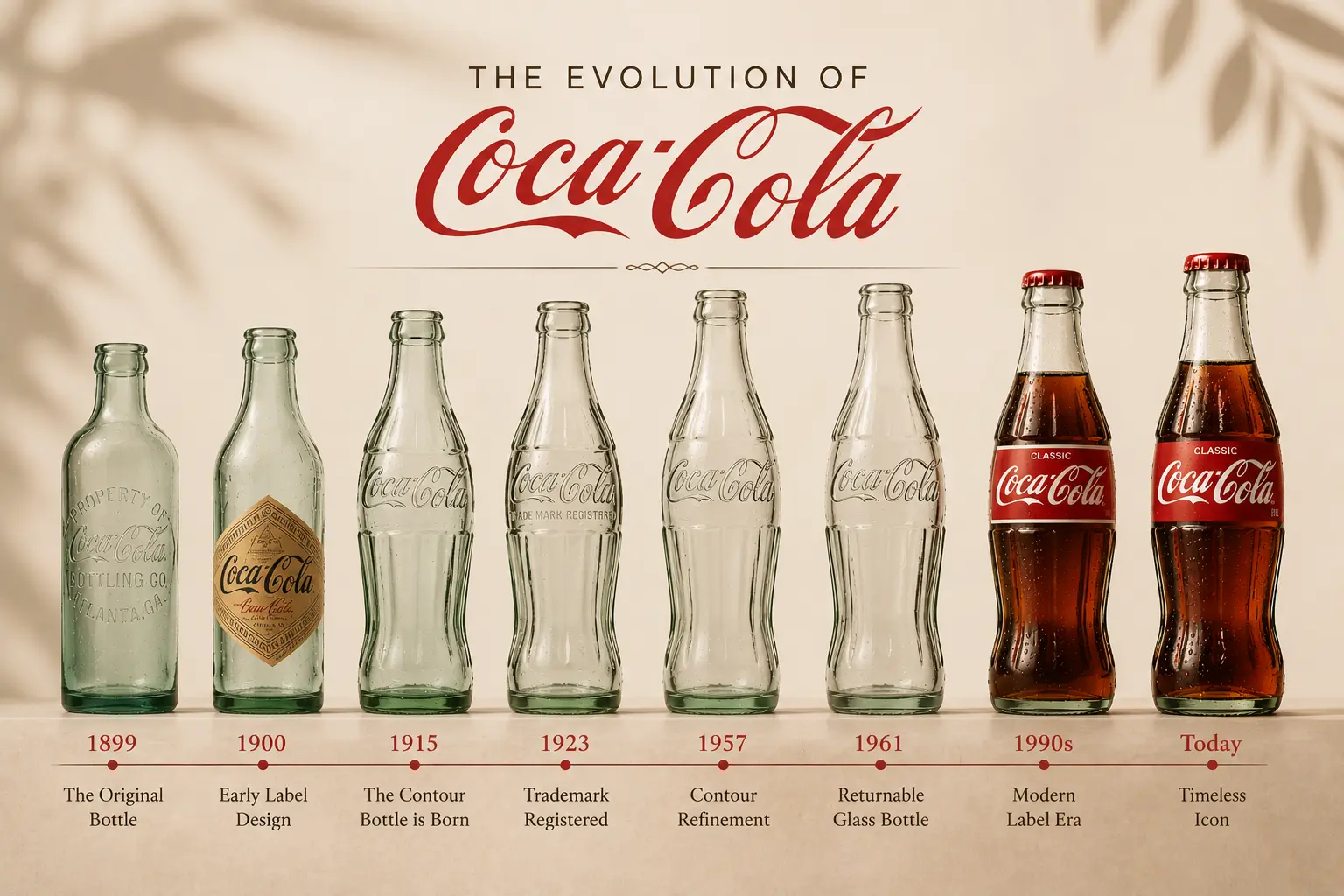
1. Coca Cola Contour Bottle
Before vs After
Before
- Straight glass bottle
- Easy to imitate
- Generic appearance
After
- Curved contour bottle
- Instantly recognizable
- Global design icon
The Problem
By the early 1900s, Coca Cola had become hugely popular, and imitation brands started appearing everywhere. Many copied the bottle shape so closely that customers struggled to tell the difference. The company realized the product inside remained the same, but the package needed its own identity. A bottle became much more than a container. It became a silent salesman.
Why Redesign
In 1915, Coca Cola challenged designers to create a bottle that anyone could recognize by touch, even in the dark or from a broken piece. Designers took inspiration from the cocoa pod and created the famous contour bottle. The redesign gave Coca Cola something competitors could never easily copy.
The Result
The contour bottle became one of the most recognized packages in history and strengthened Coca Cola's global identity for more than a century.
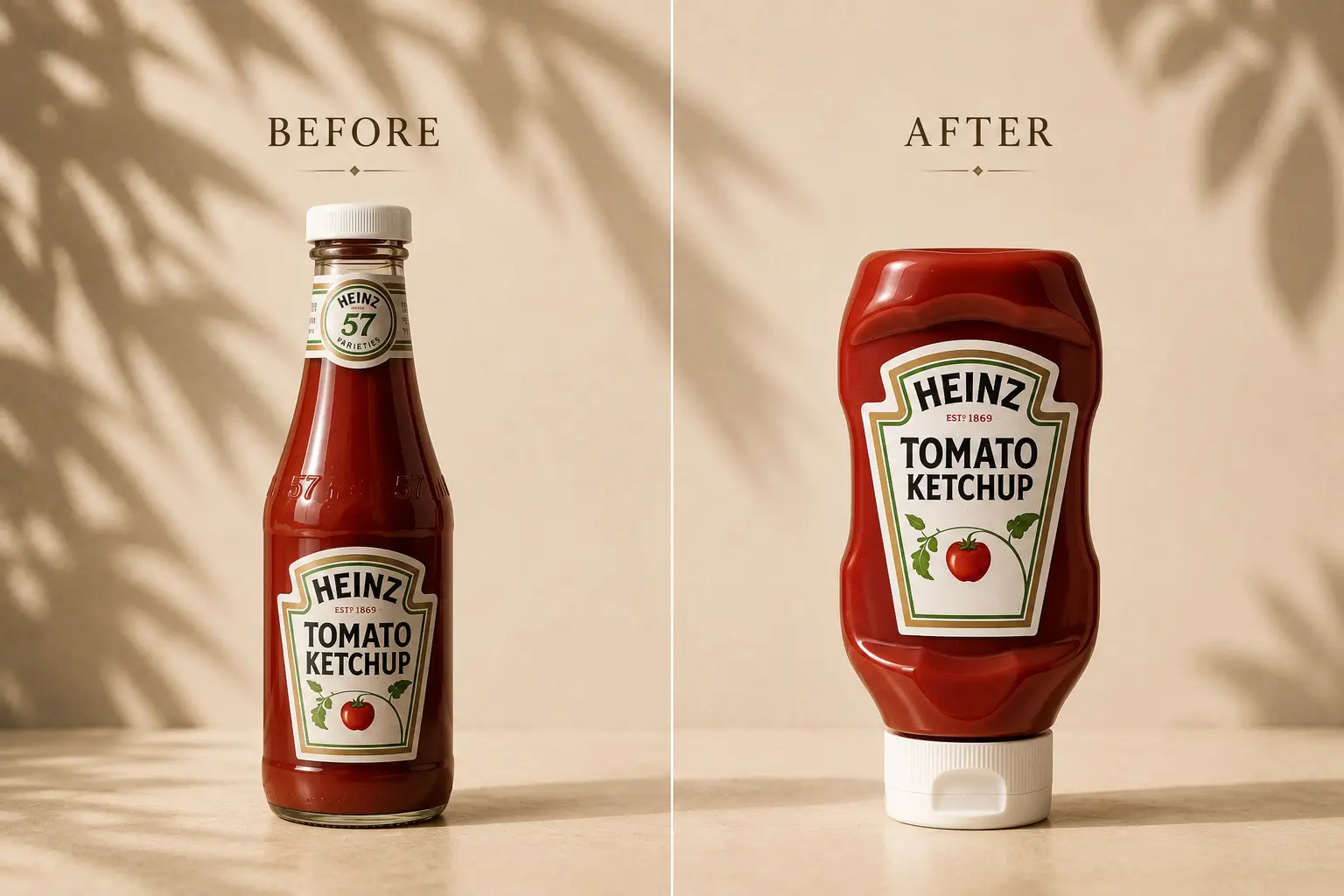
2. Heinz Ketchup Bottle
Before vs After
Before
- Heavy glass bottle
- Slow pouring
- Messy serving
After
- Upside down squeeze bottle
- Easy flow
- Cleaner experience
The Problem
Everyone knew the feeling of waiting for ketchup to slowly crawl out of a glass bottle. People shook the bottle, tapped it, and often ended up with a huge splash on their food. The product tasted great, but the experience frustrated millions of customers every day.
Why Redesign
Instead of changing the ketchup recipe, Heinz redesigned the package. Moving the cap to the bottom meant gravity did most of the work. Customers could squeeze the exact amount they wanted without waiting.
The Result
The redesign improved convenience, reduced waste, and helped Heinz remain one of the world's leading ketchup brands.
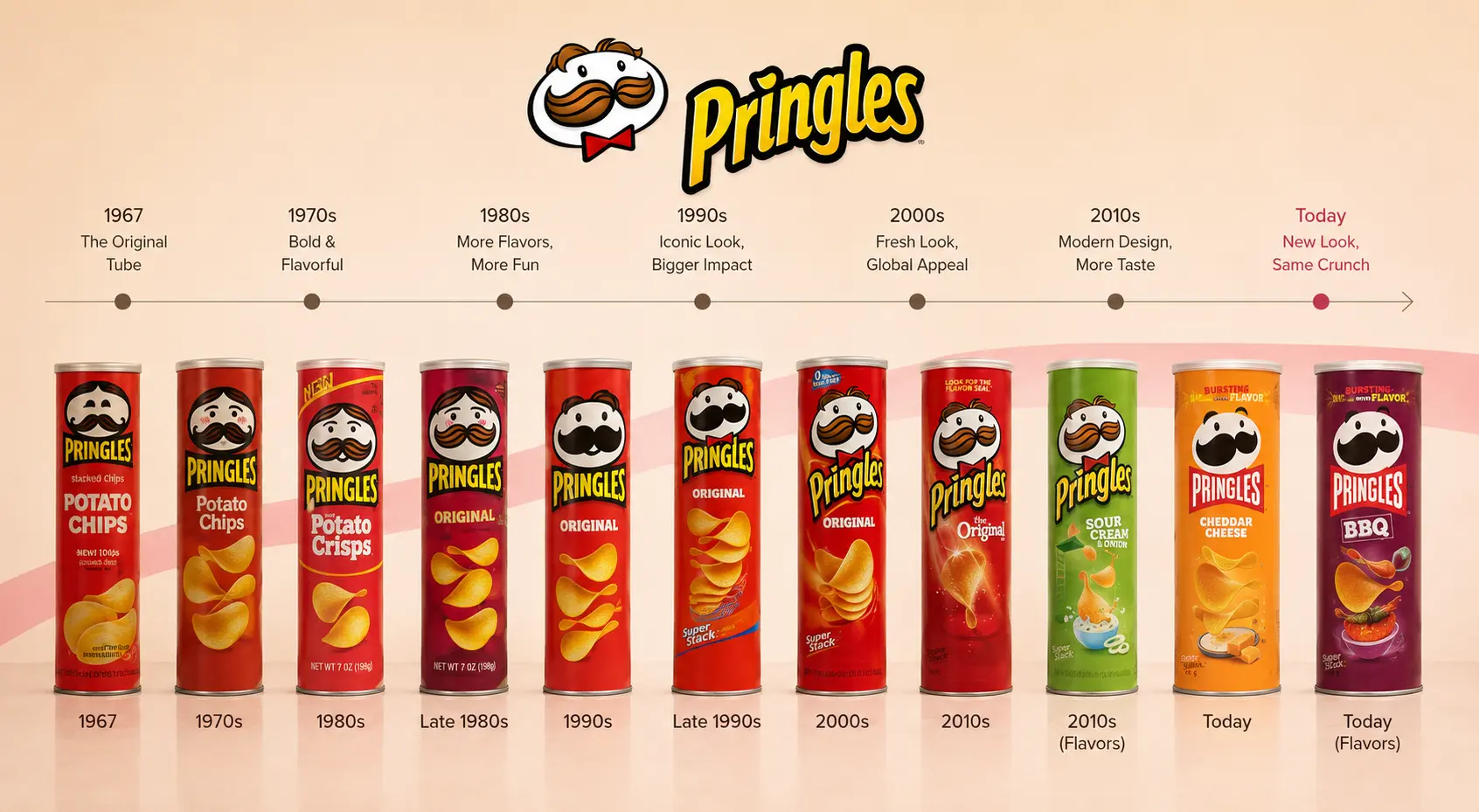
3. Pringles
Before vs After
Before
- Chips broke easily
- Bags trapped air
- Uneven shapes
After
- Stackable chips
- Protective can
- Longer freshness
The Problem
Traditional potato chips often arrived broken before customers even opened the packet. Transportation damaged fragile chips, leaving crumbs at the bottom. Customers accepted this as normal until Pringles questioned the entire experience.
Why Redesign
Engineers redesigned both the chip and the packaging together. Each chip received a unique curved shape that stacked perfectly inside a rigid cylindrical can. The packaging protected every chip during transport.
The Result
Pringles created one of the most recognizable snack packages in the world while solving a problem customers had accepted for decades.
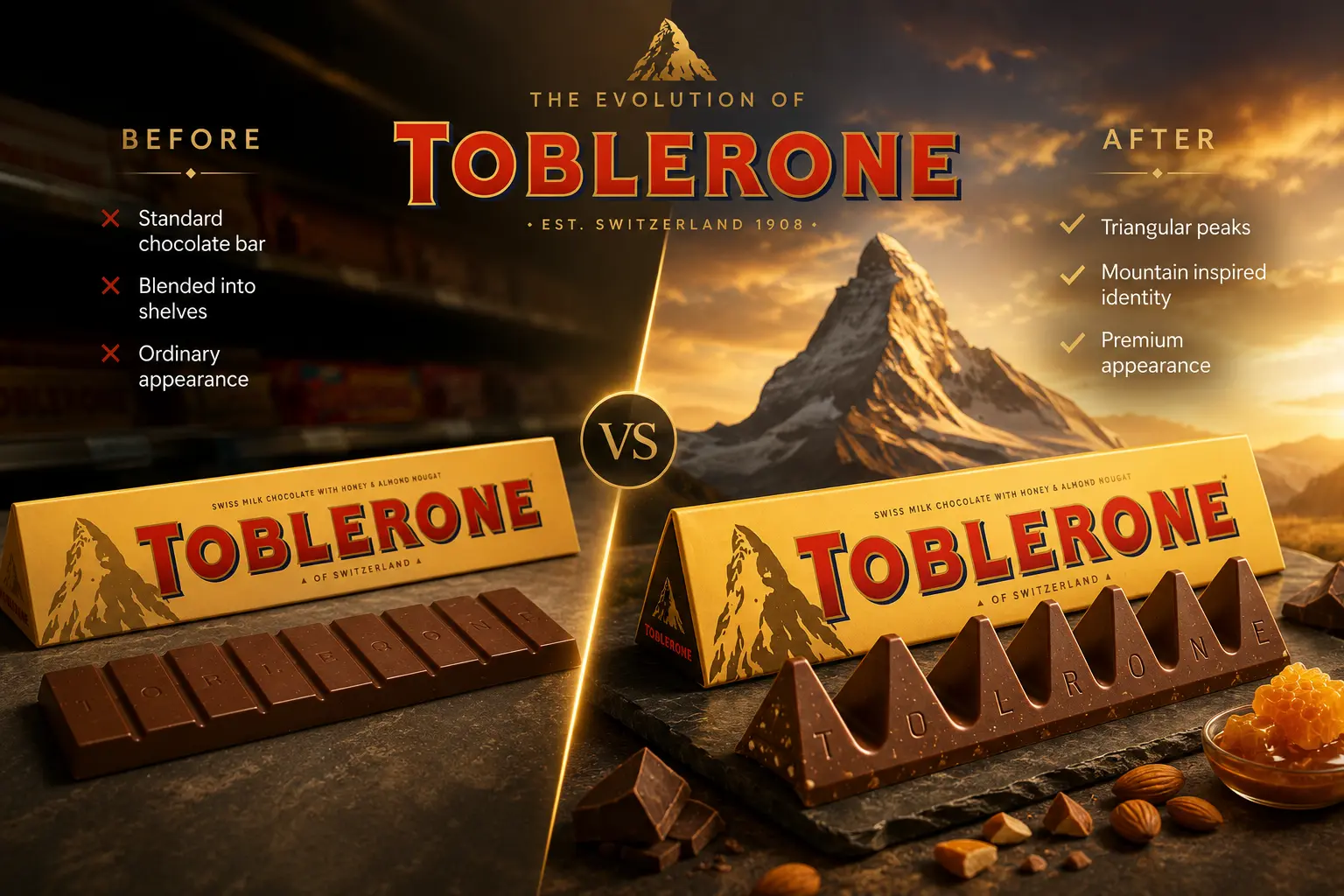
4. Toblerone
Before vs After
Before
- Standard chocolate bar
- Blended into shelves
After
- Triangular peaks
- Mountain inspired identity
- Premium appearance
The Problem
Chocolate bars looked almost identical in the early twentieth century. Standing out among competitors became increasingly difficult. Toblerone wanted customers to recognize the product instantly.
Why Redesign
The company introduced its distinctive triangular shape inspired by the Swiss Alps. The unusual geometry made the product memorable long before customers tasted the chocolate.
The Result
More than a century later, Toblerone remains one of the easiest chocolate brands to recognize anywhere in the world.
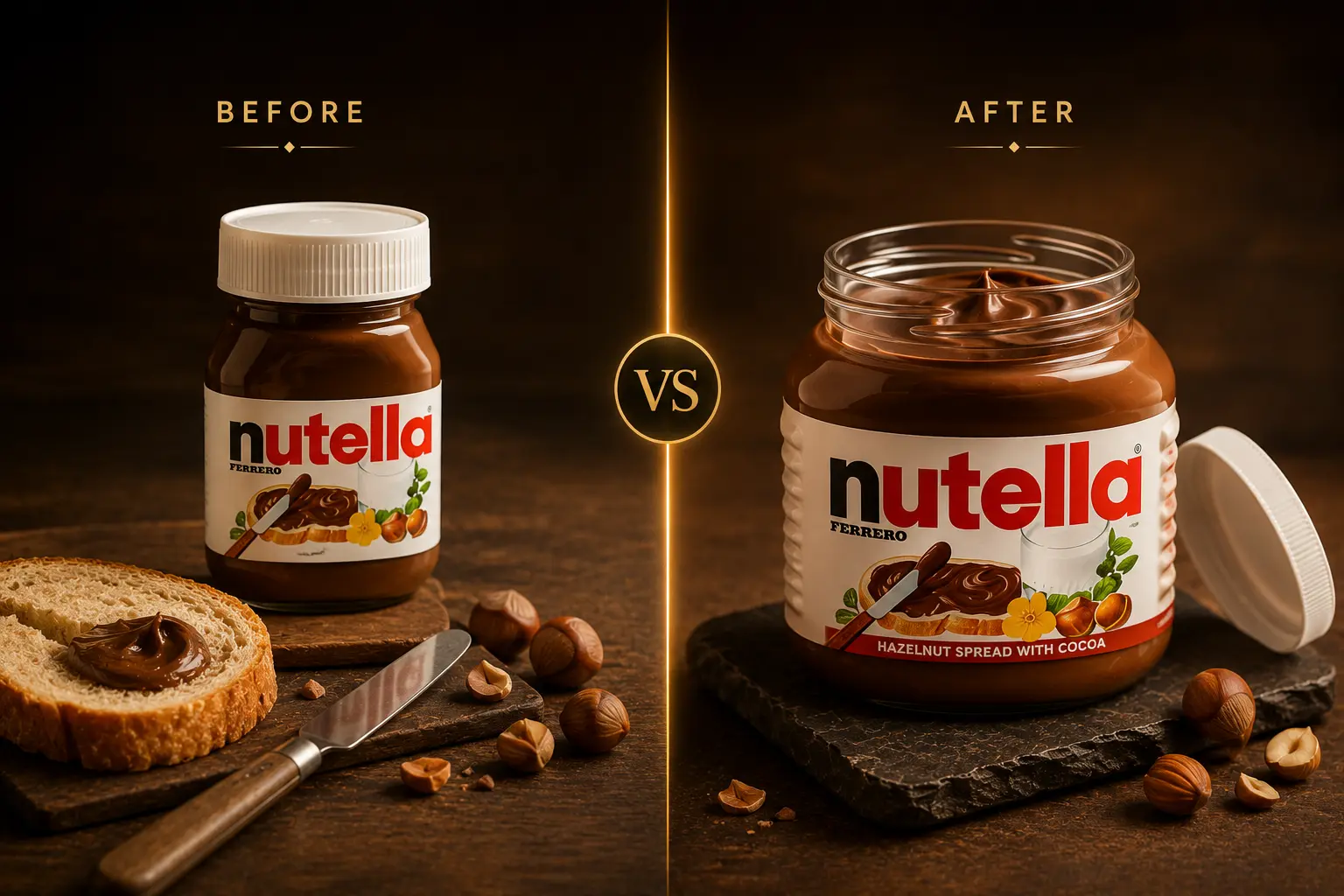
5. Nutella Jar
Before vs After
Before
- Narrow opening
- Hard to scoop
- Basic packaging
After
- Wide mouth jar
- Better grip
- Modern label
The Problem
Families used Nutella almost every morning, yet reaching the last few spoonful inside the jar felt surprisingly difficult. The product delighted customers, while the packaging created unnecessary frustration.
Why Redesign
Ferrero redesigned the jar with a wider opening and improved ergonomics. The changes made spreading easier while modern packaging strengthened shelf appeal.
The Result
Small packaging improvements helped reinforce Nutella as one of the world's favorite breakfast spreads.
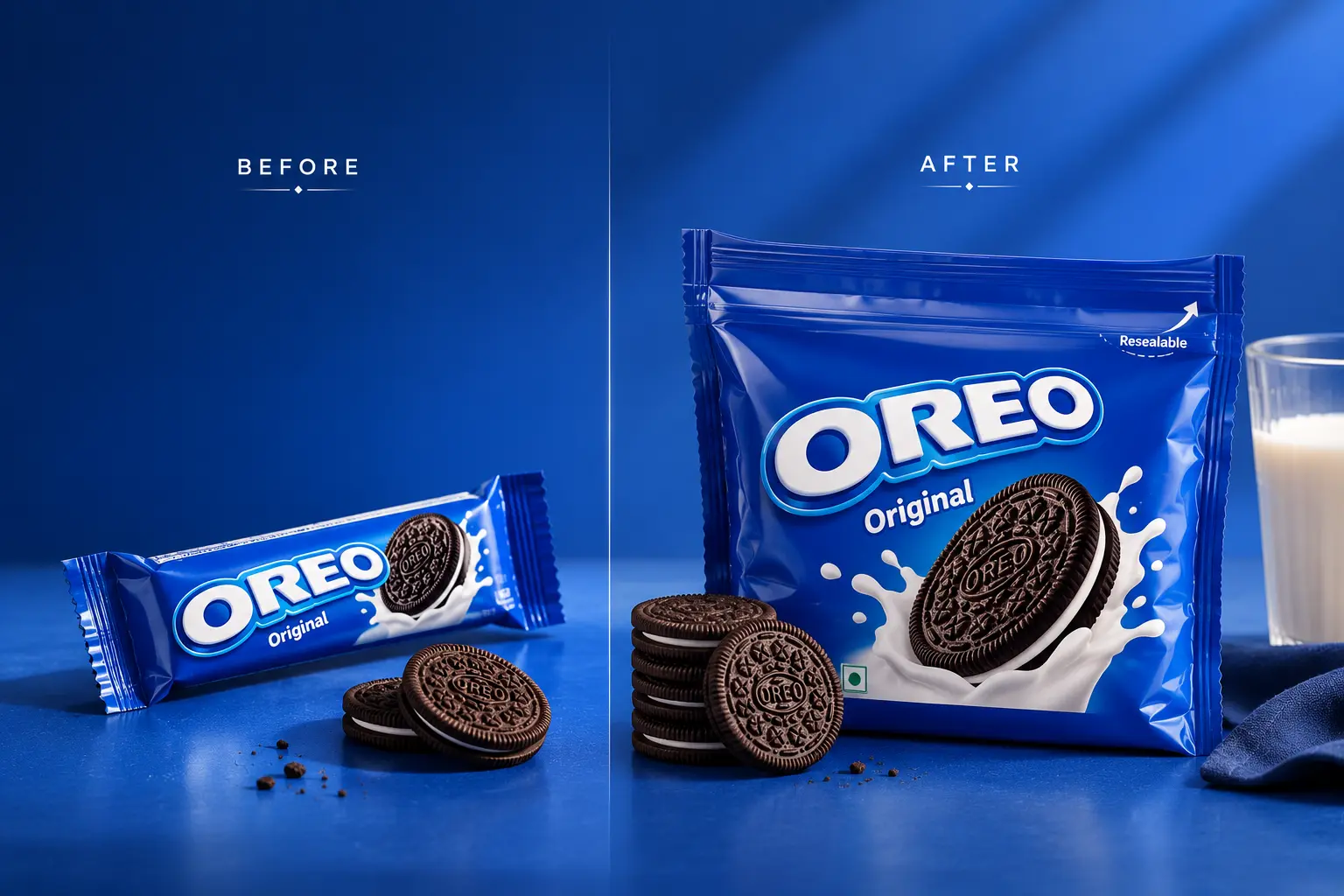
6. Oreo Packaging
Before vs After
Before
- Disposable sleeves
- Lost freshness quickly
After
- Resealable packs
- Better freshness
- More convenience
The Problem
Families often struggled to keep opened cookies fresh. Once the packet was opened, the cookies gradually lost their crisp texture.
Why Redesign
Oreo introduced resealable packaging that protected freshness after every use. Customers enjoyed the same quality from the first cookie to the last.
The Result
Packaging became an important part of the Oreo experience rather than simply protecting the product.
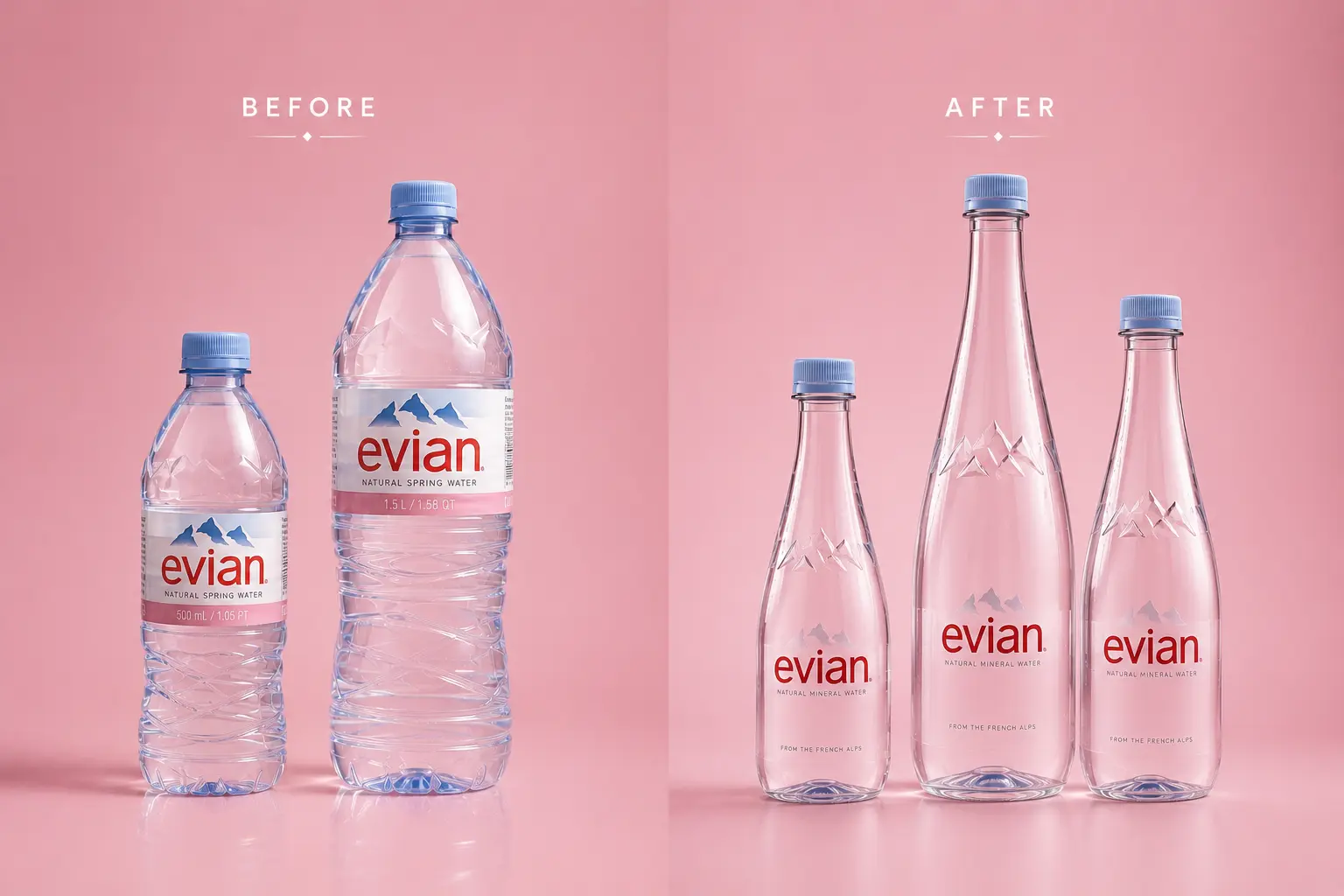
7. Evian Bottle
Before vs After
Before
- Standard water bottle
- Generic appearance
After
- Elegant silhouette
- Lightweight plastic
- Premium identity
The Problem
Bottled water quickly became a crowded market where almost every bottle looked alike. Standing apart required more than simply selling water.
Why Redesign
Evian focused on elegant bottle design, premium branding, and lighter materials. The bottle became a lifestyle product instead of just another beverage container.
The Result
The redesign strengthened Evian's premium image across international markets.
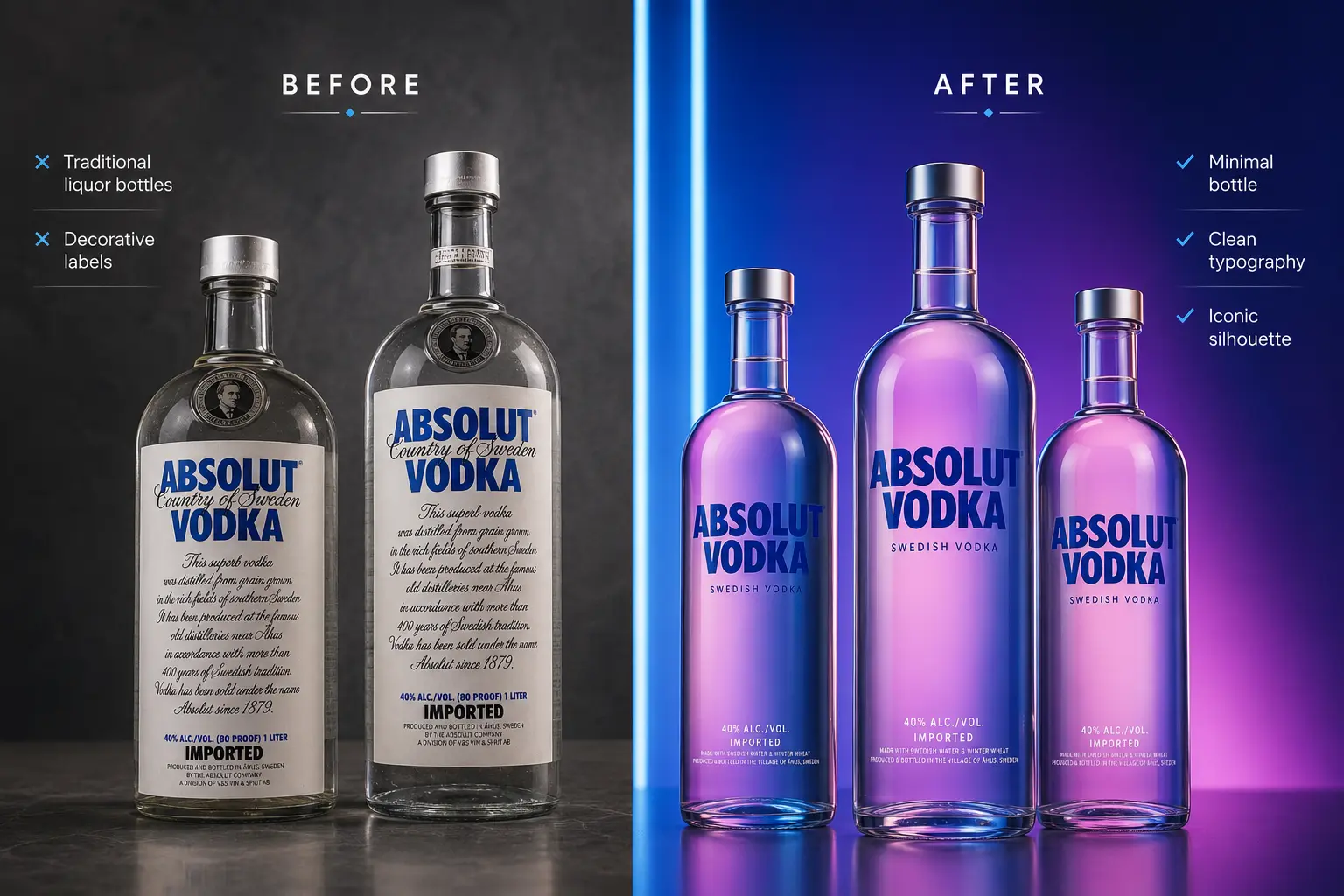
8. Absolut Vodka Bottle
Before vs After
Before
- Traditional liquor bottles
- Decorative labels
After
- Minimal bottle
- Clean typography
- Iconic silhouette
The Problem
Liquor shelves were filled with ornate bottles competing for attention. Absolut wanted customers to remember its bottle instantly.
Why Redesign
Inspired by old Swedish medicine bottles, the company embraced simplicity. The minimalist design became the centerpiece of every advertising campaign.
The Result
The bottle itself became one of the world's most famous pieces of package design.
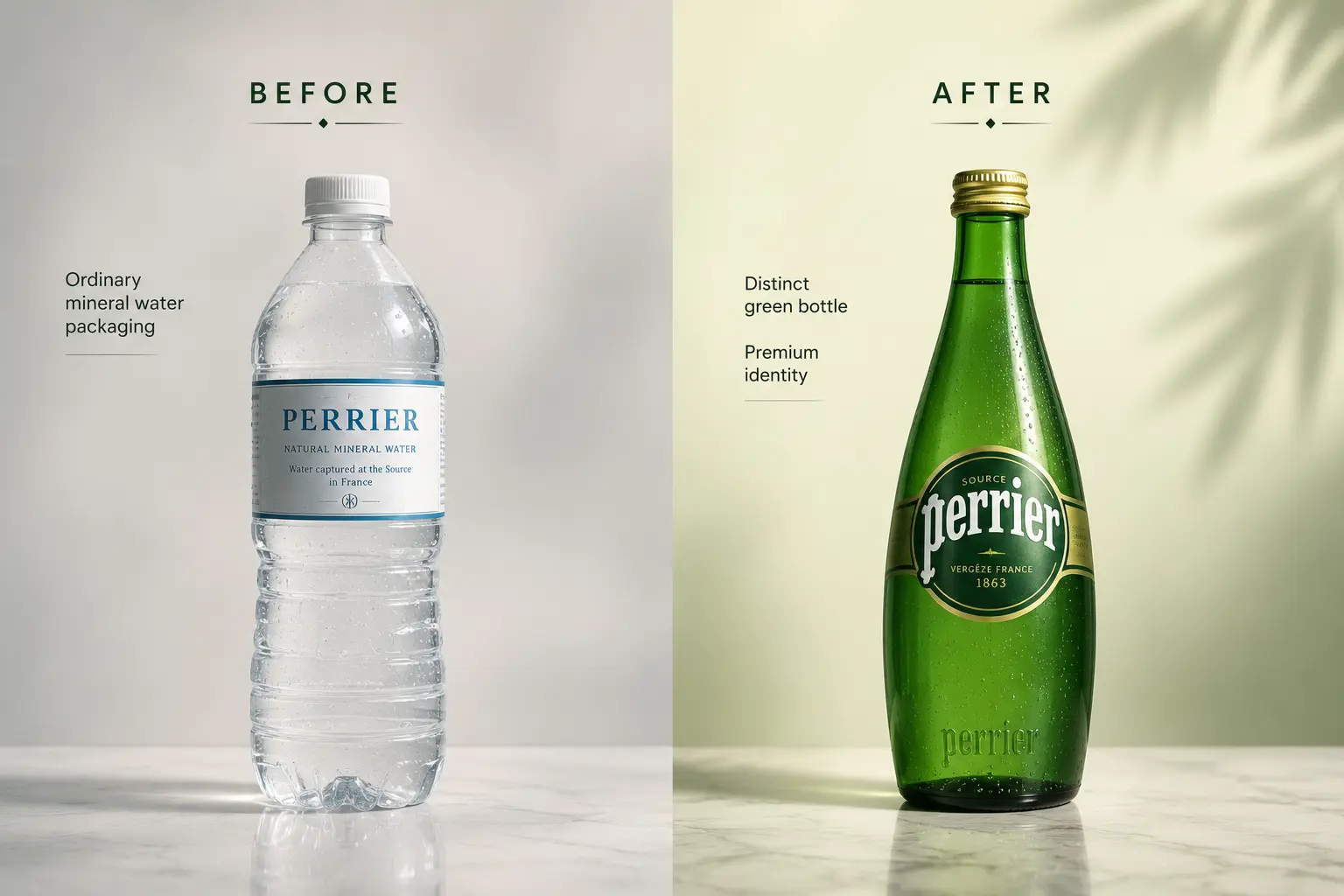
9. Perrier Bottle
Before vs After
Before
- Ordinary mineral water packaging
After
- Distinct green bottle
- Premium identity
The Problem
Sparkling water companies competed heavily for attention, making differentiation increasingly important.
Why Redesign
Perrier invested in a distinctive bottle shape and color that communicated freshness and sophistication before customers even opened it.
The Result
The green bottle became synonymous with premium sparkling water around the world.
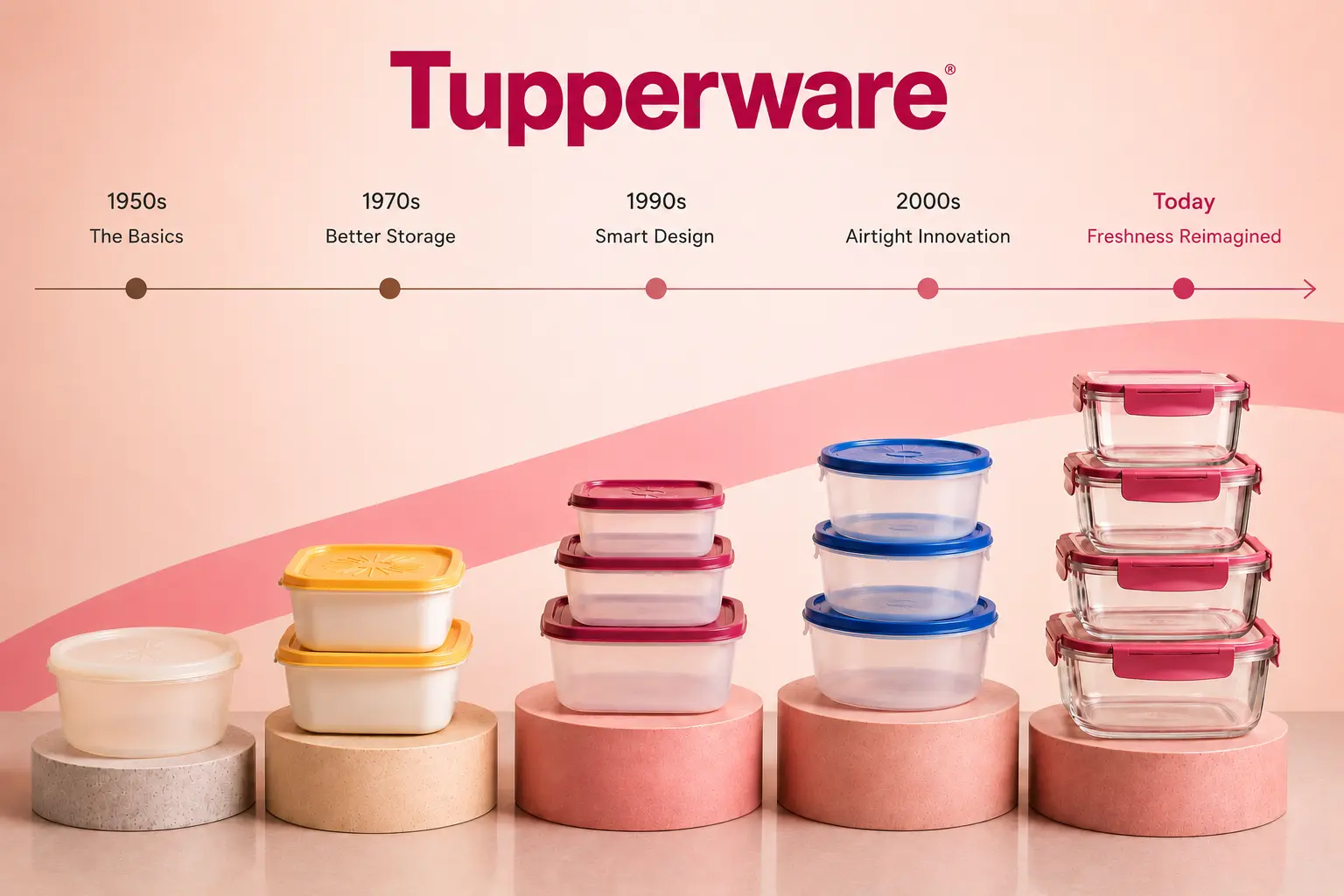
10. Tupperware
Before vs After
Before
- Loose food containers
- Frequent spills
- Poor freshness
After
- Airtight seal
- Stackable storage
- Longer freshness
The Problem
Food storage containers often leaked, wasted food, and created messy kitchens. Families wanted a simple way to preserve leftovers without constant spills.
Why Redesign
Earl Tupper developed an airtight sealing mechanism that locked freshness inside the container. Combined with stackable designs, the containers completely changed kitchen organization.
The Result
Tupperware transformed everyday food storage into a global business, with millions of households adopting its containers and the famous "burp seal" becoming a symbol of quality.
Key Takeaways From These Product Redesign Examples
Across these ten product redesign examples, several common themes emerge.
- Great redesigns solve genuine customer problems.
- Packaging often becomes a competitive advantage.
- Small usability improvements create lasting customer loyalty.
- Manufacturing innovation supports better quality and scalability.
- Strong visual identity increases brand recall.
- Sustainability continues shaping modern design evolution.
- Everyday frustrations inspire breakthrough product improvement ideas.
- Timeless products evolve continuously while preserving their core identity.
Consumer Electronics Product Redesign Examples
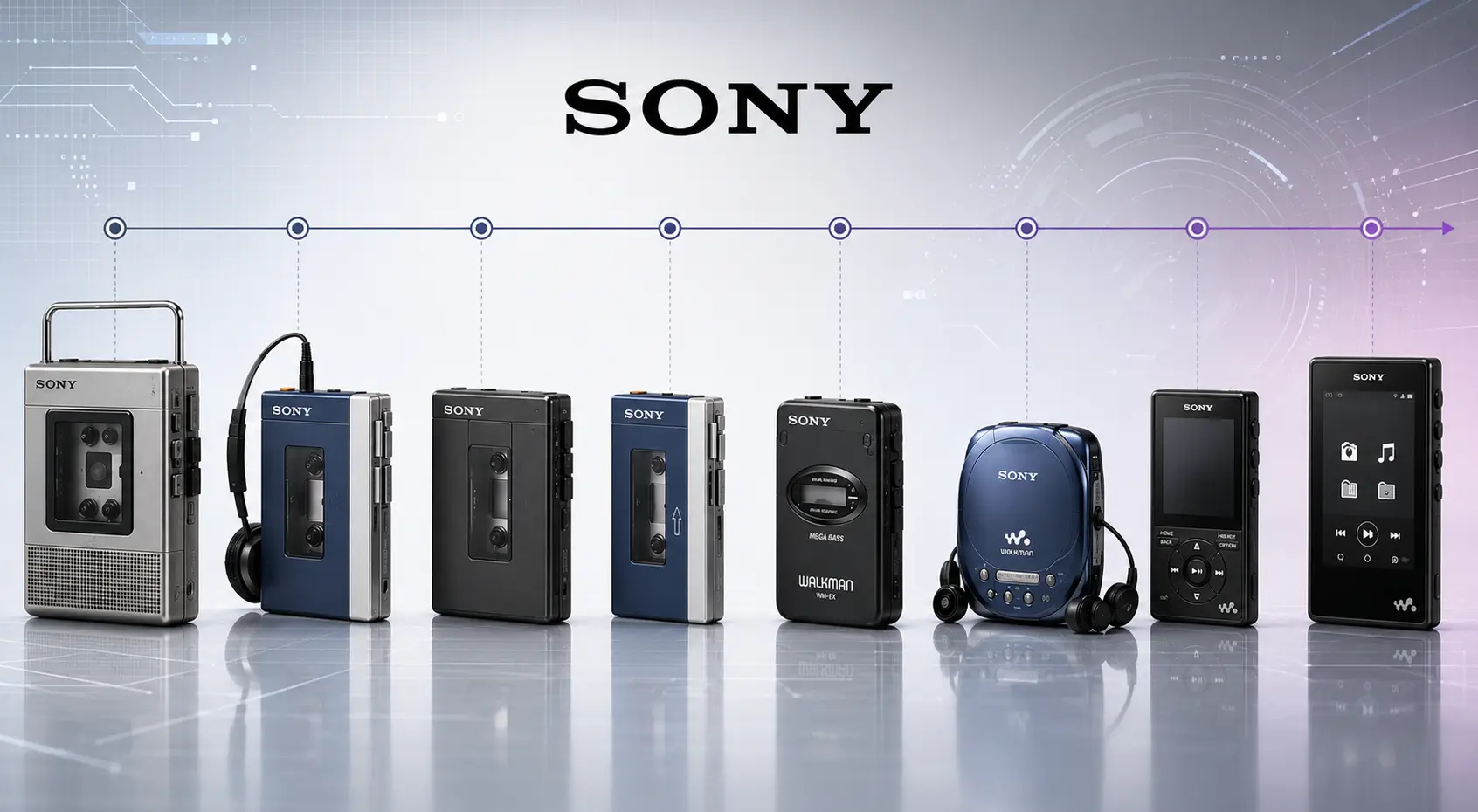
11. Sony Walkman
Before vs After
Before
- Bulky cassette recorders
- Music stayed at home
- Shared listening experience
After
- Pocket sized player
- Personal music
- Lightweight design
The Problem
Before the Walkman, enjoying music while traveling meant carrying heavy cassette players or waiting until you reached home. Music felt tied to a place rather than becoming part of everyday life. Sony believed people wanted freedom instead of furniture sized entertainment.
Why Redesign
Sony redesigned music consumption itself. Engineers removed recording features, reduced size, improved battery efficiency, and created lightweight headphones. The product became simple enough to carry everywhere.
The Result
The Walkman created an entirely new category of portable entertainment, sold more than 400 million units across different models, and forever changed the way people listened to music.
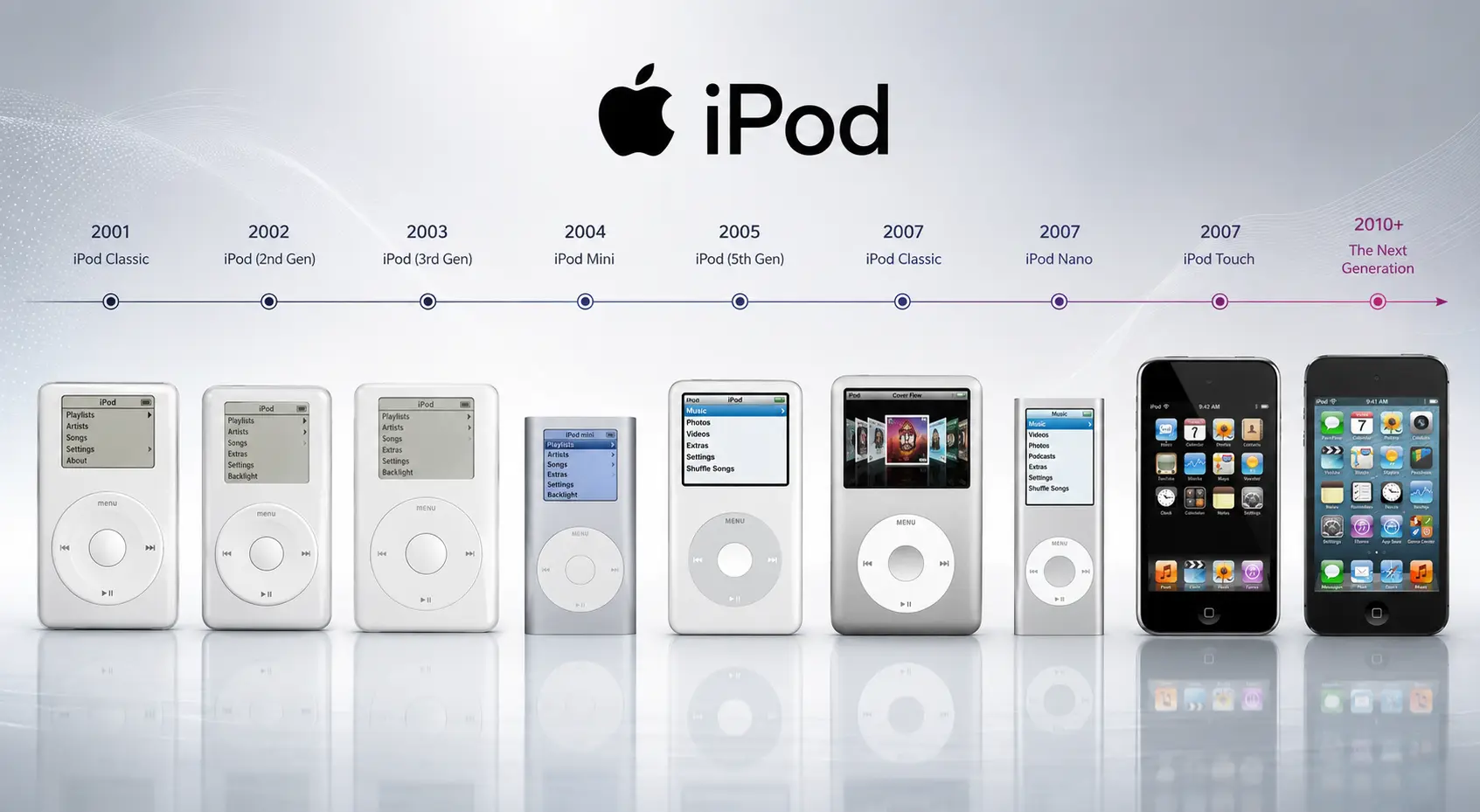
12. Apple iPod
Before vs After
Before
- MP3 players with confusing buttons
- Small storage
- Complicated navigation
After
- Click Wheel
- Thousands of songs
- Beautiful minimalist design
The Problem
Early MP3 players stored very little music and navigating through songs felt frustrating. Music libraries kept growing while devices remained difficult to use.
Why Redesign
Apple focused on simplicity instead of adding more buttons. The Click Wheel allowed users to scroll through thousands of songs effortlessly while the clean design created an emotional connection.
The Result
The iPod became one of Apple's most successful products and transformed digital music forever, paving the way for the iPhone ecosystem.
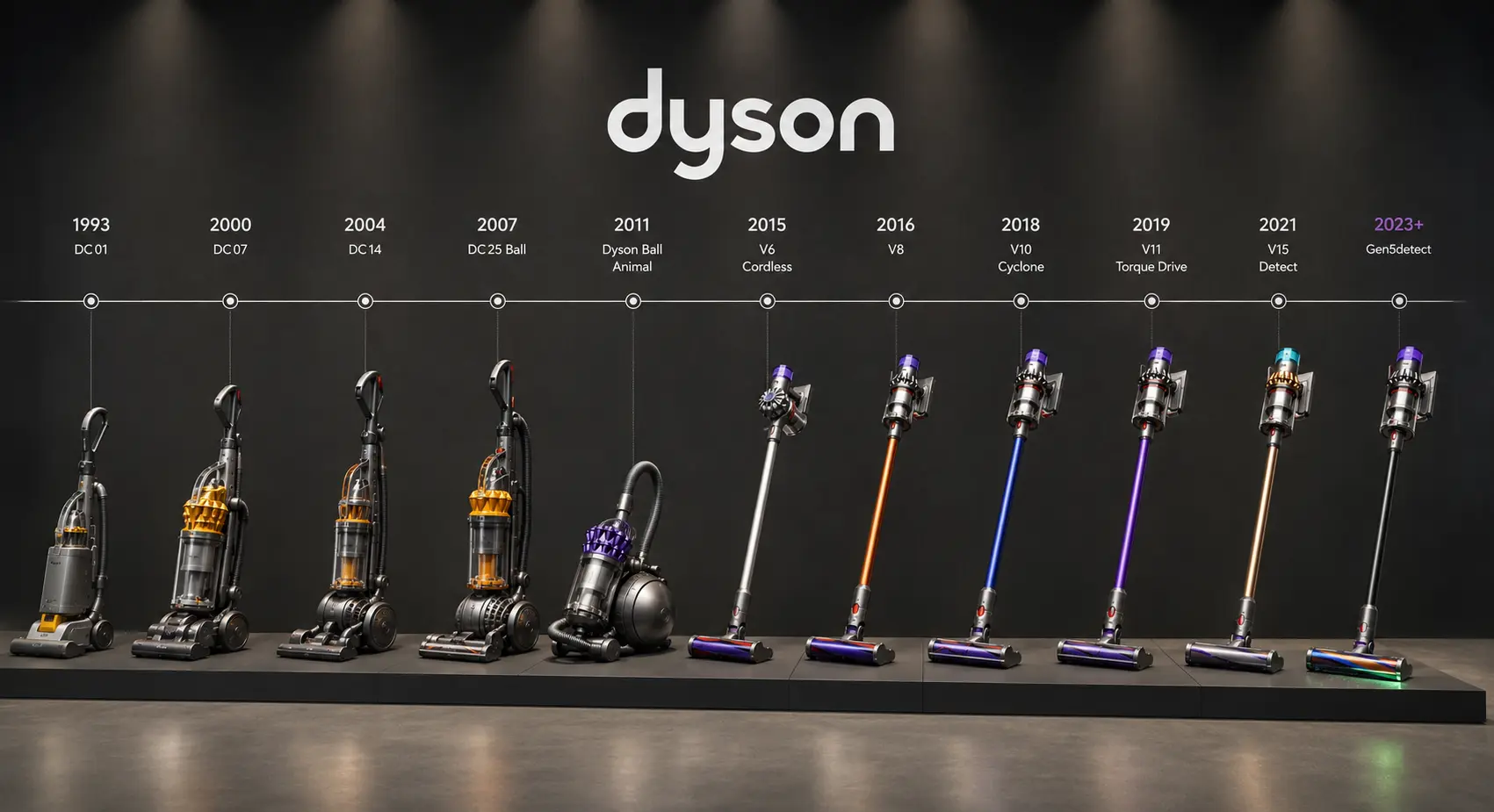
13. Dyson Vacuum Cleaner
Before vs After
Before
- Vacuum bags clogged
- Suction reduced over time
- Frequent maintenance
After
- Bagless cyclone technology
- Consistent suction
- Transparent dust bin
The Problem
James Dyson became frustrated after noticing his vacuum cleaner lost suction every time the dust bag filled. Customers accepted this as normal, but Dyson believed the problem deserved a better solution.
Why Redesign
Instead of improving vacuum bags, Dyson eliminated them completely. After building 5,127 prototypes, he perfected cyclone technology that separated dust without blocking airflow.
The Result
Dyson created one of the most famous product redesign examples in history, built a multibillion dollar company, and expanded into fans, air purifiers, hair dryers, and other premium consumer products.
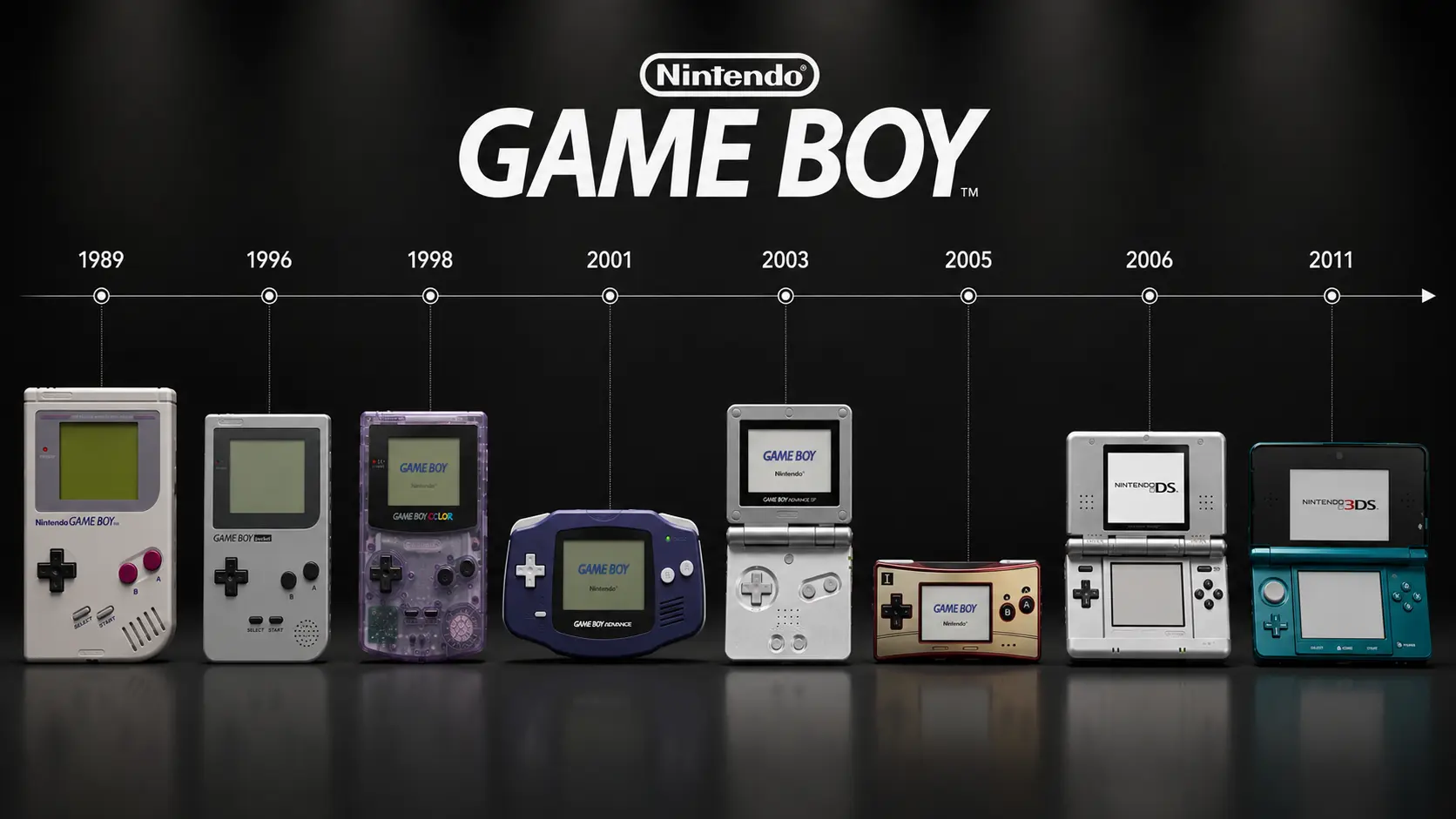
14. Nintendo Game Boy
Before vs After
Before
- Home gaming only
- Large consoles
- Limited portability
After
- Handheld gaming
- Better battery life
- Compact entertainment
The Problem
Video games mainly belonged inside living rooms. Players wanted entertainment during travel, school breaks, and holidays.
Why Redesign
Nintendo redesigned gaming around portability. The company prioritized battery life and gameplay over advanced graphics, creating a product families could carry anywhere.
The Result
The Game Boy sold more than 118 million units and became one of the most successful handheld gaming devices ever created.
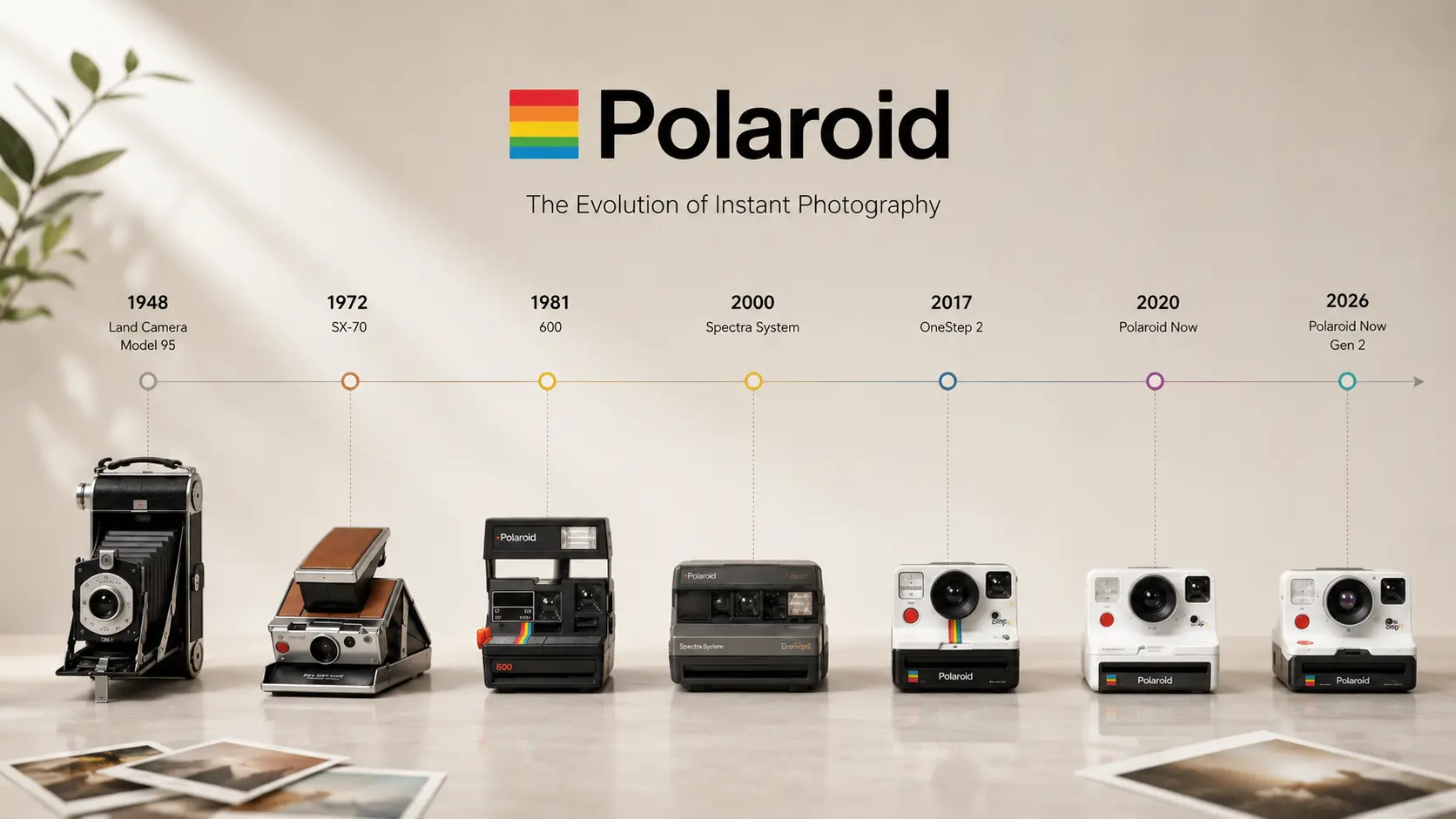
15. Polaroid Camera
Before vs After
Before
- Film developed separately
- Long waiting time
- Delayed memories
After
- Instant photographs
- Immediate sharing
- Portable experience
The Problem
Traditional photography required customers to wait days before seeing their pictures. Special moments often remained unseen until film development finished.
Why Redesign
Polaroid redesigned photography by combining image capture and development into a single instant experience. The excitement became part of the product itself.
The Result
Instant photography became a cultural phenomenon that continues inspiring modern cameras and social experiences today.
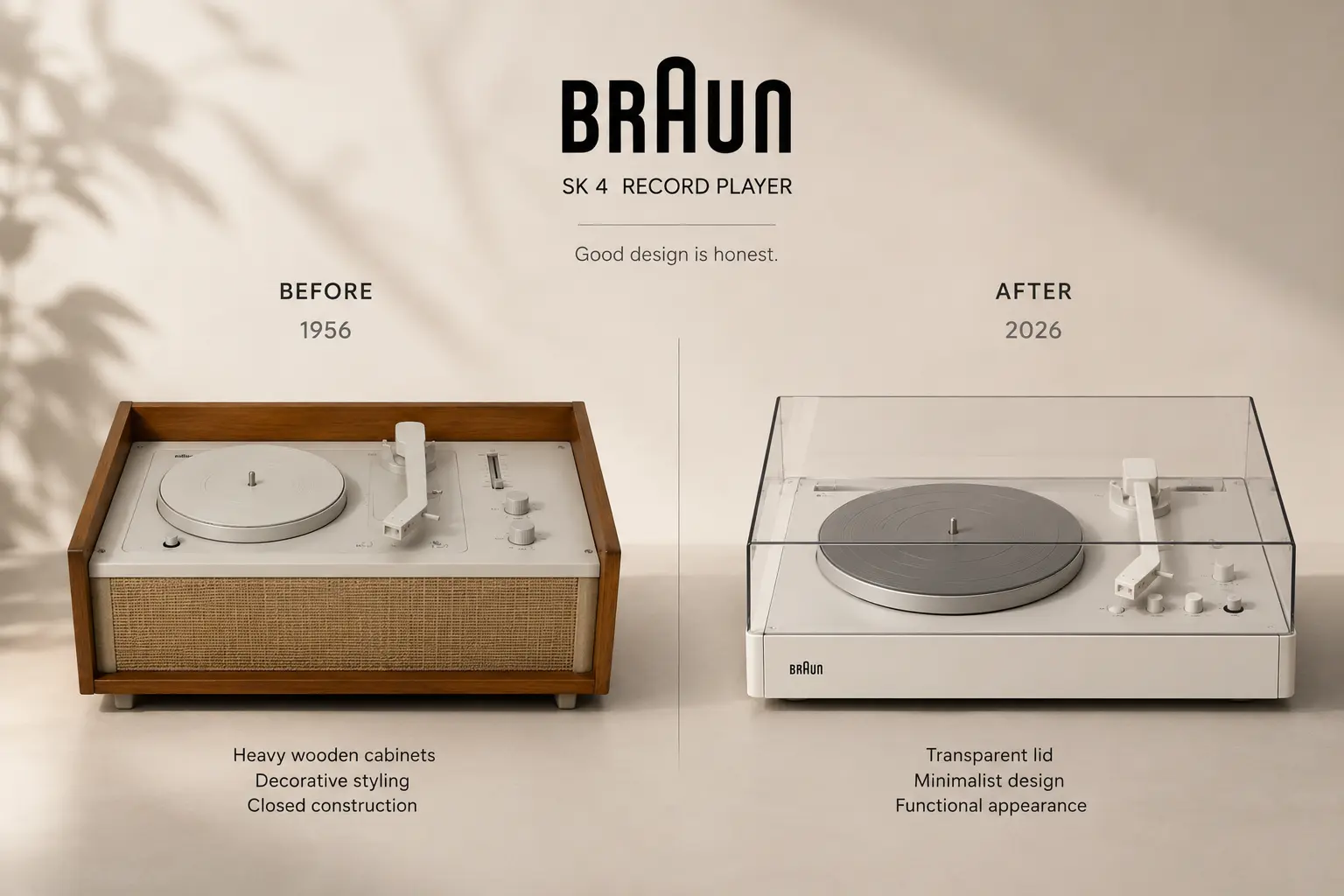
16. Braun SK4 Record Player
Before vs After
Before
- Heavy wooden cabinets
- Decorative styling
- Closed construction
After
- Transparent lid
- Minimalist design
- Functional appearance
The Problem
Consumer electronics focused heavily on decoration rather than usability. Products often looked like furniture instead of precision engineering.
Why Redesign
Designer Dieter Rams embraced simplicity and function. Every design decision prioritized usability while eliminating unnecessary decoration.
The Result
The Braun SK4 influenced generations of industrial designers and inspired countless modern consumer electronics.
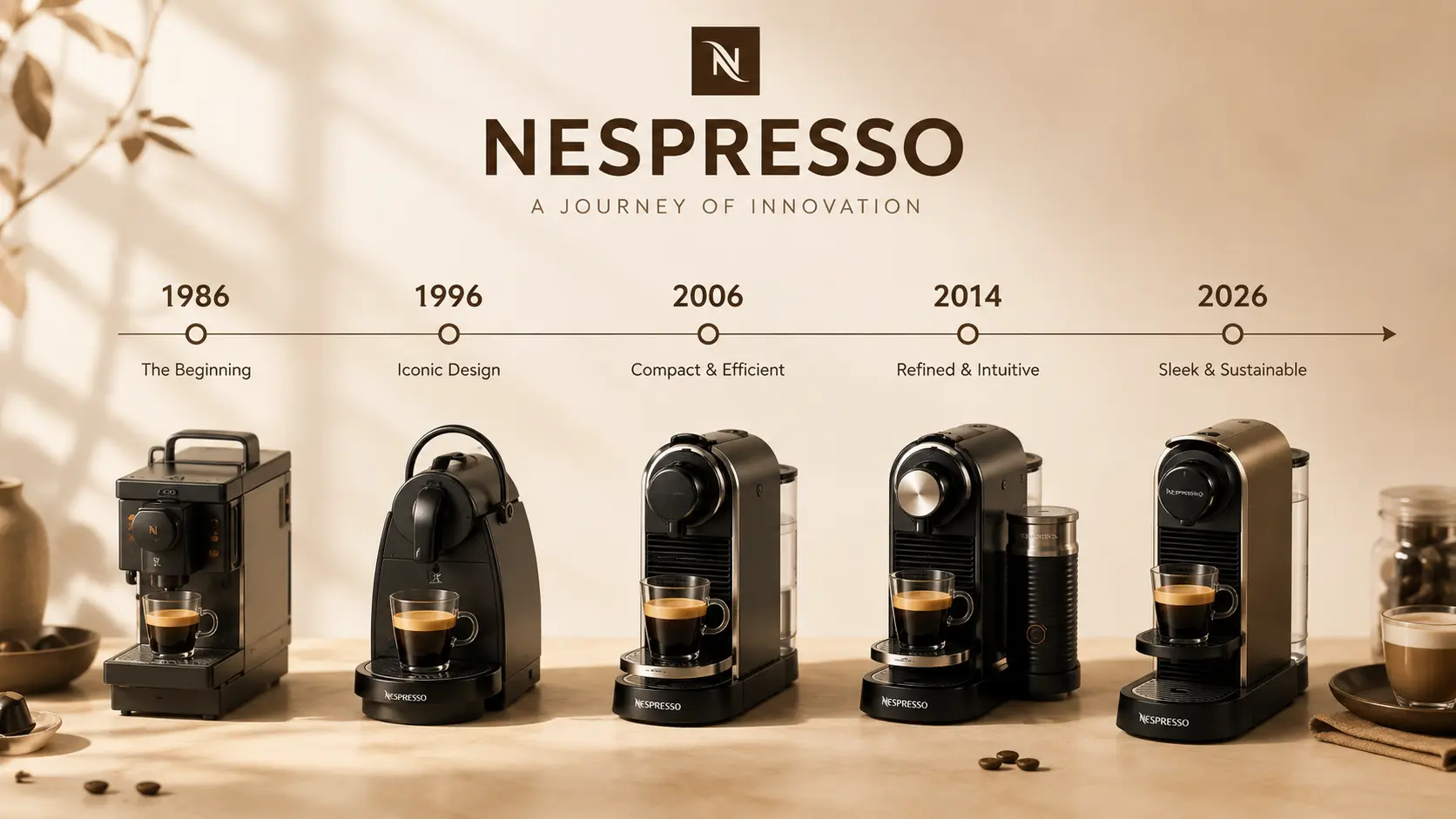
17. Nespresso Machine
Before vs After
Before
- Café quality coffee required skill
- Large espresso machines
- Time consuming preparation
After
- Coffee capsules
- One touch brewing
- Consistent quality
The Problem
Making café quality espresso at home required expensive machines and professional skills. Many coffee lovers wanted convenience without sacrificing taste.
Why Redesign
Nespresso simplified the entire brewing process through capsule technology and elegant machine design. Every cup delivered consistent quality with minimal effort.
The Result
Nespresso created an entirely new premium coffee category and transformed the home coffee market worldwide.
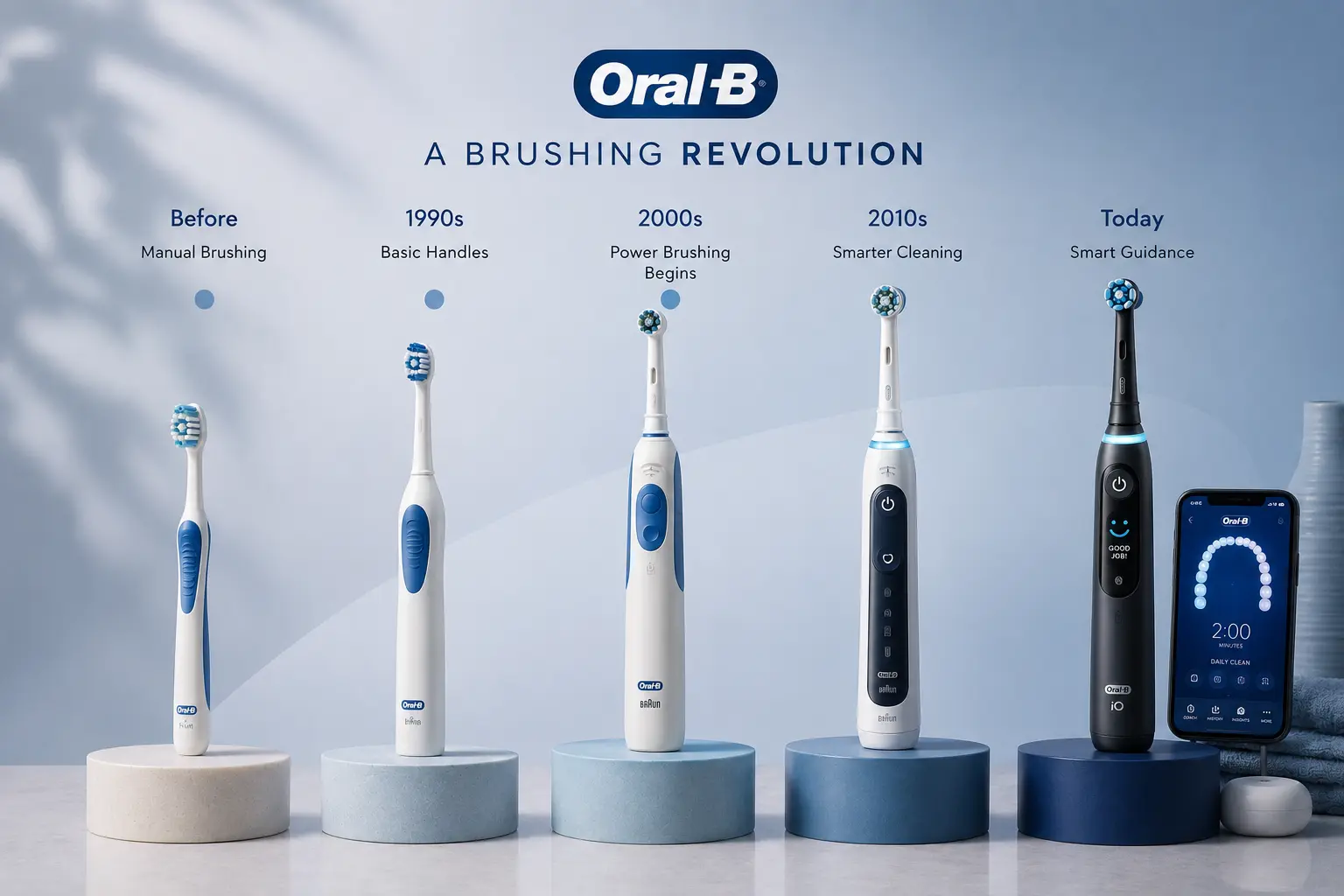
18. Oral B Electric Toothbrush
Before vs After
Before
- Manual brushing
- Inconsistent cleaning
- Basic handles
After
- Oscillating brush head
- Pressure sensors
- Smart guidance
The Problem
Many people brushed either too hard or too softly, reducing cleaning effectiveness while increasing the risk of gum damage.
Why Redesign
Oral B combined dental research with electronics to create smarter brushing experiences. Sensors and timers helped users improve their daily habits.
The Result
Electric toothbrushes became a mainstream oral care category and significantly improved consumer awareness around dental hygiene.
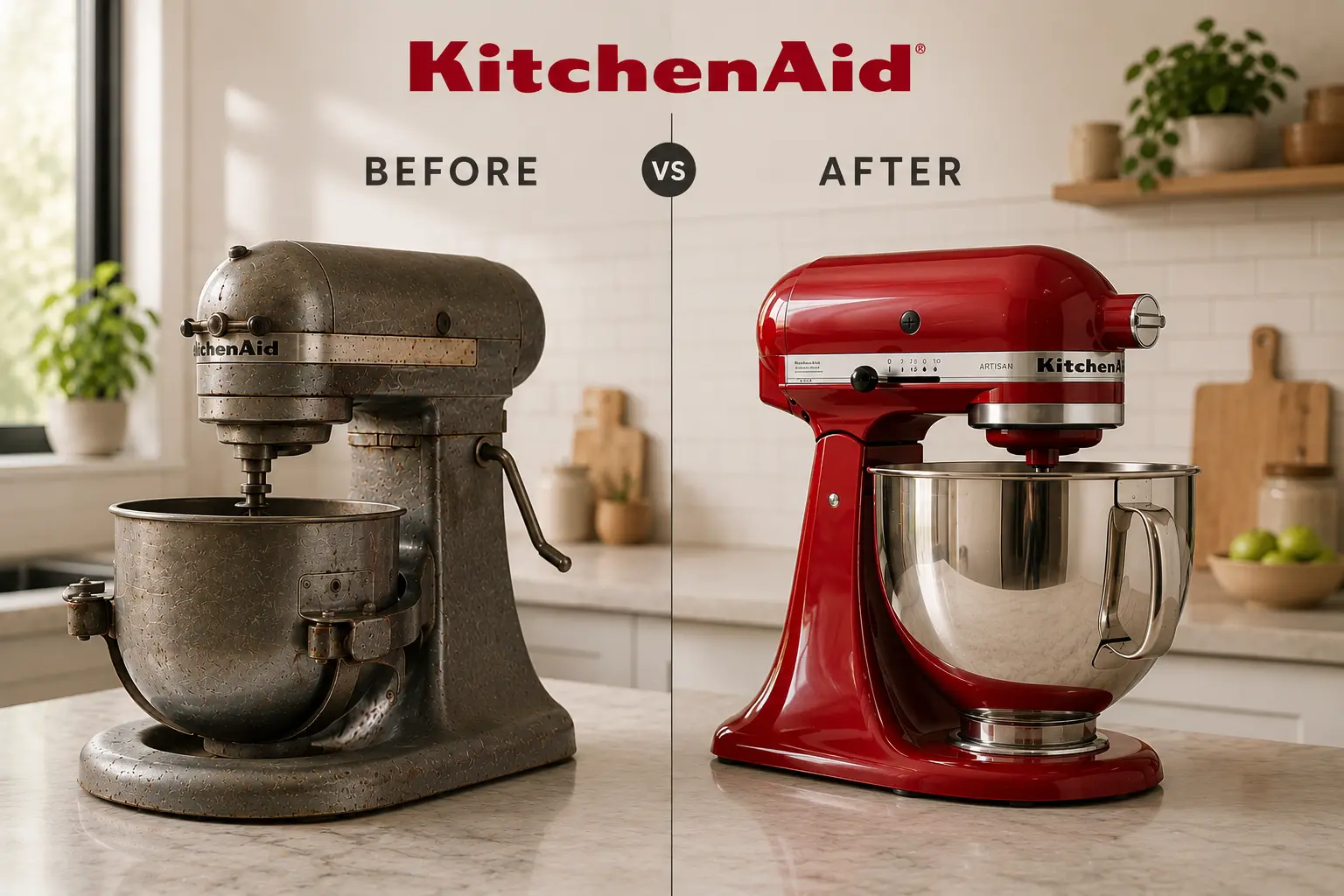
19. KitchenAid Stand Mixer
Before vs After
Before
- Heavy commercial equipment
- Limited home use
After
- Elegant countertop appliance
- Multiple attachments
- Timeless design
The Problem
Home cooks wanted professional performance without industrial sized equipment occupying their kitchens.
Why Redesign
KitchenAid refined the stand mixer through stronger motors, versatile attachments, and an iconic silhouette that remained familiar across generations.
The Result
More than a century later, the KitchenAid mixer remains one of the most recognizable kitchen appliances in the world.
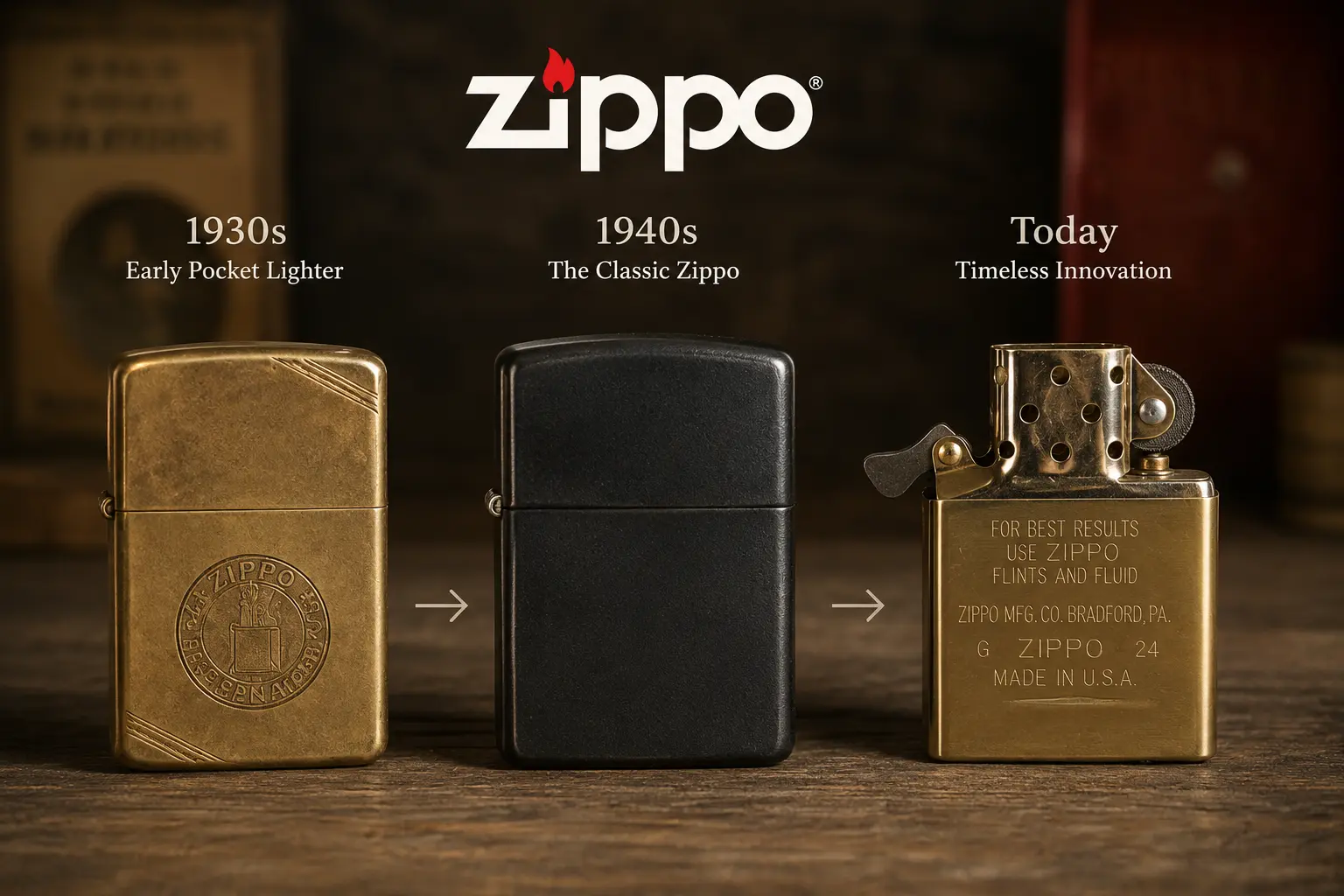
20. Zippo Lighter
Before vs After
Before
- Fragile lighters
- Wind sensitive flame
- Poor durability
After
- Windproof design
- Flip top lid
- Lifetime reliability
The Problem
Early lighters often failed outdoors because wind easily extinguished the flame. Durability also remained a major concern.
Why Redesign
Zippo redesigned the lighter around reliability. The windproof chimney, sturdy metal body, and refillable mechanism transformed a simple tool into a trusted everyday companion.
The Result
Zippo sold more than 650 million lighters worldwide and became one of the longest lasting examples of timeless industrial design.
This section introduces a wider variety of redesign principles than the first ten:
- Sony Walkman introduced portable experiences
- Apple iPod simplified user experience
- Dyson solved a major engineering problem
- Game Boy redefined portability
- Polaroid redesigned the customer experience
- Braun focused on minimalist industrial design
- Nespresso transformed a service into a product
- Oral B improved health through technology
- KitchenAid showed evolution without changing identity
- Zippo proved continuous refinement beats constant reinvention
Automotive And Mobility Product Redesign Examples
Automotive & Mobility covers Volkswagen Beetle, Mini Cooper, Porsche 911, Vespa, Jeep Wrangler, Ford Mustang, Fiat 500, Toyota Prius, Tesla Roadster, and Brompton Folding Bike, each with their redesign stories.
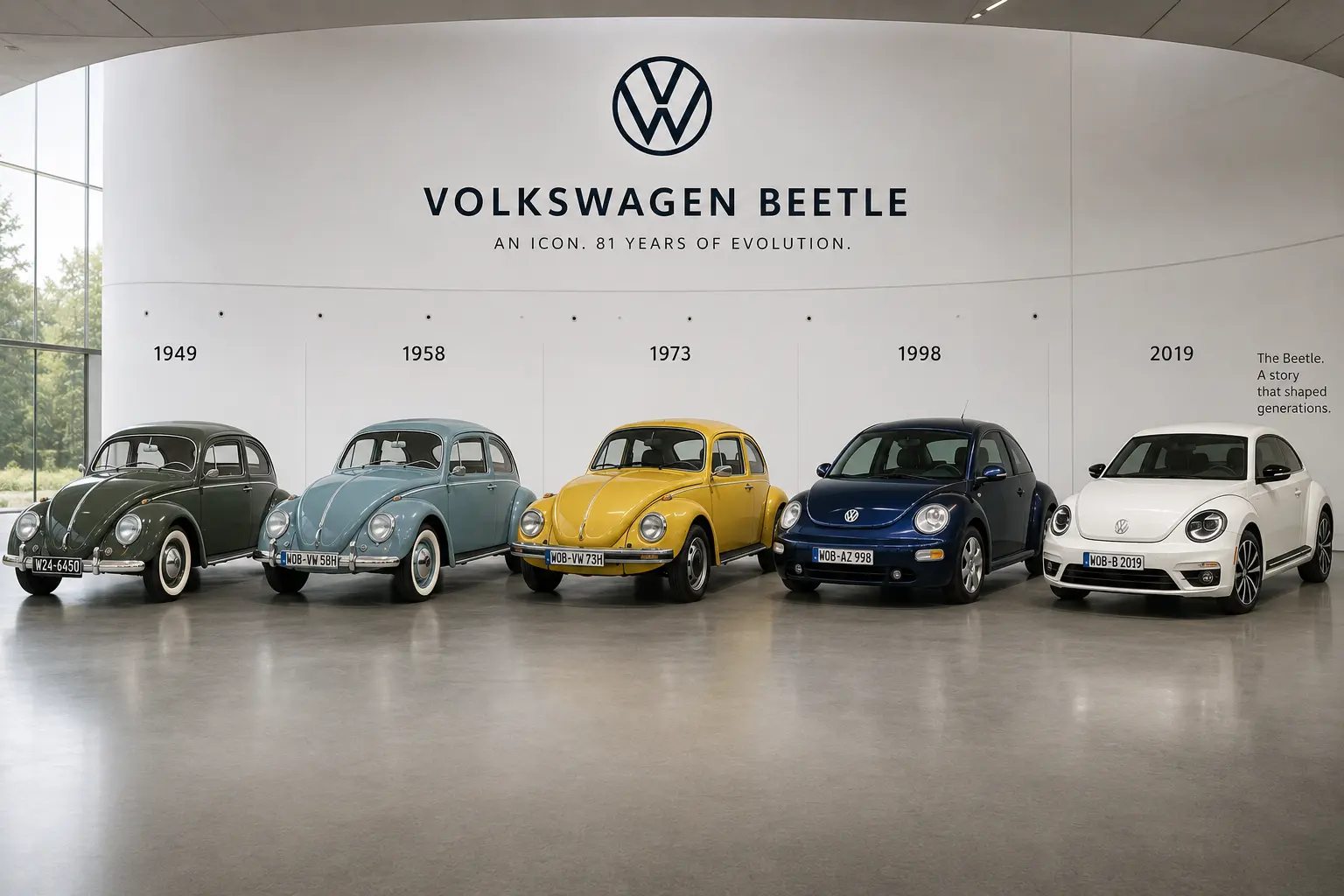
21. Volkswagen Beetle
Before Vs After
Before
- Compact economy car
- Basic engineering
- Minimal comfort
After
- Modern safety features
- Rounded iconic styling
- Improved performance and comfort
The Problem
The original Volkswagen Beetle earned its reputation as an affordable and reliable people's car. As decades passed, customer expectations evolved. Buyers wanted better safety, comfort, and technology while still loving the Beetle's unmistakable personality.
Why Redesign
Volkswagen modernized almost every part of the car while preserving its signature silhouette. Engineers improved the chassis, engine, suspension, and interior without losing the emotional connection people had built over generations.
The Result
The Beetle became one of the world's best selling cars with more than 21.5 million units sold, proving that preserving identity while embracing innovation creates lasting success.
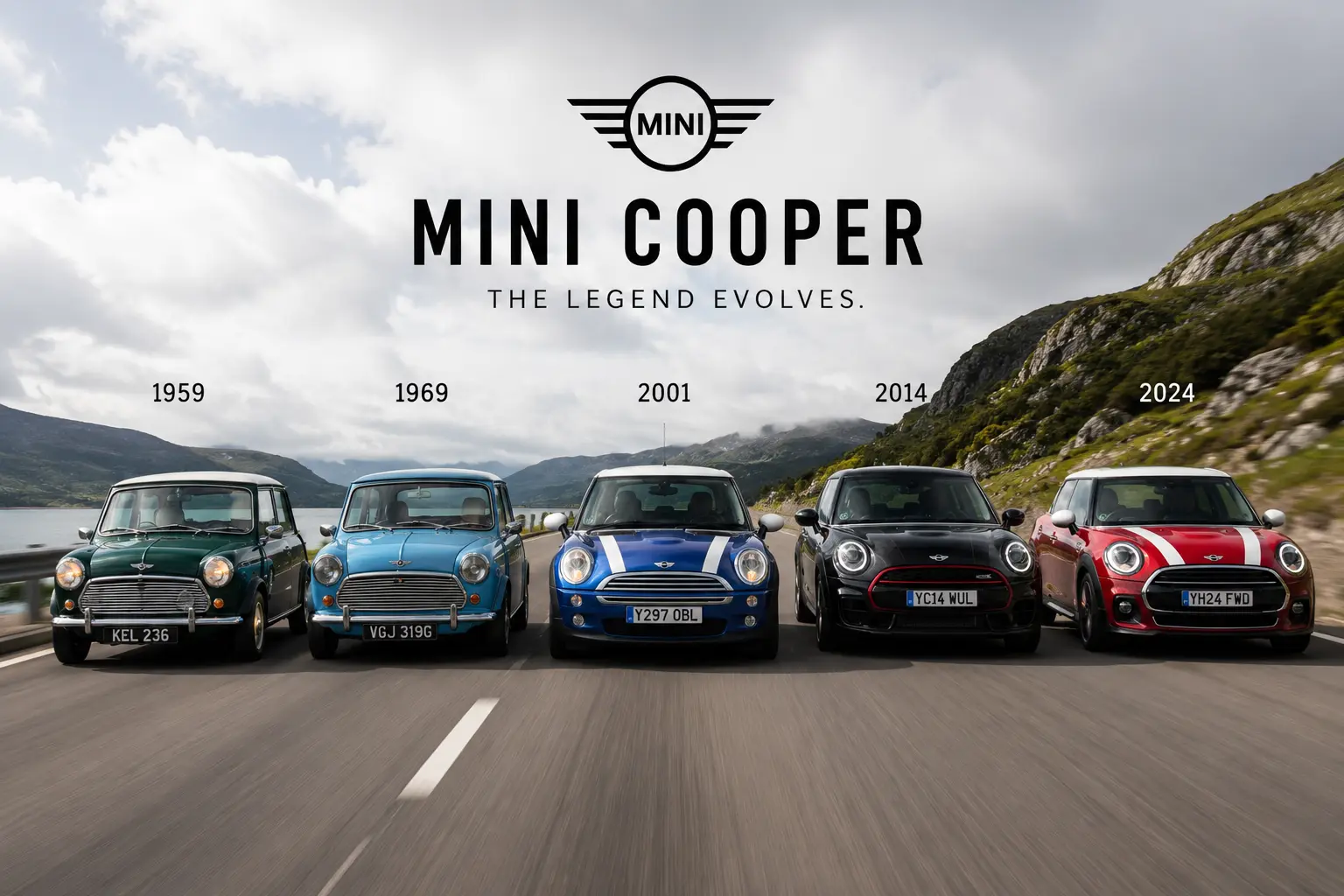
22. Mini Cooper
Before Vs After
Before
- Tiny city car
- Simple interior
- Limited safety
After
- Premium compact car
- Modern technology
- Enhanced driving experience
The Problem
The original Mini became a symbol of efficient urban transportation. Modern customers, however, expected greater comfort, advanced safety systems, and premium features without sacrificing the playful driving experience.
Why Redesign
After BMW acquired the Mini brand, designers increased its size, improved build quality, introduced digital technology, and refined performance while maintaining the instantly recognizable design.
The Result
Mini successfully evolved from a practical city car into a premium lifestyle brand with millions of loyal customers worldwide.
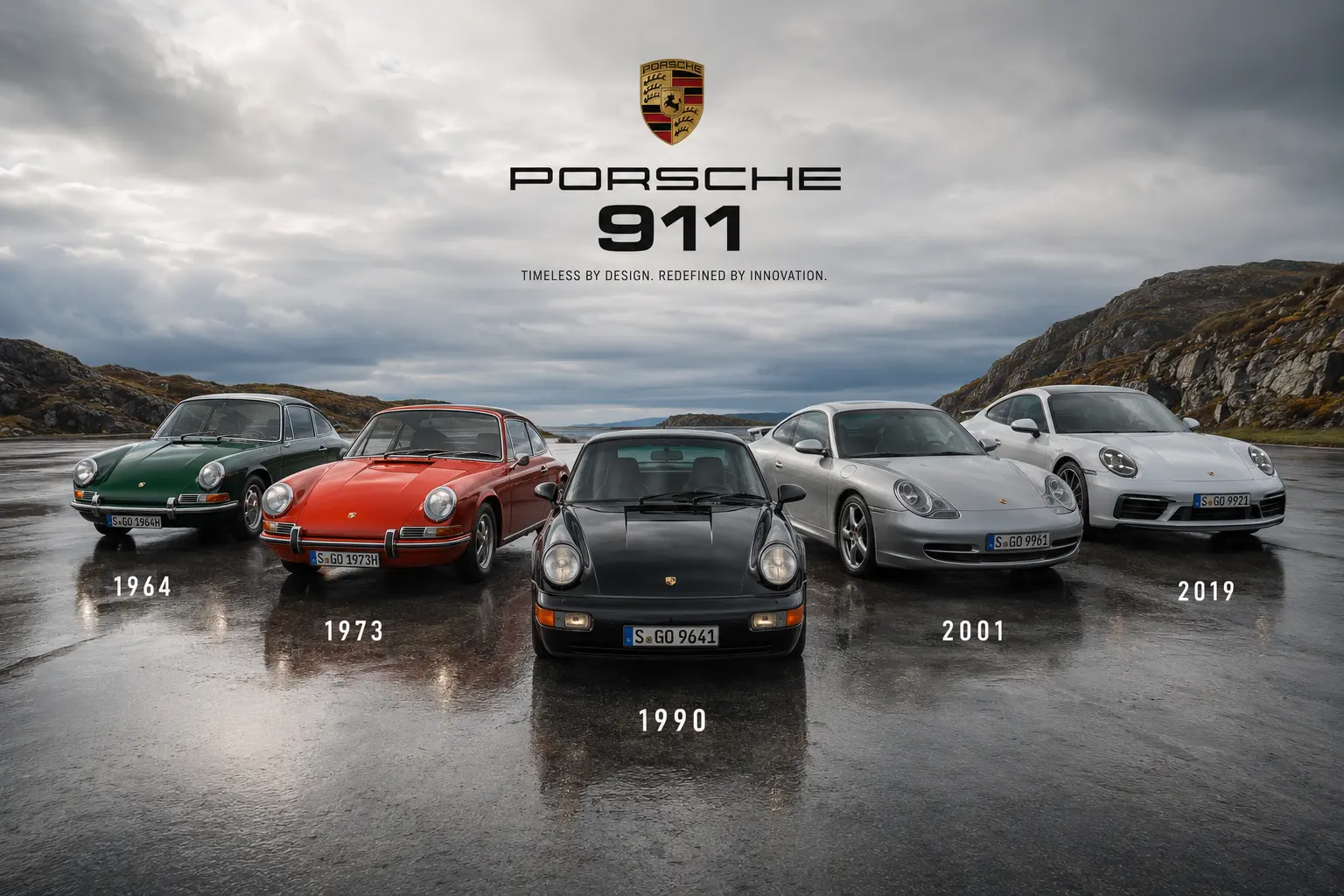
23. Porsche 911
Before Vs After
Before
- Lightweight sports car
- Air cooled engine
- Minimal electronics
After
- High performance engineering
- Advanced aerodynamics
- Modern technology with classic styling
The Problem
Sports car technology advanced rapidly over six decades. Customers demanded more speed, greater safety, improved reliability, and enhanced comfort while expecting the Porsche 911 to remain instantly recognizable.
Why Redesign
Porsche followed an evolutionary approach rather than dramatic reinvention. Every generation refined aerodynamics, engine performance, suspension, and materials while protecting the car's timeless silhouette.
The Result
The Porsche 911 became one of the most respected examples of design evolution and remains one of the longest running sports car nameplates in history.
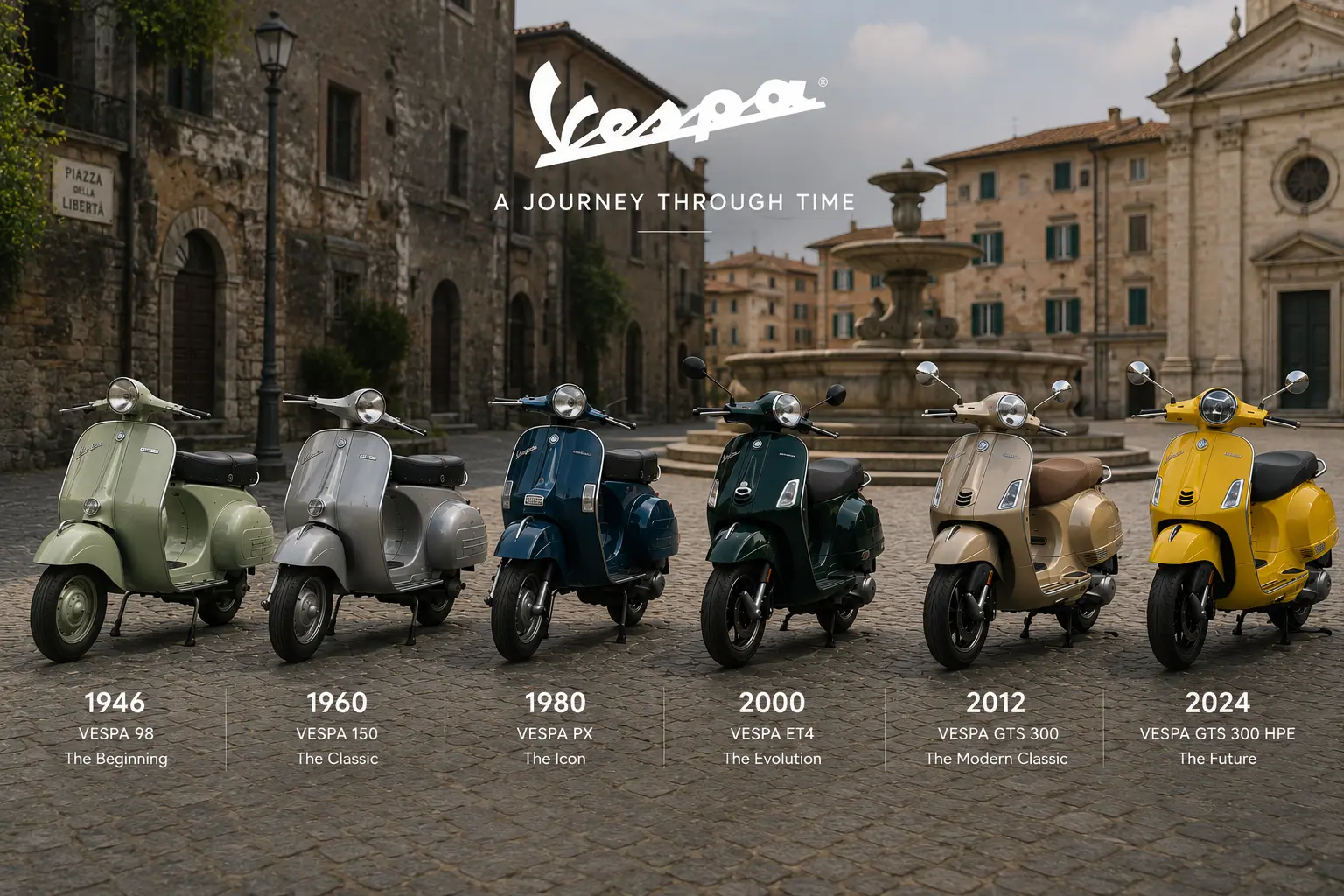
24. Vespa Scooter
Before Vs After
Before
- Basic post war transportation
- Small engine
- Minimal storage
After
- Stylish urban scooter
- Better performance
- Improved comfort and safety
The Problem
The original Vespa solved transportation challenges after World War II. As cities modernized, riders looked for greater comfort, reliability, and efficiency while appreciating the scooter's iconic Italian design.
Why Redesign
Piaggio continuously improved engines, suspension, braking systems, storage capacity, and fuel efficiency while preserving the timeless body shape.
The Result
Vespa became one of the world's most recognizable two wheelers and a symbol of Italian design across more than 140 countries.
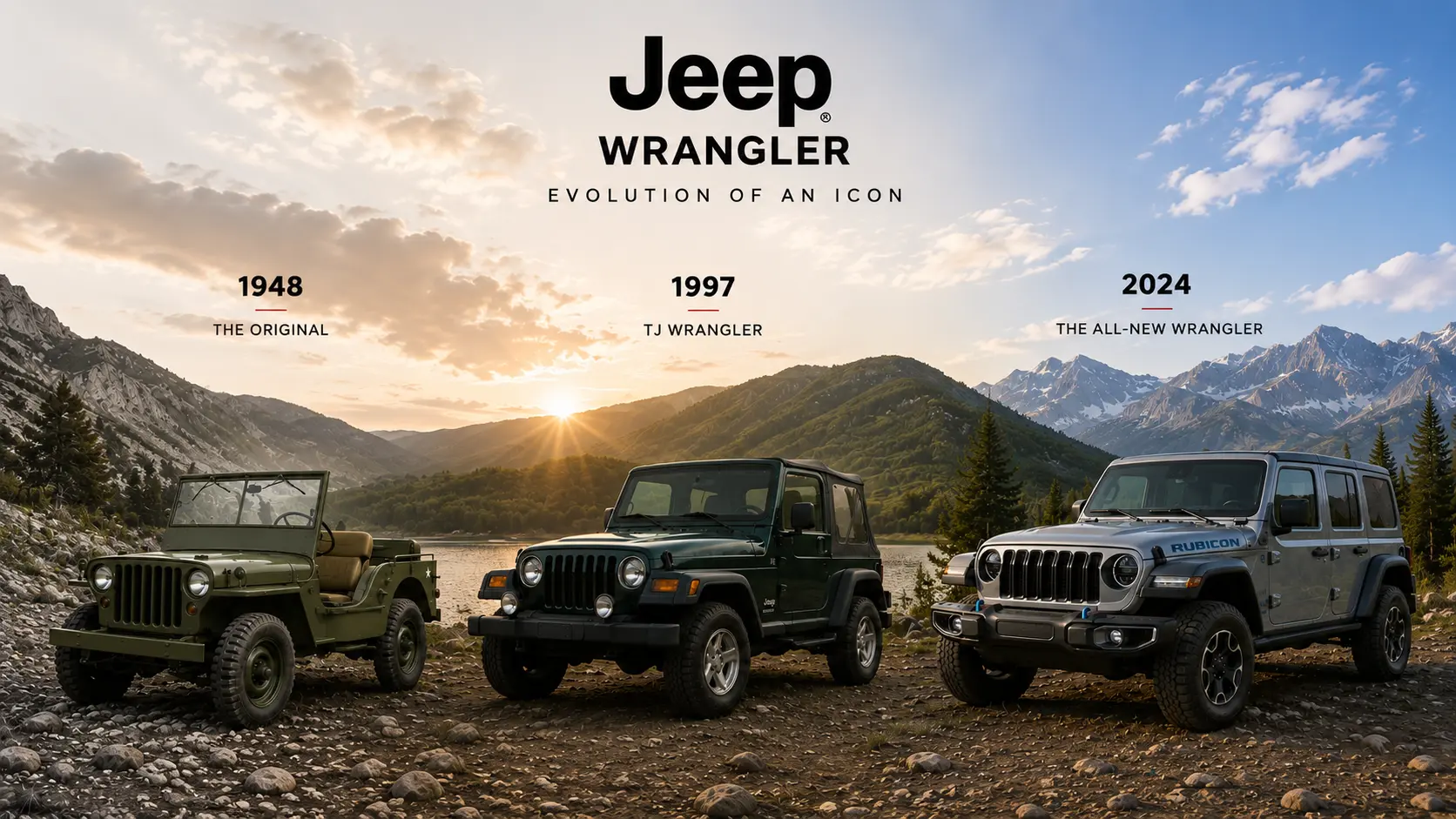
25. Jeep Wrangler
Before Vs After
Before
- Military utility vehicle
- Rugged interior
- Limited comfort
After
- Adventure lifestyle vehicle
- Modern cabin
- Advanced off road technology
The Problem
The Jeep earned its reputation through military service and exceptional off road capability. Civilian customers loved its toughness but wanted a more comfortable everyday driving experience.
Why Redesign
Jeep introduced stronger engines, improved interiors, advanced suspension systems, removable roof options, and modern infotainment while maintaining legendary off road performance.
The Result
The Wrangler became one of the strongest lifestyle brands in the automotive industry with a passionate global community.
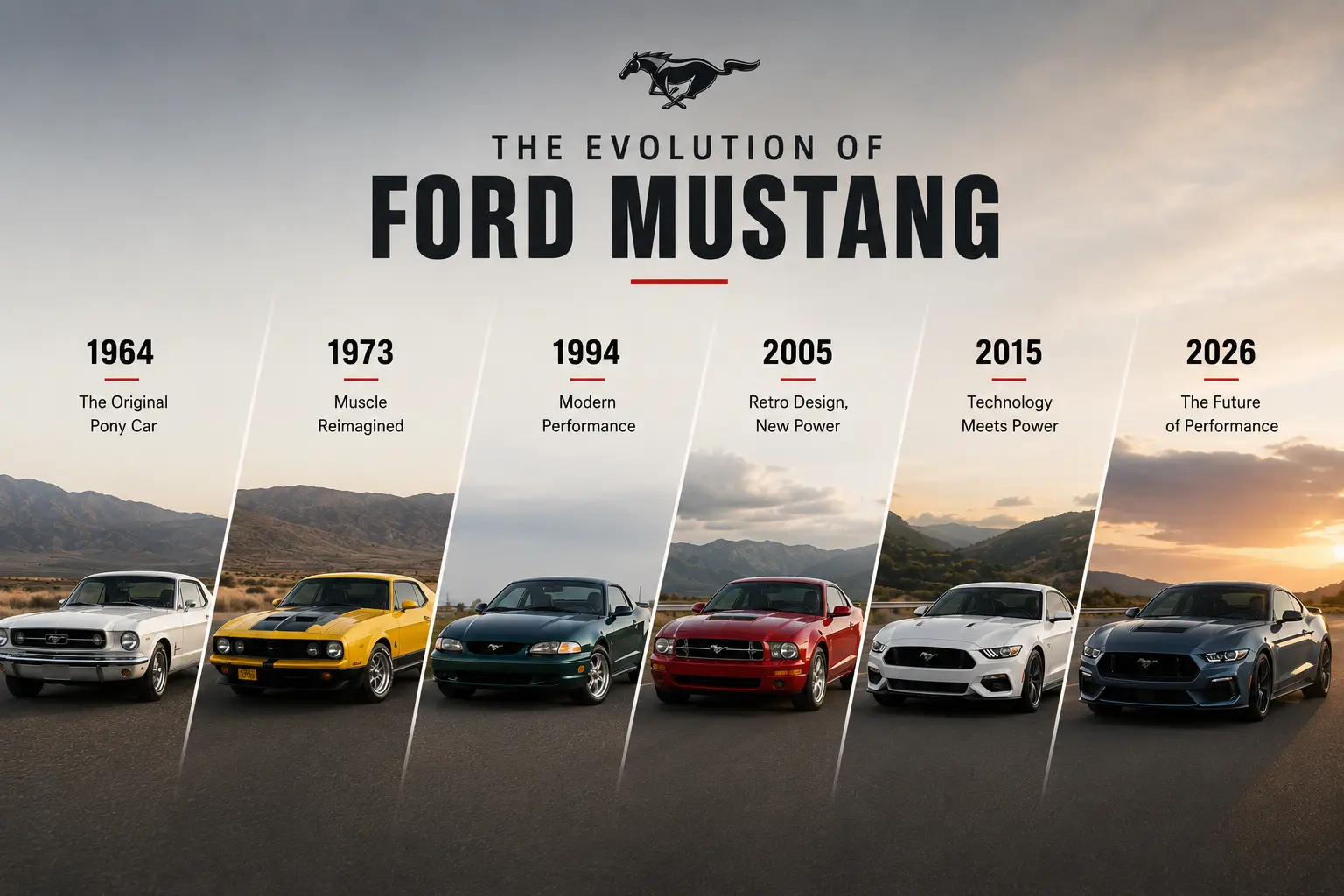
26. Ford Mustang
Before Vs After
Before
- Affordable muscle car
- Simple engineering
- Limited safety technology
After
- Modern performance car
- Advanced electronics
- Global sports car
The Problem
Changing fuel prices, emissions regulations, and customer expectations challenged the muscle car segment. Ford needed to modernize performance while preserving the Mustang's emotional appeal.
Why Redesign
Engineers improved aerodynamics, fuel efficiency, handling, safety, and interior technology without losing the aggressive character that made the Mustang famous.
The Result
The Mustang became one of the world's most successful sports cars and expanded into international markets.
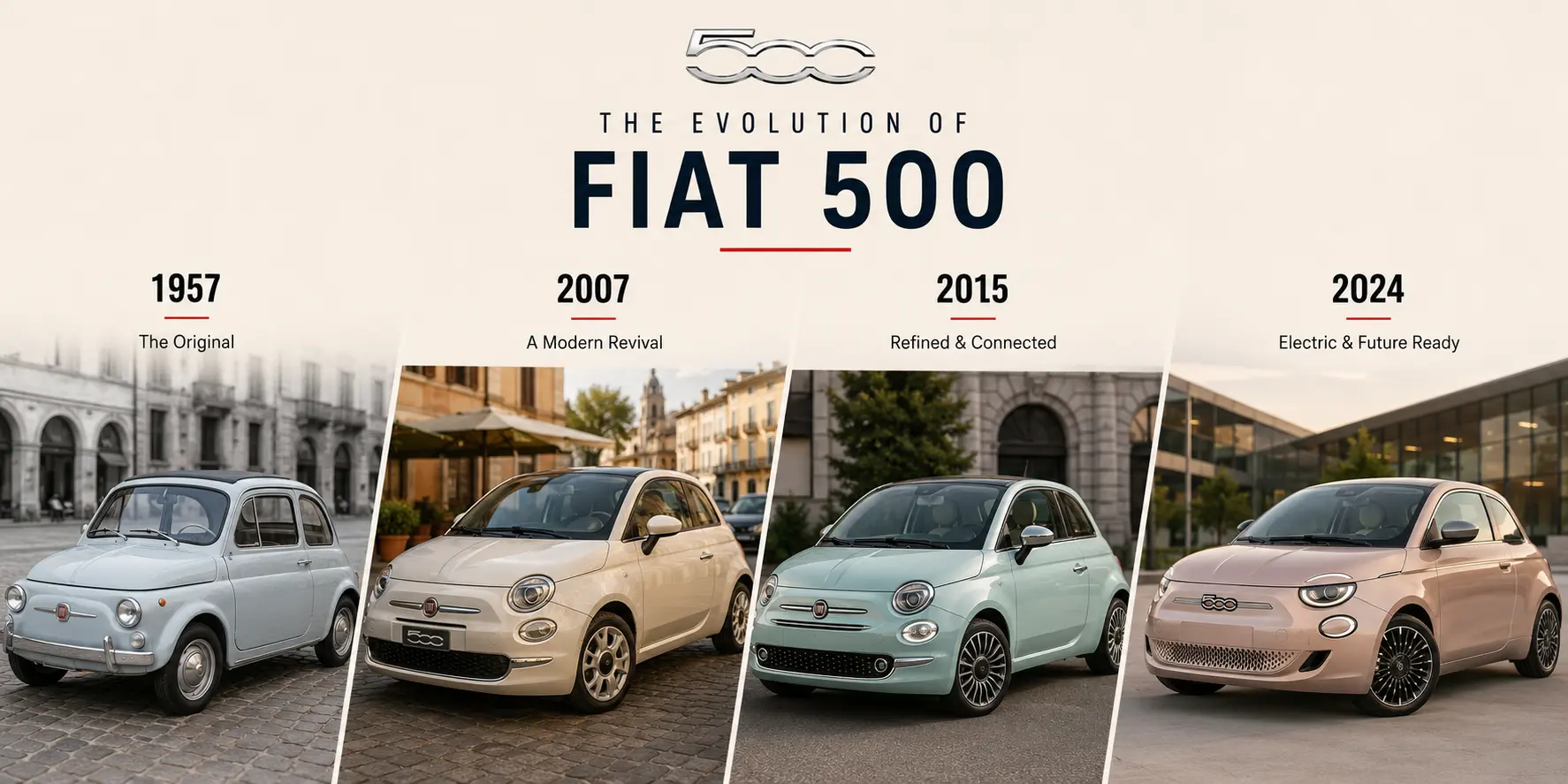
27. Fiat 500
Before Vs After
Before
- Tiny economy car
- Practical transportation
- Limited features
After
- Retro inspired city car
- Premium interiors
- Electric variants
The Problem
The original Fiat 500 served as affordable transportation for post war Europe. Modern drivers wanted style, personalization, efficiency, and advanced technology within a compact footprint.
Why Redesign
Fiat blended nostalgic styling with modern engineering, creating a product that appealed to younger urban customers while honoring its heritage.
The Result
The redesigned Fiat 500 became a successful global comeback story and one of Europe's most recognizable compact cars.
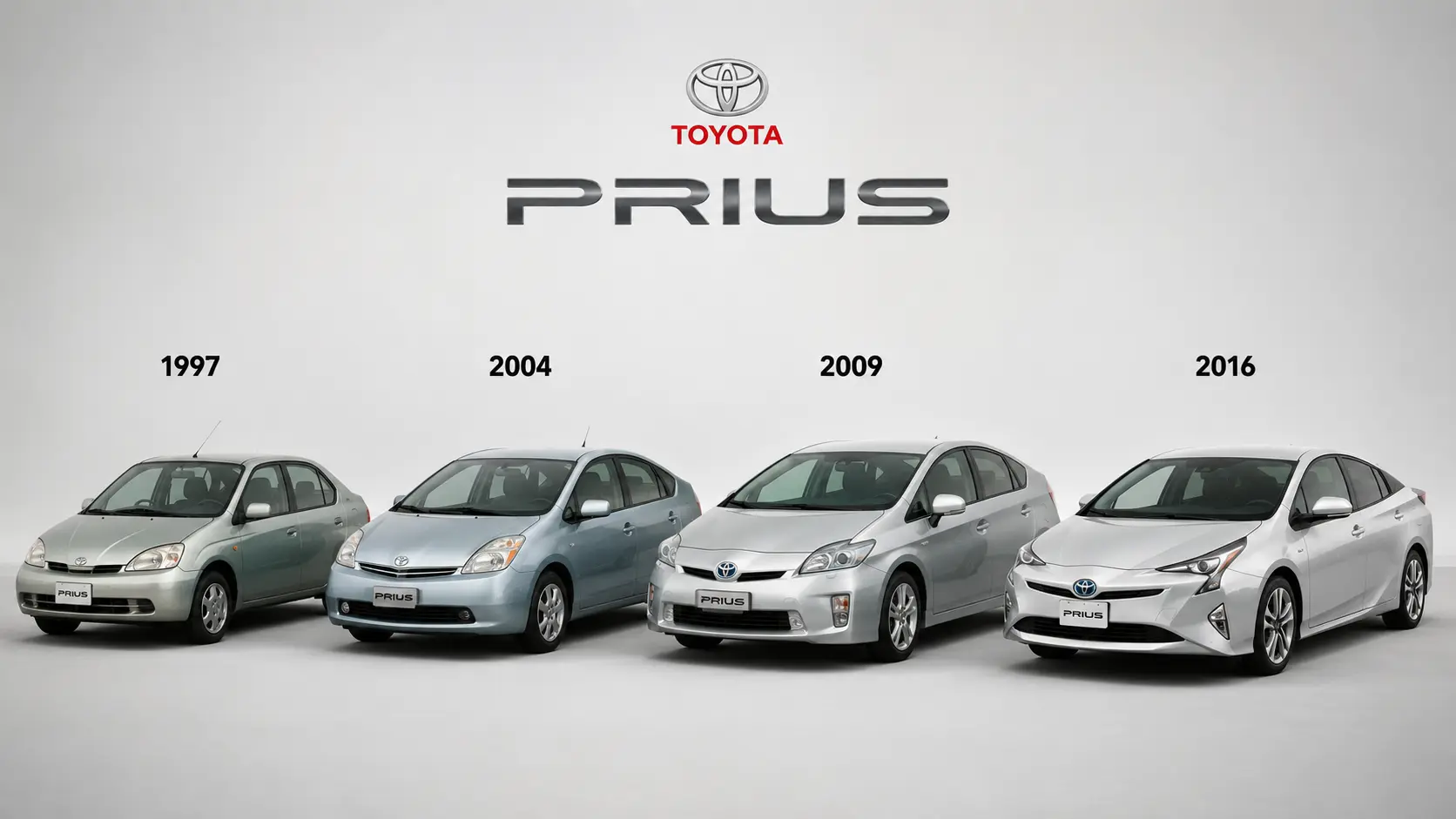
28. Toyota Prius
Before Vs After
Before
- Traditional petrol vehicles
- High fuel consumption
- Limited environmental focus
After
- Hybrid technology
- Better fuel efficiency
- Eco conscious design
The Problem
Growing environmental concerns and rising fuel costs created demand for cleaner transportation. Most manufacturers still focused primarily on conventional engines.
Why Redesign
Toyota invested heavily in hybrid technology, redesigning the entire powertrain rather than making small efficiency improvements.
The Result
The Prius became the world's first mass produced hybrid car and inspired the automotive industry's shift toward electrification.
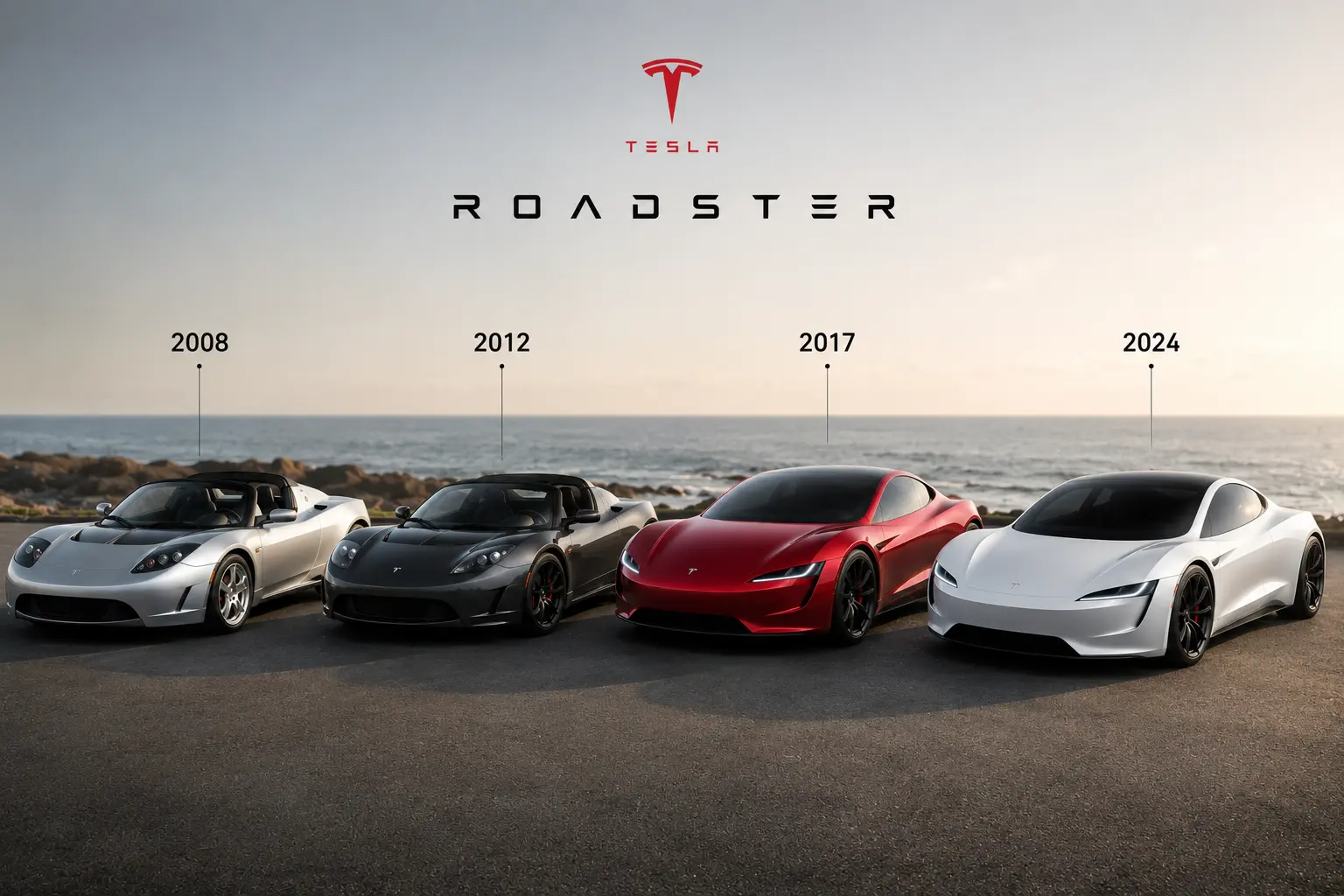
29. Tesla Roadster
Before Vs After
Before
- Electric cars viewed as slow
- Limited driving range
- Low excitement
After
- High performance electric sports car
- Modern battery technology
- Premium image
The Problem
Electric vehicles struggled with public perception. Many consumers associated them with compromise rather than performance.
Why Redesign
Tesla reimagined electric mobility by combining sports car performance with battery innovation and premium design.
The Result
The Roadster transformed public perception of electric vehicles and accelerated investment across the global automotive industry.
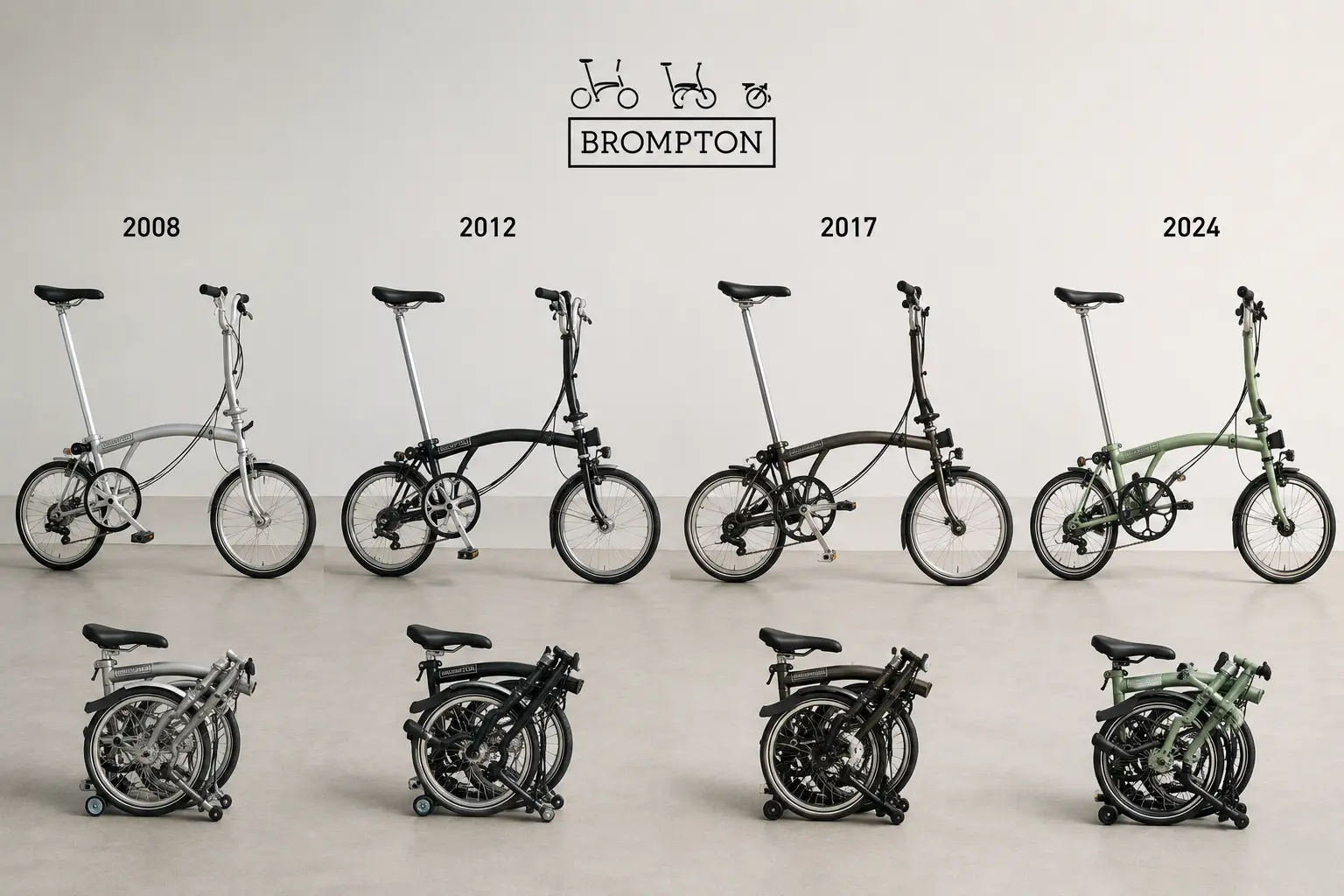
30. Brompton Folding Bicycle
Before Vs After
Before
- Conventional bicycles
- Difficult public transport integration
- Bulky storage
After
- Compact folding mechanism
- Easy portability
- Urban commuting solution
The Problem
City commuters wanted bicycles that worked alongside trains, buses, and small apartments. Traditional bicycles often became inconvenient during daily travel.
Why Redesign
Brompton redesigned the bicycle around portability. Engineers created a compact folding system that preserved ride quality while dramatically reducing storage space.
The Result
Brompton became one of the world's most respected folding bicycle brands and helped redefine urban commuting.
These ten examples introduce several new redesign themes:
- Preserving heritage while modernizing (Porsche 911, Volkswagen Beetle, Fiat 500)
- Lifestyle repositioning (Jeep Wrangler, Vespa)
- Technology driven redesign (Toyota Prius, Tesla Roadster)
- Solving urban mobility problems (Mini Cooper, Brompton)
- Performance evolution (Ford Mustang)
Fashion, Footwear And Lifestyle Product Redesign Examples
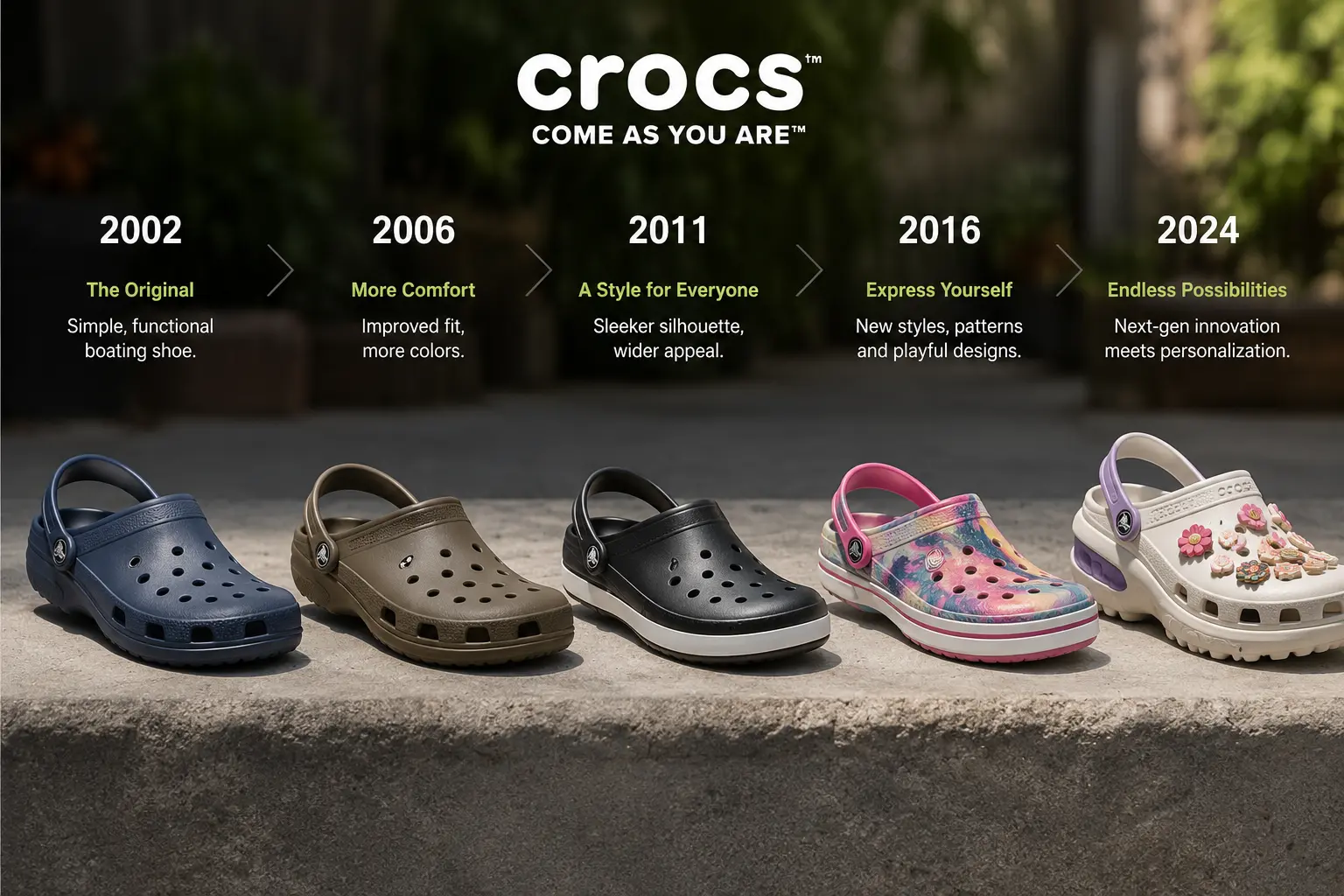
31. Crocs Classic Clog
Before Vs After
Before
- Simple boating shoe
- Limited colors
- Functional appearance
After
- Global fashion icon
- Hundreds of color options
- Customizable with Jibbitz charms
The Problem
When Crocs launched in 2002, the shoes were celebrated for comfort but criticized for their appearance. Many people called them bulky and unattractive. While customers loved how they felt, the design struggled to gain mainstream acceptance.
Why Redesign
Instead of changing what made Crocs comfortable, the company embraced its unique identity. New colors, collaborations with celebrities and luxury brands, limited edition collections, and Jibbitz charms transformed the shoe into a form of self expression. Crocs turned personality into its biggest strength.
The Result
Crocs evolved from a niche boating shoe into a global fashion phenomenon. Annual revenue crossed billions of dollars, and the brand became one of the greatest modern product redesign examples.
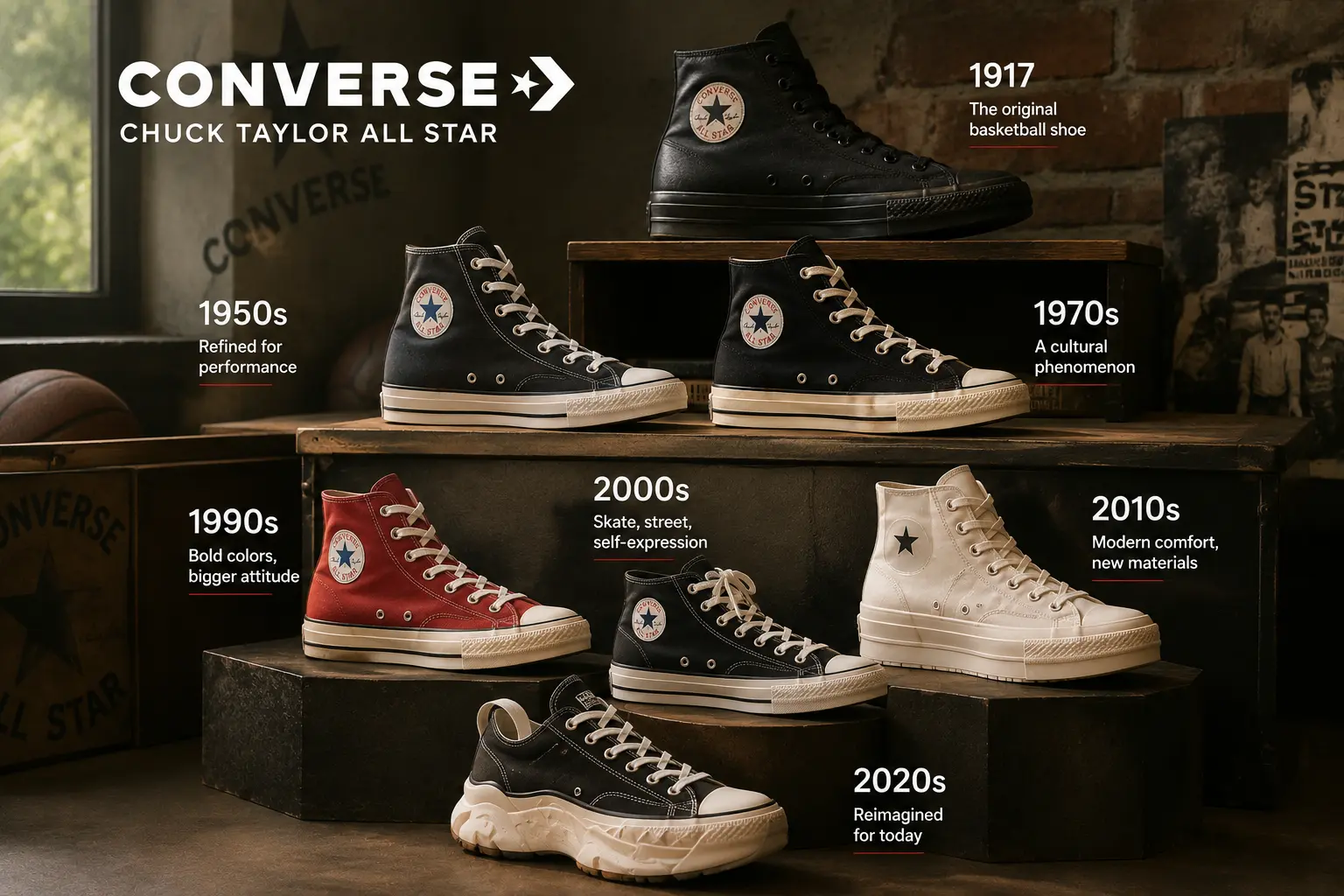
32. Converse Chuck Taylor All Star
Before Vs After
Before
- Basic basketball shoe
- Canvas upper
- Limited cushioning
After
- Lifestyle sneaker
- Improved comfort
- Modern materials
The Problem
The Chuck Taylor began as a basketball shoe, but advancements in sports footwear made it less competitive on the court. Customers continued loving its timeless look while expecting greater comfort for everyday wear.
Why Redesign
Converse preserved the classic silhouette while upgrading cushioning, arch support, and materials. The redesign respected the heritage while adapting the shoe for modern lifestyles.
The Result
More than a century after its launch, the Chuck Taylor remains one of the world's best selling sneakers and a cultural icon.
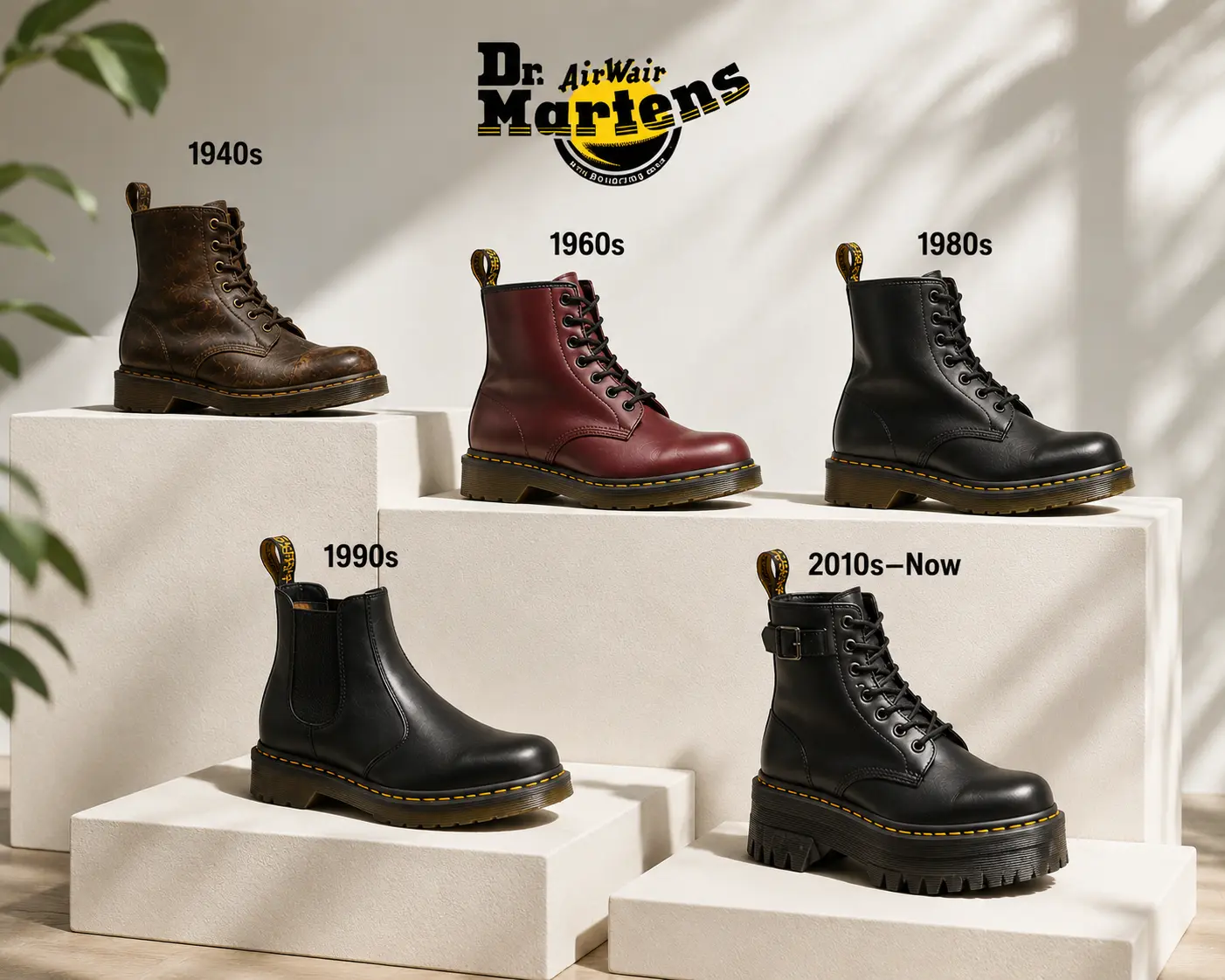
33. Dr. Martens Boots
Before Vs After
Before
- Work boots
- Industrial purpose
- Limited audience
After
- Fashion statement
- Premium materials
- Global lifestyle brand
The Problem
Originally designed for factory workers, Dr. Martens boots offered exceptional durability but appealed to a narrow customer base. Fashion trends created opportunities far beyond workwear.
Why Redesign
The brand refined leather quality, introduced new colors, expanded styles, and embraced music, art, and youth culture. The boots evolved from practical footwear into a symbol of individuality.
The Result
Dr. Martens became one of the most recognizable footwear brands while staying true to its rugged identity.
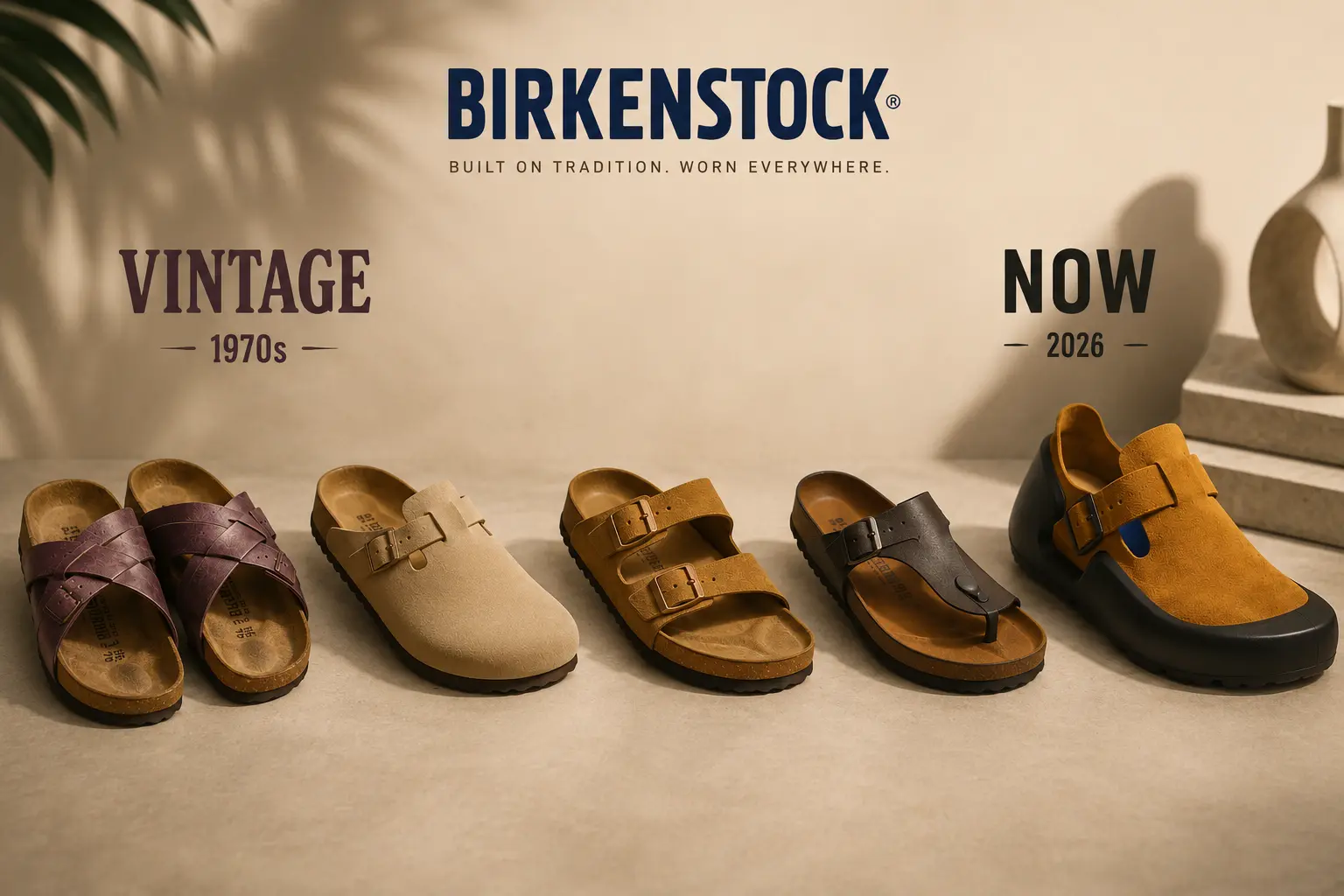
34. Birkenstock Sandals
Before Vs After
Before
- Orthopedic footwear
- Functional appearance
- Medical positioning
After
- Premium lifestyle sandal
- Luxury collaborations
- Fashion essential
The Problem
Birkenstock built a loyal following because of its ergonomic footbed, yet many shoppers viewed the sandals as purely practical. The brand needed broader appeal without losing its health focused design.
Why Redesign
Birkenstock improved materials, introduced premium finishes, collaborated with luxury designers, and modernized branding while preserving the famous cork footbed.
The Result
The sandals became a favorite among celebrities, fashion houses, and everyday consumers around the world.
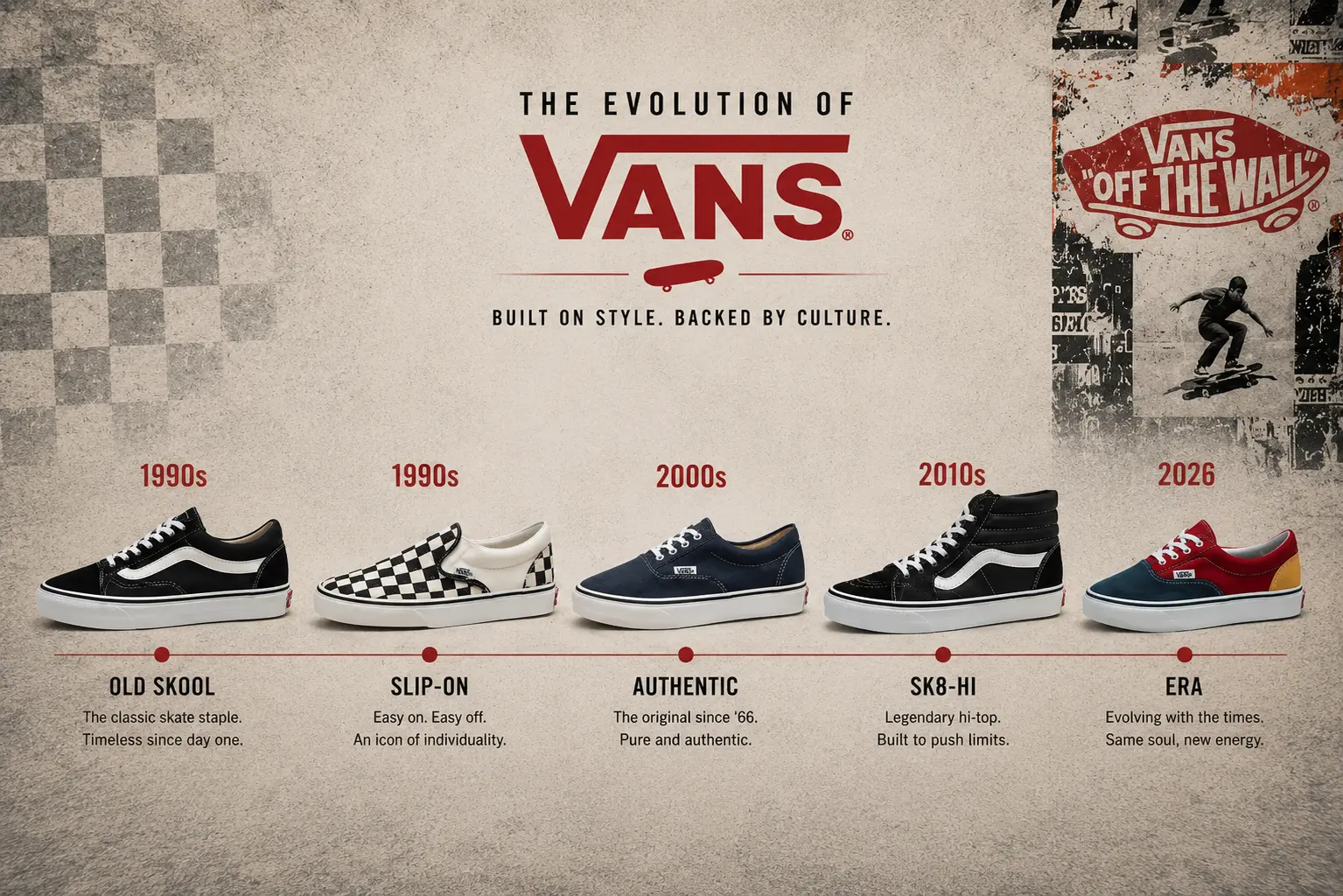
35. Vans Old Skool
Before Vs After
Before
- Skateboarding shoe
- Limited color options
- Basic construction
After
- Streetwear icon
- Endless collaborations
- Improved durability
The Problem
As skateboarding entered mainstream culture, customers wanted footwear that performed well while expressing personal style.
Why Redesign
Vans strengthened construction, introduced fresh colorways, and partnered with artists, musicians, and designers. The famous side stripe became one of the brand's strongest visual assets.
The Result
The Old Skool became one of the most recognizable sneakers in fashion and skate culture.
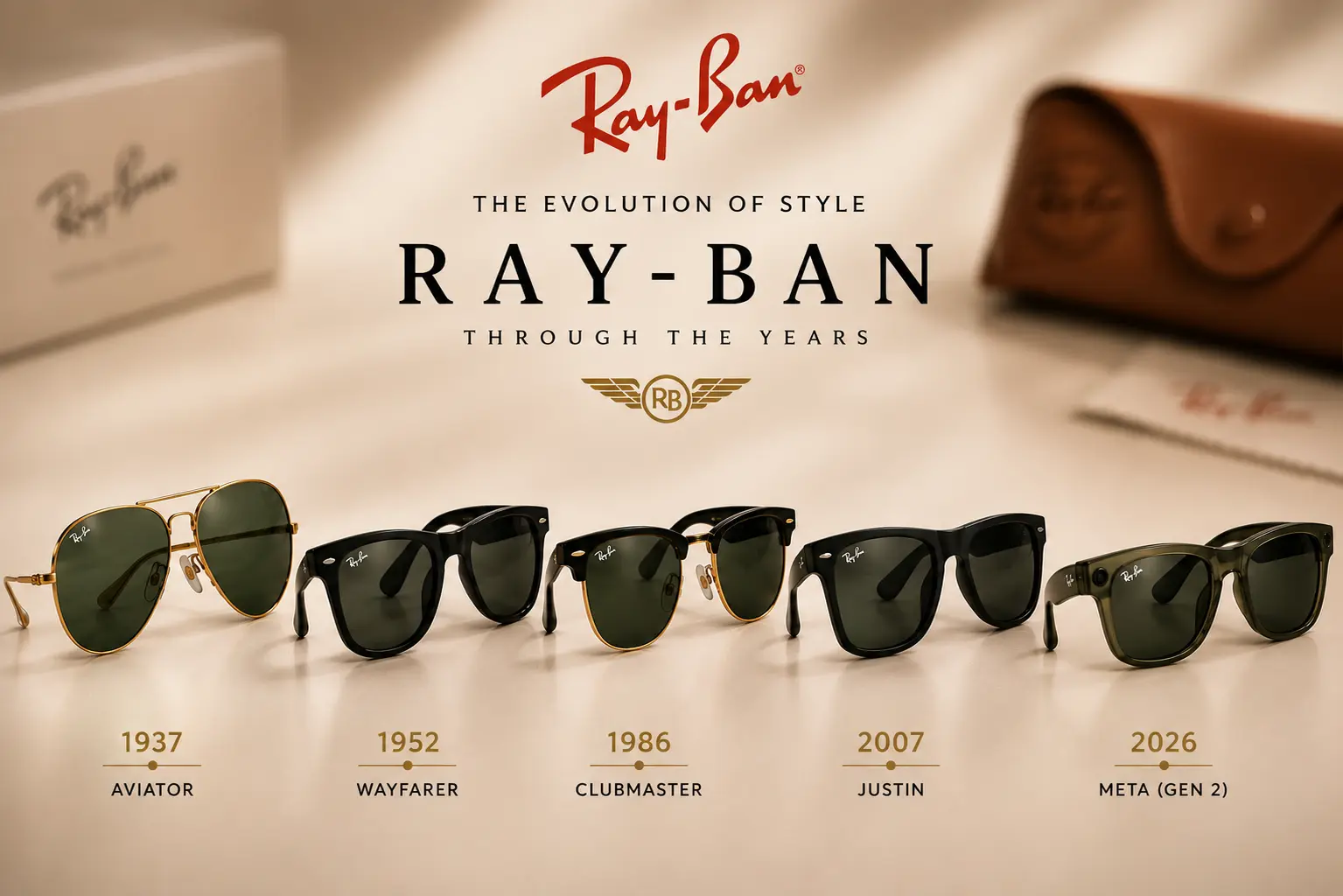
36. Ray Ban Aviator
Before Vs After
Before
- Military sunglasses
- Functional design
- Limited audience
After
- Global fashion accessory
- Premium lenses
- Timeless styling
The Problem
Ray Ban Aviators were originally created for military pilots. Civilian consumers appreciated the design but wanted more variety and lifestyle appeal.
Why Redesign
Ray Ban expanded lens technologies, introduced new frame finishes, and embraced Hollywood, music, and fashion. The redesign focused on broadening appeal while maintaining the signature teardrop shape.
The Result
The Aviator became one of the world's most iconic eyewear designs and continues to influence fashion across generations.
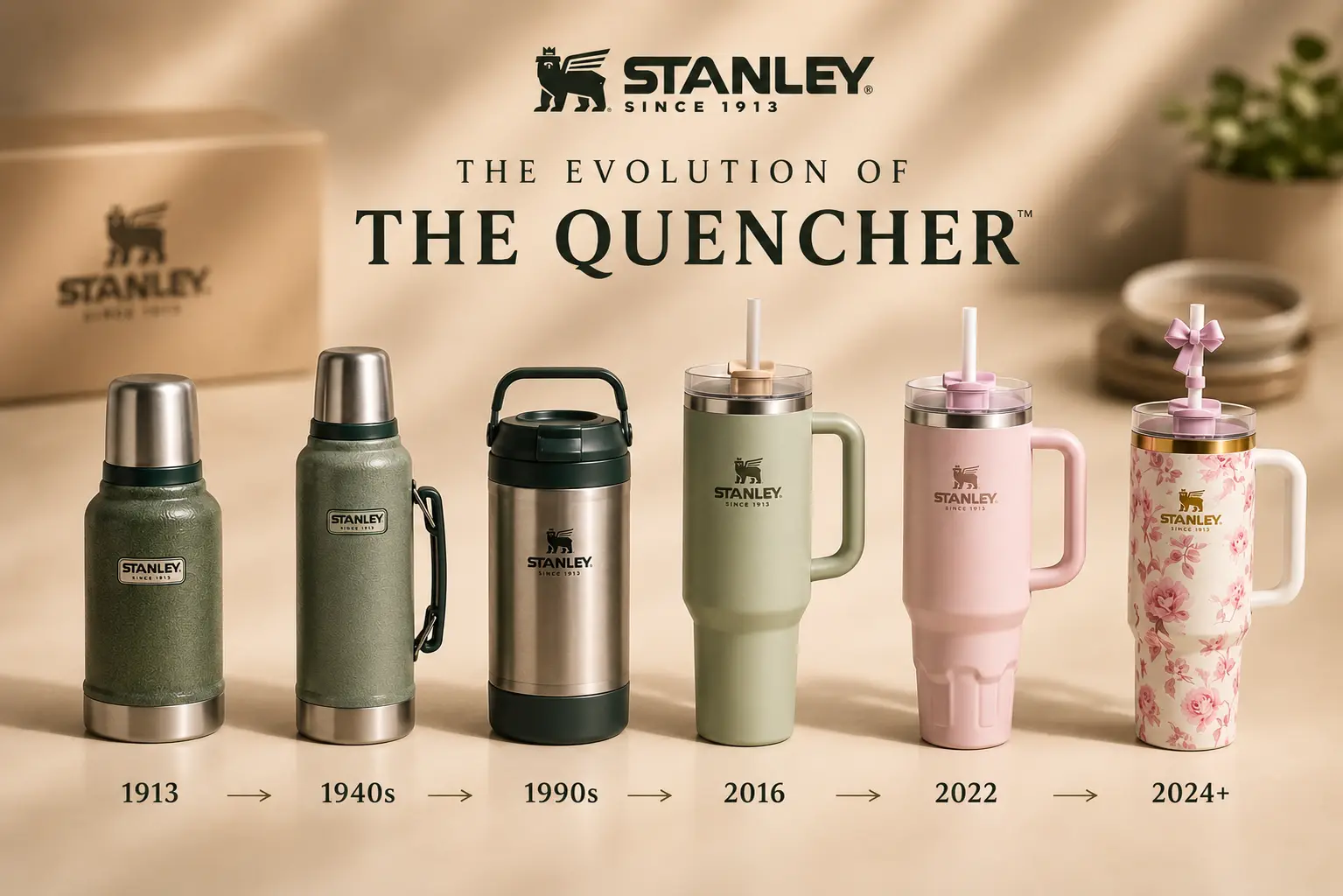
37. Stanley Quencher Tumbler
Before Vs After
Before
- Utility drink container
- Outdoor audience
- Functional appearance
After
- Lifestyle tumbler
- Social media sensation
- Premium everyday accessory
The Problem
Stanley built its reputation among construction workers and outdoor enthusiasts. Younger consumers sought drinkware that combined performance with style and everyday convenience.
Why Redesign
The company introduced larger capacities, comfortable handles, car friendly bases, vibrant colors, and influencer collaborations. The tumbler quickly became a lifestyle product rather than simply drinkware.
The Result
Demand exploded across social media, stores sold out repeatedly, and Stanley experienced remarkable revenue growth within just a few years.
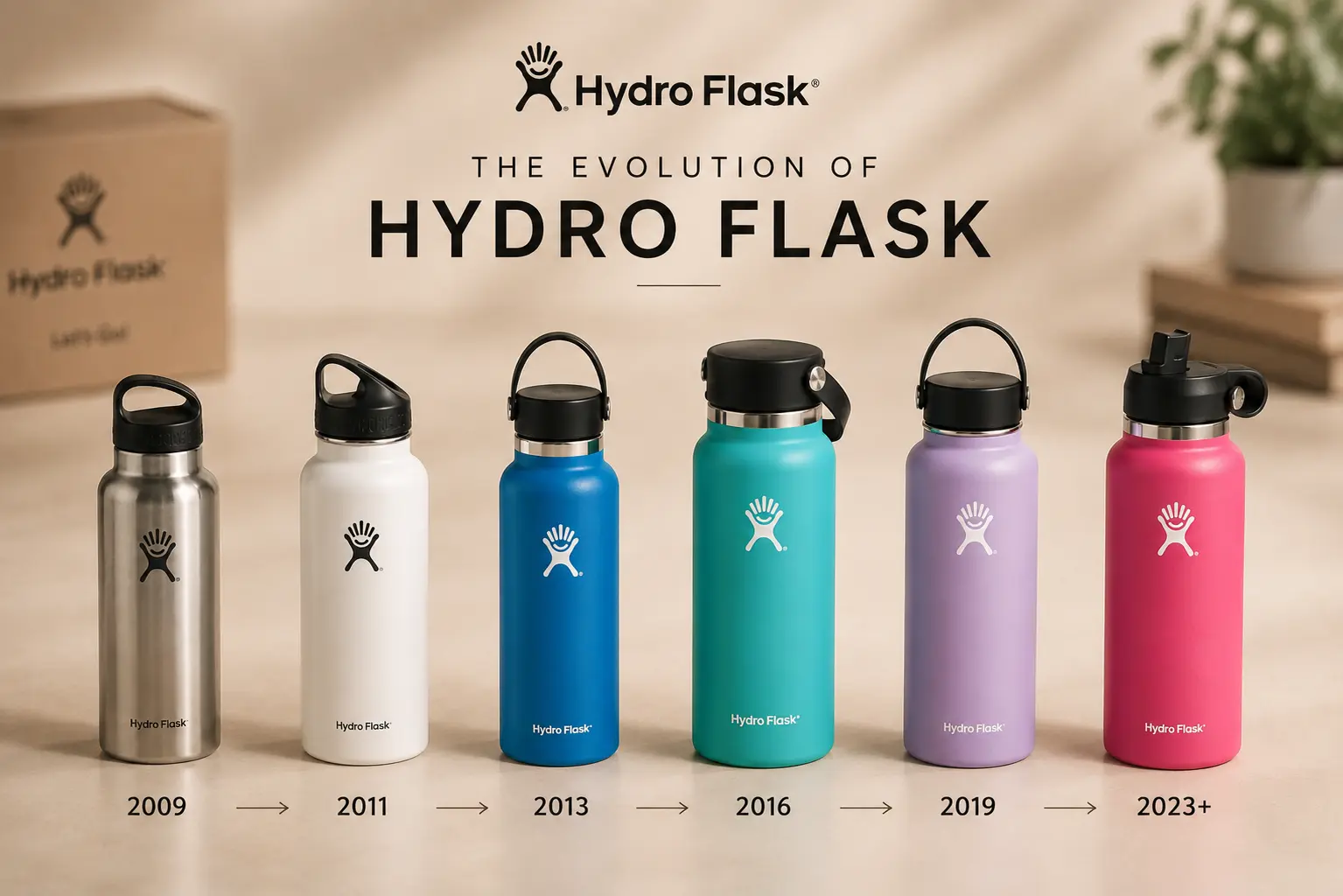
38. Hydro Flask
Before Vs After
Before
- Standard reusable bottle
- Limited insulation
- Basic appearance
After
- Double wall insulation
- Bright color options
- Premium outdoor identity
The Problem
Reusable bottles often struggled to maintain beverage temperature for long periods. Outdoor enthusiasts wanted products that performed during demanding adventures.
Why Redesign
Hydro Flask focused on vacuum insulation, powder coated finishes, durable materials, and stylish colors. Performance and aesthetics developed together.
The Result
Hydro Flask became one of the leading premium reusable bottle brands and inspired countless competitors.
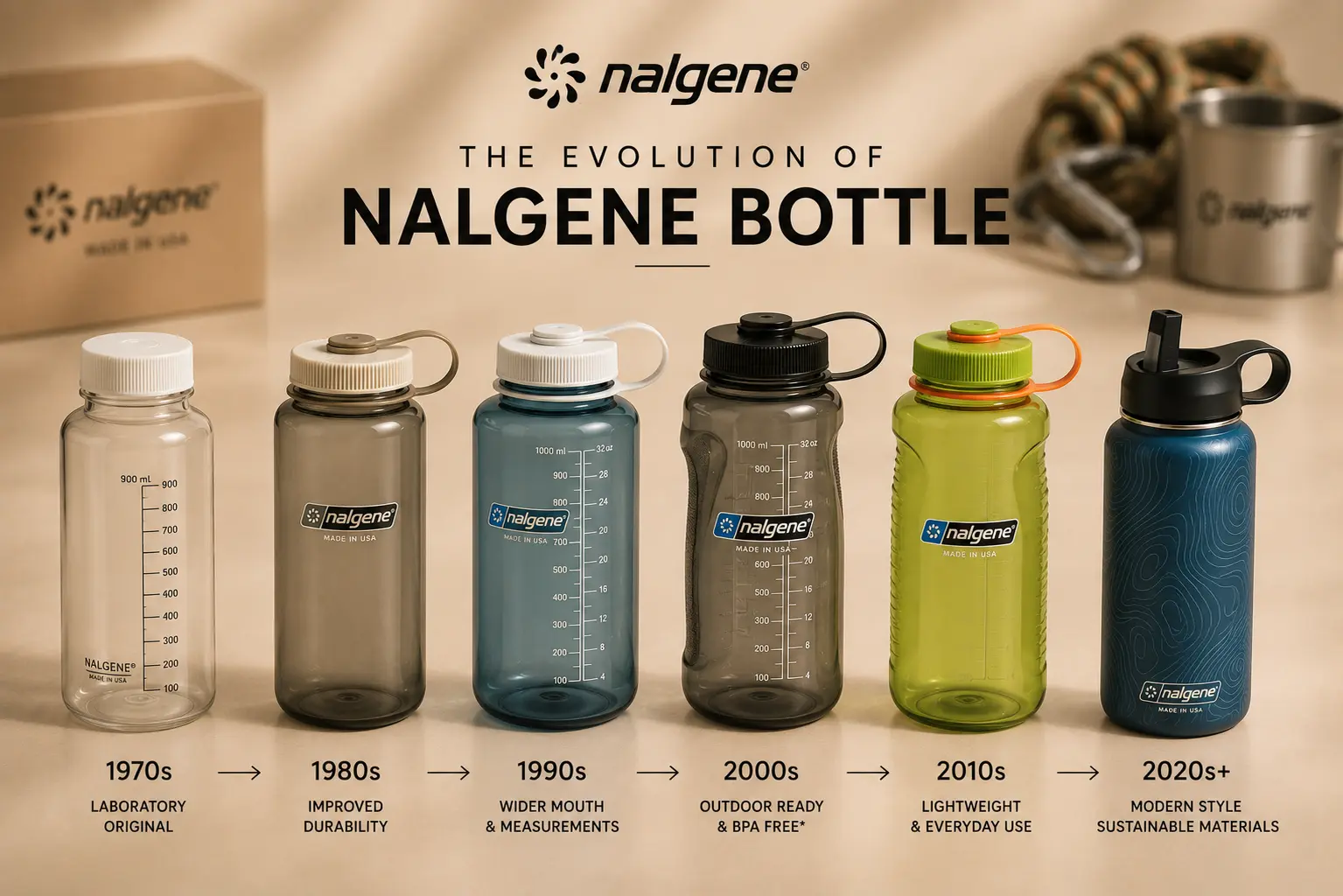
39. Nalgene Bottle
Before Vs After
Before
- Laboratory container
- Scientific use
- Functional design
After
- Outdoor essential
- BPA free materials
- Wide mouth convenience
The Problem
Scientists appreciated Nalgene bottles for their durability, while outdoor enthusiasts unexpectedly discovered the same benefits during hiking and camping trips.
Why Redesign
The company embraced this new audience by improving grip, introducing vibrant colors, enhancing measurements, and transitioning to BPA free materials.
The Result
Nalgene became one of the world's favorite reusable bottles for travelers, hikers, students, and athletes.
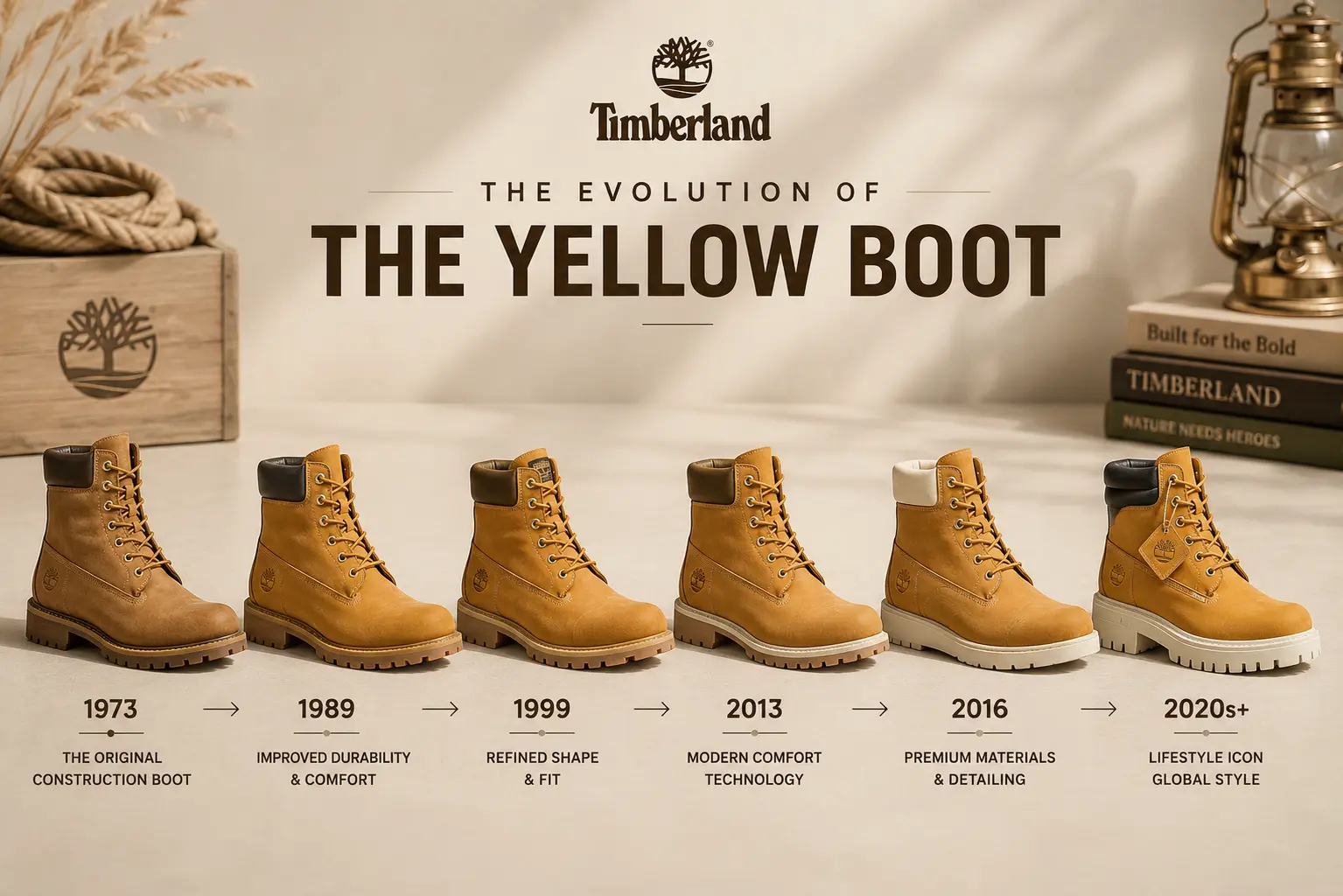
40. Timberland Yellow Boot
Before Vs After
Before
- Construction boot
- Heavy work footwear
- Utility focused
After
- Fashion icon
- Premium craftsmanship
- Lifestyle product
The Problem
The original Timberland boot excelled on construction sites because of its waterproof durability. Urban consumers admired the rugged look and wanted the same product for everyday wear.
Why Redesign
Timberland expanded color choices, improved comfort, introduced sustainable leather sourcing, and collaborated with designers while preserving the instantly recognizable silhouette.
The Result
The Yellow Boot evolved from workwear into one of the most influential lifestyle boots in fashion history, proving that authenticity often becomes the strongest selling point.
Household, Personal Care And Everyday Product Redesign Examples
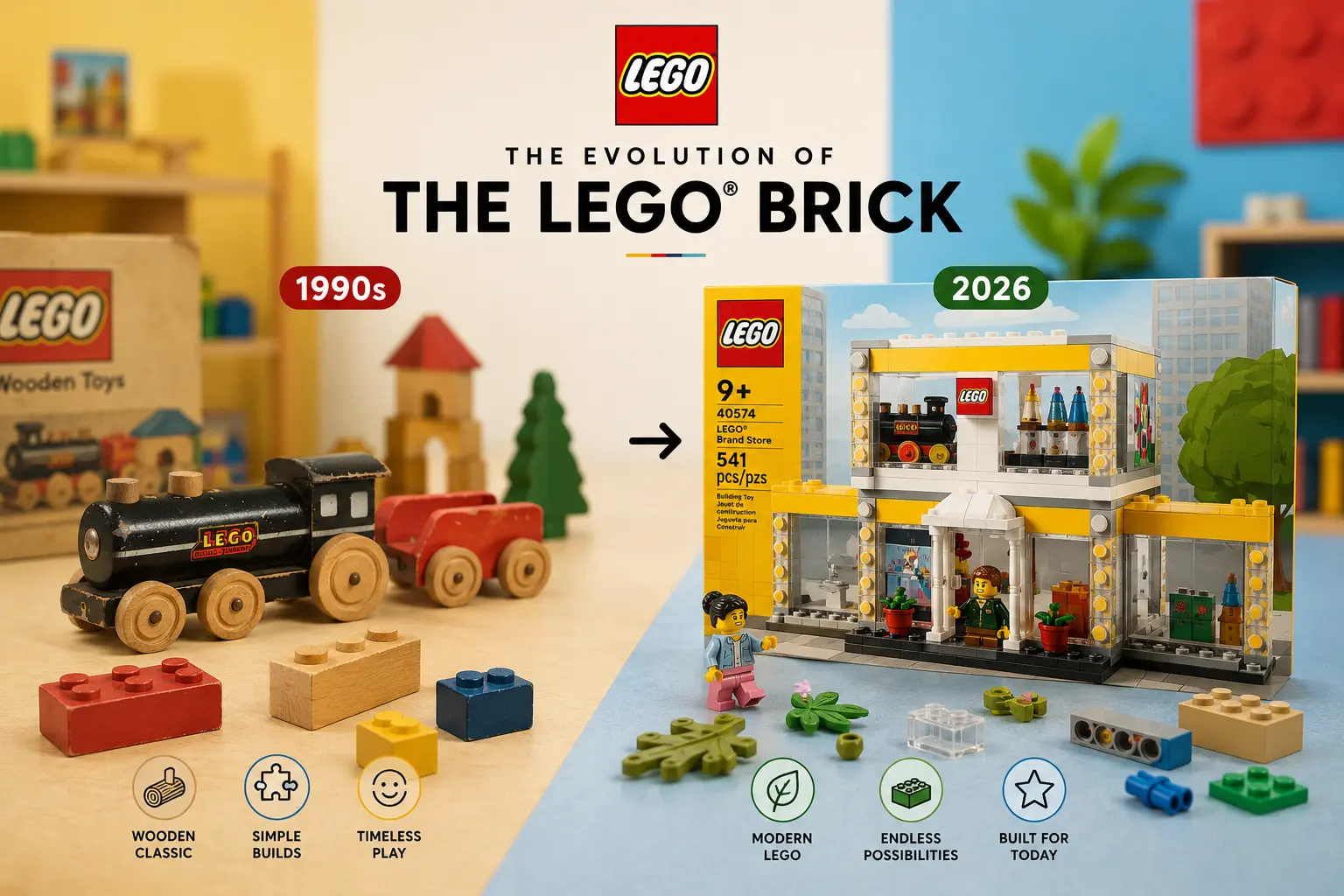
41. LEGO Brick
Before Vs After
Before
- Wooden construction toys
- Limited durability
- Pieces varied in shape and fit
After
- Precision molded plastic bricks
- Universal compatibility
- Endless creative possibilities
The Problem
LEGO began with wooden toys, but they wore out over time and limited what children could build. As families looked for toys that lasted longer and encouraged creativity, the company realized it needed a completely new approach.
Why Redesign
LEGO introduced the now famous interlocking plastic brick in 1958. Engineers perfected the tube and stud system so every brick connected securely while remaining easy to separate. The company maintained the same dimensions for decades, allowing new sets to work seamlessly with older collections.
The Result
LEGO became the world's largest toy company, selling billions of compatible bricks that continue inspiring creativity across generations.
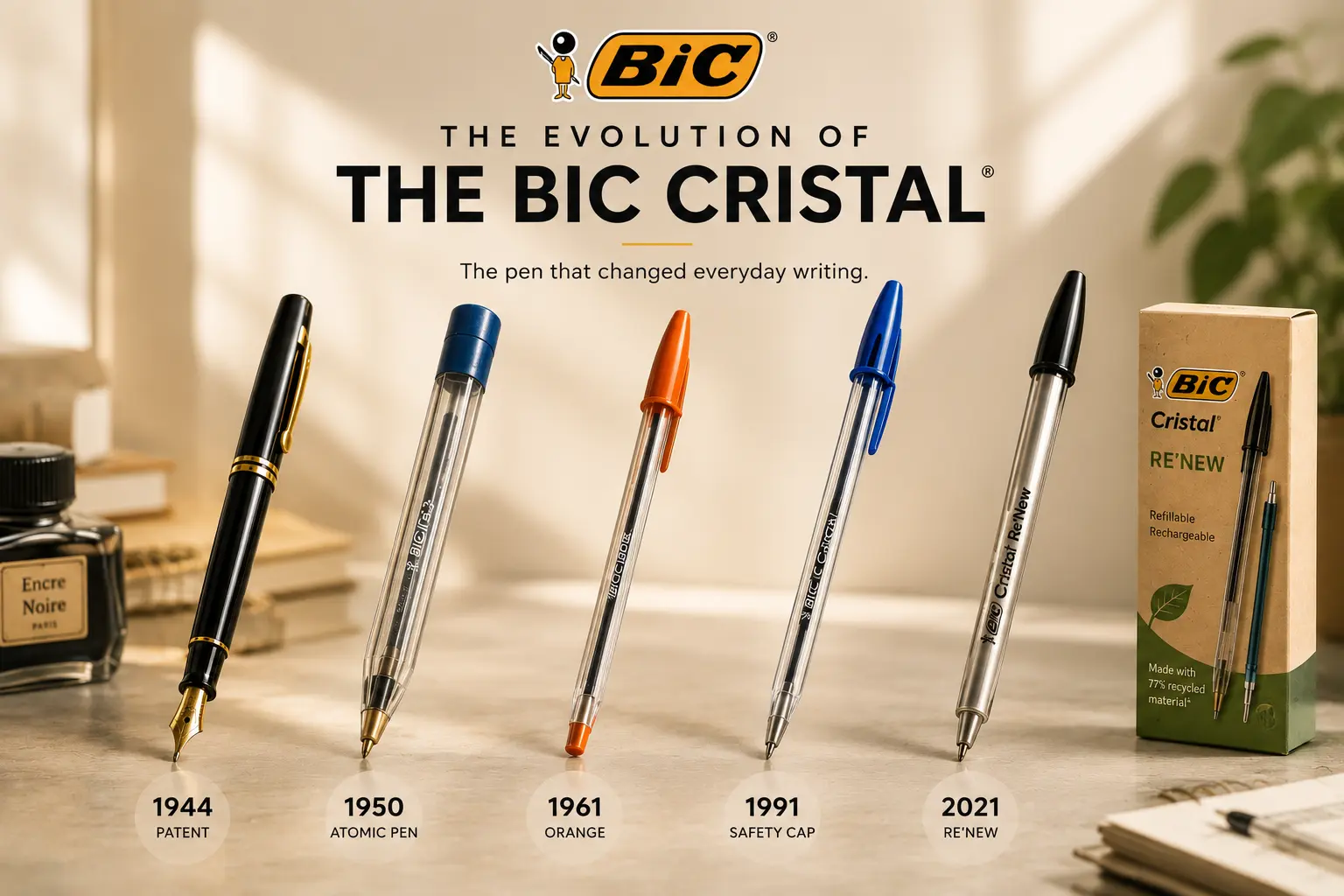
42. BIC Cristal Pen
Before Vs After
Before
- Expensive fountain pens
- Frequent ink leaks
- High maintenance
After
- Affordable ballpoint pen
- Smooth writing
- Disposable convenience
The Problem
Writing instruments were once expensive, messy, and difficult to maintain. Fountain pens leaked, required constant refilling, and often stained clothes and documents. Everyday writing deserved a simpler solution.
Why Redesign
BIC focused on simplicity. The transparent barrel allowed users to see remaining ink, while precision engineering ensured smooth and reliable writing. Every design decision reduced cost without compromising performance.
The Result
More than 100 billion BIC Cristal pens have been sold, making it one of the best selling consumer products in history.
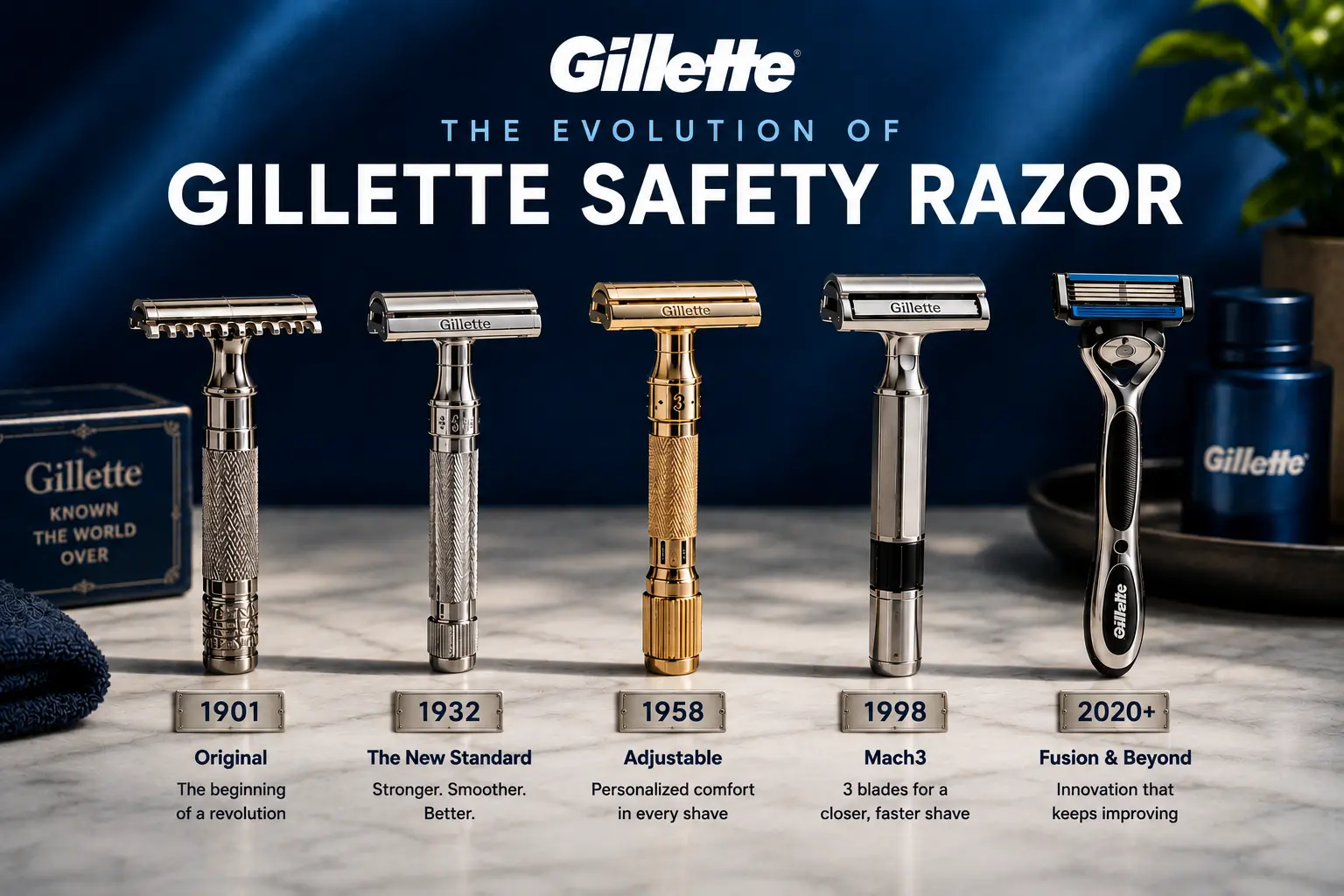
43. Gillette Safety Razor
Before Vs After
Before
- Straight razors
- Skilled handling required
- Higher risk of cuts
After
- Replaceable blades
- Safer shaving
- Convenient daily use
The Problem
Traditional shaving required experience and patience. Many people found straight razors intimidating and inconvenient for everyday grooming.
Why Redesign
King C. Gillette introduced a safety razor with disposable blades. Customers replaced only the blade instead of sharpening the entire razor, making shaving quicker, safer, and more accessible.
The Result
Gillette revolutionized personal care and built one of the world's most successful subscription style business models long before the digital era.
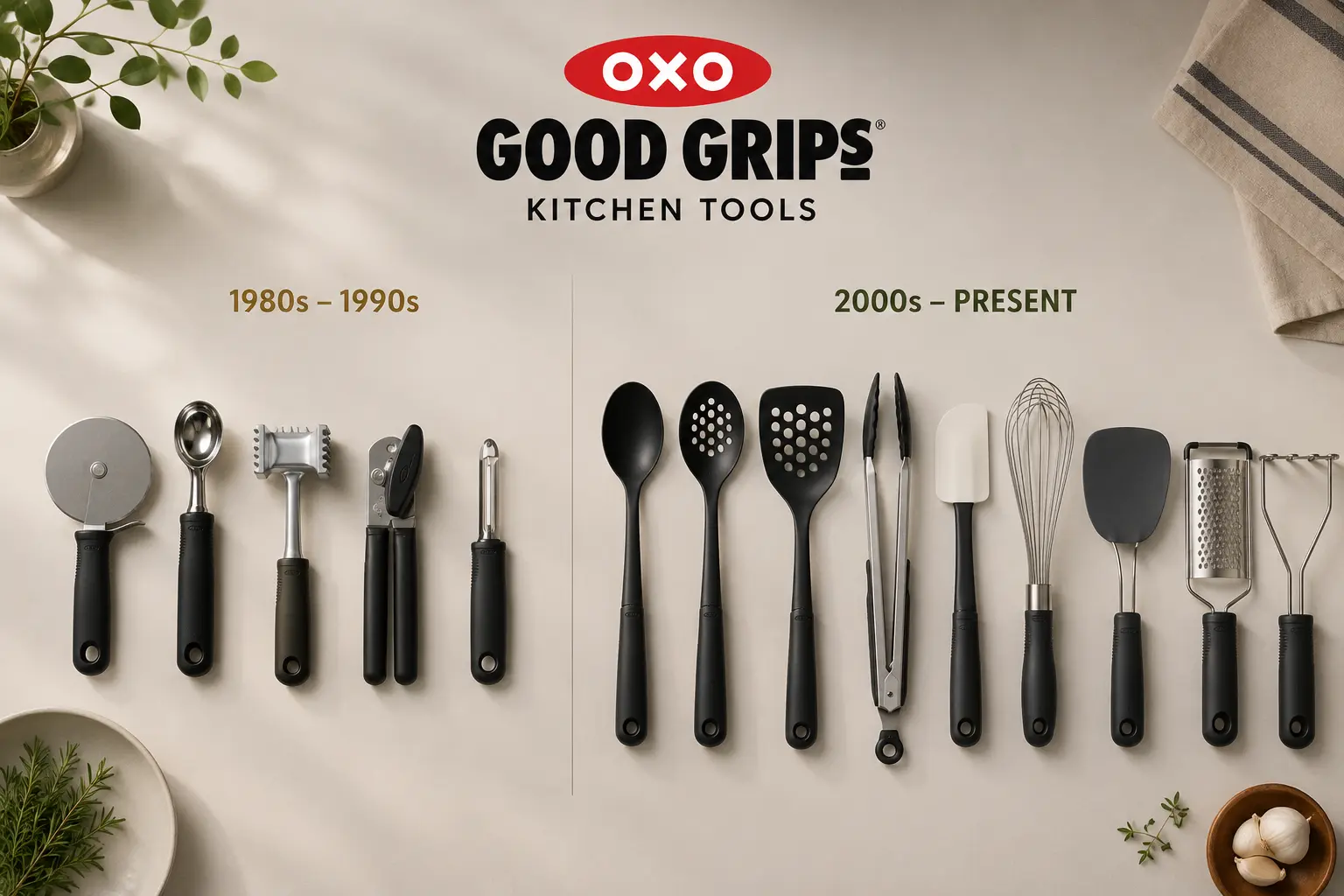
44. OXO Good Grips Kitchen Tools
Before Vs After
Before
- Thin metal handles
- Uncomfortable grip
- Limited accessibility
After
- Soft ergonomic handles
- Better control
- Universal usability
The Problem
Sam Farber noticed his wife struggled to use traditional kitchen tools because of arthritis. Many utensils prioritized manufacturing efficiency while overlooking comfort.
Why Redesign
OXO developed thick, non slip handles that reduced strain and improved grip. Although designed for people with arthritis, the products proved more comfortable for everyone.
The Result
OXO became one of the world's best product design case studies, proving that designing for accessibility often creates better products for every customer.
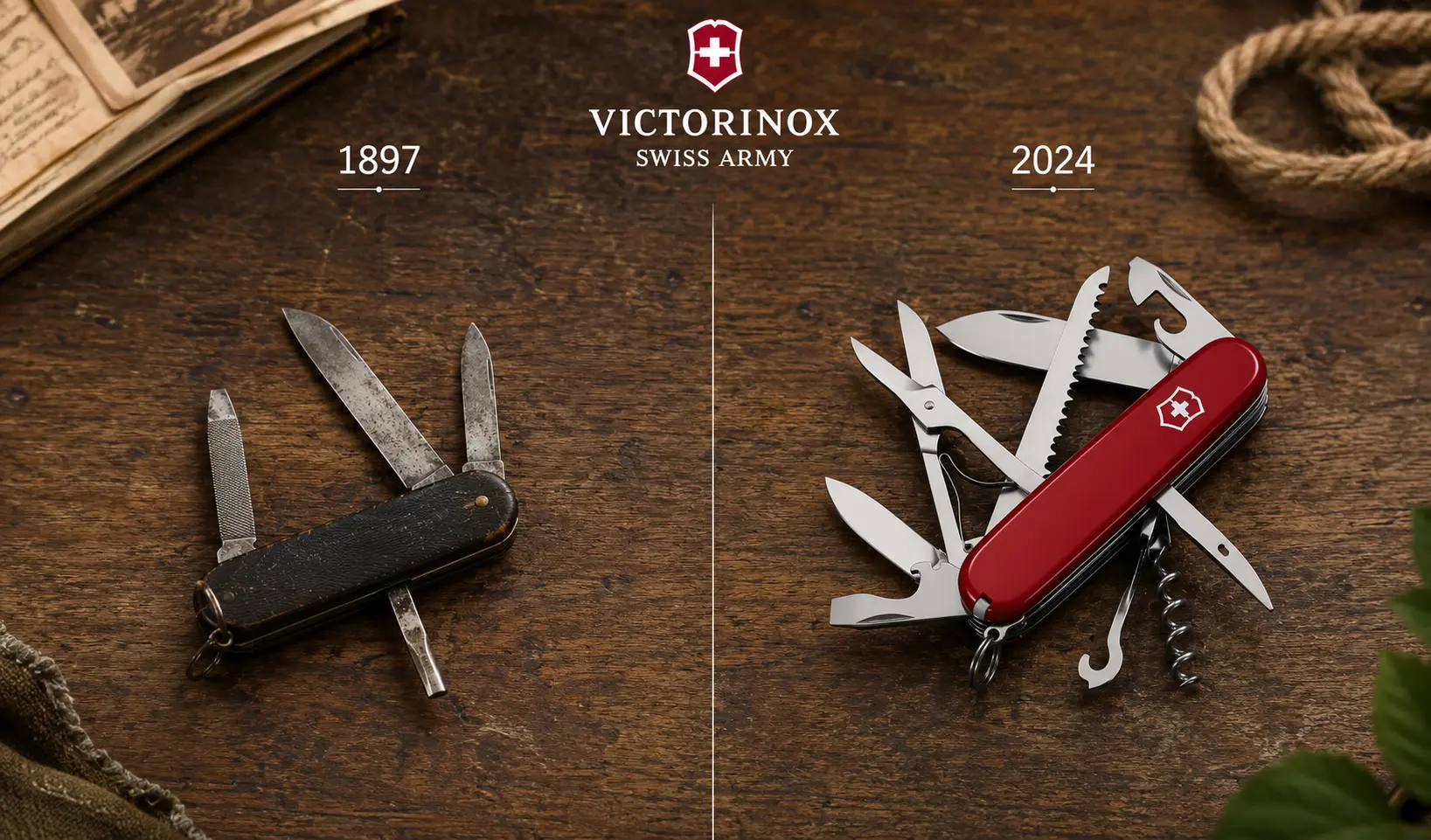
45. Swiss Army Knife
Before Vs After
Before
- Single purpose tools
- Separate equipment
- Limited portability
After
- Multi tool design
- Compact size
- Everyday convenience
The Problem
Carrying multiple tools required extra space and organization. Travelers, soldiers, and outdoor enthusiasts wanted one reliable solution instead of several individual tools.
Why Redesign
Victorinox continuously added useful functions while improving durability, materials, and precision engineering. The familiar red handle remained unchanged, strengthening brand recognition.
The Result
The Swiss Army Knife became one of the most iconic examples of practical product evolution.
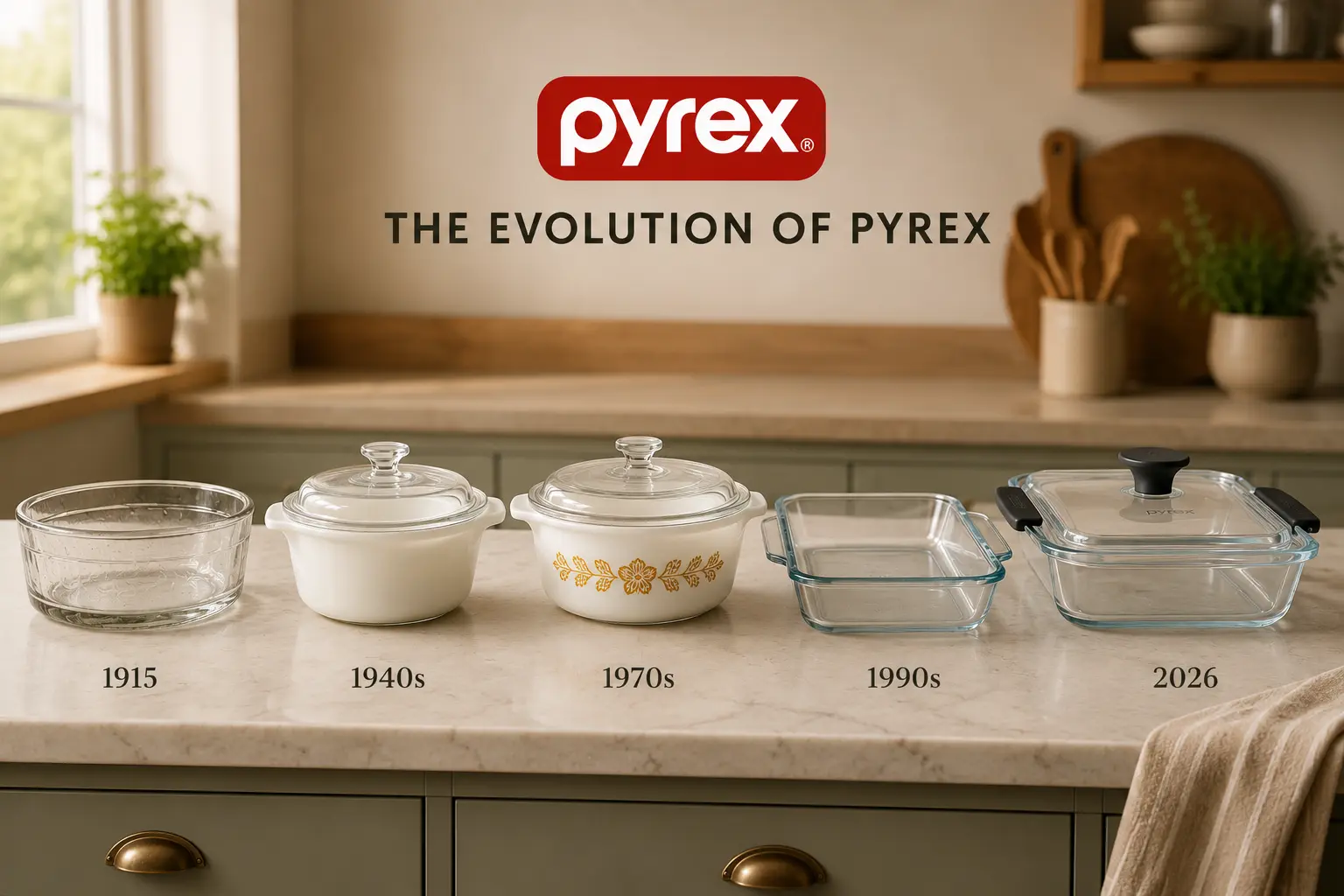
46. Pyrex Cookware
Before Vs After
Before
- Fragile kitchen glassware
- Limited heat resistance
- Frequent breakage
After
- Heat resistant glass
- Oven safe cookware
- Versatile kitchen use
The Problem
Early glass cookware cracked easily under high temperatures, limiting how people cooked and baked at home.
Why Redesign
Pyrex introduced specialized heat resistant glass that handled dramatic temperature changes. The redesign expanded cooking possibilities while improving safety.
The Result
Pyrex became a trusted household name and helped transform modern home baking.
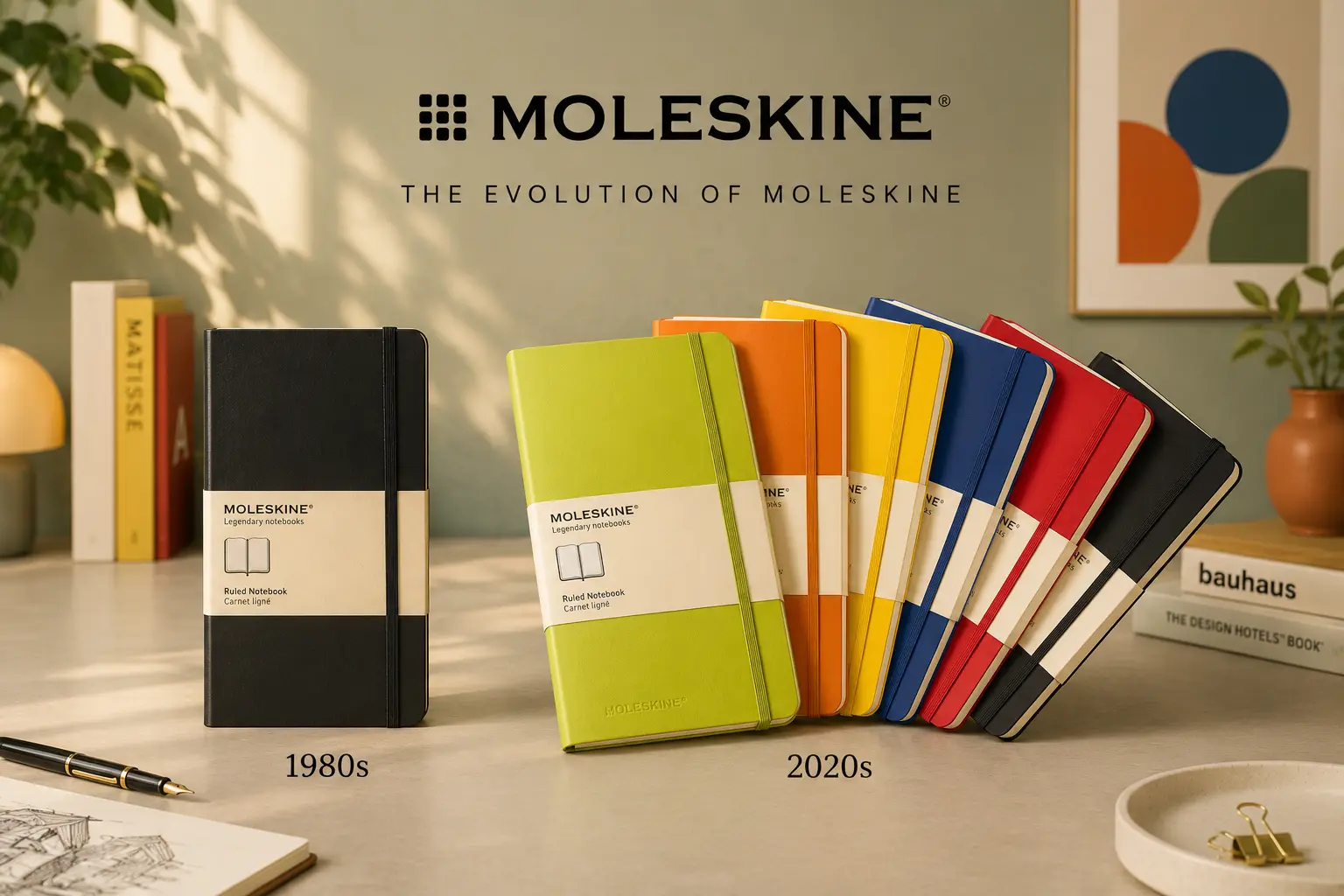
47. Moleskine Notebook
Before Vs After
Before
- Ordinary notebooks
- Basic construction
- Limited brand identity
After
- Premium notebook
- Elastic closure
- Elegant minimalist design
The Problem
Most notebooks focused purely on function. Writers, artists, designers, and entrepreneurs wanted something that reflected creativity and craftsmanship.
Why Redesign
Moleskine combined premium paper, durable covers, thoughtful details, and timeless aesthetics to create a notebook people proudly carried every day.
The Result
The notebook became a favorite among creative professionals and transformed stationery into a lifestyle product.
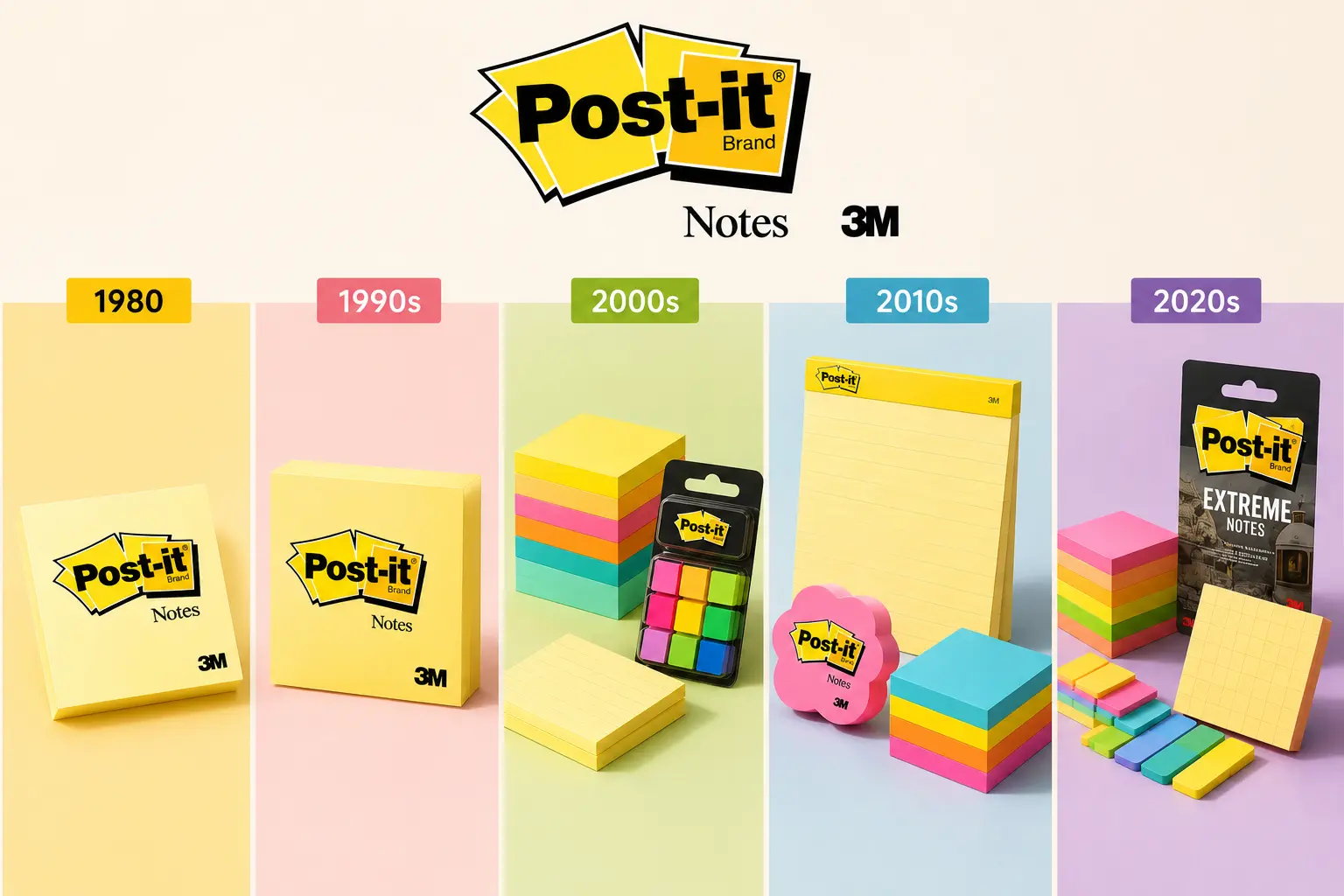
48. Post it Notes
Before Vs After
Before
- Paper reminders
- Tape required
- Difficult repositioning
After
- Reusable adhesive notes
- Easy organization
- Endless applications
The Problem
People frequently left reminders using scraps of paper that easily disappeared or damaged surfaces with glue and tape.
Why Redesign
Scientists at 3M discovered a low tack adhesive and transformed what first appeared to be a failed experiment into one of the world's most useful office products.
The Result
Post it Notes became an everyday productivity essential and one of history's greatest examples of accidental innovation leading to purposeful redesign.
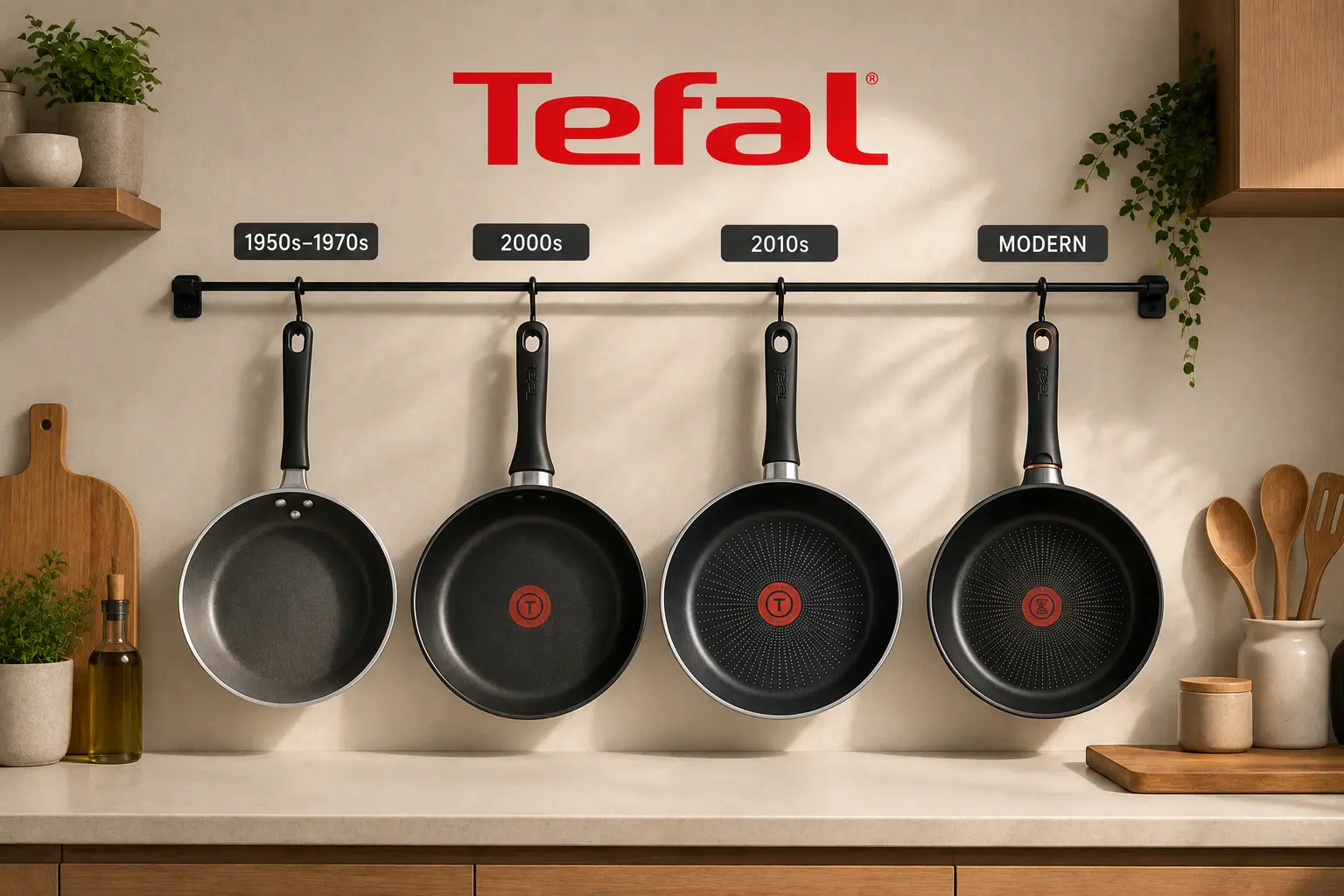
49. Tefal Non Stick Frying Pan
Before Vs After
Before
- Food sticking to pans
- Difficult cleaning
- Heavy oil usage
After
- Non stick coating
- Faster cleaning
- Healthier cooking
The Problem
Cooking often meant scraping burnt food from pans and spending extra time cleaning. Home cooks wanted cookware that simplified everyday meals.
Why Redesign
Tefal introduced non stick coatings that improved cooking performance while reducing the amount of oil required. Convenience became the product's biggest selling point.
The Result
Non stick cookware became a standard feature in modern kitchens around the world.
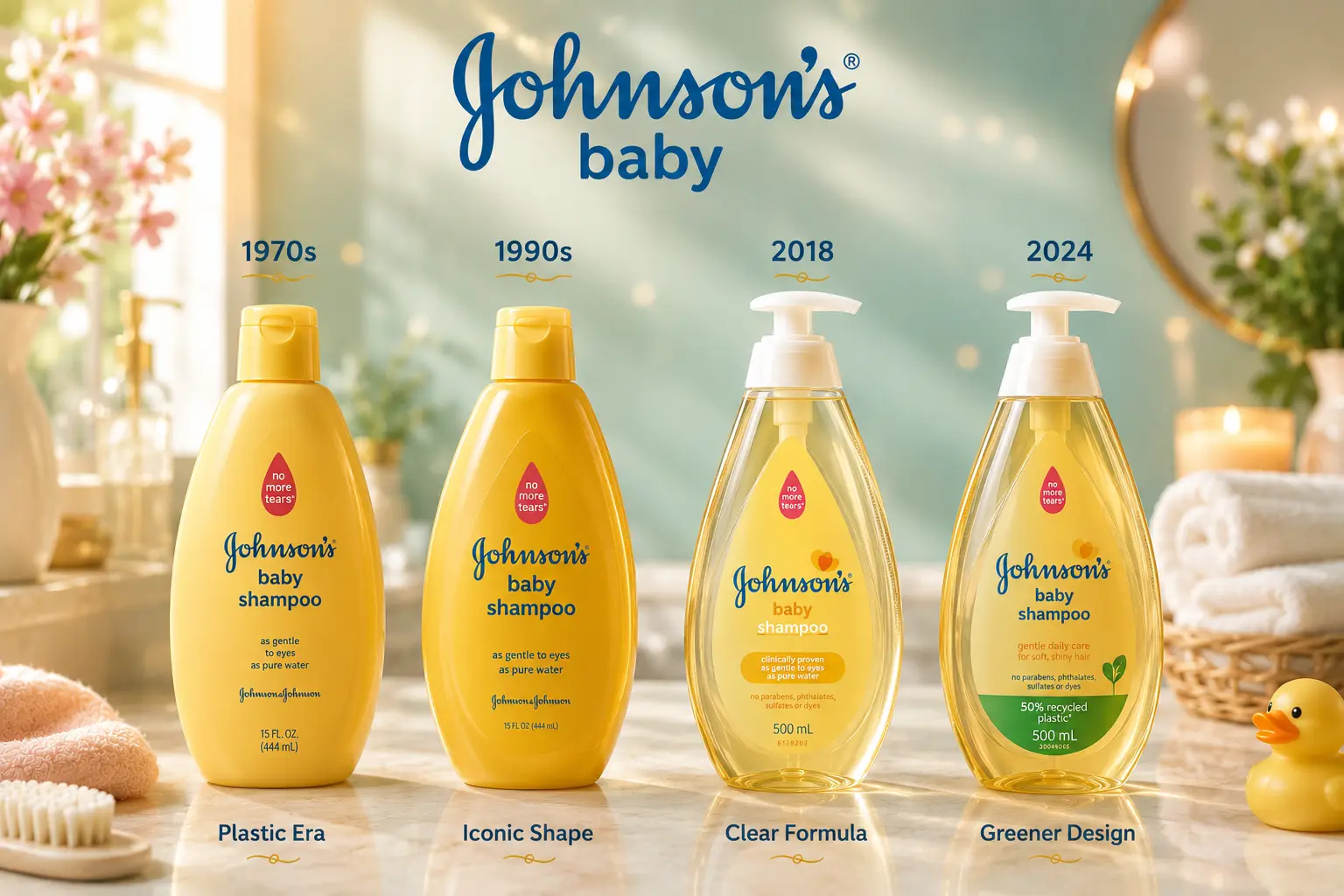
50. Johnson's Baby Shampoo
Before Vs After
Before
- Adult shampoo formulas
- Eye irritation
- Limited child focused design
After
- Gentle formula
- Tear free experience
- Child friendly packaging
The Problem
Parents wanted personal care products specially designed for babies. Adult shampoos often caused discomfort during bath time, turning a simple routine into a stressful experience.
Why Redesign
Johnson's developed a gentler formula and paired it with soft, friendly packaging that reassured parents. The redesign focused equally on product performance and emotional trust.
The Result
Johnson's Baby Shampoo became one of the most trusted baby care products worldwide, showing how empathy and customer understanding can shape lasting product innovation.
Eight Reasons Products Get Redesigned
Every successful redesign begins with a meaningful reason. While every product follows a unique journey, history shows that most redesigns happen because of a handful of common patterns.
1. Customer Experience Improves
Customers interact with products every day, making even the smallest inconvenience noticeable over time. Listening carefully to feedback helps businesses identify opportunities that competitors often overlook. The most successful redesigns begin by making everyday experiences simpler, smoother, and more enjoyable.
2. Technology Evolves
Advances in technology open the door to products that perform better while using fewer resources. New innovations help brands improve reliability, precision, and efficiency without changing the core purpose of the product. Companies that embrace technological progress often create entirely new customer expectations.
3. Manufacturing Becomes Smarter
Manufacturing improvements help businesses produce better products at greater scale and with higher consistency. Efficient production reduces waste, improves quality control, and shortens delivery timelines. These operational improvements strengthen both profitability and customer satisfaction.
4. Better Materials Become Available
Material innovation allows products to become lighter, stronger, safer, and more durable. New materials also improve sustainability, comfort, and long term performance. Choosing the right material often transforms the overall customer experience without changing the product's purpose.
5. Consumer Lifestyles Change
As people's habits evolve, products must adapt to fit new routines and expectations. Urban living, remote work, health awareness, and digital lifestyles continue influencing product design across industries. Brands that evolve alongside their customers remain relevant for decades.
6. Competition Raises Expectations
Every new competitor pushes the market toward better products and higher standards. Continuous improvement helps businesses stand out while strengthening customer loyalty. Companies that consistently innovate often become the benchmark that others aspire to follow.
7. Sustainability Drives Innovation
Customers increasingly value products that balance performance with environmental responsibility. Redesigning products with recyclable materials, efficient manufacturing, and longer lifecycles creates benefits for both businesses and society. Sustainability has become a powerful driver of modern product innovation.
8. Brands Grow Into New Markets
Expanding into new regions or customer segments often requires thoughtful product adaptation. Design changes help products appeal to different cultures, lifestyles, and purchasing behaviors while preserving the brand's identity. A well planned redesign makes global growth more achievable and sustainable.
A redesign often helps companies reach new audiences, enter global markets, or expand into entirely new product categories while maintaining a recognizable identity.
Across every industry, these reasons appear again and again. They form the foundation of countless product development examples and product innovation examples that continue shaping the products we use every day.
Eight Signs Your Product Is Ready For A Redesign
A product rarely asks for a redesign directly. Customers reveal the need through their behavior, feedback, and purchasing decisions.
Watch for these signals:
- Customer complaints begin repeating the same issues.
- Product reviews mention usability more than features.
- Manufacturing costs continue increasing.
- Competitors deliver a noticeably better experience.
- Customer support requests become more frequent.
- Packaging creates unnecessary waste or damage.
- New materials offer better durability or sustainability.
- Sales begin slowing despite strong market demand.
One signal may suggest a small improvement. Several signals together often indicate the right time for a comprehensive redesign.
Questions Every Founder Should Ask Before Redesigning A Product
Before investing time and resources, gather the right information. Strong questions often produce stronger products.
Ask your team:
- Which customer frustration appears most often?
- Which feature creates the most value?
- Which feature receives the least engagement?
- What part of the product feels outdated?
- Which manufacturing step consumes the most time?
- Which material creates unnecessary cost?
- Which customer segment remains underserved?
- What would make customers recommend this product more often?
- Which improvement delivers the highest impact with the lowest effort?
- Which part of the experience creates delight?
The answers frequently reveal opportunities that spreadsheets alone cannot uncover.
Product Redesign Checklist
Use this checklist before beginning any redesign project.
Customer Research
- Interview existing customers.
- Observe real product usage.
- Study customer reviews.
- Identify recurring pain points.
- Understand purchase motivations.
Product Evaluation
- Measure usability.
- Review ergonomics.
- Evaluate durability.
- Test packaging.
- Compare against competitors.
Engineering Review
- Simplify components.
- Reduce manufacturing complexity.
- Improve repairability.
- Select better materials.
- Increase product reliability.
Business Review
- Estimate redesign cost.
- Calculate expected return.
- Review pricing strategy.
- Analyze production capacity.
- Plan launch timeline.
A structured evaluation reduces guesswork and increases the likelihood of a successful redesign.
Common Product Redesign Mistakes
Many redesign projects struggle because businesses focus on appearance while overlooking customer experience.
Some of the most common mistakes include:
- Redesigning for trends instead of customers.
- Adding features that increase complexity.
- Ignoring manufacturing feasibility.
- Skipping prototype testing.
- Overlooking packaging improvements.
- Collecting too little customer feedback.
- Changing too many elements simultaneously.
- Losing the product's original identity.
- Delaying improvements until customers leave.
- Measuring success only through appearance.
The strongest redesigns improve functionality, usability, engineering, and emotional connection together.
The Future Of Product Redesign
The next decade will reshape how products are imagined, manufactured, and experienced. Artificial intelligence will accelerate concept generation. Advanced materials will improve durability while reducing environmental impact. Digital twins will allow engineers to simulate product performance before production begins. Mass customization will help brands create products tailored to individual preferences without sacrificing manufacturing efficiency.
Customers will also expect greater transparency. They will increasingly value products that explain where materials come from, how they are manufactured, how long they last, and how they can be repaired or recycled. Design innovation will extend beyond appearance and become a complete business strategy.
The companies that thrive will view redesign as a continuous cycle of learning rather than a milestone. Every customer interaction, every review, and every product iteration becomes another opportunity to create a better experience.
About The Author

Vyasateja Rao – Chief Advisor, Analogy
VT Rao (Vyasateja) is a multi-award-winning product designer with over two decades of experience, and the visionary founder of Analogy, a Bangalore-based industrial and interaction design studio. He specializes in crafting memorable and innovative experiences for both physical and digital products. After earning a Masters in Industrial Design from North Carolina State University in 2007, Vyas worked across the United States, Hong Kong, China, Korea, Taiwan, Singapore, and India, collaborating with Fortune 500 companies and leading design studios. His studio has received international recognition, including the Red Dot, IF Design, Good Design, NY Product Design, European Product Design, German Product Design, IBDC, Singapore Design Award, and multiple patents for product innovation. VT has designed for global clients such as Panasonic, Unilever, Amazon, Marvel, and Cellairis, blending creativity with manufacturability to create breakthrough products. Beyond design, he mentors aspiring designers, teaching the importance of contrast, surprise, and hidden artifacts in creating compelling experiences.