Hardware product development from concept to market-ready typically costs between $75,000 and $400,000. Most hardware products require 3 to 5 rounds of prototyping to reach market-ready quality. Engineering and technical development is the largest single cost in hardware development. CE, FCC, and UL certifications each require formal testing at accredited labs, and their costs depend on its category. Injection moulding tools cost is a hidden cost which most first-time founders ignore. This is a manufacturing capital cost that's separate from your development budget. A 25% contingency above your core engineering estimate is the minimum viable buffer for a hardware project.
How much does it cost to ideate, conceptualize, develop a prototype, and manufacture a hardware product? Real cost breakdowns by phase, product type, and complexity from the studio behind Google, Panasonic and Unilever products. Here is a situation we see constantly. A first-time founder walks in with three quotes already in hand. One says $20,000. One says $120,000. One says "it depends." All three are for the exact same product idea. If that has ever happened to you, you are not alone. Those quotes are simply measuring completely different things. One studio is scoping concept design only. Another is quoting the full journey through manufacturing. The third has not figured out your product yet.
None of them told you that upfront.
This is where most hardware founders make their first and most expensive mistake. They compare hardware product development cost numbers without understanding what those numbers actually cover. One quote might include prototyping. Another might stop at engineering drawings. A third might bundle certifications while excluding tooling entirely. Without knowing what each number represents, you cannot make a sensible decision about where to invest or who to trust.
We have developed hardware products with Google, Panasonic, Unilever, and boAt. We have also worked with dozens of first-time founders building their very first physical product from scratch. After two decades and several hundred shipped products, here's exactly what drives hardware development cost up or down, we can tell you exactly what drives hardware product development cost up or down and where the budget killers hide. The goal of this guide is to give you complete clarity before you spend a single rupee or dollar on development.
But knowing that range without the context behind it is like knowing the price of a flight without knowing the destination. Let us break it down properly, phase by phase, so you get clarity and you can know what you are paying for.
What the $75K to $400K Range Actually Means
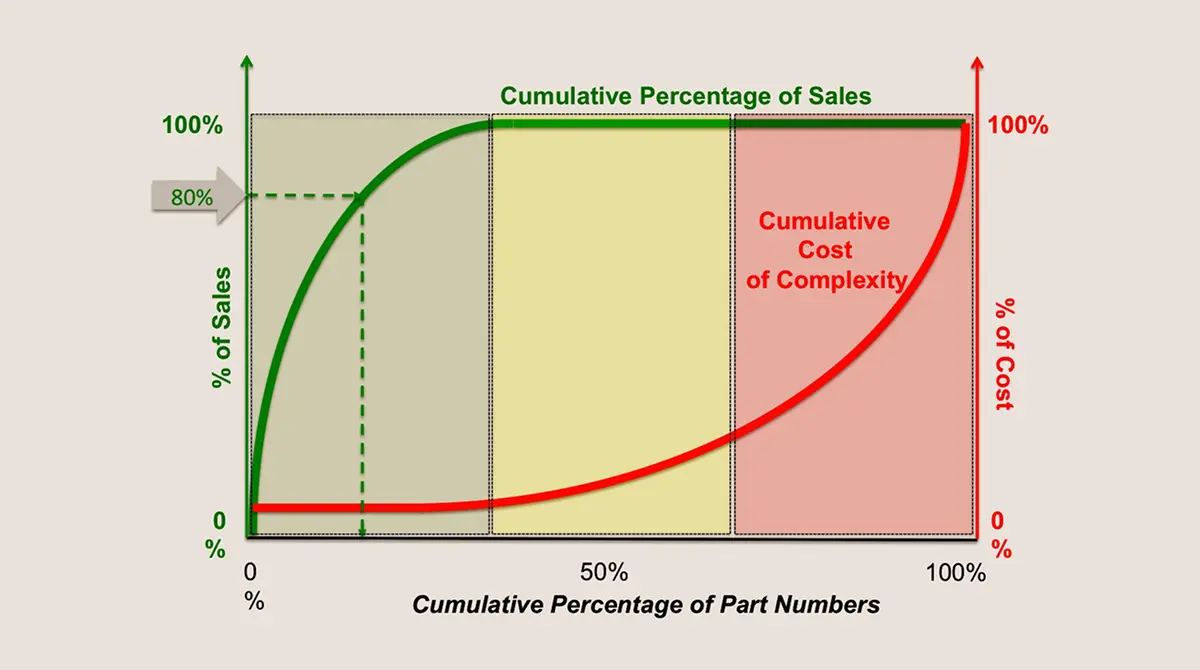
The hardware product development cost range is not a cop-out. It exists because hardware is deeply physical, and every product decision compounds in cost. The materials you choose, the electronics architecture you design around, the regulatory markets you are targeting, the number of custom components, the manufacturing process chosen: all of these multiply against each other. A product that needs wireless connectivity, a rechargeable battery, a custom enclosure, and FDA clearance is genuinely four to five times more expensive to develop than a product that does not.
The honest truth is this: if you are getting quotes under $30,000 for a connected consumer electronics product, you are not getting a discount. You are getting a product that will fail in testing, tooling, or manufacturing. The cheap path almost always costs more in the long run. Hardware does not forgive shortcuts the way software does. You cannot push a firmware update to fix a poorly designed enclosure after the moulds have been cut.
Here is a clean way to think about where your product likely sits. Simple products, such as basic consumer accessories with no electronics and standard manufacturing, fall in the $75,000 to $125,000 range for total hardware product development cost. Moderate complexity products, including smart home devices, fitness trackers, and kitchen appliances with connectivity, sit between $125,000 and $250,000. High complexity products such as medical devices, industrial equipment, and advanced IoT with regulatory hurdles run from $250,000 to $400,000 and beyond. Most first-time founders discover their product is more complex than they initially believed. That is normal, and it is also why having a clear cost framework from the start protects your runway.
"Most first-time founders discover their product is more complex than they initially believed. Having a real hardware product development cost framework from the start is the only thing that protects your runway." - Vyasateja Rao, Founder, Analogy Design
The Four Phases of Hardware Development
Hardware product development cost is not one big expense. It has four distinct phases, each with its own cost profile, its own risk factors, and its own way of compounding if mismanaged. Most founders underestimate phases three and four. That is where budgets collapse, timelines extend, and products quietly die. Understanding each phase clearly is the first step to planning a budget that actually holds. Below are three questions that determine your hardware development budget:
1. Does your product have electronics?
No electronics? You're likely in the $75K to $125K range. Custom wireless and sensors should have a minimum budget of $200K or more. A product with a microcontroller, battery, and Bluetooth module is not a simple product, even if it fits in your palm. Every additional electronic subsystem adds engineering hours, certification scope, and failure points that must be validated before manufacturing begins.
2. Are you selling into a regulated industry?
Medical, industrial, or anything needing FDA/FCC/BIS adds $30K to $80K and 6 to 12 months of work at a minimum. Certification comes at the start of development, because it will be shaping your engineering decisions from day one. Founders who discover their regulatory path late routinely rebuild work that was already completed, at a stage when rebuilding is most expensive.
3. Do you need a custom enclosure or off-the-shelf housing?
Custom injection-moulded enclosure requires you to spend $15K to $100K in tooling on top of development. Tooling cost is a capital expense that sits completely outside your development budget, which is exactly why first-time founders miss it until it stops their launch cold. A product that is fully designed, validated, and manufacturing-ready still cannot ship without funded tooling.
If you answered yes to two or more of these, your product is moderate-to-high complexity. Here's what that means phase by phase.

Phase 1: Industrial Design and Concept Development
Typical cost: $15,000 to $75,000
This is where your idea becomes something tangible enough to test, present to investors, and hand to engineers. Phase 1 covers user research, form factor exploration, CAD modeling, material selection, and aesthetic development. It sounds straightforward, but the quality of thinking done here directly determines the hardware product development cost of everything that follows. Poor decisions made during concept design become expensive engineering problems two phases later, at a point when fixing them costs far more.
What drives Phase 1 cost up: complex ergonomics or multi-user interaction requirements, premium material specifications and finish standards, multiple design directions explored before committing, and deep user testing rounds. What keeps Phase 1 lean: a clear and specific design brief from day one, straightforward form factors without complex mechanical interaction, and standard manufacturing processes using commonly available materials. Scope creep is expensive, and every new direction explored adds time and money to this phase.
A simple consumer product might need $15,000 to $25,000 in concept design. A medical device with ergonomic requirements and regulatory considerations can hit $50,000 to $75,000 before you have written a single line of firmware. The investment is real, but it is also the cheapest point in the entire development journey to make changes. A revision here costs hours. The same revision after tooling costs thousands. Read more about our concept design process and what it covers.
Actionable tip: Write a one-page design brief before you engage any studio. Define your target user, the core problem in one sentence, the three to five features that matter most, and your target retail price. That brief alone will sharpen every conversation you have with designers and engineers and protect you from scope creep from day one.
Phase 2: Engineering and Technical Development
Typical cost: $25,000 to $150,000
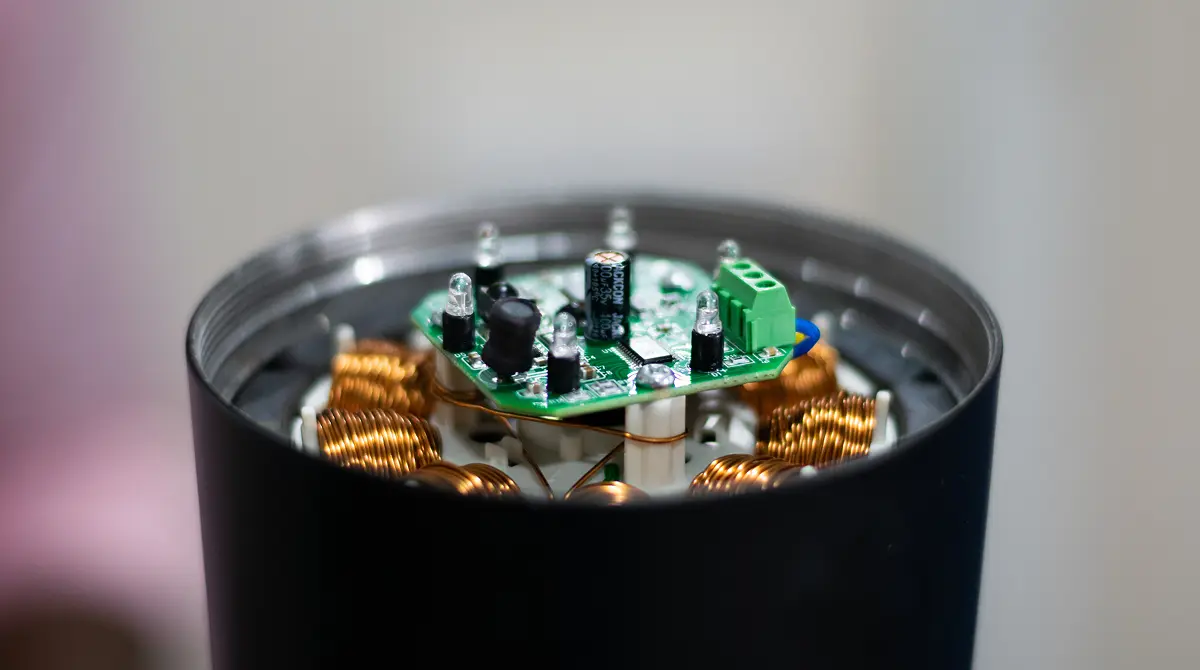
This is where your product becomes technically real, and it is usually the single largest line item in your total hardware product development cost. Engineering covers mechanical design, electronics development, firmware, and system integration. Each of these disciplines has its own cost range, and they interact in ways that are not always visible until you are deep inside the process with real deadlines and real suppliers.
Mechanical engineering covers CAD modeling and technical manufacturing drawings, structural analysis and stress testing, Design for Manufacturing optimisation, and assembly tolerance planning. This typically runs $10,000 to $60,000 depending on complexity. Electronics development, which includes circuit design, PCB layout, component selection, firmware development, and EMC/EMI compliance preparation, adds another $15,000 to $75,000. System integration, which brings hardware and software together into a coherent product, adds $5,000 to $25,000 on top. These are not sequential costs you can skip. They are parallel workstreams that must be managed together from the start.
The biggest swing factor in Phase 2 is your electronics architecture. A product using off-the-shelf modules might land at $25,000 total for engineering. A connected device with custom sensors, wireless protocols, and a companion mobile app can easily push past $100,000. Understanding this early shapes smarter decisions about what to build custom and what to buy proven. Read our DFM checklist for hardware founders to understand how design decisions in this phase affect your manufacturing cost later.
Actionable tip: Before Phase 2 begins, ask your engineering team to map out your full system architecture covering every component, every integration point, and every wireless protocol. This document takes a few days and costs almost nothing compared to the rework it prevents when problems are discovered late.

Phase 3: Prototyping and Testing
Typical cost: $10,000 to $50,000
Prototypes do one thing: they prove your design works before you commit to manufacturing. This phase is iterative by nature, and most products need three to five rounds of prototyping to reach market-ready quality. Each round reveals something different such as a tolerance issue, a usability failure, or a component that does not behave as specified under real conditions. Each round is also where you save the cost of finding those same problems inside a factory producing thousands of units.
The progression follows a clear path. Proof-of-concept prototypes ($2,000 to $8,000) answer one question: does the core technology actually work? Functional prototypes ($5,000 to $15,000) test basic performance across the full product. Design validation prototypes ($8,000 to $25,000) bring form and function together to test the complete user experience. Pre-production prototypes ($10,000 to $30,000) match final manufacturing specifications and confirm the product is ready to tool. Testing and validation adds another $5,000 to $20,000 for functional performance, durability, regulatory pre-testing, and user acceptance testing.
Products with custom components or tight tolerances cost more to prototype. This is not a problem to avoid. It is a signal that the product is genuinely complex and requires proper investment in validation. Founders who skip or rush prototyping consistently report the same outcome: they discover in manufacturing the problems they chose not to find in prototyping, at a point when the hardware product development cost of fixing them has multiplied by ten.
Read our step-by-step guide on how to build a hardware product from scratch.
Actionable tip: Define what you want to learn from each prototype round before you build it. Document every failure: a cracked housing, a loose connector, a user who cannot figure out how to turn the device on. Patterns emerge quickly, and those patterns guide your next iteration far more reliably than intuition does.

Phase 4: Manufacturing Preparation and Launch Support
Typical cost: $15,000 to $75,000
This is where most first-time hardware founders run out of budget. It's because they simply did not know what to plan for. Manufacturing preparation is a major driver of total hardware product development cost, and it includes DFM review, supplier identification and qualification, tooling design, production line setup, quality control planning, packaging specification, regulatory certification submissions, and supply chain management. None of these are optional if you want a product that ships reliably at volume.
DFM review ($8,000 to $25,000) optimises your design for the realities of production: reducing part count, standardising components, and designing assemblies that can be built consistently by workers who have never seen your product brief. Manufacturing setup ($10,000 to $40,000) covers supplier vetting, tooling and fixture development, production line testing, and quality systems implementation. Launch support ($5,000 to $20,000) handles packaging design and testing, regulatory certifications, and ongoing supply chain oversight through the first production runs.
Read more about our manufacturing support and launch services.
The reason this phase surprises founders is simple: it does not feel like development. The product is designed. The prototype works. Surely the hard part is done. What they discover is that getting a product to work in a prototype environment and getting it to work consistently in a factory producing thousands of units are two entirely different engineering problems. The transition between those two states is where Phase 4 lives and where the most expensive surprises in any hardware product development cost plan hide.
Actionable tip: Start talking to manufacturers in Phase 2, not Phase 4. Share your design intent early. Their feedback on component availability, standard tooling dimensions, and assembly complexity will shape smarter engineering decisions months before those decisions become expensive to change.
Explore our Product Path methodology to see how we structure this from the start.
The Hidden Costs That Kill Hardware Budgets
These are the line items that do not appear in most development quotes. They are also the ones that cause projects to stall, run out of runway, or collapse entirely at the finish line. Every first-time hardware founder encounters at least one of these. The ones who survive are the ones who planned for them before the surprises arrived.
Regulatory compliance is the first hidden driver of hardware product development cost. Certification testing runs $10,000 to $50,000 depending on your product category and target markets. Medical devices and industrial equipment push toward the high end. CE marking for Europe, FCC certification for the United States, and UL safety testing each require formal testing at accredited laboratories with documented submissions. In India, BIS certification under the Electronics and Information Technology Goods rules is mandatory for many categories.
You can review mandatory certification requirements on the Bureau of Indian Standards official portal and the US FCC certification database. None of this is included in a standard development quote, and none of it is optional if you want to sell legally.
Tooling and mould costs are the second major hidden expense. Even simple injection moulding tools cost $15,000 to $100,000 per mould. This is a manufacturing capital cost, not a development cost, which is why it gets treated separately and then forgotten. Founders regularly reach manufacturing-ready status with a market-ready product and no budget left for tooling. Plan for this number from day one or it will stop your launch cold. This overview of injection moulding gives useful context on why tooling is as expensive as it is.
The iteration and redesign contingency is the third. Most hardware products need two to three major design iterations before they are truly right. Build 20 to 30 percent contingency above your core hardware product development cost estimate. Projects that skip this buffer end up cutting corners during manufacturing validation, which is the most expensive place in the entire journey to cut anything. The founders who treat the contingency as optional are the ones who call us three months before launch with problems that cost twice what proper planning would have.

What It Really Costs to Build a Hardware Product: Full Checklist
First-time founders consistently underestimate hardware product development cost because the full picture is never written in one place. This checklist is that place. Every item on this list is a real cost that your development budget must account for. Miss any one of them and your hardware product will stall, overspend, or fail to launch on time.
- Industrial design and concept development: $15,000 to $75,000 depending on complexity and number of design directions explored
- Mechanical engineering and CAD: $10,000 to $60,000 covering structural design, tolerances, and DFM optimisation
- Electronics development and PCB design: $15,000 to $75,000 covering circuit design, firmware, and EMC preparation
- System integration and software: $5,000 to $25,000 to bring hardware and software together into a functioning product
- Proof-of-concept and functional prototyping: $7,000 to $23,000 across early testing rounds
- Design validation and pre-production prototypes: $18,000 to $55,000 for near-final testing before manufacturing commitment
- Regulatory certifications such as FCC, CE, UL, RoHS, and BIS: $10,000 to $50,000 depending on product category and target markets
- Tooling and injection mould costs: $15,000 to $100,000 per mould, separate from development cost entirely
- Manufacturing setup, supplier qualification, and quality systems: $10,000 to $40,000
- Packaging design, testing, and specification: $5,000 to $15,000
- Iteration and redesign contingency buffer: 20-30% above your total core development estimate
- Project management and coordination overhead: 10-15% of total budget if not handled by a full-service studio
This is the complete picture of hardware product development cost that most quotes do not show you. Knowing it before you start is the difference between a funded, focused project and one that runs out of runway in Phase 3.

The Biggest Cost Drivers in Hardware Development
Understanding what drives your hardware product development cost gives you real control over your budget. These five factors determine more of your total spend than anything else, and every one of them is something you can actively manage with better decisions made early in the process.
Technical complexity of your electronics is the largest variable in any hardware product development cost estimate. Custom sensors, novel wireless protocols, and unique hardware-software integrations all add engineering hours. If you can use proven modules or reference designs instead of custom silicon, you will save significantly without compromising the product experience. The IEEE standards for wireless protocols are worth reviewing to understand which connectivity options require custom versus standard implementations.
Regulatory requirements add both time and money to your total hardware product development cost. Medical devices, industrial equipment, and connected consumer electronics each sit in different regulatory environments. FDA clearance and UL certification each add months and real budget to your timeline. Know your full certification path before engineering begins, not after. Discovering a regulatory requirement late is like discovering a structural issue after the walls are built.
You can review the FDA device classification system to understand where your product sits before development starts.
Material selection has more impact on hardware product development cost than most founders expect. Exotic materials look compelling in renders but cost significantly more to prototype, source, and manufacture consistently. Standard plastics, metals, and established surface finishes keep costs predictable and supply chains resilient. Premium materials are worth their cost when they genuinely deliver user value, not when they are chosen for aesthetics in product renders that no one will ever compare to the final product.
Design scope creep is the single most controllable cost driver in the entire process. Every major scope change after engineering begins resets work that has already been completed. Getting your product requirements locked and agreed before engineering starts is the highest-return action available to any hardware founder. It costs almost nothing to do this well and almost everything to do it badly.
Read our full hardware product development guide to understand how requirements lock into the full nine-stage process.
Manufacturing process complexity affects both hardware product development cost during development and per-unit cost at scale. Multi-shot moulding, complex sub-assemblies, and tight tolerances all increase engineering costs upfront and manufacturing costs over the lifetime of the product. Simpler designs that are easy to manufacture are cheaper to develop, cheaper to produce, and cheaper to quality-control at volume. This is the core principle behind Design for Manufacturing, which you can explore in this overview of DFM.
Hardware Agency vs. Freelancer vs. In-House
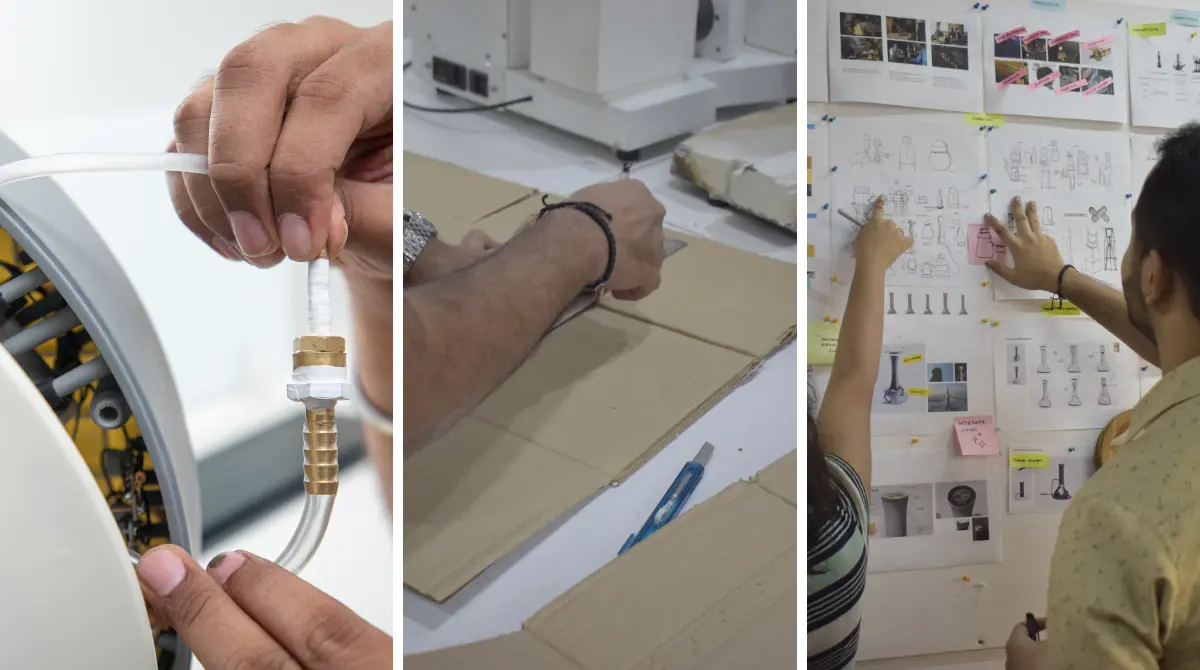
How you structure your development team shapes your hardware product development cost outcome as much as your product decisions do. Each model has a legitimate use case and a profile of the founder it actually serves well. Understanding what suits your situation before you start is worth more than any individual quote you will receive.
Freelancer networks ($40,000 to $150,000) offer lower hourly rates and higher coordination overhead. You manage all vendor relationships, integration points, and project timelines yourself. This model works for narrow, clearly-defined scopes where you already have hardware engineering experience and know exactly what you are buying. It fails when scope is unclear, when disciplines need to integrate tightly, or when you are navigating hardware product development cost planning for the first time and do not know what questions to ask.
Development agencies ($75,000 to $400,000) carry a higher all-in cost but include full accountability and project management. You get a single point of contact who owns the entire journey from concept through manufacturing. This model almost always saves money in the long run for complex products by catching integration problems early when they cost hours to fix rather than weeks. The premium you pay for agency management is almost always recovered in the iterations it prevents and the delays it avoids.
In-house teams ($200,000 to $1,000,000 or more) add salaries, benefits, equipment, software, and facilities on top of development costs. This only makes financial sense for companies planning multiple hardware products or running ongoing hardware research and development. For a first-time founder building a single product, the in-house model dramatically increases your hardware product development cost without proportional return. Read our startup product development guide for a full comparison of how these models play out across different founder profiles.
How to Allocate Your Hardware Development Budget
The founders who hit their development milestones without running dry follow a consistent allocation pattern. It is not complicated. What it requires is committing to the contingency before you feel you need it, because by the time you feel you need it, you have already spent it on something else.
Allocate 60 to 70 percent of your total budget to core development covering industrial design, engineering, and prototyping. This is the heart of your hardware product development cost and the area where quality decisions pay the highest return. Allocate 20 to 30 percent to manufacturing preparation covering DFM review, tooling design, and manufacturing setup. This is the phase most founders underbudget, and it is the phase that decides whether your product ships on time or stalls at the factory gate. Reserve 10 to 20 percent as contingency for iteration, unexpected testing requirements, and supply chain surprises that arrive without warning.
A note on contingency: treating it as optional is the most consistent predictor of hardware project failure we observe. Hardware always surfaces surprises. The founders who treat the contingency budget as untouchable are the ones who reach launch with a product worth launching. The founders who spend it early on extra features are the ones who cut corners in manufacturing validation. Cutting corners in manufacturing validation is the most expensive thing you can do across the entire hardware product development cost journey, because the problems it creates appear at the worst possible time.

When to Invest More, When to Hold Back
Not every product needs maximum investment in every category. Part of making smart hardware product development cost decisions is understanding where investment compounds into better outcomes and where it does not. Getting this distinction right early can save hundreds of thousands of dollars without compromising your product.
Invest more when your product involves complex technical requirements or custom components that have no off-the-shelf equivalent. Invest more when you are entering a regulated industry where compliance is non-negotiable and failure to certify prevents any sale. Invest more when user safety is a core product consideration, because the cost of a recall or a serious incident vastly exceeds the cost of proper validation at any stage of development. Invest more when premium aesthetics are part of your market positioning and your customer is paying a price that reflects it. Invest more when time to market is critical and you cannot afford rework cycles that push your launch back by months.
Hold back when you are still validating market demand before committing to full development. Hold back when your product relies on proven, commodity technologies that do not require custom engineering. Hold back when your requirements are genuinely simple, locked, and unlikely to change as the product evolves. Hold back when you have sufficient runway to support a longer development timeline and can afford to move in deliberate stages rather than racing toward a deadline.
The real cost of cheap development is a pattern we see repeatedly. Founders optimise for cutting early-stage hardware product development cost, then spend three times that amount fixing manufacturing problems that proper design would have caught. Poor industrial design leads to products that miss user needs, manufacturing flaws that are expensive to fix in tooling, and recall risk that can end a company before it gains momentum. The quality of your design phase directly determines the cost of everything that follows it.
Frequently Asked Questions About Hardware Product Development
Final Thoughts: Know the Number Before You Need It
Hardware product development cost is not a mystery. It follows a logic that is learnable, predictable, and manageable if you understand the structure before you start spending. The founders who reach launch on time and on budget are the ones who understood what they were budgeting for from the very beginning and made every phase decision with the full picture in view.
Every stage of hardware product development matters. Every decision compounds. The cost of a mistake in concept design is a conversation. The cost of the same mistake in tooling is a wire transfer you cannot reverse. Understanding that progression is how you protect your runway, make better decisions, and actually get your product to market at a price and quality level that makes the business viable.
Your next step is clarity, not commitment. Before you engage any studio or engineer, know your product type, your regulatory path, your target price point, and your total hardware product development cost including contingency. That foundation is what every successful hardware product is built on, and it is the foundation our team at Analogy Design helps every founder build from day one.

7 Key Numbers Every Hardware Founder Should Know
- $75,000 to $400,000: Full hardware product development cost range from concept to market-ready
- $15,000 to $75,000: Phase 1 industrial design and concept development
- $25,000 to $150,000: Phase 2 engineering and technical development
- $10,000 to $50,000: Phase 3 prototyping and testing across all rounds
- $15,000 to $75,000: Phase 4 manufacturing preparation and launch support
- $10,000 to $50,000: Regulatory certification costs that most quotes exclude entirely
- 20-30%: Contingency buffer that every hardware project needs and most founders skip
Ready to get a real number for your product?
We review your brief, tell you where your product sits in the complexity range, and give you a realistic hardware product development cost estimate with no vague ranges and no "it depends." Work with Analogy Design
About The Author

Vyasateja Rao - Founder, Analogy
Vyasateja Rao is a multi-award-winning product designer with over two decades of experience, and the visionary founder of Analogy, a Bangalore-based industrial and interaction design studio. He specializes in crafting memorable and innovative experiences for both physical and digital products. After earning a Masters in Industrial Design from North Carolina State University in 2007, Vyasateja worked across the United States, Hong Kong, China, Korea, Taiwan, Singapore, and India, collaborating with Fortune 500 companies and leading design studios. His studio has received international recognition, including the Red Dot, IBDC, Singapore Design Award, and multiple patents for product innovation. Vyasateja has designed for global clients such as Panasonic, Unilever, Amazon, Marvel, and Cellairis, blending creativity with manufacturability to create breakthrough products. Beyond design, he mentors aspiring designers, teaching the importance of contrast, surprise, and hidden artifacts in creating compelling experiences.