Picture the moment your idea hits you. It feels electric. You can almost see the product on a shelf, resting in a customer's hands, maybe even sitting on a crowdfunding page with thousands of backers. That spark is real, and it deserves respect. Yet here is the part most first time founders learn the hard way. The fastest way to drain your savings is to start building before you validate your hardware product idea. This guide shows you how to validate your hardware product idea early and with confidence, so every rupee and every dollar you spend later moves you forward.
Think about the quiet fear that sits behind every big idea. What if you pour months of nights and weekends into a product, and the market simply shrugs. What if you raise money from friends and family, order tooling, and then learn that buyers feel lukewarm. That fear is healthy, because it pushes you toward smarter choices. Hardware product idea validation turns that fear into fuel, since it replaces guessing with proof. You stop hoping people want your product and start knowing they do.
Here is the dream version of your journey. You talk to real buyers, you watch their eyes light up, and you collect a list of people ready to pay. You walk into design and engineering with evidence in hand. Investors lean in because you carry data instead of opinions. That outcome starts with one simple habit. You validate your hardware product idea before you spend a dollar on development.
So let us walk through the exact playbook, step by step, in plain language any founder can follow.

Why Founders Burn Cash Before They Learn The Truth
Most hardware dreams fade quietly, and the cause repeats itself again and again. Founders fall for the solution before they fully understand the problem. The sketches feel thrilling, the renders look gorgeous, and that rush feels like progress. Yet motion and progress differ. Spending on CAD, prototypes, and molds feels productive while it slowly drains the bank, especially while demand stays unproven. Idea validation flips the order, so you learn the truth first and spend second.
Here is what the burn usually looks like in practice. You commit savings to a prototype, then to a second prototype, then to tooling that costs anywhere from $50,000 to $500,000. Each step feels logical in the moment. Meanwhile the core question stays wide open. Will real buyers pay real money for this product? That open question is the silent killer of hardware startups. When you validate your hardware product early, you close that question fast and protect your capital.
Now flip the script in your mind. Imagine spending a few weeks and a small budget to confirm demand before anything physical exists. That is the whole promise of hardware product idea validation. It feels less glamorous than a shiny prototype, yet it carries far more power. Smart founders treat validation as a very important step in the hardware product development progress. They guard their time, their money, and their belief in the idea.
Want the bigger picture around this stage? The full journey from spark to shelf sits inside this deep guide on startup product development, which places idea validation exactly where it belongs, right at the very start of everything.
The Quiet Fear Every First Time Founder Feels
Every first time founder carries a private worry. It whispers late at night. What if the idea that feels brilliant turns out to be only average. That worry grows louder the moment real money enters the picture. You feel the weight of expectations from family, peers, and your own ambition. This pressure pushes many founders to either freeze or rush. Both reactions hurt your chances. Validation offers a calmer third path forward.
The frustration usually sounds familiar. You watch other founders launching, scaling, and posting wins, while your idea still lives quietly inside your head. Time slips away, and the gap between vision and reality feels heavier each week. That gap fuels doubt. Yet that same gap shrinks the moment you validate your hardware product idea with real conversations and real signals. Honest action dissolves anxiety faster than any pep talk.
So here is a gentle reframe. Treat this stage as a treasure hunt rather than a test you might fail. Every conversation hands you fresh clues. Every honest reaction sharpens your direction. Hardware product idea validation rewards curiosity, and curiosity feels a lot better than fear. As clues stack up, your confidence grows from a wish into a well earned belief backed by real evidence.

What Idea Validation Really Means For Hardware
Let us define this clearly, because the phrase gets thrown around loosely. Idea validation means gathering real evidence that buyers feel the problem, want a solution, and feel ready to pay for it. For hardware specifically, the stakes climb higher, since physical products carry tooling, materials, certifications, and long timelines. That weight makes early proof even more valuable. When you validate your hardware product idea, you measure desire, willingness to pay, and urgency before steel ever gets cut.
Hardware behaves differently from software, and that difference shapes everything. Software founders can ship a rough version in days, watch usage, and tweak overnight. Hardware founders face molds, suppliers, lead times, and budgets that stretch from 18 to 36 months. A wrong turn in software costs an afternoon. A wrong turn in hardware costs months and a small fortune. So hardware product idea validation matters far more here than it does for a quick app.
Many founders confuse validation with applause. Friends say they love it, and that feels wonderful, yet praise rarely equals payment. Real validation lives in behavior. Emails captured, deposits placed, preorders made, waitlists joined. Those actions carry weight because they cost the buyer something real. Genuine hardware product idea validation always tracks what people do, since actions reveal truth far better than kind words ever will.
For a structured lens on proving value early, this framework on product MVP validation walks through how to test the smallest version of your concept while you validate your hardware product on a tight budget. These ideas trace back to the customer development approach made popular in lean startup circles.
Talk To 50 Strangers Who Could Become Buyers
The single most powerful step costs almost nothing. Talk to fifty potential buyers, real strangers, far beyond your friends and family. Aim for people who feel the problem in their daily lives. Ask them how they handle it today, what frustrates them, and what they have already tried. Listen for patterns rather than polite agreement. This is where idea validation becomes real, because strangers owe you the honesty that friends often soften.
Finding fifty buyers feels intimidating at first, yet it gets easier fast. Slide into communities where your buyer already gathers. Subreddits, Facebook groups, LinkedIn threads, local meetups, and niche forums all work. Offer value before you ask for time. Frame the chat as learning rather than selling, since people open up when they feel safe. Each conversation moves your hardware product idea validation from theory toward real proof.
Approach every chat with genuine curiosity. Your goal is to understand reality, rather than to defend your idea. When someone pokes a hole in your concept, treat that as a gift, because they just saved you months and a pile of cash. Stay quiet, let them talk, and capture their exact words. The richer your notes, the sharper your decisions when you validate your hardware product idea later.
Quick Win: Where To Find Buyers Fast
Drop into three communities your buyer already loves. Offer help, share value, and ask for a short chat. Ten honest conversations can start within a single week, and momentum builds from there. This habit shaped real products. Before choosing a single component, the team behind the iDiya wellness device confirmed a genuine gap with real users, and that early clarity guided every later design and engineering choice.
Questions That Pull The Real Truth From Users
The quality of your answers depends on the quality of your questions. Vague questions invite vague, flattering replies. Sharp questions surface real behavior, real budgets, and real urgency. Here is a set of prompts built to pull honest truth from the people you hope to serve. Use them in order, and let each answer guide your next question naturally.
• How do you handle this problem right now, step by step?
• Which part of your current solution frustrates you the most?
• How often does this problem show up in a typical week?
• What have you already tried, and what happened after?
• How much time or money does this problem cost you today?
• What would push you to switch to something new?
• How much would you happily pay for a real fix?
• When would you ideally want this problem solved?
• Who else around you feels this same pain regularly?
• What would make this a must buy rather than a maybe?
Notice the pattern hiding inside these prompts. Each one points at behavior, money, frequency, and timing, since those four signals predict real demand. Steer clear of leading questions that beg for a yes. Let the buyer paint the picture in their own words. As answers pile up, themes emerge, and those themes form the backbone of solid hardware product idea validation.
Capture everything in one simple sheet. Tag each answer by theme, count how often each pain repeats, and watch the strongest signals rise to the top. This small habit turns scattered chats into a clear map. With that map, you validate your hardware product with evidence rather than gut feel, and your next decisions feel obvious and calm.
Build A Landing Page That Proves People Care
Words feel great, yet behavior proves demand. A simple landing page turns interest into measurable action. Describe the problem in one punchy line, show the promise of your product, and add one clear call to action. Drive a small amount of traffic through ads or social posts, then watch what people actually do. Sign ups, clicks, and deposits speak far louder than compliments. This step pushes your idea validation from talk into hard numbers.
Focus on the metrics that reveal real intent. Page views feel nice, yet email captures and preorders carry true weight. A healthy conversion from visitor to email signals genuine pull. Even better, test a small refundable deposit, since money on the table is the strongest proof of all. When strangers pay before the product exists, you hold powerful hardware product idea validation right in your hands.
Pro Tip: Track Intent Over Vanity
Watch email captures and deposits, since those numbers reveal true buyer intent far better than raw page views ever could.
You can build this page in a single afternoon. Use Webflow, Carrd, or any simple builder, add a crisp headline, one hero image, and one button. Pair it with a short video that shows both the problem and the promise. Then send focused traffic from the exact communities you spoke with earlier. The faster you launch the page, the faster you validate your hardware product idea with live market signals.
Crowdfunding platforms add another strong layer of proof. A preorder page tests demand and price at the same time. To understand how this model works, the concept of crowdfunding is well documented, and many hardware founders use it as a live validation engine for their first run.
Spot Real Demand Versus Polite Encouragement
Here lies the trap that fools gentle hearted founders. Friends, family, and kind strangers shower you with encouragement. They say it sounds amazing, they wish you luck, and they promise to buy one day. That warmth feels lovely, yet it can lead you straight off a cliff. Polite praise costs them nothing at all. Real demand asks them to act, and action is the only signal that matters in honest idea validation.
So learn to read the difference quickly. A soft yes sounds like maybe, someday, or it depends. A hard yes looks like a deposit, a preorder, a calendar booking, or a referral to three friends. Track behavior, count commitments, and weigh money far above words. When you validate your hardware product, treat every dollar pledged as worth one hundred kind comments, because it carries real skin in the game.
Watch for the strongest tell of all. People asking when they can buy. That single question reveals genuine pull. Equally telling is a buyer trying to pay you on the spot. These moments separate a real market from a friendly cheer squad. Anchor your hardware product idea validation in these behaviors, and your confidence will rest on solid ground.
A Simple Step By Step Idea Validation Playbook
Ready to put all of this into motion? Here is a clean, repeatable playbook you can run in a few short weeks. Follow it in order, since each step builds on the one before it. By the end, you will hold real evidence and a clear yes or refine answer on whether to build.
1. Write the problem in one sharp sentence, from the buyer's point of view.
2. List fifty potential buyers who feel that exact pain in daily life.
3. Run honest interviews using the truth pulling questions above.
4. Tag answers by theme and rank the strongest, most repeated pains.
5. Build a one page landing site with a single clear call to action.
6. Drive focused traffic from the communities you already explored.
7. Capture emails, then test a small refundable deposit for real intent.
8. Measure conversion, comments, and the share of hard yes signals.
9. Decide with evidence. Build, refine the idea, or pivot the angle.
Founder Note
Speed beats polish at this stage. A rough test today beats a perfect test next quarter, every single time. Run this loop once, and the fog lifts. You move from hoping to knowing. This is the beating heart of hardware product idea validation, and it works across wearables, appliances, medical devices, and consumer gadgets alike. Repeat the loop whenever you add a major feature, since fresh proof keeps you grounded in reality.
Once your evidence stacks up, you can shape the smallest testable version with help from a prototype and MVP team, so your first real build aims straight at proven demand instead of a hopeful guess.
Smart Moves And Slips In Hardware Validation
Some habits speed up your proof, while others quietly sabotage it. The table below lays out the smart moves beside the common slips, so you can steer around expensive detours. Keep it close as you validate your hardware product idea, and glance at it before every spend.
Read this table again before you spend a single dollar. Each smart move costs very little, while each slip can cost months and a heavy pile of cash. The founders who win at idea validation treat evidence as their compass and ego as their luggage. Pack light, move fast, and let the data lead the way.
Soft Yes Versus Hard Yes: Reading Buyer Signals
This comparison deserves its own spotlight, because it quietly decides your future. A soft yes feels warm yet weightless. A hard yes feels concrete and bankable. Learn to sort one from the other, and your hardware product idea validation gains real teeth. Below sit the signals that fall into each camp, so you can score every conversation honestly.
Soft yes signals to treat with care:
• I love this idea, good luck with it.
• I would probably buy it someday soon.
• Sounds useful, send me updates maybe.
Hard yes signals worth celebrating:
• Here is my deposit, please reserve mine.
• When exactly can I buy this product?
• I just shared it with three friends who need it.
Notice how the hard yes always involves action, money, or urgency. Those three forces predict real sales with surprising accuracy. Weigh your signals honestly, and resist the warm glow of empty praise. When the hard yes column fills up, you have the green light to validate your hardware product idea further with a paid pilot or a crowdfunding push.
Tools That Test Your Hardware Product Idea
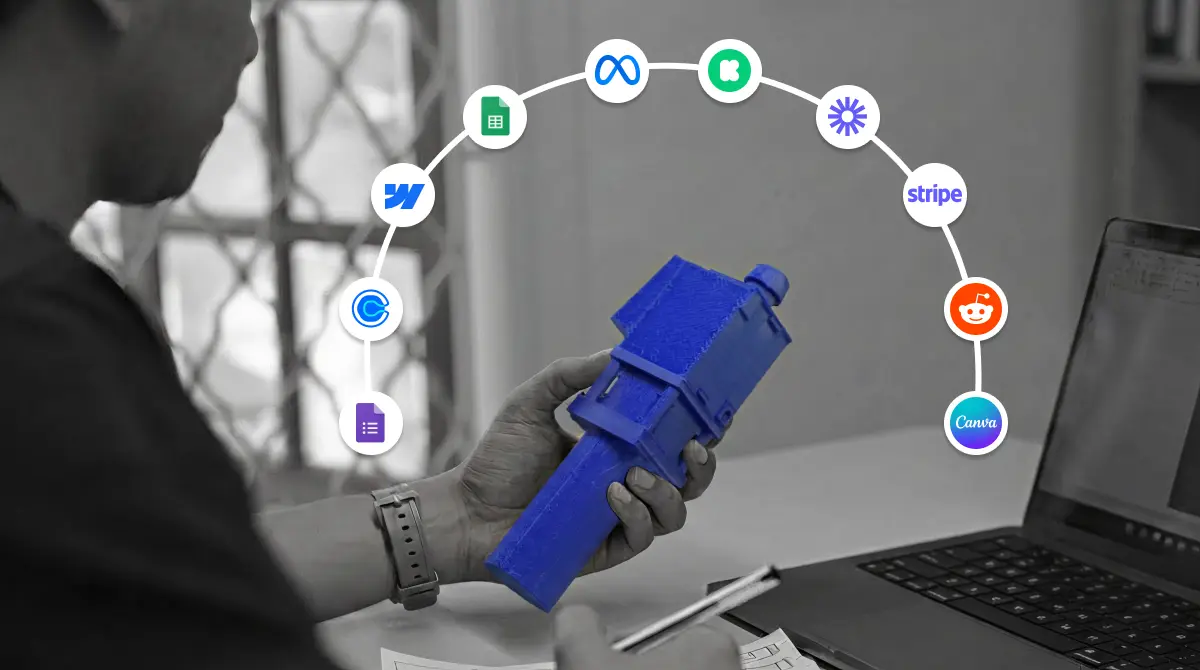
You can run full hardware product idea validation on a shoestring budget. Plenty of low cost or free tools let you test demand before you build anything physical. Here is a practical stack you can assemble today, grouped by what each one helps you achieve. Pick what fits your workflow, and resist the urge to collect every shiny app.
• Google Forms or Typeform for quick buyer surveys.
• Calendly for booking honest interview calls with ease.
• Webflow or Carrd for a fast, clean landing page.
• Notion or Google Sheets for tagging and sorting insights.
• Meta Ads or Reddit Ads for targeted traffic.
• Kickstarter or Indiegogo for live preorder proof.
• Loom for a short, friendly product explainer video.
• Stripe for collecting small refundable deposits.
• Reddit, Discord, and Facebook Groups for buyer access.
• Canva for crisp visuals and quick mockups.
Pick one tool per job and stay lean. A focused stack keeps you fast and clear headed. Spend your energy on conversations and signals rather than software setup. With these tools, you validate your hardware product for the price of a few coffees, which beats burning your savings on a hopeful guess.
Curious where these signals lead next? Once demand looks strong, your concept can take shape through professional concept design. Many founders pair this with a lean minimum viable product mindset to keep early builds small, smart, and affordable.
Protect Your Idea While You Validate It
A common worry stops founders cold. What if someone steals my idea during all these conversations. Here is the calm truth. Ideas hold little value on their own, while execution holds nearly all of it. Most people stay busy with their own lives and lack the drive to build your vision. So talk openly, since the insight you gain far outweighs the tiny risk. Still, a few smart steps let you guard your work while you validate your hardware product idea.
If your concept carries a true technical novelty, explore protection early. A provisional patent buys you time and peace of mind at a modest cost. Document your progress with dates, sketches, and notes, since a clear record strengthens your position. For deeper guidance, the Analogy Design team wrote a full walkthrough on patenting your product idea, which pairs beautifully with your validation work.
Official resources help you take the next step with ease. In the United States, the USPTO handles patent registration and offers clear guidance for new inventors. In India, the Office of the Controller General of Patents manages filings and resources. For any other country, search for your national patent office and follow their process. These official bodies keep your idea validation and protection on solid legal ground.
How Analogy Design Validates Hardware Ideas
Running solo works well, yet experienced guidance speeds everything up. Analogy Design has guided hundreds of products from spark to shelf for brands like Google, Panasonic, and Unilever. Their structured method builds proof into the very first stage, so founders skip the costly guesswork. With twenty plus years of design depth and a team across industrial design, engineering, and strategy, they turn fuzzy ideas into evidence backed plans. That is the calm, confident way to validate your hardware product idea.
Their Product Path method maps the full journey, and it starts exactly where you should. With demand. Real projects show the payoff. The ergonomic toothbrush for Pepsodent began with a sharp user and a clear price point. The Wildcraft outdoor gear line stayed focused by defining its buyer early. Each win traces back to disciplined hardware product idea validation at the very start.
From the Mustard AI glasses to a 367 percent funded crowdfunding launch, the pattern stays the same. Prove demand, then build with precision. Browse the full work portfolio to see how validated ideas became real, shipping products. When you feel ready to validate your hardware product with expert hands, a short strategy call through the contact page sets the direction.
Your Idea Validation Checklist Before You Build
Before you spend a dollar on development, run through this checklist. Tick every box, and you can move into design with real confidence. Leave a few boxes open, and you know exactly where to focus next. This is your final gate for solid idea validation, and it keeps your budget safe.
1. You wrote the core problem in one clear, buyer focused sentence.
2. You spoke with at least fifty real potential buyers.
3. You spotted strong, repeating patterns across the answers.
4. You confirmed buyers feel the pain often and feel it strongly.
5. You learned what buyers pay today and would pay tomorrow.
6. You launched a landing page and drove real, targeted traffic.
7. You captured emails and tested a small refundable deposit.
8. You counted more hard yes signals than soft ones.
9. You documented every insight inside one organized sheet.
10. You feel ready to build, refine, or pivot with evidence.
If most boxes carry a tick, congratulations, your idea earned the right to exist in the real world. If a few stay open, loop back and gather more proof. Either way, you now hold a clear, evidence based answer. That is the entire point of hardware product idea validation, and you just mastered the discipline.
Frequently Asked Questions On Idea Validation
Key Takeaways To Validate Your Hardware Idea
Let us tie it all together. These takeaways capture the heart of everything above, so you can act today with full clarity. Keep them somewhere visible, and revisit them before every major decision.
1. Prove demand before you spend a dollar on building anything.
2. Talk to fifty real buyers and listen hard for patterns.
3. Ask about money, timing, and frequency of the pain.
4. Track behavior like deposits and preorders, beyond praise.
5. Launch a simple landing page to measure real intent.
6. Weigh hard yes signals far above soft encouragement.
7. Decide with evidence, then build with full confidence.
Keep these seven principles close as you validate your hardware product idea. They turn a risky leap into a series of smart, low cost steps. Follow them with discipline, and you join the founders who ship products people truly crave.
Your Next Move Starts Today
Your idea deserves a real shot at the world. The path forward feels clear now. Prove demand first, then build with precision. Start small, start today, and let evidence guide every step. The founders who win simply begin, gather proof, and keep moving steadily. You hold that very same power right now, in this moment.
When you feel ready to move from proof to product, expert guidance makes the climb smoother. Explore the launch support options, or book a quick strategy call through the contact page. Bring your evidence, and let the next stage begin with momentum. This is how you validate your hardware product idea and turn it into something real, valuable, and lasting.
About The Author

Vyasateja Rao - Founder, Analogy
Vyasateja Rao is a multi-award-winning product designer with over two decades of experience, and the visionary founder of Analogy, a Bangalore-based industrial and interaction design studio. He specializes in crafting memorable and innovative experiences for both physical and digital products. After earning a Masters in Industrial Design from North Carolina State University in 2007, Vyasateja worked across the United States, Hong Kong, China, Korea, Taiwan, Singapore, and India, collaborating with Fortune 500 companies and leading design studios. His studio has received international recognition, including the Red Dot, IBDC, Singapore Design Award, and multiple patents for product innovation. Vyasateja has designed for global clients such as Panasonic, Unilever, Amazon, Marvel, and Cellairis, blending creativity with manufacturability to create breakthrough products. Beyond design, he mentors aspiring designers, teaching the importance of contrast, surprise, and hidden artifacts in creating compelling experiences.