Somewhere between the excitement of a first working prototype and the pressure of a looming launch date, many founders quietly wonder whether their product will end up doing more harm than good once it reaches the world in the thousands. The dream of building something people love sits right beside a nagging fear that a poorly considered material or a needlessly complex assembly could leave a footprint far heavier than intended. That tension rarely gets addressed head on, mostly because sustainability conversations tend to arrive late, long after the design decisions that actually determine environmental impact have already been locked in.
Here is the encouraging part of that story. Design for manufacturing and assembly, the same discipline founders adopt to protect budgets and timelines, happens to be one of the most effective sustainability tools available to a hardware founder, even when sustainability sat far outside the original reason for adopting it. Fewer parts mean less raw material pulled from the earth. Simpler assembly means less energy burned on a factory floor. A product built to come apart cleanly means a longer useful life and a real shot at recycling instead of landfill.
This guide walks through exactly how DFMA and sustainability intersect, using a founder friendly framework that treats environmental responsibility as a natural outcome of good manufacturability thinking rather than a separate, expensive initiative bolted on at the end.
The Uncomfortable Truth About Sustainable Hardware
Most of a product's environmental fate gets decided far earlier than founders assume. Industry research consistently points to roughly eighty percent of a product's lifetime environmental impact being locked in during the design phase, long before a single unit reaches a factory floor. That means sustainability is rarely something a founder can bolt onto a finished design through better packaging or a recycling program at the end of the line.
This uncomfortable truth reframes the entire conversation around what sustainable hardware actually requires. A beautifully packaged product built from an overly complex, part heavy design has already locked in a heavier environmental footprint than a simpler, better considered alternative, regardless of what the packaging says on the outside. Founders chasing genuine sustainability, rather than the appearance of it, need to look at design decisions long before marketing decisions.
Design for manufacturing and assembly steps directly into this gap. Because DFMA asks founders to question part count, material choice and assembly complexity from the very first sketch, it forces exactly the kind of early stage thinking that determines most of a product's eventual environmental impact. Analogy's complete DFM guide covers the manufacturability side of this thinking in detail, and pairs naturally with the sustainability lens this article focuses on.
DFMA Can Become A Sustainability Tool
Here is what makes design for manufacturing and assembly such a quietly powerful sustainability tool. Nobody needs to add an extra sustainability workstream to a project for these benefits to show up. Every core habit of good DFMA practice happens to reduce environmental impact as a natural side effect, purely because efficient manufacturing and light environmental footprints tend to point in the same direction.
Reducing part count is the clearest example. Fewer parts require less raw material extraction, less energy spent machining or moulding each component, and less packaging needed to ship parts between suppliers before final assembly. A product engineered from twelve parts instead of twenty is simply lighter on the planet than its more complicated sibling, even when sustainability sat far outside the conversation during the redesign that got it there.
Simplified assembly sequences carry a similar quiet benefit. Faster, more logical assembly reduces energy consumption on the production line and lowers the scrap rate that comes from handling errors and rework. Every discarded part due to a botched assembly step represents wasted material and wasted energy, so a design that assembles cleanly the first time is inherently a design that wastes less. A product built to be repeated efficiently at scale is, almost by definition, a product built with less waste baked into every unit that rolls off the line.
"Design for manufacturing and assembly is what turns a beautiful sketch into a product a factory can actually build, ship and repeat at scale."
- Vyasateja Rao, Founder & Chief Advisor at Analogy
Four Stages Where DFMA Protects The Planet
Thinking about sustainability as one giant, overwhelming goal tends to paralyze first time founders rather than help them. A more useful approach breaks the relationship between DFMA and sustainability into four connected stages, forming what this guide calls the Sustainability Loop, a cycle founders can walk through at any point in their product's development.
Stage One: Material Selection
Every material carries a different environmental cost, from the energy required to extract and process it to how easily it can be recycled at the end of a product's life. Design for manufacturing and assembly naturally invites this conversation, since material choice sits at the heart of manufacturability decisions anyway. Choosing a recyclable, widely available material that also happens to mould or machine efficiently often satisfies both the environmental and manufacturability goals in a single decision.
Founders working through Analogy's concept design services explore material options early precisely for this reason, weighing manufacturability, cost and environmental footprint together rather than treating them as separate conversations. A material that performs beautifully but requires a rare, energy intensive extraction process rarely survives this kind of layered scrutiny once alternatives are on the table.
Stage Two: Manufacturing Efficiency
Once materials are chosen, the manufacturing process itself becomes the next sustainability lever. A part designed with proper draft angles, consistent wall thickness and sensible tolerances reduces reject rates during production, which directly reduces wasted material and wasted energy. Every rejected part represents raw material and processing energy that produced nothing usable, a pure environmental cost with zero benefit attached.
DFM reviews conducted as part of a broader design for manufacturing and assembly process catch these inefficiencies before tooling begins, when fixes are cheap and painless. Founders who skip this stage often discover their reject rate only after mass production starts, by which point the environmental cost of every discarded part has already been paid.
Stage Three: Assembly And Labor
Assembly efficiency carries its own environmental weight, one many founders overlook entirely. A product requiring twenty minutes of manual assembly consumes far more energy across a production run than one requiring five minutes, purely through longer machine run times, longer facility operating hours and higher overall energy draw per unit produced. Reducing part count and simplifying fastening methods, core design for manufacturing and assembly habits, directly shrinks this energy footprint.
Analogy's Prototype and MVP stage tests assembly sequences early, specifically to catch these inefficiencies before they multiply across thousands of units in mass production. A five minute improvement in assembly time on a single unit sounds small until it gets multiplied across a full production run, at which point the cumulative energy savings become genuinely significant.
Stage Four: End Of Life
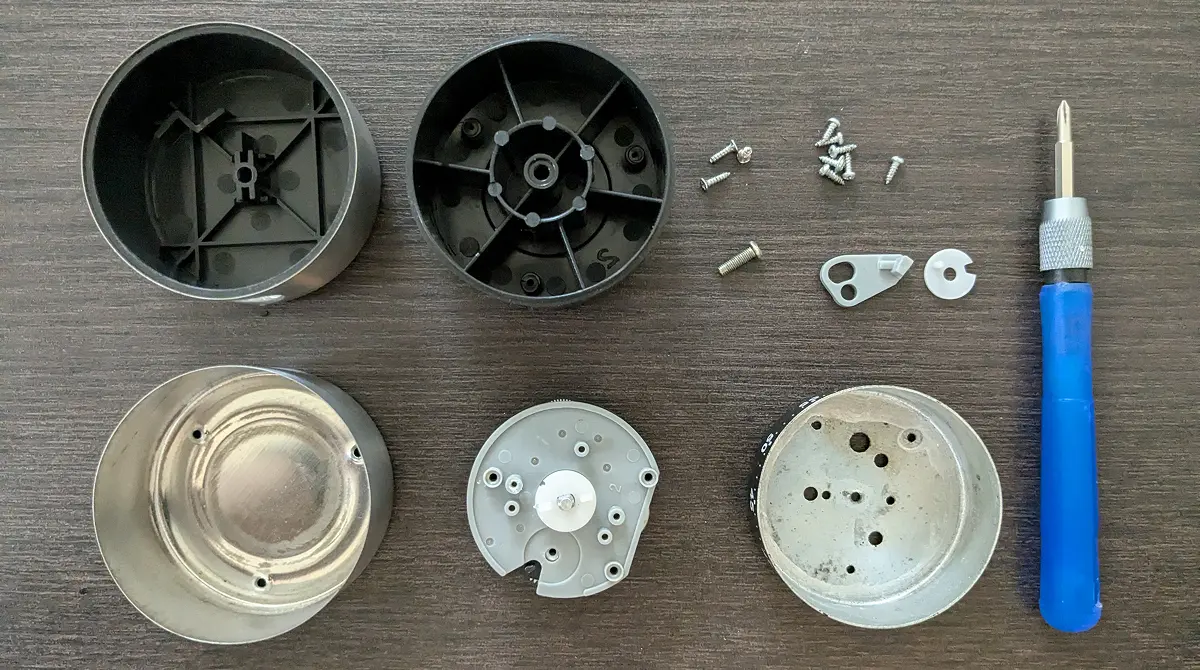
The final stage in the Sustainability Loop asks what happens to a product once a customer is finished with it. Products glued together, lacking any disassembly path, tend to end up in landfill, since separating materials for recycling becomes impractical or impossible. Products designed with disassembly in mind, using accessible fasteners instead of permanent adhesives, offer customers and recyclers a genuine path back into the material stream.
This end of life thinking connects design for manufacturing and assembly directly to the circular economy, a topic explored further in the next section. Analogy's Manufacturing service increasingly factors this fourth stage into early design reviews, since founders are asking about it more often as customers grow more conscious of what happens to products after their useful life ends.
Designing For Disassembly: The Circular Half Of DFMA
Most first time founders think about design for manufacturing and assembly purely in terms of building a product quickly and cheaply. Far fewer think about the reverse process, how that same product eventually comes apart. This gap represents one of the biggest missed opportunities in sustainable hardware design, since a product that assembles beautifully but resists disassembly locks its materials into a single use journey headed straight for landfill.
Design for disassembly borrows heavily from the same principles that make DFMA effective in the first place. Reducing part count helps disassembly just as much as assembly, since fewer parts mean fewer separation steps for a recycler or repair technician to navigate. Standardized fasteners that a technician can identify and remove with common tools beat proprietary screws or permanent adhesives every time a product needs to be opened, whether for repair, refurbishment or eventual material recovery.
Snap fits and reversible joints deserve particular attention here, since they often satisfy assembly efficiency and disassembly efficiency simultaneously, a rare case where the fastest way to put something together also happens to be the fastest way to take it apart later. Founders willing to trade a small amount of aesthetic freedom for this dual benefit frequently find their products easier to repair, easier to refurbish, and easier to recycle, all from the same underlying design for manufacturing and assembly decisions.
Academic research increasingly frames disassembly as a critical enabler of circular product design, recognizing that a product's recyclability depends heavily on how it was assembled in the first place. Founders unfamiliar with terms like DfX or concurrent engineering can review Analogy's DFM glossary for a quick refresher before diving deeper into this section. Founders building toward long term brand trust, particularly with environmentally conscious customers, increasingly find that a repairable, disassemblable product tells a stronger sustainability story than any packaging claim ever could.
A Sustainability Scorecard For Your Next DFMA Review
Running a design for manufacturing and assembly review through a sustainability lens skips the need for a separate process or specialized environmental consultant. The scorecard below folds directly into any existing DFMA review, giving founders a quick way to spot where a design could shed unnecessary environmental weight.
- Total part count compared against the simplest functionally viable version of the product
- Percentage of parts made from recyclable or widely recycled materials
- Presence of permanent adhesives that block future disassembly
- Number of distinct fastener types used across the entire product
- Estimated assembly time per unit and its associated energy draw
- Reject rate expected from current tolerance and process choices
- Packaging material required to ship components between suppliers before final assembly
- Availability of a documented disassembly path for repair or recycling
- Distance materials or components travel before reaching final assembly
- Whether any single part could be eliminated by merging its function into a neighboring part
Running through even half of these questions during a standard design review tends to surface at least one meaningful improvement, often one that also lowers cost, since sustainable choices and cost efficient choices overlap far more often than founders expect.
Where Sustainability & Cost Savings Quietly Overlap
Founders sometimes assume sustainable design decisions carry an automatic cost premium, a reasonable assumption that frequently turns out to be backwards in practice. The table below highlights common design for manufacturing and assembly decisions where the more sustainable choice also happens to be the more cost effective one.
| Design Decision | Less Sustainable Path | DFMA Aligned Sustainable Path |
|---|---|---|
| Fastening method | Permanent adhesive bonding | Reversible snap fits or standard screws |
| Part count strategy | Many small, specialized parts | Fewer, multi function merged parts |
| Material sourcing | Rare material requiring long transport | Widely available, locally sourced material |
| Packaging between suppliers | Excess protective packaging for many small parts | Minimal packaging for fewer, consolidated parts |
| Tolerance strategy | Unnecessarily tight tolerances across the board | Tolerances matched precisely to functional need |
| End of life plan | Absent disassembly plan, product designed for landfill | Documented disassembly path enabling repair and recycling |
This overlap explains why design for manufacturing and assembly so often functions as a sustainability tool even on projects where sustainability sat outside the primary design brief entirely. The same decisions that lower tooling cost, reduce assembly labor and shrink reject rates tend to be the exact decisions that lighten a product's environmental footprint.
Products Where DFMA Choices Support Sustainability
The air fryer project Analogy developed leaned heavily on cost saving design decisions that carried a sustainability benefit as a natural byproduct, consolidating parts and simplifying the internal assembly in ways that reduced both manufacturing cost and material use simultaneously. This kind of dual benefit shows up frequently once a team starts actively looking for it during a design for manufacturing and assembly review.
Precision equipment tells a different part of this story. The Roto Evaporator built for Aditya Scientific needed to survive years of repeated laboratory use, which meant every design for manufacturing and assembly decision had to account for long term serviceability rather than a short product life. Choosing components that could be individually replaced and serviced, instead of a sealed unit designed for eventual disposal, kept the product both easier to manufacture and easier to keep running for its full working life.
The exercise bike project carried a similar durability focused mindset. Fitness equipment tends to sit in a home or gym for years, so the team leaned on part count reduction and standardized fasteners not only to simplify assembly on the line but also to keep the product genuinely repairable long after it left the factory. A bike built with accessible, replaceable components avoids the common fate of durable goods that get discarded whole the moment one small part fails.
Founders exploring what this layered thinking looks like across a wider range of products can browse Analogy's full portfolio of product design creations, or read more about the studio's broader philosophy on the about page, where sustainability sits alongside manufacturability as a natural extension of good design rather than a separate initiative.
Frequently Asked Questions For DFMA & Sustainability
Does DFMA automatically make a product sustainable?
DFMA stops short of automatically guaranteeing sustainability, though it removes many of the barriers between a founder and a genuinely lower-impact product. The discipline naturally pushes designers toward fewer parts, simpler assembly, and more thoughtful material choices, all of which tend to reduce environmental footprint as a direct byproduct — but a founder who actively layers sustainability questions onto a standard DFMA review gets far more consistent results than one who hopes sustainability shows up on its own.
Is sustainable product design more expensive than conventional design?
Sustainable design decisions frequently overlap with cost-saving decisions rather than working against them, particularly through a DFMA lens: reducing part count lowers both material cost and footprint, and simplifying assembly lowers both labor cost and energy consumption. Some choices do carry a premium, like specialized recycled materials, but these tend to be the exception — design-driven sustainability, rooted in part count and material efficiency, tends to deliver lower cost alongside genuine environmental benefit.
How does part count reduction actually help the environment?
Every part represents a chain of environmental costs from raw material extraction through processing, packaging, and transportation. Removing a single part eliminates that entire chain for every unit ever produced — a product shipping fifty thousand units with two fewer parts each represents one hundred thousand fewer components pulled from raw material and shipped across a supply chain, which is why experienced teams treat part count as the highest-leverage variable in an early concept review.
What is design for disassembly and how does it relate to DFMA?
Design for disassembly focuses on how easily a product can be taken apart at end of life, for repair, refurbishment, or recycling, and draws on the same DFMA principles of reduced part count and standardized, accessible fasteners. A product engineered for efficient assembly using reversible joints rather than permanent adhesives often turns out to be efficient to disassemble too — a simple test is whether a technician with basic tools could open the product and separate its materials within a reasonable time.
Should first-time founders prioritize DFMA or sustainability first?
These priorities rarely compete once a founder understands how closely they overlap. DFMA should generally come first chronologically, since it establishes the part count, material choices, and assembly logic that sustainability outcomes depend on anyway — layering sustainability onto an existing DFMA review, rather than running two separate initiatives, produces far more efficient results for founders with limited engineering bandwidth.
Can DFMA help with sustainability certifications or eco labels?
Many certifications and eco labels examine exactly the decisions a strong DFMA process already documents, including material composition, recyclability, and disassembly pathways, so a well-documented DFMA process gives founders a significant head start. That said, formal certification usually requires additional steps beyond a standard review, including material safety documentation and sometimes third-party supply chain auditing, so it's worth looping certification requirements into DFMA conversations from the start.
Does using recycled materials complicate a DFMA review?
Recycled materials can introduce additional manufacturability considerations, since material consistency sometimes varies more than virgin material, requiring wider tolerances or extra process validation. This complexity rarely outweighs the environmental benefit, and running slightly more conservative tolerance targets during early reviews, along with small batch testing, tends to absorb most of the variation without requiring major redesign later.
How much environmental impact can a founder realistically reduce through DFMA alone?
The realistic reduction varies by product category, though meaningful double-digit percentage reductions in material use and energy consumption are commonly reported when part count and assembly efficiency both improve substantially — a product going from thirty parts to eighteen, a fairly typical DFMA outcome, carries a proportionally lighter footprint across every stage of production. Packaging, transportation, and end-of-life handling still need separate attention beyond the product design itself.
Do customers actually care about sustainable manufacturing when they buy hardware products?
Consumer research increasingly shows growing awareness around sustainability claims, though customers respond most strongly to concrete, verifiable details rather than vague marketing language. A product that can genuinely point to fewer parts, recyclable materials, and a documented repair path tells a far more credible story than generic messaging unsupported by real design decisions — reviews and word of mouth increasingly reference how easily a product can be repaired.
What is the single highest-impact DFMA change a founder can make for sustainability?
Part count reduction consistently delivers the broadest sustainability benefit across material use, manufacturing energy, assembly labor, and end-of-life complexity all at once. This single lever also aligns perfectly with cost reduction goals, giving founders a rare case where the most sustainable choice and the most budget-friendly choice point in exactly the same direction — starting every DFMA review by asking whether any part could disappear entirely remains the fastest path toward a lighter footprint.
Sustainability As A Byproduct Of Good Design
Every founder eventually faces a quiet choice buried inside dozens of small design decisions. Add one more part for a marginal aesthetic gain, or merge it away and keep the product leaner. Reach for a familiar material out of habit, or spend an extra week researching a genuinely better option. None of these moments feel dramatic in isolation, yet together they decide whether a product ends up as something the planet can absorb easily or something it struggles to.
This is really what separates hardware companies that talk about sustainability from ones that practice it. Analogy explores this gap further in 8 Industrial Design Trends To Look Out For, where longevity focused design and material transparency show up as recurring themes shaping how founders are expected to build in the years ahead. Founders weighing whether to bring in outside design expertise at this stage may also find Industrial Design Consultancy: Why Startups Win useful, since much of the sustainability groundwork covered in this guide depends on having the right people asking these questions early rather than late.
Cost remains the other half of this equation for most first time founders, and it rarely works against sustainability the way people assume. What Does It Actually Cost To Build Hardware breaks down where budget typically goes during development, and many of the same line items that drive cost up, excess parts, wasted tooling iterations, inefficient assembly, are the exact areas a sustainability minded DFMA review tends to shrink first.
None of this requires a founder to become an environmental expert overnight. It simply asks for the same curiosity that goes into choosing a great material or a clever mechanism, pointed at a slightly wider set of questions. Analogy has spent years helping founders hold both goals at once, and the studio's take on where design and environmental responsibility meet is laid out more fully in The Role Of Industrial Design In Creating Sustainable Products. If you are somewhere in the middle of your own product's design and want a second set of eyes on where it could get lighter, reach out to Analogy directly and bring the conversation in before your next tooling decision rather than after it.
Ready to see how sustainable your current design could become through a proper design for manufacturing and assembly review? Book a strategy call with Analogy and find out where your product could shed unnecessary environmental weight without adding cost or complexity.
Sources And Further Reading
- A review of disassembly systems for circular product design, ScienceDirect
- Examining the role and future potential of design for disassembly methods, Cambridge Core
- Circular Industrialized Construction: Design for Manufacturing, Assembly and Disassembly, MDPI Buildings
- From principles to practice: DFMA and design for deconstruction, Wiley Online Library
- Circular design overview, Ellen MacArthur Foundation
Ready to build?
Tell us what you're building.
We'll tell you where the real risks sit in your specific product and what it would take to ship it, concept to production.
About The Author

Vyasateja Rao – Founder & Chief Advisor, Analogy
Vyasateja Rao (Vyas) is a multi-award-winning product designer with over two decades of experience, and the visionary founder of Analogy, a Bangalore-based industrial and interaction design studio. He specializes in crafting memorable and innovative experiences for both physical and digital products. After earning a Masters in Industrial Design from North Carolina State University in 2007, Vyas worked across the United States, Hong Kong, China, Korea, Taiwan, Singapore, and India, collaborating with Fortune 500 companies and leading design studios. His studio has received international recognition, including the Red Dot, IBDC, Singapore Design Award, and multiple patents for product innovation. Vyas has designed for global clients such as Panasonic, Unilever, Amazon, Marvel, and Cellairis, blending creativity with manufacturability to create breakthrough products. Beyond design, he mentors aspiring designers, teaching the importance of contrast, surprise, and hidden artifacts in creating compelling experiences.
Vyas is a Design for Manufacturing (DFM) specialist with two decades of experience in product engineering and production optimization. Having worked with more than 100 brands, Vyas has hands-on experience in both product design and manufacturing. This exposure shaped his deep understanding of DFM principles, learning directly from mold designers and production teams. At Analogy, Vyas integrates manufacturing considerations from the earliest design stages, ensuring efficient, cost-effective, and production-ready products. He believes DFM transforms CAD designs into real, launch-ready products, making the engineering process smoother and more impactful.