How A Product Development Firm Brings Ideas To Life

Product Design Agency: From Idea to Real Product

We’ve helped hundreds of inventors, founders and companies turn ideas into world firsts. Now, it’s your turn.

book a strategy call
January 7, 2026
Vyasateja Rao

Ever wondered how that amazing new gadget or app came to be? A product design agency does far more than make things look good. Discover the process, skills, and strategy behind how great product development firms turn raw ideas into real, scalable products. While it takes a village, so to speak, to bring a new product to life, product designers play a crucial role. This blog post dives into the world of product design, exploring the various hats a product designer wears, the essential skills they bring to the table and what a product design agency does. The product design process is best understood as a series of deliberate decisions, each one narrowing possibility into something buildable and commercially meaningful.

A product design agency begins with the question every founder struggles to answer clearly: what problem does this product solve, and for whom does it solve it with precision? That answer determines material choices, form language, manufacturing method, and go-to-market timing, all of it flows from clarity established at the brief stage. Studios that rush this foundation phase consistently find themselves rebuilding expensive assumptions later in the development cycle, at a point where changes carry real financial consequences. The concept design process at a serious product design agency treats brief-building as a design act in itself, worthy of as much craft as the sketching and prototyping that follows. Getting the foundation right is the single highest-leverage investment any product development journey can make.

Product development as a discipline has matured significantly, moving away from a linear handoff model toward a deeply iterative, feedback-driven cycle that compounds learning at every stage. Early-stage founders often arrive at a product design agency expecting a simple exchange: share the idea, receive the finished product. What they discover is a collaborative system where their domain knowledge and the studio's expertise in design engineering work together as a continuously improving loop. The concept sketching phase, where dozens of ideas are generated and filtered rapidly, functions as a genuine decision-making tool rather than a purely artistic exercise. Each sketch is a hypothesis about form, function, and manufacturability being tested cheaply before any expensive tooling is committed. That velocity of low-cost learning is what separates product design agencies that consistently ship great products from those that consistently overrun timelines and budgets.

Turning your innovative idea into a successful product requires a strategic approach. This is where product design comes in. But what exactly is the product design process, and why is it crucial for your product's success?

Defining the Product Design Process:

Product design is a collaborative journey and one of the services we offer to transform your vision into a tangible solution. Partnering with a product development agency or a product design consultant can streamline this process.  They'll guide you through each stage, which typically involves:

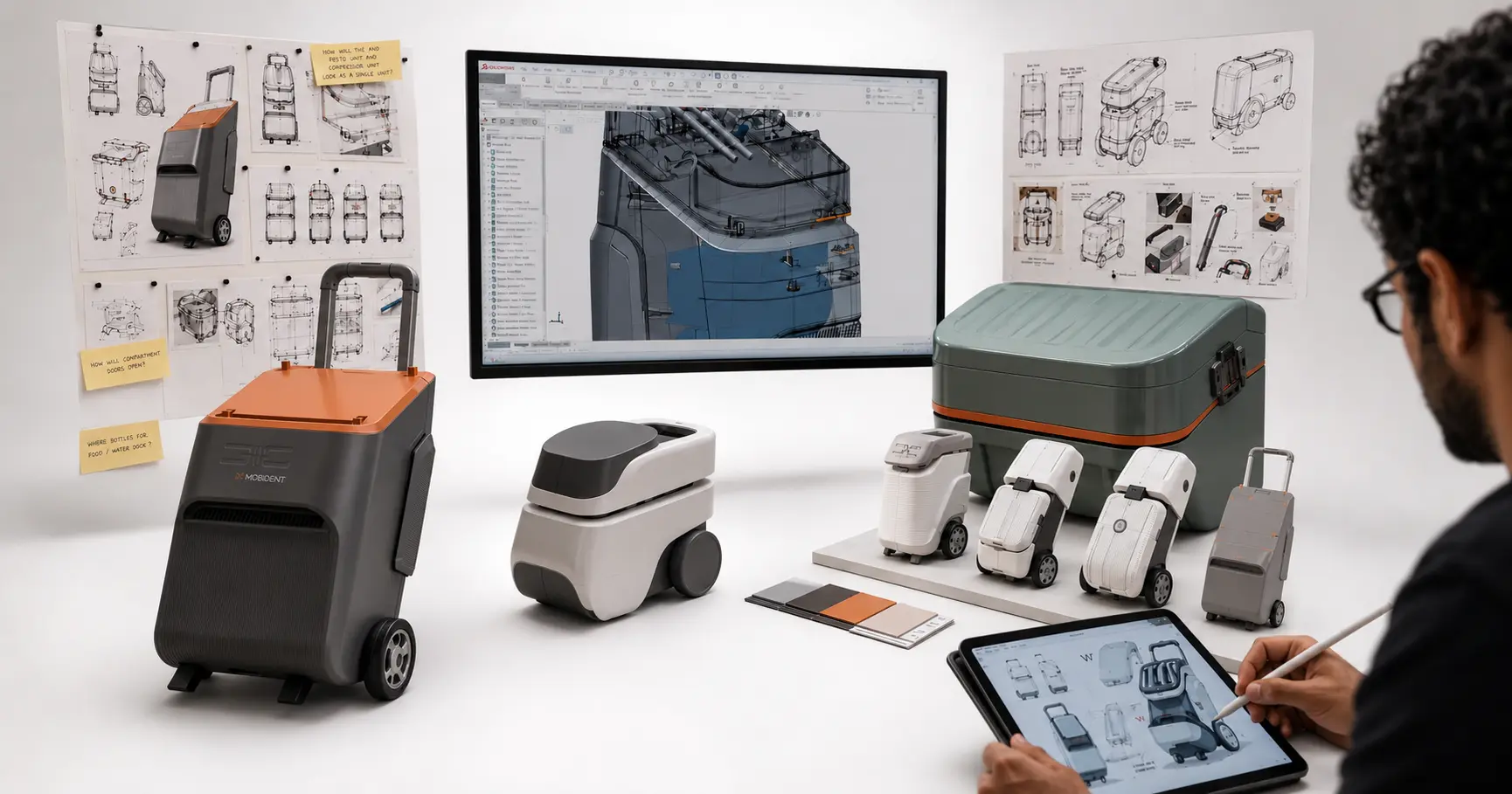
Hardware Product Development Process At Studio
  • Understanding your vision and goals: This initial phase involves brainstorming and defining the core purpose of your product.
  • User research: A product development firm will conduct thorough user research to understand your target audience's needs, wants, and pain points. This user-centric approach is vital for creating a product that resonates with your market.
  • Ideation and prototyping: Once the user is at the center, creative solutions can be explored. Brainstorming sessions and the development of prototypes allow for the exploration of various design possibilities.

Highlighting the User Focus in Product Design:

The success of any product hinges on its ability to solve a user's problem or fulfill a need.  Product design consulting emphasizes this user focus throughout the entire process. By prioritizing user research and incorporating user feedback during the prototyping stage, you ensure your product offers a seamless and valuable user experience. User focus in product design is a phrase used so frequently that it risks losing its operational meaning entirely. What it actually demands is a willingness to let research findings override assumptions, even assumptions the founding team has held since the very beginning of the project. A product design agency conducting real user research regularly surfaces insights that feel counterintuitive: the feature everyone assumed was central turns out to matter far less than a detail the team considered peripheral or cosmetic. Human factors design, which studies how people physically and cognitively interact with objects and environments, gives these findings a structural framework that survives disagreement and internal politics. It ensures that ergonomic principles, perceptual logic, and behavioral patterns all shape the physical form of a product before manufacturing locks those decisions permanently in place.

The agencies doing this rigorously produce products with meaningfully lower return rates, higher satisfaction scores, and stronger word-of-mouth than those treating user research as a checkbox.

The most powerful user research is observational rather than declarative. Watching how a person actually uses a prototype in their real environment reveals behavior that surveys and interviews consistently miss, because people are remarkably poor predictors of their own actions under real-world conditions with real distractions and real stakes. A product design agency with experience across multiple product categories builds a library of these behavioral observations over time, informing new projects with patterns identified across past ones in adjacent spaces.

This cross-category learning is part of what makes an experienced product development team substantially more valuable than a fresh one working on its first project in isolation. Founders who invest in the observational research phase consistently report that it changes their product in ways that make it dramatically more usable and commercially compelling for the target audience. The cost of this phase is always far lower than the cost of discovering those behavioral mismatches after launch, when the product is already in the hands of paying customers.

Concept Design Example Of A Hardware Product
Power Bank by Just Elegance: Designed by Analogy

This user-centric approach is what sets great products apart. By partnering with a product design professional, you can bridge the gap between your vision and a reality that resonates with your target audience. Explore our full guide to prototyping your product idea. In today's competitive landscape, successful product development requires a unique blend of creativity and technical expertise. This is where the multifaceted designer truly shines. These skilled professionals go beyond aesthetics, acting as strategic partners throughout the product development lifecycle.

A Well-Rounded Skillset: Beyond the Visual

The skillset that genuinely distinguishes a great product design agency from a competent one is the ability to hold aesthetic vision and engineering constraints in the same thought simultaneously. Mechanical design knowledge shapes which forms are feasible. Material science understanding shapes which surfaces are achievable within budget. Manufacturing process awareness shapes which geometries can survive tooling at production scale without cost blowouts. A designer fluent in all three brings a fundamentally different quality of thinking to the concept phase compared to one who specializes in visual output alone. This is the profile that serious hardware founders seek when they approach a product design agency, because they understand that the most beautiful sketch is worthless if it fails the transition to a manufacturable, cost-effective product.

While a strong foundation in visual design is essential, a product design consultant brings a much broader skillset to the table. They excel in user research, conducting surveys and usability testing to understand user needs and pain points. This user-centric approach is crucial for crafting products that resonate with the target audience. Additionally, product design consulting emphasizes prototyping, allowing for the creation of interactive models to test and refine design concepts before investing in full-scale development.

Concept design services at the highest level require fluency across technical disciplines that visual design training alone rarely provides. Understanding the stress distribution in an injection-molded polymer part, the tolerance requirements for a mechanical assembly, or the thermal management challenges in an embedded electronics enclosure. These are engineering design considerations that shape form decisions from the very first line drawn. The product design professionals building careers at leading studios combine design education with mechanical engineering knowledge, materials science, and production planning awareness in ways that were genuinely rare a decade ago. For founders building hardware products, this technical breadth in a design partner is the difference between a concept that survives into production and one that requires costly redesigns at the manufacturing stage.

The DFM principles that govern how products are designed for efficient manufacturing are disciplines a great product design agency applies from day one, treating them as creative inputs rather than final-stage constraints. That proactive approach saves significant time and capital across the full product development lifecycle.

Cross-team alignment

Top design firms prioritize fostering open communication between design, engineering, and marketing teams This ensures everyone has a clear understanding of the project goals and user needs, preventing information silos and promoting a more cohesive final product.
Healthcare Product Design By Analogy Design
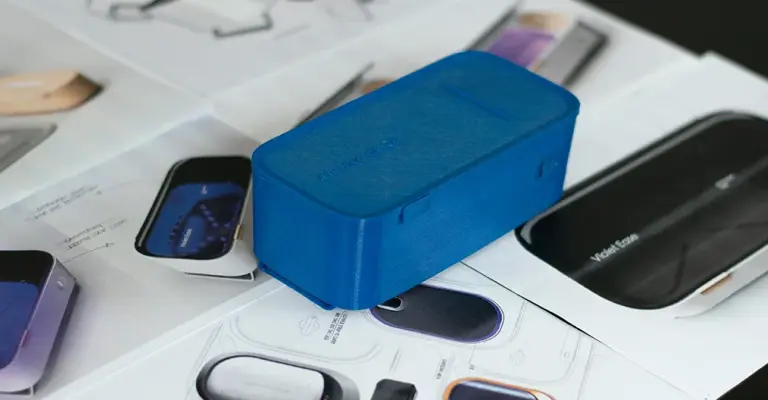
Sanitising Unit for Violet Ease: Designed by Analogy

Product design companies, also known as product development agencies or product design consultancies, don't just create products that look good. They take a user-centric approach, ensuring every aspect of a product is designed to deliver a positive user experience. This involves understanding how users interact with the product throughout their journey, and creating something that is not only functional but also intuitive and enjoyable to use.

Cross-team alignment is the capability that most product development projects underestimate until a late-stage misalignment creates a visible and expensive crisis. Design teams operating with a different understanding of the product brief than the engineering team produce concepts that require rework when the two worlds finally converge around a physical prototype. Marketing teams working in isolation from both design and engineering create brand promises that the physical product struggles to deliver in a buyer's hands at retail. A product design agency that actively manages alignment across these functions serves as the connective tissue of the entire development project, ensuring that decisions made in one domain are immediately visible and legible to the others. This coordination role is as technically demanding as any design task, requiring communication skills, strategic clarity, and a thorough understanding of each team's real constraints and priorities. The studios doing it well consistently bring products to market faster and with fewer expensive surprises than those treating alignment as a secondary concern.

  • Understanding the User Journey: Product design companies delve deep to understand how users interact with a product. Through user research, they create user personas and user journey maps. This helps identify user needs, pain points, and expectations at every touchpoint, from initial discovery to ongoing use.
  • Creating Products with Usability and Customer Experience in Mind: By prioritizing usability and customer experience (UX), product design companies ensure that the products they create are not just functional but also user-friendly and resonate with users on an emotional level. This means designing user interfaces (UIs) that are clear, intuitive, and aesthetically pleasing.

Alignment tools inside a serious product development firm go far beyond shared documents and weekly stand-up meetings. Structured design reviews with clear decision criteria, rapid prototype reviews that bring engineering and marketing perspectives into the same room around a physical object, and formally documented design intent rationales all serve to keep diverse teams coherent across months of complex and interdependent work. When a hardware startup runs out of runway or misses its launch window, misalignment between teams is among the most common root causes identified in post-mortems conducted after the fact.

A product design agency that treats alignment as a primary deliverable rather than a secondary benefit produces dramatically different project outcomes for its clients. The investment in process infrastructure early in a project returns many times over in avoided rework and accelerated decision-making as the development cycle progresses. That is where the real value of a structured agency engagement reveals itself most clearly to founders who have experienced the alternative.

While creating beautiful products is important, a product design company goes far beyond aesthetics.  They act as a bridge between the user and the business, ensuring the final product is not only functional but also aligns with strategic goals.

The Designer's Role in Product Strategy:

Product design companies, also known as product development agencies, don't just execute on existing ideas. They play a crucial role in shaping product strategy through user research and competitor analysis. This valuable insight from product design consultants informs key decisions about features, target audience, and overall product roadmap. Product strategy built without design input is a plan that describes what a product should achieve in a market without truly understanding how users will experience it in their hands and in their daily lives. A product design agency enters this conversation as an advocate for the user within strategic planning, bringing user research data and behavioral insight into decisions otherwise driven purely by market analysis and financial modeling. The best agencies translate user needs into product requirements with enough specificity that engineering teams can act on them directly, rather than interpreting vague directional guidance and making their own assumptions.

This contribution to product strategy is often undervalued until a product reaches market and founders discover that their strategic assumptions about user behavior were simply inaccurate at a costly scale. Validating product ideas through design-led research before committing to full development is one of the highest-value services a product design agency provides. The cost of changing direction at the strategy stage is a fraction of the cost of changing direction at the tooling stage.

Competitive analysis conducted by a product design agency differs from the kind commissioned from a market research firm in ways that matter enormously to hardware founders. Where market research identifies feature gaps and pricing positions, design-led competitive analysis reveals the experiential gaps: where competing products feel cumbersome in the hand, where their form language fails to communicate their value at the moment of first contact, where their material choices disappoint in a way that generates buyer's remorse within the first week.

These are insights that surface only when experienced designers interact with competitor products the way real users do, in real contexts with real expectations. A product design agency brings this layered analysis into strategy conversations, identifying white space that pure market research overlooks because it lives in the sensory and experiential dimensions of a product rather than in its feature checklist.

For founders building hardware products in competitive categories, this perspective is one of the genuinely rare advantages that a skilled product design agency delivers consistently across engagements.

Prototype Wireframe And Journey Map By Product Design Firm

Considering Both User Needs and Business Objectives:

A product design company doesn't operate in a vacuum.  Product design consulting involves understanding not just user needs but also the business's goals.  This means considering factors like production costs, scalability, and potential revenue streams. By carefully balancing both user experience and business objectives, product development firms ensure the final product is not just delightful to use but also commercially successful.

The tension between user needs and business objectives is real in every product development project, and the agencies that pretend otherwise are doing their clients a genuine disservice. Users want maximum functionality, premium materials, and effortless experience across every touchpoint. Businesses need cost structures that sustain healthy margins, production methods that scale reliably as volume grows, and development timelines that preserve investor confidence through the critical early stages. A product design agency that understands both sides of this equation designs solutions that satisfy user needs within business constraints, rather than advocating for one at the expense of the other. This balance is where design for manufacturing thinking becomes commercially critical, ensuring that the user experience a product promises is genuinely achievable within the production economics the business can sustain. Studios fluent in this balance consistently produce products that are both loved by users and profitable for the companies behind them.

Manufacturing cost is a design variable, and the product design agencies that treat it as such from the first sketch produce fundamentally different outcomes from those that treat it as a procurement problem to solve after design is complete. Every geometric decision, every material specification, every assembly sequence has a direct cost implication when multiplied across a full production run. An agency with real manufacturing experience brings this cost awareness into creative decisions naturally, finding material combinations and form solutions that achieve the desired user experience at production costs the business can actually absorb across its unit economics.

This is why the most commercially successful hardware products tend to emerge from product development firms with genuine manufacturing relationships alongside their design capability. Understanding the full product economics, from raw material cost to assembly labor to tooling amortization, allows a product design agency to make creative decisions that hold up across the entire business case. That combination of creative and commercial fluency is rare, and it is worth seeking deliberately when selecting a development partner.

Wondering how that sleek app or innovative gadget came to be? Product design companies play a crucial role, acting as your guide throughout the design journey. From the initial spark of an idea to crafting a user-friendly prototype, these product development agencies offer a comprehensive range of services.

Key Deliverables: Prototypes, Wireframes, Journey Maps

Product design companies aren't just about brainstorming cool ideas. They translate those ideas into tangible deliverables that bring your vision to life. This includes prototypes interactive models that allow users to experience the product before it's built. Wireframes, which are essentially visual blueprints, outline the layout and functionality of the product. Additionally, journey maps help visualize the user's entire experience with your product, from start to finish. The deliverables a product design agency produces are communication tools as much as they are design artifacts, and their value extends well beyond the immediate development phase. A prototype communicates structural intent and user experience quality to investors, manufacturing partners, and internal stakeholders far more powerfully than any presentation deck. A wireframe communicates interaction logic to software engineers with a precision that written specifications rarely match across different technical backgrounds and interpretation styles.

Journey maps communicate user experience priorities to marketing teams in a language that connects strategic intent to actual human behavior in the real world. Each of these deliverables serves multiple audiences simultaneously, which is why a great product design agency invests in the quality of its documentation as seriously as the quality of its physical design work. Founders who underestimate the communication value of these artifacts consistently find themselves having more expensive alignment conversations later in the development process, repeating explanations that a well-crafted deliverable would have settled definitively.

Among the most underutilized deliverables in product development is the concept design examples package: a curated collection of design directions explored during the ideation phase, documenting the range of possible solutions considered before the chosen direction was selected. This artifact serves multiple purposes across the development lifecycle and beyond the immediate project. It demonstrates the rigor of the agency's ideation process to investors and stakeholders seeking evidence of creative discipline and thorough exploration.

It preserves rejected directions that may become relevant again as market conditions shift or product roadmaps expand into adjacent categories. Exploring what concept design services look like in practice reveals just how much strategic value lives inside what appears from the outside to be a purely creative exercise. A complete deliverables package from a rigorous product design agency is a strategic asset, extending its value far beyond the project that produced it.

Iterative Design Process From Ideation To Testing

The Iterative Design Process: From Ideation to Testing

Great product design isn't a linear process. Product design consultants, who are experts within product design companies, champion an iterative approach. This means constantly refining ideas based on user feedback. The journey begins with ideation, where designers brainstorm potential solutions. Next, these ideas are translated into prototypes and wireframes, which are then tested with real users. This feedback loop ensures the final product is not only functional but also meets the needs and expectations of your target audience. By partnering with a product design consulting firm, you gain access to a team of experts who can transform your vision into a reality. Learn all about how we can create positive impact on creative ideas.

The iterative design process is the structured acknowledgment that every product development project begins with imperfect information that improves as work progresses. Designers and founders know less about what users will actually want at the start of a project than they will know six months in, after research, prototyping, and real-world testing have replaced assumptions with evidence. An iterative process is designed to capture this learning efficiently, building the fastest possible feedback loop between design decisions and real-world validation at each stage. A product design agency operating this way reaches a validated, manufacturable product design significantly faster than one following a linear development sequence, precisely because it catches and corrects errors when they are still cheap to fix. The MVP launch strategy that the best hardware product studios follow makes structured learning the centerpiece of the entire development approach. Speed of learning, rather than speed of execution, is the real competitive advantage in modern product development.

Testing is the discipline that most founders instinctively want to compress when timelines feel tight, and it is the discipline that most consistently proves its value when something fails in the market at scale. Rigorous prototype testing with real users in real environments surfaces failure modes that controlled studio testing misses entirely, because real conditions introduce variables that lab environments are structurally incapable of replicating. Environmental factors, behavioral variations across different user demographics, and interaction patterns under stress or distraction all produce insights that change the product in meaningful ways before launch.

One must build robust testing protocols into its iterative process is protecting its clients from the far more expensive discovery of these issues post-launch, when correction costs are multiplied by units already in the field. The prototype and MVP development phase deserves serious time and resource investment precisely because the cost of the information gathered there is always lower than the cost of the problems it prevents downstream. Founders who have been through a painful product launch consistently wish they had tested longer and launched more deliberately.

What Makes a Product Design Agency Worth It

The decision to bring in a product design agency is one of the highest-leverage choices a hardware founder makes in the early stages of bringing a product to life. The right agency accelerates the journey from validated concept to manufacturable product by months, dramatically reducing the cost of errors that compound as development progresses. The wrong agency adds overhead without adding capability, consuming time and budget while producing work that requires expensive correction downstream. The difference between these two outcomes lives almost entirely in the selection process: how carefully a founder evaluates a studio's process, their manufacturing knowledge, and their track record with products in adjacent categories. A beautiful portfolio is a necessary signal but an insufficient one, the questions worth asking go deeper than aesthetic preference and surface capability. Process discipline, technical depth, and genuine manufacturing experience are the capabilities that determine whether a product design agency creates real value or expensive delay.

Here are the qualities worth evaluating before signing with a product design agency:

  • Manufacturing fluency can the team explain DFM tradeoffs in your specific material category clearly and without prompting?
  • Prototype quality are their development prototypes functional and testable, or purely visual representations?
  • Honest timeline management do they give realistic ranges with identified risk factors, or optimistic commitments that consistently slip?
  • Cross-discipline communication can design and engineering staff explain each other's decisions coherently and without blame?
  • Post-launch support does the engagement extend through production validation, or conclude at design handoff?
  • Reference projects are past clients willing to speak candidly about both the outcomes and the process experience from inside the engagement?

The strongest product design agencies are distinguished by their willingness to challenge a brief rather than simply execute it. When a studio pushes back on a technical assumption, surfaces a user research finding that complicates the original plan, or recommends a manufacturing approach that costs more upfront but saves significantly at production scale, it is demonstrating the kind of engaged partnership that produces lasting product quality. That willingness to challenge is a feature of the relationship, and founders who recognize it as such consistently get better work than those who expect unquestioning execution.

Founders working with a serious product design agency for the first time often report that the most valuable moments in the engagement were the ones they initially resisted most strongly. The suggestion to spend three more weeks on user research before committing to a form direction. The recommendation to build a functional prototype before finalizing the visual design language. The insistence on a DFM review before releasing manufacturing drawings to a vendor.

Each of these inflection points feels like a delay in the moment and reveals itself as a significant time-saver in the months that follow. The agencies earning long-term client relationships are those with the confidence to make these recommendations clearly, and the track record to make those recommendations credible. Selecting a product design agency on price alone is among the most reliably expensive decisions a hardware founder makes.

What Working With a Design Agency Really Feels Like

Most founders arrive at a product design agency engagement with a mix of genuine excitement and understandable uncertainty, given the stakes and the unfamiliarity of the process. They have an idea they believe in deeply, a timeline they feel already behind, and a budget that simultaneously feels large and insufficient for everything the project seems to require. The first few weeks of a serious agency engagement typically involve more questioning than answering, more research than drawing, more constraint-mapping than concept generation or rendering. Founders who expect to see finished visualizations in week one sometimes find this opening phase disorienting. Those who have been through a hardware product development cycle before recognize it as the highest-value work in the entire engagement, because the quality of the question-asking at the start determines the quality of every answer produced across all the months that follow.

The relationship between a founder and a product design agency is most productive when it operates as a genuine collaboration rather than a vendor relationship where one party receives and the other delivers. The founder brings domain knowledge, user access, market relationships, and the strategic clarity that comes from living inside a problem for months or years. The agency brings design methodology, engineering breadth, manufacturing knowledge, and the creative distance that comes from having seen many products across many categories rise and fail for identifiable reasons. These two bodies of knowledge are genuinely complementary, and the best work consistently emerges when both sides bring their full capability to the shared process without territorial protection. Founders who treat the engagement as a brief delivery followed by passive reception of outputs miss the collaborative dynamic that produces genuinely differentiated products. The agencies worth working with actively invite founder expertise into the process at every stage, treating it as an asset rather than an interference.

Communication rhythm matters more than most founders anticipate when structuring an agency engagement from the start. A weekly review cadence with clearly defined decision points keeps a product development project moving at the pace the timeline and budget require. Ad hoc communication patterns, where founders and agencies interact reactively rather than rhythmically, consistently produce delays as decisions requiring multi-stakeholder input accumulate between irregular touchpoints and lose momentum. Agreeing on decision authorities at the start of an engagement, clarity about which decisions require founder sign-off versus studio discretion, prevents a significant category of delay that every hardware product development project otherwise encounters at the worst possible moments.

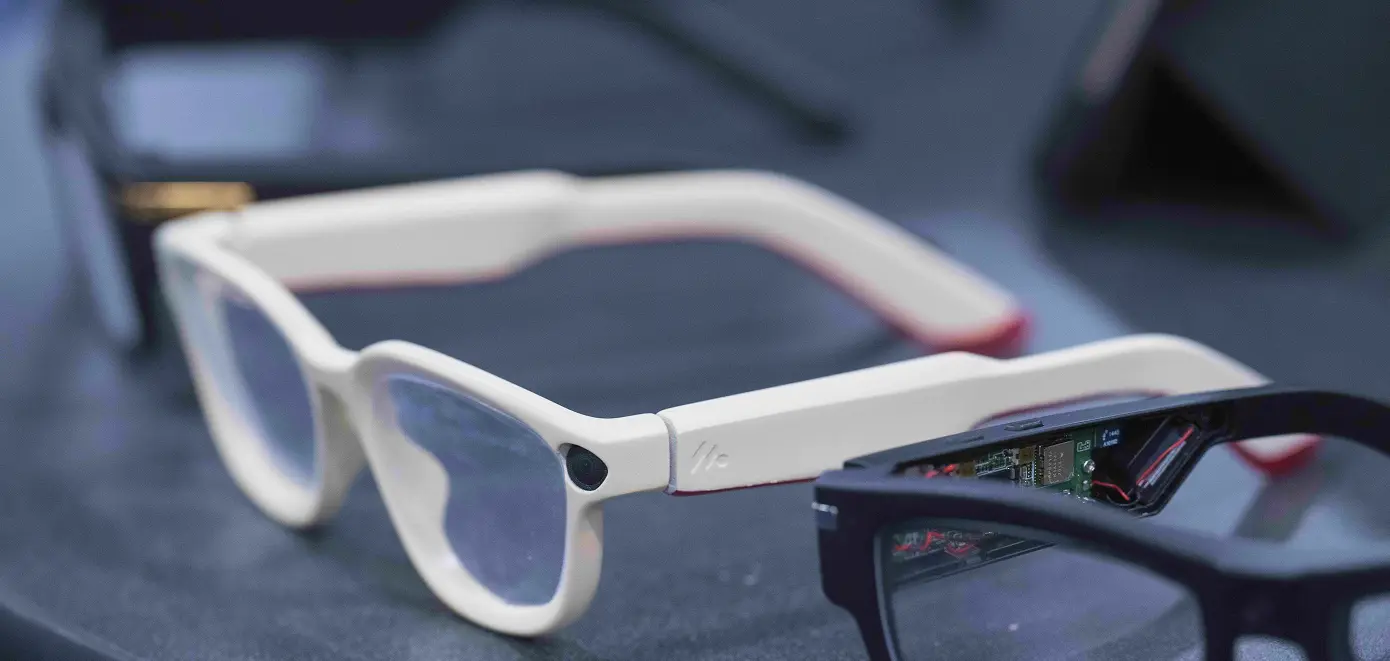
For standards that help both parties structure this relationship well, the Industrial Designers Society of America publishes professional practice guidelines worth reviewing before entering a significant product development partnership. And for the behind-the-scenes reality of how studio-client collaboration shapes final product outcomes, Wired's design and product coverage features the honest accounts worth reading before committing to a major development investment. The AI glasses project is a sharp example of what a well-structured studio-client collaboration produces when both sides engage with full commitment across a demanding ten-month timeline.

Share this post
Design
Insight
News
Business
Vyasateja Rao
Chief Advisor, Analogy Design
LinkedIn