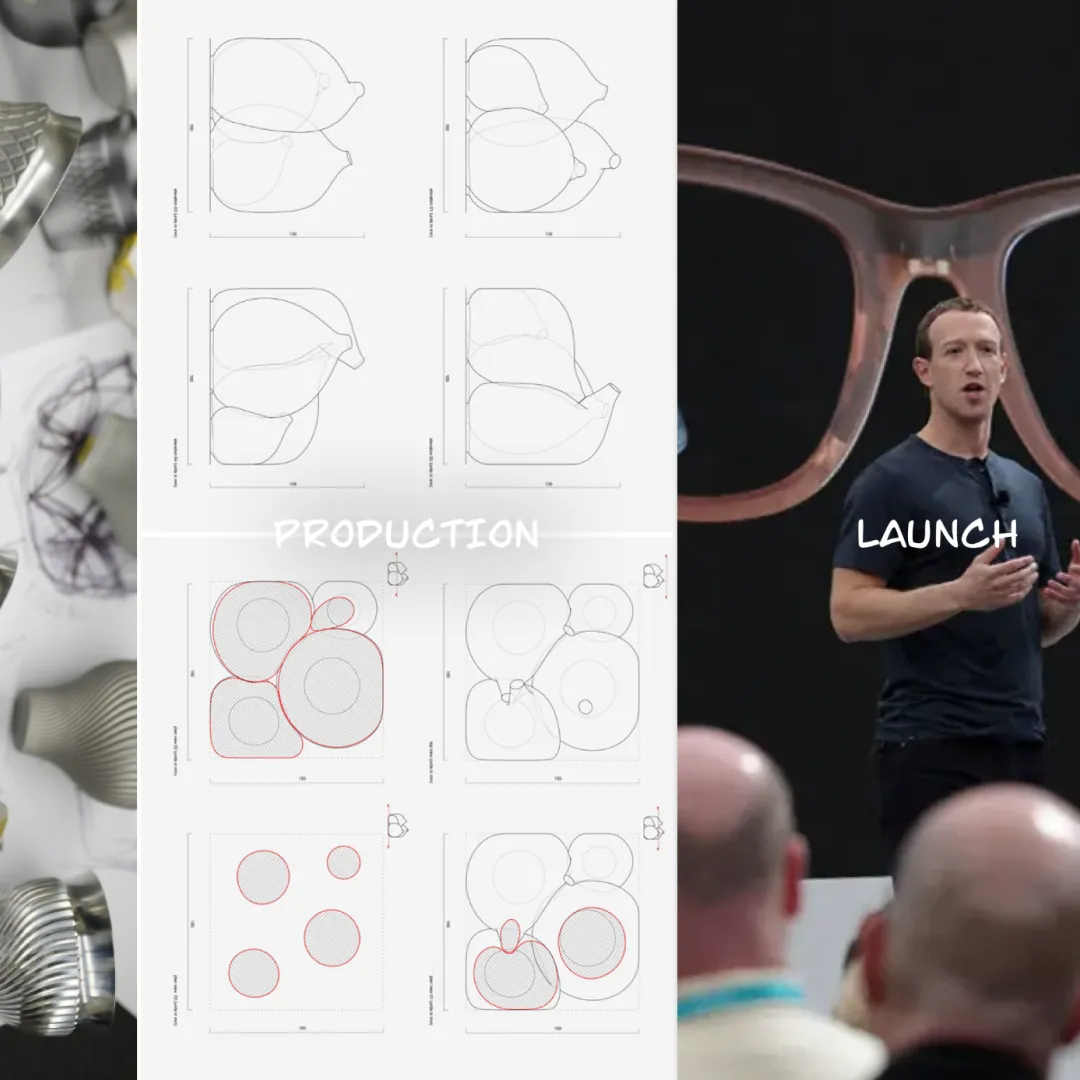
Most first-time hardware founders hire a design studio expecting a vendor. Most studios are happy to be one. You write a brief, they quote it, they deliver it, and whether the product ever sells is your problem. We built Analogy the other way round. Founder-first means we act as your product development partner, with your launch as the finish line, not as a supplier with a list of deliverables. It changes what we say on the first call, how we price, who works on your product and when we tell you bad news.
This post explains what founder-first means in practice, with real examples from the last few months at the studio, and the questions you can use to test whether any product development partner, including us, actually works this way.
Founder-First, In One Sentence
Founder-first means every decision we make on your project is judged by one question: does this get the founder to a product that can be made, sold and paid for? Not "does this fill the scope", not "does this make the portfolio look good", and not "does this keep the project running longer". On our home page we describe it as working like a strategic co-founder, without the equity, and not as another vendor.
That sounds like a slogan until you look at how a normal vendor relationship is set up. Then it becomes a set of very specific commitments.
Why We Had To Say It Out Loud
A vendor is paid to deliver the brief you wrote, not to question it. If the brief has a flaw, a vendor's incentive is to build the flaw beautifully and invoice for it. Hourly billing makes it worse: the scope grows as the hours do, so every extra feature, every extra round and every late change is good for the vendor and bad for your runway.
First-time founders feel this most, because they don't yet know which parts of the brief are dangerous. On our home page we list the four decisions we see sink first products: picking a vendor in week three because they replied fast, choosing the cheapest quote from an RFQ, planning one deliverable at a time with no roadmap, and not understanding certifications or manufacturing until it's too late. None of those are design problems. They are decisions, and a vendor has no reason to stop you making them.
Hardware founders rarely fail on ideas. They fail on making the wrong decisions, usually early, usually without anyone in the room whose job is to say "wait". Founder-first is our answer to that gap.
What Founder-First Looks Like In Practice
These are the six commitments we hold ourselves to. Each one comes with an example from real projects, with founders' details left out.
1. You hear the truth before you pay for anything
We'll tell you on the first call if your product can't be made at your price. That is a promise on our About page, and it costs us work. About 60% of founders who go through the first phase of our Product Path™ change or pivot their idea there. We don't treat that as a failure rate. It is the cheapest point in the whole journey to find out, and the single best reason to hire a team that will tell you.
Sometimes the truth is that you shouldn't hire us yet. Recently a group of high-school students asked us to build a posture-sensing backpack with sensors and vibration feedback. The R&D alone would likely have run to $85,000–$100,000. Our team told them not to spend that money: they had a school lab, fabrication tools and teachers, so the smart move was to build rough versions themselves, fail a few times and come back when they knew exactly who it was for. We sent them to a community of designers instead of a proposal.
2. We protect your runway like it's ours
Every phase of Product Path™ has a fixed scope and a fixed price, agreed before you commit. There's no hourly billing, so we earn nothing from your project growing. That one structural choice removes most of the conflict of interest that makes vendors expensive.
It also means we talk about money before we talk about form. A founder came to us recently with ₹10–15 lakh to launch two earbud models with custom shells. Tooling alone would have cost around ₹5–6 lakh per model, so the whole budget would have gone before a single unit was made, shipped or marketed. Our advice was to start from an existing factory design (an ODM) and change only what the customer would see, then invest in fully custom hardware once the first units had sold. Another founder had tooling quotes for a water bottle of $28,000–$60,000. We thought our manufacturing partner could bring that down by about half, and said so before any design work began.
When a founder's cash flow is tight, for example while a funding round is still closing, we have moved projects from big milestone payments to smaller monthly retainers so work can start without draining the account. A vendor protects its margin. A founder-first team protects the founder's ability to finish.
3. You make the big calls, with everything on the table
Being founder-first doesn't mean we decide for you. It means we make sure you decide with the full picture. On a feasibility study, our team builds the options side by side: rough forms, a hypothetical bill of materials, likely unit cost, retail price, compliance and time to market. Then we put them in front of the founder on a whiteboard and let them choose.
On one recent project, a founder wanted a powered device to pick hair off bathroom floors. When we laid out the routes, the battery and vacuum versions carried electrical safety and wireless certifications that would add somewhere between $3,000 and $20,000 or more before launch, plus a much higher unit cost. A simple non-powered version solved the same problem. The founder picked the direction. Our job was to make sure the trade-off was visible before money was spent, not after.
4. The same senior team from first sketch to factory floor
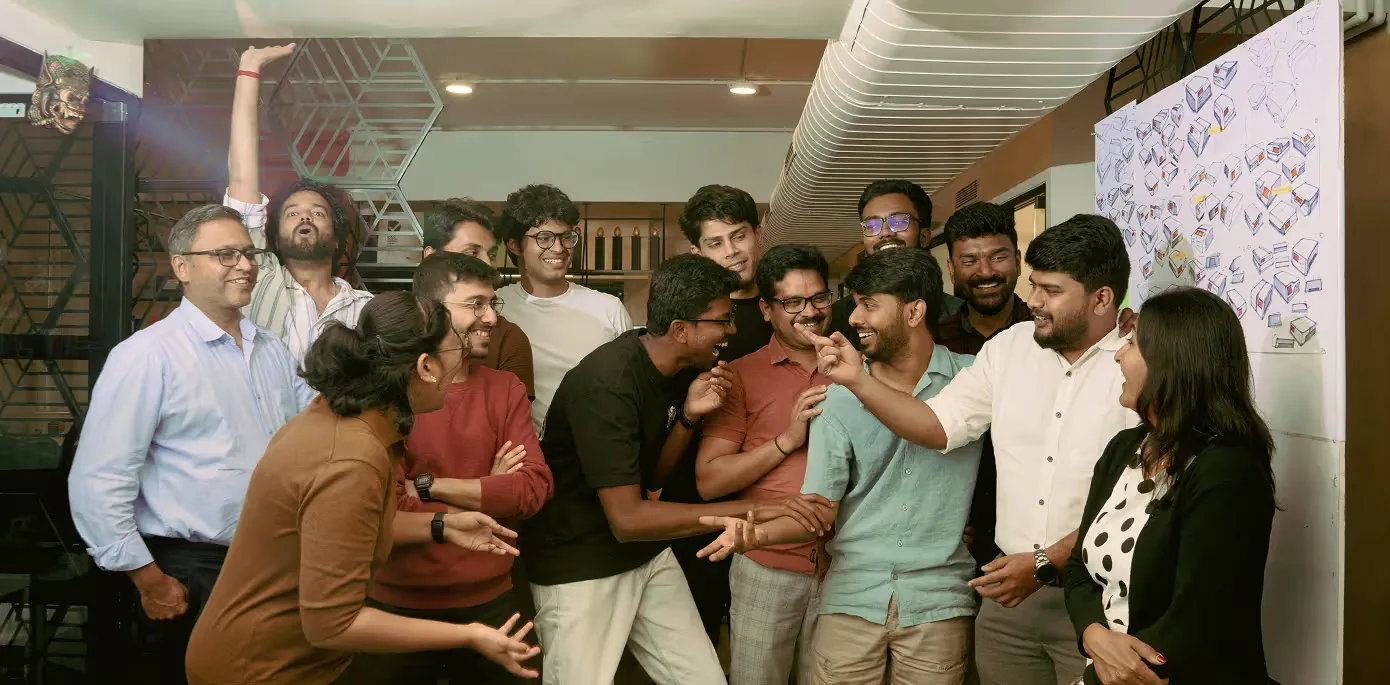
The team that works with Unilever and Panasonic is the team that builds your first product. There is no account layer between you and the designers, and no intern learning on your product. We're about twenty designers and engineers in Bengaluru with a team of four in Shenzhen, and the same people stay with your product through concept, engineering, prototyping and manufacturing.
That continuity matters most at the end. Design intent gets lost at every handoff, and the biggest handoff is to the factory. Our Shenzhen team is on the floor when the first parts come off the tool, so your DFM package isn't a PDF emailed to a vendor and hoped over. Read how a product development firm takes an idea to production for what that journey involves.
5. Your idea, your IP, your company
You own your idea and the IP we create for it, and that is written into our agreements. We sign an NDA on request. We don't take equity, even though we work on your product the way a co-founder would. Founder-first means the upside of your company stays with you.
We're also profitable, debt-free and independent, with no outside investors. Nobody is pushing us to stretch projects or chase volume, so the only people we answer to on your project are you and your customers.
6. We measure ourselves by your launch, not our delivery
A vendor's job ends when the files are sent. Ours ends when your product can be made at a cost that works at your volume. That's why our Work page includes companies that didn't make it. Their products shipped, but the companies ran out of runway, or the market moved. A portfolio with no failures in it is a portfolio that isn't telling you the truth, and you're about to bet years of your life on whether a partner does.
Founders notice the difference. Vivek Madappa, who spent eight years on a fragmented idea before we turned it into India's first mobile dental clinic in eight months, put it this way: "Their honesty and acknowledgment of project complexity were refreshing." Another founder came to us after waiting four years and working with two other studios; within eight months his sleep mask was oversubscribed by 300% on Kickstarter.
Founder-First Product Development Partner Vs Vendor
Here is how the two models compare on the things first-time founders tell us matter most.
| Question | Vendor for hire | Founder-first team |
|---|---|---|
| What are they paid for? | Delivering the brief you wrote | Getting your product made and launched |
| How is it priced? | Hourly or day rates; scope grows with the hours | Fixed scope and price per phase, agreed up front |
| When do you hear bad news? | When it shows up in a quote or at the factory | On the first call, or in the first phase while it is cheap |
| Who works on your product? | Whoever is free; often a junior behind an account manager | The same senior team from sketch to factory floor |
| Who manages the handoffs? | You, between design, engineering and the factory | One team carries it through every stage |
| Will they tell you not to build it? | Rarely; it ends the project | Yes, when that is the right answer |
What Founder-First Doesn't Mean
Founder-first is easy to misread, so it's worth being clear about what it isn't.
- It doesn't mean agreeing with you. Most teams are paid to agree with you. We'd rather lose a project than build a product we believe will fail at the price you need.
- It doesn't mean free work. We give clear advice on the first call, but design and engineering are paid, fixed-price phases. That's what lets us stay independent of your project growing.
- It doesn't mean the cheapest quote. There is always someone cheaper. On a first product you need an experienced navigator in the seat next to you, and the rework a cheap partner causes usually costs more than the difference.
- It doesn't mean we run your company. You make the product decisions. We make sure you have the facts, the costs and the risks in front of you when you do.
"Hardware founders rarely fail on ideas. They fail on making the right decisions. We are here to remedy that."
- Vyasateja Rao, Founder of Analogy Design
How To Choose A Product Development Partner That's Founder-First
Any studio can put "founder-first" on its website. When you choose a product development partner, these questions show quickly whether it's true. Ask them on your first call with anyone, including us.
- Have you ever told a founder not to build their product, or not to hire you yet? What happened?
- Is your price fixed per phase, or does it grow with hours?
- Who exactly will work on my product, and will the same people be there at the factory?
- What will I know about unit cost, tooling and certifications at the end of the first phase?
- Who owns the IP you create, and is that written into the contract?
- Can I see projects that didn't go to plan, and what you learned from them?
A partner who answers these clearly, with examples, is working for your launch. A partner who changes the subject is working for the brief. Our guide to common hardware startup mistakes covers what to watch for once the project starts.
What Happens When You Talk To Us
Every project starts with a free 30-minute strategy call. You tell us the idea, where you are and what you have to spend. We tell you what we see: where the real risks sit, whether it can likely be made at your target price, and what the first sensible step is, even if that step doesn't involve us.
If it does make sense to work together, the first phase of Product Path™ takes four to six weeks. You get three to five concept directions, one validated direction in design CAD, vendor recommendations and an indicative cost. A full first product, from concept to production-ready, typically costs $51,000–$85,000 over nine to fourteen months, with the same team the whole way. Those numbers are on our website because founder-first starts before you ever speak to us.
You get one shot at your first product. We'd like to be the team that helps you take it.
Ready to build?
Tell us what you're building.
We'll tell you where the real risks sit in your specific product and what it would take to ship it, concept to production.
About The Author
Vyasateja Rao – Founder & Chief Advisor, Analogy
VT Rao (Vyasateja) is a multi-award-winning product designer with over two decades of experience, and the visionary founder of Analogy, a Bangalore-based industrial and interaction design studio. He specializes in crafting memorable and innovative experiences for both physical and digital products. After earning a Masters in Industrial Design from North Carolina State University in 2007, Vyas worked across the United States, Hong Kong, China, Korea, Taiwan, Singapore, and India, collaborating with Fortune 500 companies and leading design studios. His studio has received international recognition, including the Red Dot, IF Design, Good Design, NY Product Design, European Product Design, German Product Design, IBDC, Singapore Design Award, and multiple patents for product innovation. VT has designed for global clients such as Panasonic, Unilever, Amazon, Marvel, and Cellairis, blending creativity with manufacturability to create breakthrough products. Beyond design, he mentors aspiring designers, teaching the importance of contrast, surprise, and hidden artifacts in creating compelling experiences.