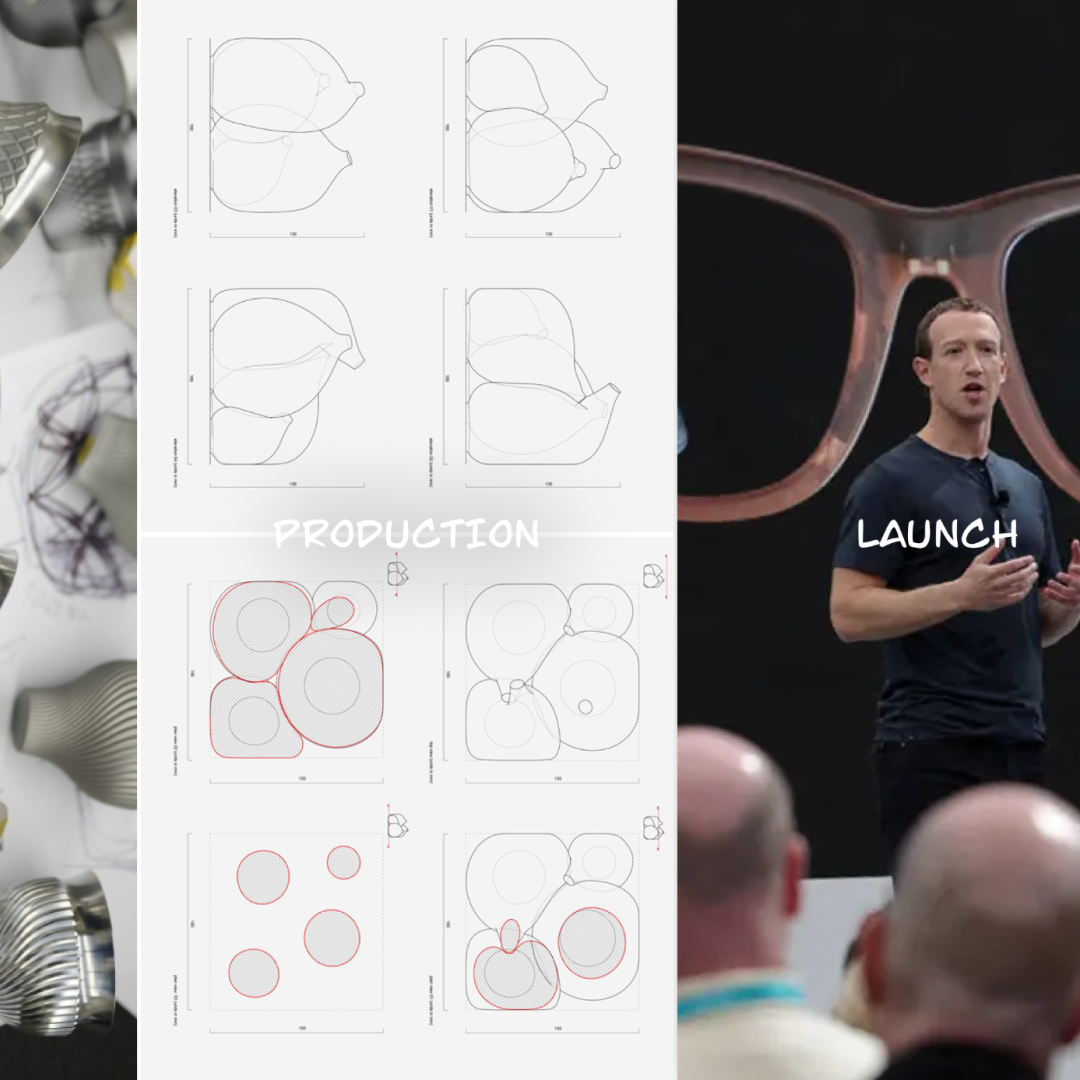
You had the vision. You had the excitement. You had a real problem worth solving and a product idea that genuinely lit people up in the room. Then somewhere between the napkin sketch and the factory floor, something went wrong. The timeline stretched. The budget ran out. The prototype that worked beautifully in the studio failed the moment a real factory examined it. The launch that was supposed to happen last quarter is still sitting in revision three.
This is the story of most hardware startups. According to CB Insights research, 97% of hardware startups fail to scale, and the overwhelming majority collapse before their product ever reaches a single paying customer. The causes are almost always the same ones. They are predictable, preventable, and devastatingly common among first-time founders who had every other ingredient for success except a clear understanding of how hardware actually works.
Hardware rewards preparation and punishes assumptions with brutal efficiency. Every shortcut taken in the early stages compounds into a far larger problem downstream. Every assumption left unvalidated becomes a costly correction later. Every phase rushed through to save time ends up costing three times that time in rework and redesign. The founders who launch successfully are the ones who understood the rules of hardware before they started spending.
This guide covers the seven mistakes we see most consistently at Analogy Design, the studio behind hardware products for Google, Panasonic, Unilever, and boAt. These are the specific points where promising hardware startups most consistently collapse, often within sight of launch. Understanding them before you begin is the single highest-return action available to any first-time hardware founder.

The Hardware Startup Graveyard: Why Good Ideas Die
Hardware is genuinely hard in ways that software simply is not. It requires upfront capital before you have a single paying customer. It demands precision across multiple disciplines simultaneously. It forces permanent decisions, like cutting a mould tool or finalising a circuit architecture, at a point when meaningful uncertainty about the market still exists. Every phase of hardware development is unforgiving in a way that most first-time founders discover too late and too expensively.
The most common reason hardware startups fail before launch is also the simplest: founders attempt to move fast in a domain that punishes speed above preparation. They compress timelines, skip validation steps, and optimise for the feeling of progress over the reality of readiness. A working prototype feels like a finished product. A positive response at a demo feels like market demand. These signals are real but incomplete, and building a business on incomplete signals is exactly how the graveyard fills.
What separates the hardware startups that launch from the ones that stall is rarely the quality of the original idea. It is almost always the quality of the process behind it. Founders who launch successfully validate early, plan costs with a complete picture, choose partners on process quality, and protect their contingency at every stage. The rest do the opposite with complete conviction that things will work themselves out.
The seven hardware startup mistakes in this guide are the specific points where failure most consistently originates. Recognise them before you invest and you dramatically shift the probability of being on the right side of that 3 percent. Each mistake is followed by a concrete, actionable step you can take immediately.
Mistake 1: You're Building for an Audience of One
Every hardware founder is in love with their product idea. That love is essential early on. It gets you out of bed at 5am to solve a problem that has stumped everyone around you. But love becomes dangerous the moment it replaces evidence. When founders skip market validation because they are convinced the market will share their enthusiasm, they build products for an audience of one. Their own imagination becomes their primary user, and their own assumptions become their product specification.
The pattern is consistent and expensive. A founder identifies a real problem, develops a solution in their head, gets energised by the concept, and moves immediately toward design and engineering. They spend $30,000 to $80,000 reaching a prototype that feels exactly right. Then they take it to real users and discover the problem they solved is genuine but the solution they built is wrong. The feature the market actually wants is the one the founder eliminated in week two because it added complexity to the build.
Validation at the concept stage costs almost nothing compared to validation at the prototype stage. A structured series of user interviews, a simple landing page to gauge demand, a clickable prototype to test usability decisions: these are the tools that reveal whether the market wants what you are building before you commit serious capital to building it. Every assumption proven wrong at this stage is a budget saved and a direction corrected before the cost of correction becomes serious.
Start with our concept design process, which builds validation into the earliest stage of hardware development rather than treating it as a step to add after the product feels good. Founders who validate through design think fundamentally differently from founders who design before validating, and the difference shows up clearly in their launch outcomes and their investor conversations. The market always tells you the truth. The question is whether you ask it before or after you spend the money.
Actionable tip: Write down the five assumptions your product depends on to succeed. Rank them by how severely your business is affected if the assumption turns out to be wrong. Validate the top two with real target users before writing a single engineering brief. The answers reshape your product in ways that internal discussion and personal conviction never could.
Mistake 2: Treating Hardware Like Software Burns Fast
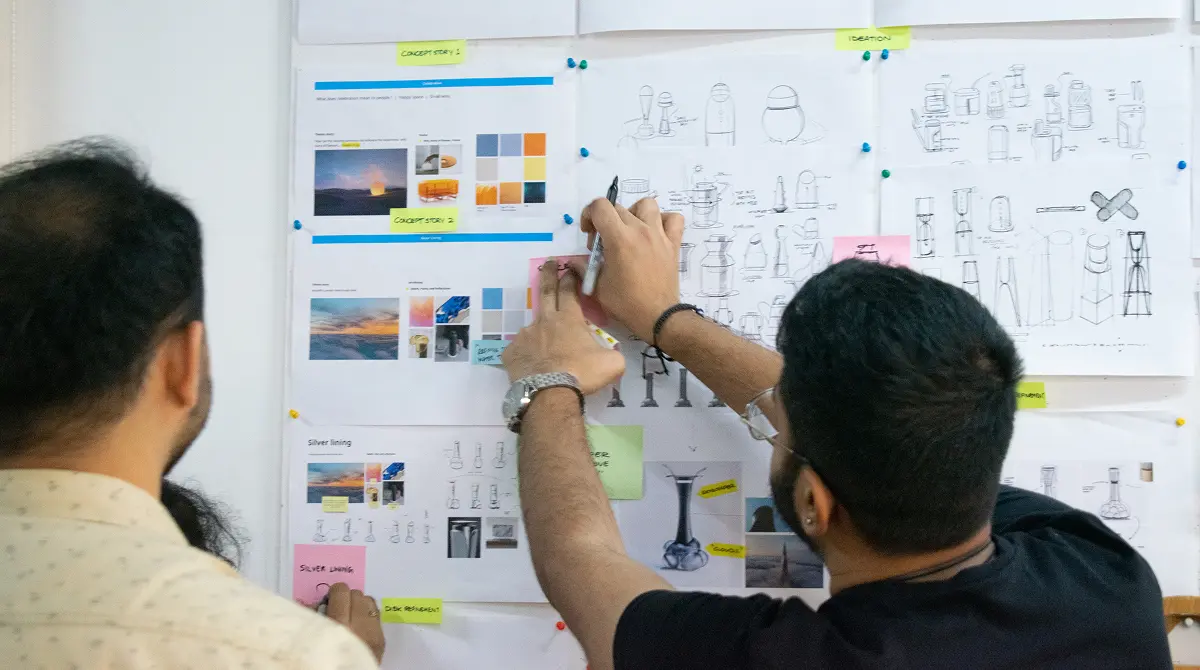
Software founders who move into hardware bring a mental model that is dangerously mismatched to the domain they are entering. In software, you ship fast, gather feedback, and iterate in days. In hardware, every iteration costs money, takes weeks, and requires coordination across suppliers, engineers, and manufacturers who operate on entirely different timescales. Treating hardware like a software project is how founders arrive at the factory gate with a great design and an empty bank account, three months before their first production run.
The most visible symptom of this hardware startup mistake is budget shock. A founder allocates $50,000 for development because that is what a software MVP cost. They reach $50,000 having completed concept design and early engineering, with prototyping, DFM review, certification, tooling, and manufacturing setup still entirely ahead of them. At that point, the options are painful: raise emergency funding on unfavourable terms, compromise the product in ways that undermine the original value proposition, or stall indefinitely while the market moves without you.
Hardware product development cost from concept to manufacturing-ready typically falls between $75,000 and $400,000 depending on complexity, electronics architecture, and regulatory requirements. Read the full hardware product development cost breakdown to understand exactly what each phase costs and where the budget surprises hide. Knowing the complete number before you start is the difference between a funded, focused project and one that stalls in Phase 3 with a working prototype and zero runway left to manufacture it.
The second dimension of this mistake is timeline. Software ships in weeks. Hardware ships in months. A simple hardware product takes 9 to 14 months from concept to manufacturing-ready. A connected consumer device takes 14 to 20 months. A product with regulatory requirements takes 20 to 36 months or longer. Founders who plan for 6 months and end up at 18 months carry a business model problem as well as a product problem, because their financial runway was built on an assumption that turns out to be wrong by a factor of three.
Actionable tip: Before your first development conversation with any studio or engineer, build a full budget model covering all four phases of hardware development plus a 25 percent contingency. Run that model against your actual fundraising timeline. If your runway covers the real development schedule with buffer, proceed. If it falls short, adjust your scope, your timeline, or your funding plan before a single engineering hour is spent.
Mistake 3: The Cheapest Partner Costs You Three Times
The first time a hardware founder receives three wildly different quotes for the same product brief, they tend to choose the middle one and hope for the best. The second time, after the middle one has let them down, they understand what those quotes actually measure. Choosing a development partner based on price is one of the most reliable methods for significantly increasing your total project cost while dramatically reducing the quality of the output at every stage.
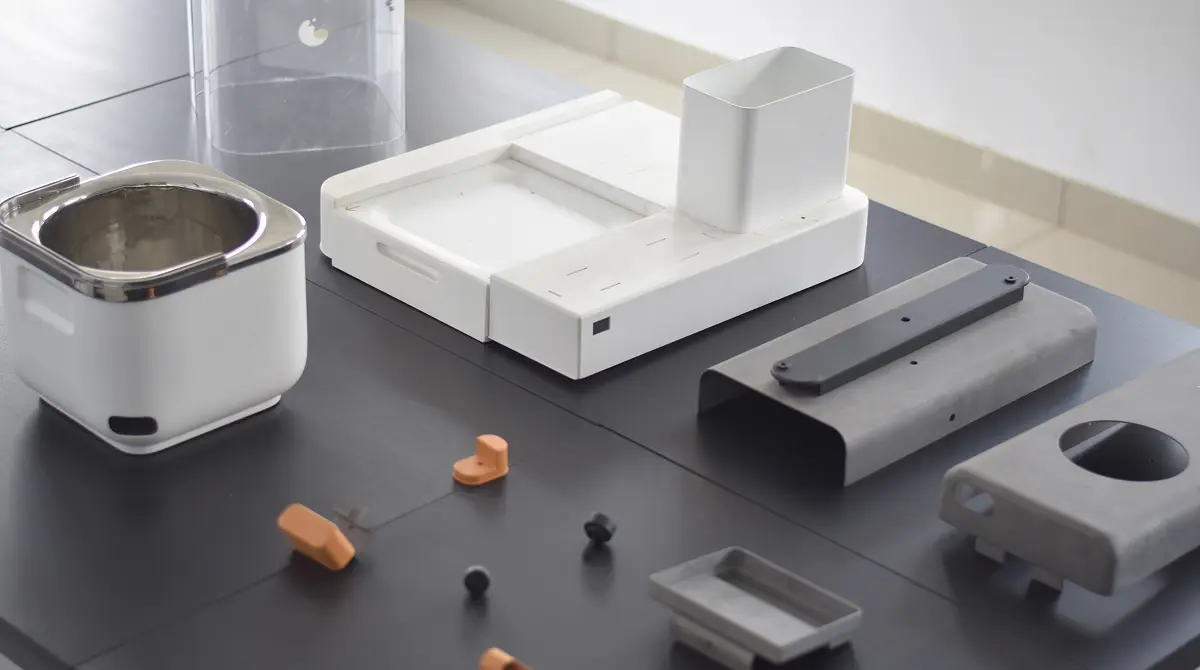
Cheap partners take cheap shortcuts. They underscore to win the project, then surface missing work as change orders after the contract is signed. Their deliverables look complete but lack the manufacturing specificity to be useful at the factory. CAD files arrive without tolerance annotations. Firmware arrives without documentation. Prototypes pass internal testing but fail the first time an external engineer or manufacturer examines them. The cost of unpicking and redoing poor-quality work consistently exceeds the cost difference that made the cheaper partner attractive in the first place.
Understanding how the three main development models actually compare gives you the framework to make a decision based on the right criteria. Read our startup product development guide for a full breakdown of how each model performs across different founder profiles and product complexities. The partner decision is one you make once and live with across the entire development journey.
The agency premium exists for a reason. A quality agency owns accountability across the entire journey: one point of contact, integrated disciplines, and a team that has already solved the problems you are about to encounter. The premium you pay in agency management is almost always recovered in the rework it prevents and the timelines it protects. This specific advantage matters most to first-time hardware founders who are operating without any safety net and with limited budget for surprises.
Actionable tip: When evaluating development partners, ask to see three case studies of products taken from concept through manufacturing. Ask specifically about what went wrong in each project, how they resolved it, and what it cost the client. The quality of that answer tells you far more about the partner than their portfolio imagery or their hourly rate ever will.
Mistake 4: Building What Factories Have Never Seen
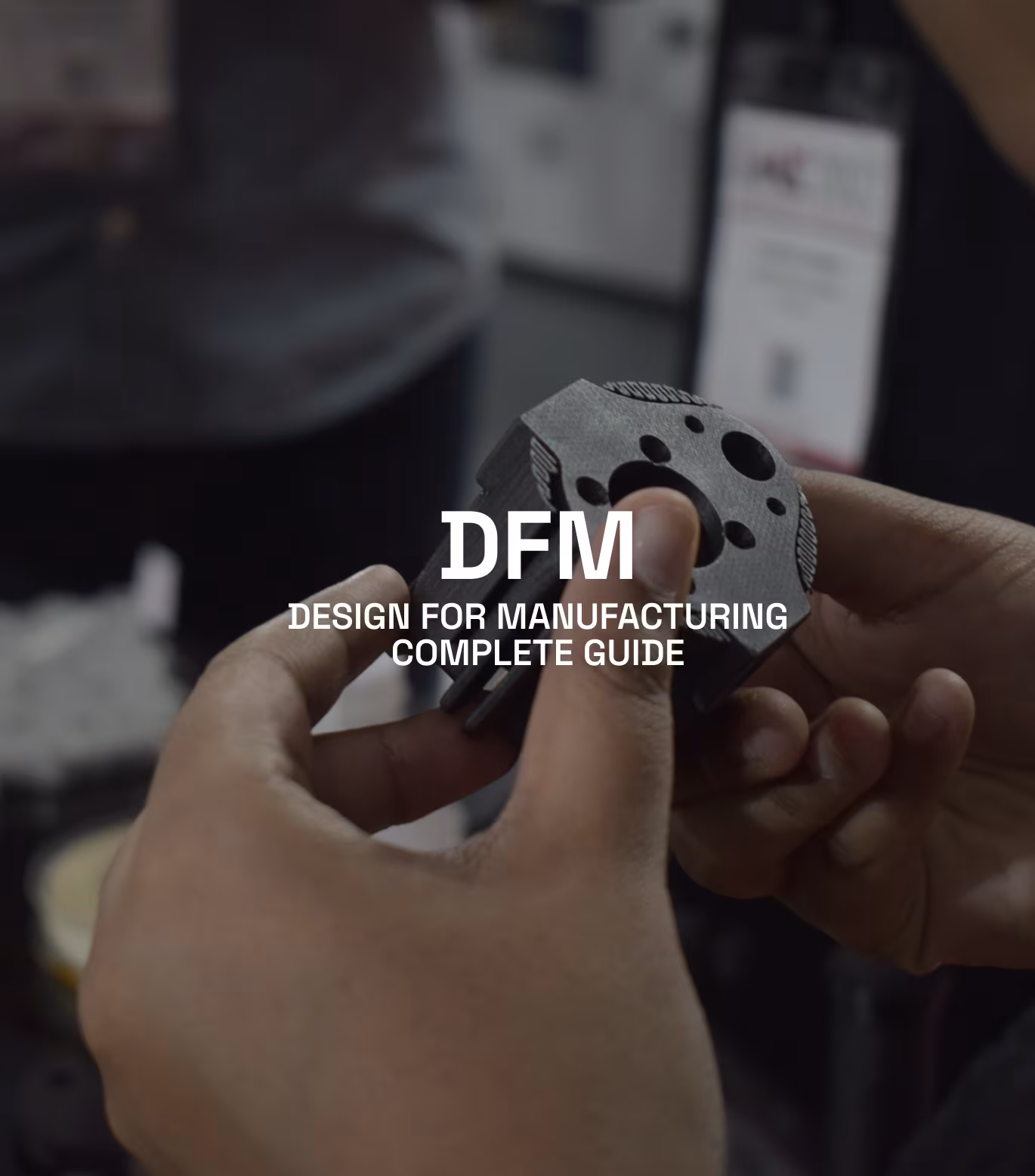
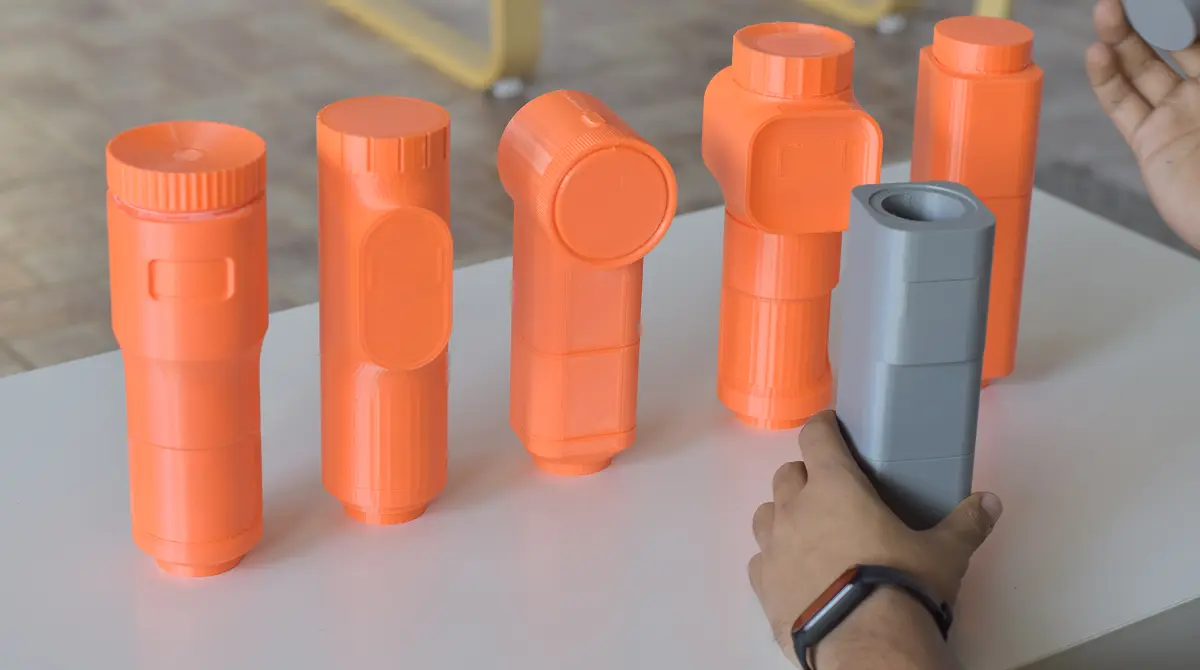
Design for Manufacturing, known as DFM, is the discipline of building products that factories can actually produce consistently, at volume, within your cost targets. Most first-time hardware founders treat DFM as a late-stage review process, something to run through before tooling begins. It is actually a design philosophy that belongs in the room from day one. Founders who bring DFM thinking into concept design build better products at lower cost with fewer manufacturing surprises. Founders who discover DFM violations at the tooling stage pay for those violations at the most expensive moment in the entire development journey.
The problem with leaving DFM out of early design is that every design decision compounds. Material choices affect tooling complexity. Feature details affect mould geometry. Assembly sequences affect unit cost and production speed. A product detail that adds fifteen seconds to each assembly cycle costs hundreds of thousands of dollars over a production run of 10,000 units. A tolerance specification tighter than the factory can reliably achieve produces a scrap rate that quietly destroys your margins before you have the revenue to absorb it.
Common DFM failures in first-time hardware products include undercuts in injection-moulded parts requiring complex and expensive side-actions in the tool, wall thicknesses outside the recommended range for the selected material, assembly sequences requiring access to areas a factory worker physically cannot reach, and surface finish specifications the factory's equipment is set up to handle. Each of these is trivially easy to address in CAD and extremely expensive to address after tooling is committed. Download our DFM checklist for hardware founders and run every design decision against it before sending any files to a manufacturer.
Explore our Product Path methodology, which structures DFM review into every stage of development rather than treating it as a final gate before tooling. Founders who use this approach consistently arrive at manufacturing with fewer surprises, lower unit costs, and better production yield from the very first production run. That advantage compounds across every batch produced.
Actionable tip: Share your CAD files with your target manufacturer at the end of Phase 2, before any tooling decisions are made. Ask them to flag every element that will cause problems on the production line. Their feedback costs nothing and reshapes your design in ways that reduce unit cost and improve production yield significantly before you commit to irreversible capital expenditure.

Mistake 5: Rushing Prototyping Is the Costliest Shortcut
Prototyping is where hardware reveals itself. Every assumption made in concept design and engineering gets stress-tested against physical reality for the first time. Components behave differently than simulated. Tolerances that looked correct in CAD produce interference fits in the real world. Users interact with a physical product in completely unexpected ways. Rushing through prototype rounds to save time and budget transfers all of those discoveries from the stage where they are cheap to fix into the manufacturing stage, where the cost of the same fix has multiplied by a factor of ten or more.
The instinct to compress prototyping is understandable. Every round is another six to eight weeks before you can present something tangible to investors. The pressure to show progress is constant and real. What is equally constant is the pattern that follows compression: the manufacturing run surfaces the exact problems that prototyping would have caught. Production stalls while the design is revised. The factory charges for downtime and rework. The launch that was supposed to happen in Q3 quietly becomes Q1 of the following year, at double the original development cost.
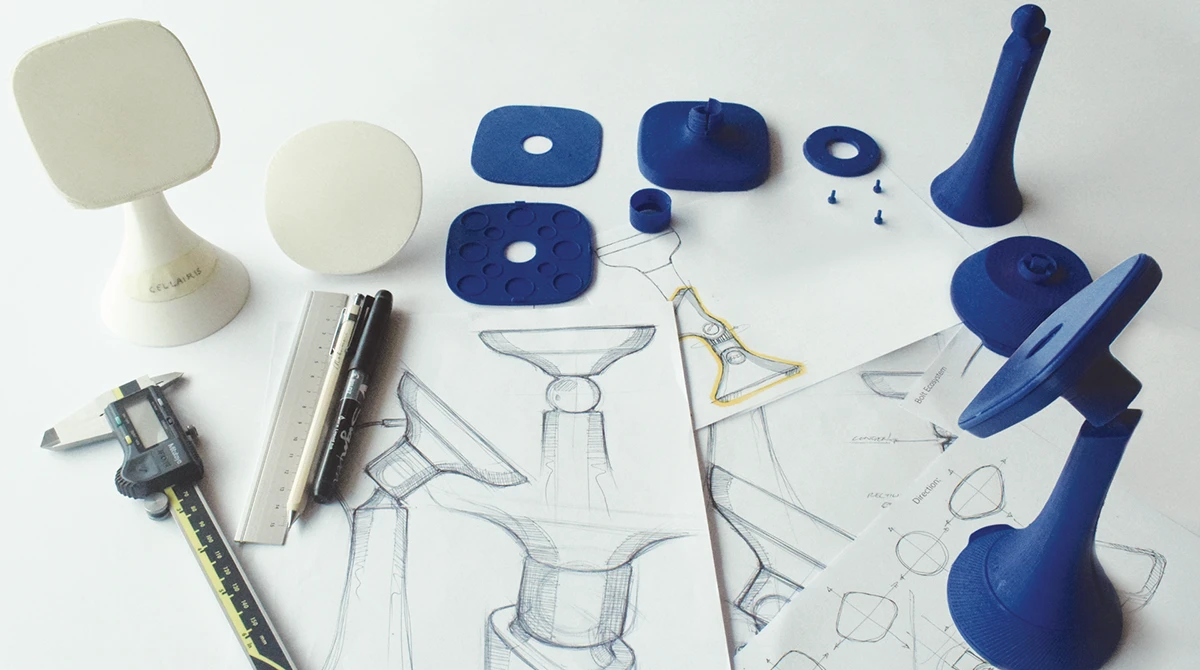
A proper prototyping progression moves through distinct stages, each designed to answer a specific set of questions the previous stage could address. Read our complete prototyping guide to understand what each round should deliver, how to extract maximum learning from every cycle, and how to structure your test briefs so each round genuinely answers the questions it was designed to answer.
The Four Prototype Stages Every Hardware Product Needs
1. Proof-of-concept prototype ($2,000 to $8,000): Does the core technology actually work at all? This stage answers one question and commits to zero decisions about form or finish. Build it rough. Learn fast.
2. Functional prototype ($5,000 to $15,000): Does the full product perform as specified across all features? This is where integration failures first surface and where the gap between disciplines becomes visible.
3. Design validation prototype ($8,000 to $25,000): Does the combined form and function deliver the right user experience? Real users enter the process here. Their reactions reshape things that engineers and designers could never anticipate alone.
4. Pre-production prototype ($10,000 to $30,000): Is this product genuinely ready for tooling and manufacturing? This is the hard gate before committing irreversible capital expenditure. Every open question answered here is a manufacturing problem eliminated.
Each stage answers questions the previous stage could address. Skipping any stage means carrying unanswered questions into a more expensive context where answering them has become dramatically more costly. Founders who protect their prototyping budget find problems at the price of fixing them. Founders who compress it find the same problems at the price of the damage those problems have already caused.
Actionable tip: Before each prototype round begins, write a one-page test brief documenting exactly what you are trying to learn. After each round, document every failure, every unexpected behaviour, and every user reaction that surprised you. Those documents become your most valuable engineering resource across the entire development journey and guide every subsequent iteration more reliably than intuition alone.
Mistake 6: Certifications Found After the Product Is Done
Regulatory certification is the phase that founders consistently treat as an afterthought and consistently regret treating that way. Certifications are legal requirements with timelines, engineering implications, and budgets that belong in your development plan from week one. A product launched in the United States requires FCC certification to be legally sold. A product launched in India requires the relevant BIS certification under the Electronics and Information Technology Goods rules to be legally imported and sold. A connected product sold in Europe without CE marking carries legal and financial liability that can end a company before it gains meaningful market traction.
The problem with discovering certifications late is that they shape your engineering in specific and consequential ways. FCC certification requirements affect your PCB layout, your antenna design, your shielding choices, and your firmware architecture. Designing without those requirements in view means re-engineering with them in view after you have already spent the budget on a design that requires revision.
CE marking for electronic products includes electrical safety testing, electromagnetic compatibility testing, and RF compliance validation, each requiring testing at an accredited laboratory before you can apply the mark. Review current FCC requirements at the FCC Equipment Authorization portal and Indian certification requirements at the Bureau of Indian Standards portal.
Certifications take time as well as money. FDA clearance for a medical device can take 6 to 18 months after submission, and the submission itself requires engineering documentation prepared in parallel with development. BIS certification in India carries its own testing protocols and processing timelines. WPC approval for wireless devices in India is a separate process entirely. Consult IEEE standards for connected electronics to understand how international technical standards interact with regional certification requirements for wireless and IoT products. Founders who discover these timelines after their product is designed frequently discover them at the precise moment their investor update is overdue and their launch window has already closed.
The financial dimension of this hardware startup mistake is also significant. Certification testing runs $10,000 to $50,000 depending on your product category and target markets. Medical devices and industrial equipment sit at the high end. These costs belong in your development budget from the start, presented as fixed line items alongside engineering and prototyping.
Founders who treat certifications as a cost to figure out later consistently report the same experience: they arrive at launch with a finished product they are legally unable to sell until they complete a process that takes months.
Actionable tip: In your first engineering conversation, ask your team to map every certification your product requires for every market you intend to sell in. Build each certification timeline and budget into your master project schedule. A certification process with a six-month turnaround time will collapse a launch schedule built on a four-month assumption.
Mistake 7: Running Out of Money 80% of the Way There
The most heartbreaking hardware startup failure is the one that happens after the hard work is already done. The product is designed. The prototype is validated. The factory is identified. Then the money runs out three months before the first production run. This pattern is far more common than most founders realise, and it almost always traces back to budget planning built around optimistic assumptions rather than the realistic cost structures that hardware development actually demands.
Hardware development cost does the opposite of front-loading. The phases that feel most complete, engineering drawings and working prototypes, actually represent the midpoint of a journey that still has DFM review, tooling, manufacturing setup, certification, packaging specification, and supply chain qualification ahead of them. Founders who allocate their full budget to the first half of the journey have the painful experience of watching a finished design sit idle because there is zero budget remaining to manufacture it. The product exists. The market exists. The runway is gone.
Explore our launch support services to understand exactly what manufacturing preparation requires so you can plan for it accurately from the beginning. And read our guide on how to build a hardware product from scratch to see the full nine-stage development journey mapped against a realistic financial model that accounts for every phase, including the ones most founders forget to budget for until they arrive at them.
The founders who reach launch on time and on budget treat the contingency budget as a hard boundary established before spending begins. They build it in. They protect it from the pressure to use it on additional features or supplementary engineering scope. They guard it with the same discipline they apply to every other engineering decision. The contingency budget is the only part of your hardware plan that covers every category of surprise that the rest of the plan failed to anticipate. Spend it early and you arrive at manufacturing validation without a safety net.
Recommended Budget Allocation for Hardware Startups
• Core development (concept design, engineering, prototyping): 60 to 70 percent of total budget. This is the heart of your hardware development investment and the area where quality decisions pay the highest long-term return.
• Manufacturing preparation (DFM review, tooling design, factory setup): 20 to 25 percent of total budget. This is the phase most founders underbudget and the phase that decides whether your product ships on time or stalls at the factory gate.
• Contingency buffer (iteration, certification surprises, supply chain): 15 to 20 percent of total budget, protected as untouchable until genuinely needed. This is the only budget line that covers every category of surprise the rest of the plan failed to anticipate.
Actionable tip: Build your hardware budget with a specific line for each development phase, a separate line for certifications, a separate line for tooling, and a 20 percent contingency on the total. Present that budget to two people who have run hardware programs before and ask them directly where it is thin. Their feedback before you start spending is worth considerably more than their sympathy after you run out.

The Hardware Startup Survival Checklist
Before committing your first dollar to hardware development, move through this checklist. Every item represents a real decision point where hardware founders make expensive mistakes. Every item checked is a risk reduced. Every item left unchecked is a potential source of the exact problems this guide was designed to help you avoid.
Validation
☐ Five core product assumptions identified and ranked by business impact
☐ Top two assumptions validated with real target users before engineering begins
☐ Market demand tested through a low-cost signal before serious capital is committed
☐ Product positioning defined clearly enough to write a one-page design brief
Budget and Timeline
☐ Full development cost modelled across all four phases with real estimates per phase
☐ Certification budget included as a separate line item for every target market
☐ Tooling and mould costs accounted for separately from core development cost
☐ 20 percent contingency buffer built in and designated as untouchable until genuinely needed
☐ Runway confirmed to cover the real development timeline plus three months of buffe
Partner Selection
☐ Development partner evaluated on process quality and accountability, rather than price alone
☐ Case studies reviewed for products taken from concept through manufacturing with real outcomes
☐ Manufacturing input sought in Phase 2, before any tooling decisions are committed
☐ DFM review confirmed as a formal part of the development scope from the beginning
Regulatory
☐ Full certification map completed for every target market before engineering begins
☐ Certification timelines added to the master project schedule alongside development milestones
☐ Certification budget confirmed directly with an accredited testing laboratory
☐ Engineering brief updated to reflect compliance requirements before design work starts
Prototyping
☐ Full prototyping progression planned across all four stages with budget per stage
☐ Test brief written for each prototype round before the round begins
☐ Budget allocated for all rounds plus at least one unplanned revision round
☐ Pre-production prototype confirmed as a hard gate before tooling commitment is made
Frequently Asked Questions

The Seven Mistakes Are Avoidable. Here's Your Path.
Every mistake in this guide is preventable. Every one of them is also common, because hardware development is genuinely complex and first-time founders work with an incomplete picture of what they are entering. The goal of this guide is to complete that picture before you start spending, because once you start spending, every decision you make carries a compounding cost that the right preparation would have reduced to a fraction.
Hardware startups that launch successfully share a consistent set of behaviours. They validate before they build. They plan costs with the full picture including the phases that feel far away at the start. They choose partners on the quality of process and accountability rather than the attractiveness of a price. They treat DFM and certifications as engineering inputs rather than finish-line formalities. They protect their prototyping budget because they understand what each round is designed to reveal. And they guard their contingency with the same discipline they apply to every other engineering decision.
Your product idea deserves a process that gives it the best possible chance of reaching the customer it was built for. That process is learnable, plannable, and entirely within your control as a founder. The seven hardware startup mistakes in this guide are the specific points where that process most commonly breaks down. Knowing them before you start is the competitive advantage that shifts your odds significantly toward the right side of that 3 percent statistic.
Your next step is clarity, not commitment. Before engaging any development partner, get clear on your product complexity, your certification path, your real budget, and your realistic timeline. That clarity is the foundation every successful hardware product is built on, and it is the foundation our team at Analogy Design helps every founder build from day one.
7 Signs Your Hardware Startup Is on Track
• You have validated at least two core product assumptions with real users before engineering begins.
• Your total development budget covers all four phases plus tooling and certification as separate line items.
• Your development partner has shown you products taken from concept through manufacturing, with honest accounts of problems solved.
• DFM review is a confirmed part of your development scope, beginning in Phase 2 alongside engineering.
• Your prototyping plan covers all four stages with a specific test brief for each round.
• Your certification map is complete for every market you intend to sell in before engineering begins.
• Your contingency buffer is at least 20 percent of total budget and protected as untouchable.
Ready to build your hardware product the right way, from day one?
We review your product brief, identify where your plan is exposed, and give you a clear path from concept through manufacturing. Real clarity on what your product needs and what it will actually cost to get it right. Work with Analogy Design
About The Author

Vyasateja Rao - Founder, Analogy
Vyasateja Rao is a multi-award-winning product designer with over two decades of experience, and the visionary founder of Analogy, a Bangalore-based industrial and interaction design studio. He specializes in crafting memorable and innovative experiences for both physical and digital products. After earning a Masters in Industrial Design from North Carolina State University in 2007, Vyasateja worked across the United States, Hong Kong, China, Korea, Taiwan, Singapore, and India, collaborating with Fortune 500 companies and leading design studios. His studio has received international recognition, including the Red Dot, IBDC, Singapore Design Award, and multiple patents for product innovation. Vyasateja has designed for global clients such as Panasonic, Unilever, Amazon, Marvel, and Cellairis, blending creativity with manufacturability to create breakthrough products. Beyond design, he mentors aspiring designers, teaching the importance of contrast, surprise, and hidden artifacts in creating compelling experiences.