What Is A Minimum Viable Product (MVP)?
A Minimum Viable Product (MVP) represents the simplest version of a product that delivers core value while enabling real user feedback. It blends product MVP validation with rapid learning to create a strong foundation for growth.
A Minimum Viable Product defines essential features, user flows, and product architecture design before scaling investment. Through MVP development services and structured validation, founders gain insights into usability, demand, and technical feasibility. This approach creates a proven pathway from idea to market readiness. A well crafted MVP supports both MVP software validation and hardware MVP development strategies. Whether building a smart device MVP or digital platform, the focus remains on solving one clear problem effectively. When concept design guides MVP execution, teams move with confidence and direction.
Are you ready to turn your concept into a validated product that attracts real traction? We at Analogy Design can help you revolutionize your concept idea into a validated and successful product. With over 10 years of experience, we have helped 100s of founders turn their concept idea into a fully functional, market ready product.
Birth Of The MVP Concept In Product Design
The idea of building less to learn more changed modern product development forever. In 2001, Frank Robinson introduced the term Minimum Viable Product while working with startups to help them launch faster with fewer resources. He described MVP as the smallest product that delivers customer value while generating meaningful market feedback. His insight shaped how founders approached concept design and early stage validation.
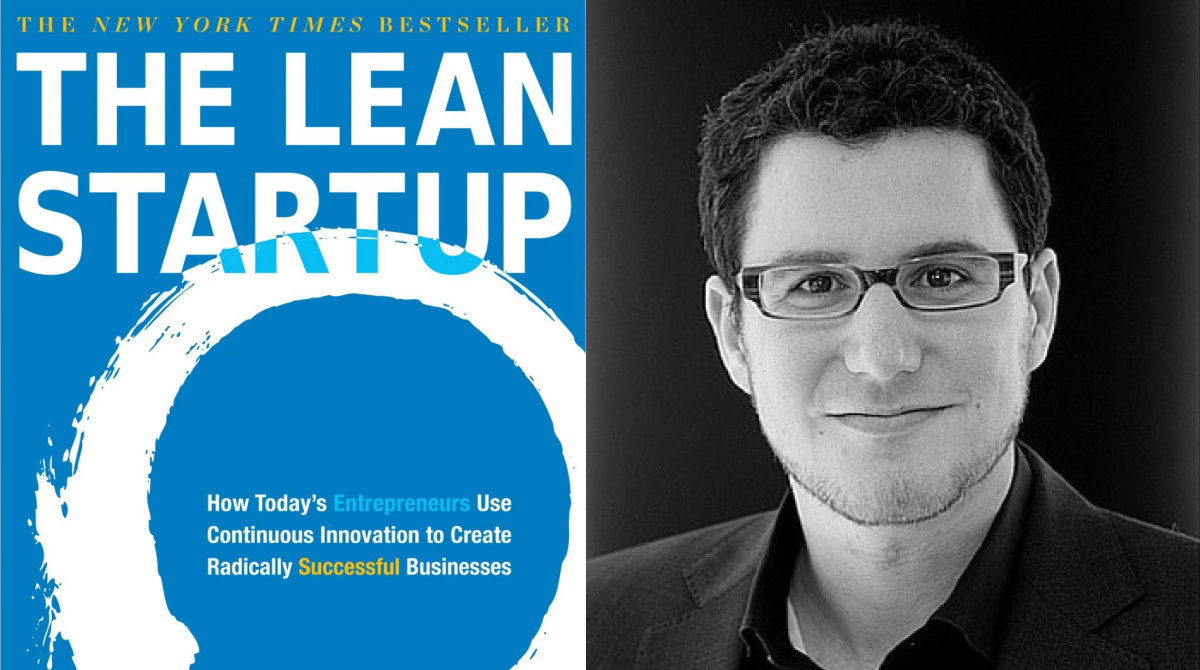
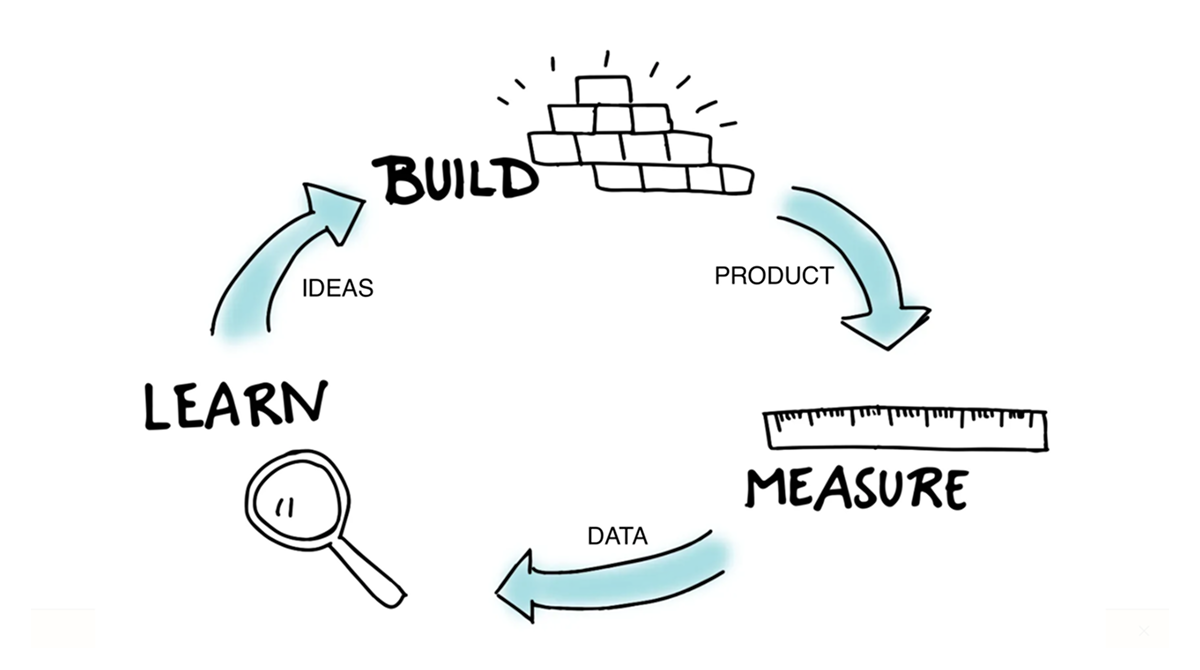
The concept gained global recognition through Eric Ries, who popularized it in 2011 through his book The Lean Startup. Ries positioned MVP as a core pillar of the Lean Startup methodology, encouraging teams to build, measure, and learn in rapid cycles. This framework connected product MVP validation with iterative development and customer driven refinement. It transformed how startups approached MVP development services and product launch planning. Since then, MVP has evolved across software and hardware industries. Today, hardware MVP development, proof of concept prototype testing, and prototype to production strategies all trace back to this foundational idea. Concept design now integrates MVP thinking from day one, ensuring that products enter the market with validated demand and measurable traction.
Why Product MVP Validation Matters
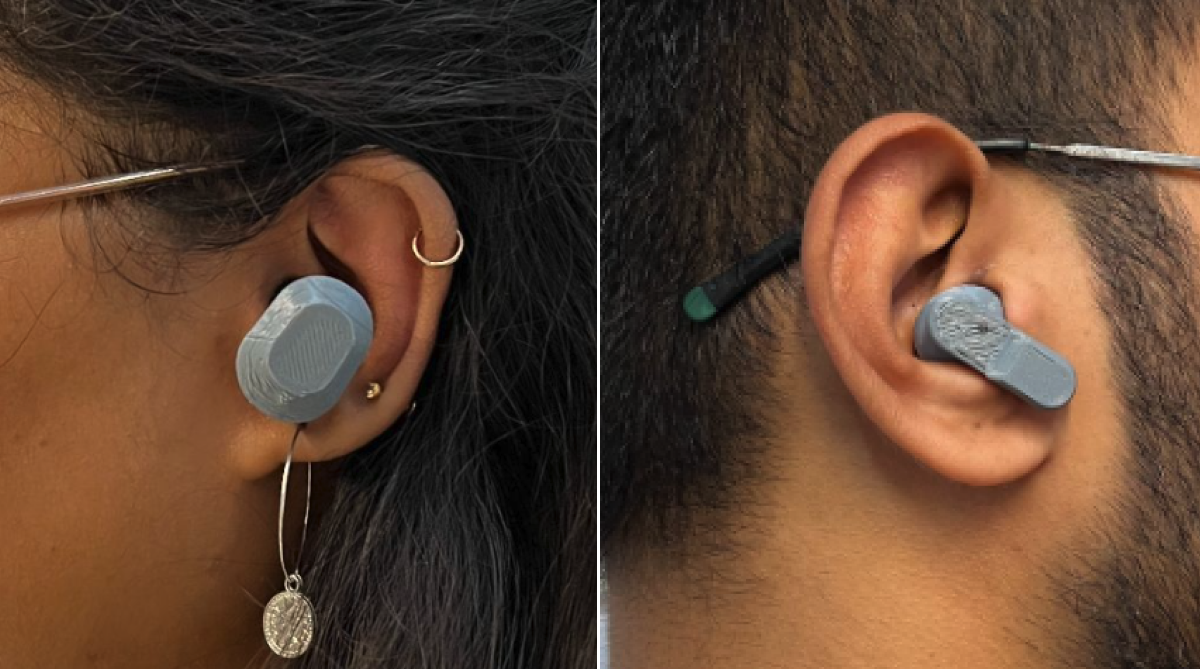
Every founder wants traction, revenue, and investor confidence. The secret lies in product MVP validation, which transforms concept design into verified market demand. Validation ensures that your solution resonates with real users before large scale manufacturing or development investment. It delivers essential data that strengthens decision making and product positioning. Product MVP validation connects iterative MVP testing with measurable learning cycles. Through MVP usability testing and user tested prototypes, teams uncover behavioral insights that shape refinements. This structured approach supports investor ready MVP development and builds credibility during fundraising conversations. A validated MVP carries far greater weight than a simple pitch deck.
When concept design integrates validation early, product risks shrink and clarity expands. Founders gain evidence that supports manufacturing ready MVP planning and prototype to production strategy. Strong validation also enhances product development partner relationships by aligning engineering and business goals.
10 Product MVP Vs No MVP Key Differences
Concept To MVP Process
Turning an idea into a validated product feels complex, yet the process becomes effortless with the right structure. Concept design acts as the essential starting point that defines purpose, functionality, and value. The concept of MVP process translates vision into actionable steps using product architecture design and rapid prototyping services. This clarity accelerates execution while preserving strategic direction.
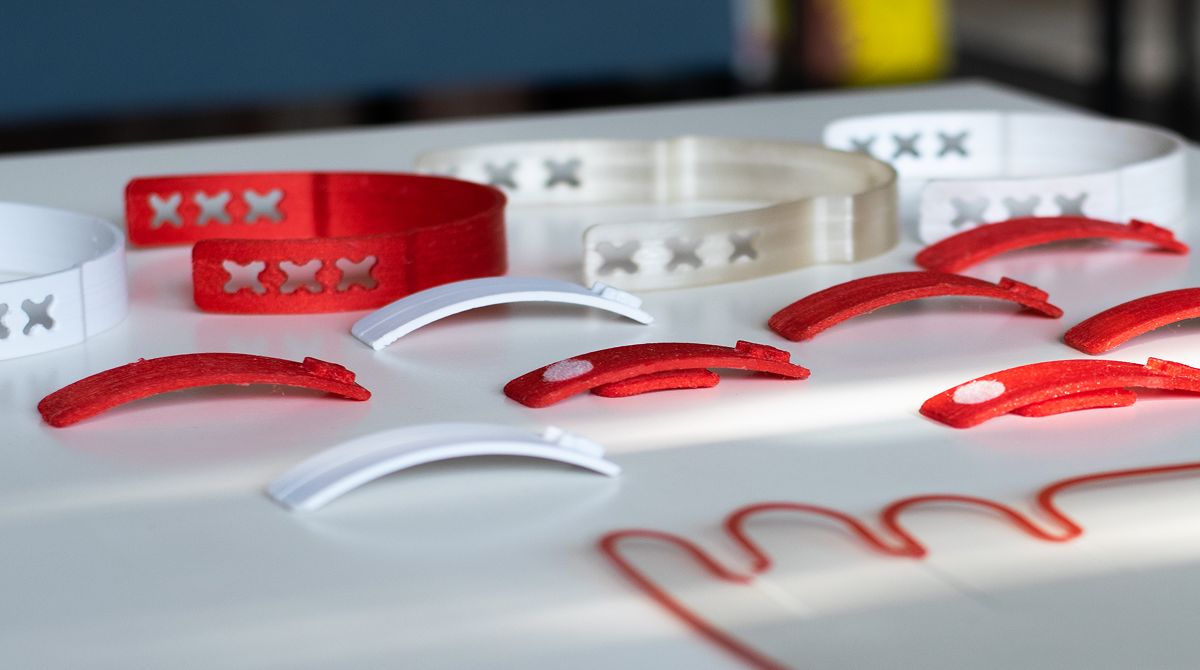
The journey begins with proof of concept prototype development to confirm feasibility. Teams then move into MVP development services that focus on core features and measurable outcomes. Through iterative MVP testing and prototype refinement cycles, each version improves performance and usability. This stage builds a strong bridge between creative vision and engineering precision. As the MVP evolves, performance metrics, usability data, and MVP software validation shape the final direction. Hardware teams integrate CNC prototype builds, 3D printing for prototypes, and DFM validation prototype methods when physical products are involved. The result is a validated foundation prepared for scaling and manufacturing readiness.
Case Study: Roto Evaporator Redesign For Aditya Scientific
Project Overview
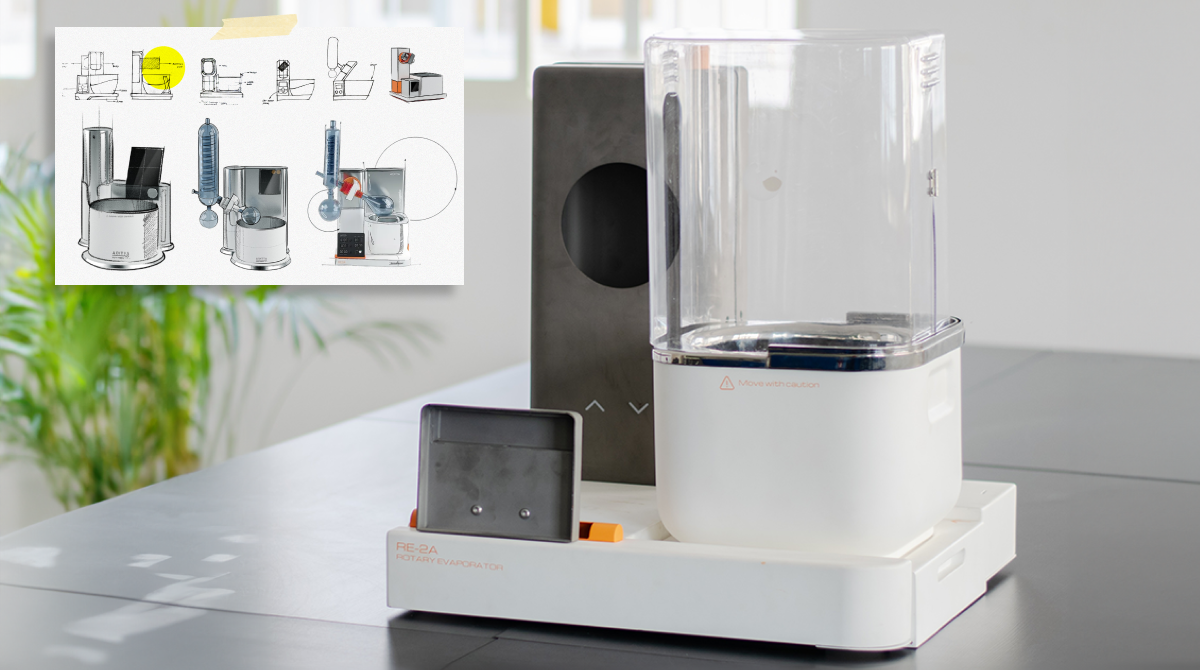
In 2021, Aditya Scientific Equipments Pvt. Ltd. partnered with Analogy Design to reimagine its 5 litre rotary evaporator for modern laboratories. The goal was to elevate usability, improve workflow efficiency, and align the product with global laboratory standards. The engagement covered concept design, MVP development, and functional prototyping within a nine month timeline.
The project focused on transforming a technically capable yet ergonomically outdated machine into a user centric laboratory system. Through a structured Product Path framework, the team moved from research to prototype validation and manufacturing readiness.
The Challenge
Laboratories demand precision, speed, and focus. The existing rotary evaporator presented several friction points:
• Scattered components and poor cable management
• Outdated controls with limited user clarity
• Inconsistent interface experience
• Limited ergonomic consideration
• Visual design that lacked brand distinction
These issues created workflow interruptions, increased learning curves for technicians, and reduced overall lab productivity.
Strategic Approach
1. Concept Design And Product Architecture
The redesign began with a deep concept design phase. The team studied lab workflows, user behavior, and environmental constraints. A refined product architecture design was developed to reorganize internal components and optimize spatial efficiency.
Control placement was redesigned to improve accessibility during experiments. The structure was compacted to reduce footprint while maintaining operational stability.
2. MVP And Functional Prototyping
A hardware MVP development strategy guided the build phase. Functional prototypes were created to validate usability, ergonomics, and component integration.
Key validation activities included:
• Real lab environment testing
• Touch interface responsiveness checks
• Chemical resistance material trials
• Mechanical movement precision testing
Iterative prototype refinement cycles ensured performance alignment with laboratory needs.
3. Industrial Design And UI Integration
The industrial design language introduced a streamlined and contemporary form. A touch enabled interface replaced traditional scattered controls, creating a more intuitive user experience.
Color, material, and finish decisions reinforced brand identity while improving durability. Corrosion resistant materials were selected for long term reliability in chemically active environments.
Cable management was reorganized internally, enhancing safety and visual clarity.
Key Innovations
• Integrated touch interface for improved control flow
• Optimized chemical bath mechanism for efficiency
• Ergonomic knob and control placement
• Compact and organized component structure
• Corrosion resistant material selection
• Digitally integrated control experience
Each feature was validated through structured prototype performance testing to ensure reliability under real world lab conditions.
Measurable Impact
The redesigned rotary evaporator delivered tangible business and operational results:
• Improved laboratory workflow efficiency
• Reduced user learning curve
• Enhanced safety through ergonomic design
• Stronger brand positioning in global markets
• Increased sales and export opportunities
The project strengthened Aditya Scientific’s competitive edge in life sciences equipment.
From Prototype To Manufacturing Readiness
Following MVP validation, the product transitioned into manufacturing readiness planning. Vendor alignment, DFM validation, and assembly optimization ensured smooth scale up.
This structured transition from concept design to prototype to production created a reliable path toward commercialization.
Client Testimonial
Naresh Reddy Aerra, Founder and CEO of Aditya Scientific, shared:
“With their experience, Analogy did a really good flow of the design. Even the user interface and the electronics, how each screen flows were done really well, and the product has come out really well. From sketches to different models and finally a beautiful design output, it still stays on my desktop as a picture of inspiration.”
This case study demonstrates how strategic concept design, hardware MVP development, and iterative prototyping can redefine industrial equipment. By aligning industrial design with engineering precision, the collaboration transformed a standard laboratory machine into a modern, ergonomic, and performance driven solution.
The Roto Evaporator project stands as a clear example of how thoughtful product innovation elevates functionality, strengthens brand identity, and drives measurable growth.
MVP Development Services Overview
Building a strong product begins with a proven system. Concept design becomes powerful when supported by structured MVP development services that translate ideas into validated outcomes. These services combine strategy, engineering, and rapid prototyping to create a clear path toward product MVP validation. The result is a focused build process that aligns technical feasibility with market demand.
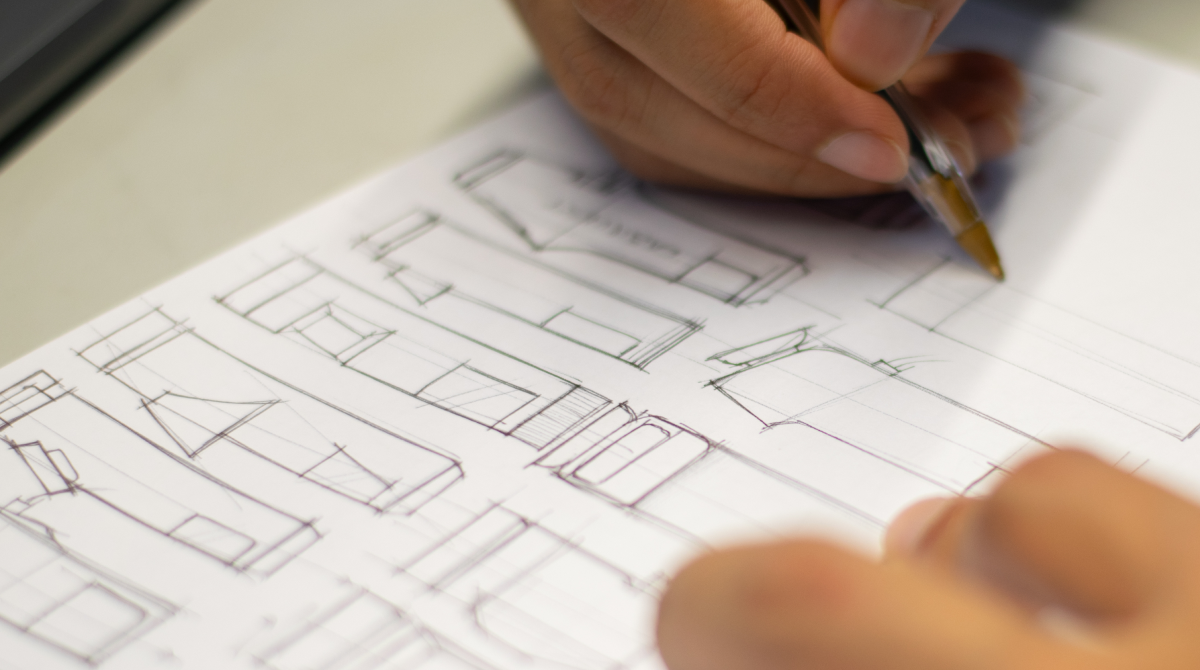
A comprehensive MVP development company typically covers product architecture design, hardware MVP development, and MVP software validation. Teams collaborate on CAD modeling for prototypes, usability planning, and functional prototype development. Each milestone connects directly to measurable learning goals, ensuring that every build cycle generates insight. This structured approach creates momentum while preserving investment efficiency. When concept design integrates MVP planning early, teams gain clarity on scope, cost, and timeline. Services such as prototype manufacturing support and DFM validation prototype preparation ensure readiness for scaling. The outcome is an investor ready MVP positioned for manufacturing and market entry.
Would your current development partner deliver this level of structured validation?
Don’t worry, we have more than 10 years of experience, you can directly reach out to us at Analogy Design.

MVP Usability Testing Framework
User behavior reveals more than assumptions ever could. A powerful MVP usability testing framework transforms concept design into real world interaction data. Through structured user tested prototypes, teams observe engagement patterns, friction points, and feature adoption trends. This validation phase strengthens product MVP validation with measurable insights.
The framework begins with clearly defined success metrics and test scenarios. Iterative MVP testing cycles allow teams to refine interface flow, ergonomics, and feature prioritization. For hardware products, ergonomic prototype testing and digital prototype testing ensure intuitive control placement and interface responsiveness. Each iteration sharpens alignment between user expectations and product performance.
As feedback accumulates, MVP refinement cycles drive continuous improvement. Insights influence both MVP software validation and hardware adjustments, ensuring holistic optimization. This process creates a confident progression toward manufacturing ready MVP development.
How effectively does your concept design capture real user behavior today? We can help you capture real user behaviour, you can directly reach out to us at Analogy Design.
5 Proven Steps To Validate MVP Usability
Step 1. Define Clear Usability Goals
Start by identifying what success looks like for your Minimum Viable Product. Align testing objectives with your concept design vision and core value proposition. Establish measurable metrics such as task completion time, interaction clarity, and user satisfaction scores. Clear goals ensure that every usability session delivers focused insights.
Step 2. Select Target Users
Choose participants who closely match your ideal customer profile. Real users provide authentic reactions that strengthen MVP validation outcomes. For hardware MVP development, include operators who represent actual working environments. Accurate participant selection increases the quality of product MVP validation data.
Step 3. Create Realistic Test Scenarios
Design scenarios that mirror real world product usage. Encourage participants to complete practical tasks using your functional prototype or digital build. This approach reveals workflow friction, interface confusion, and feature gaps. Realistic simulations strengthen iterative MVP testing cycles.
Step 4. Observe And Capture Behavioral Insights
Monitor how users interact with the MVP without guiding their actions. Record navigation patterns, hesitation points, and feature usage frequency. Combine qualitative observations with quantitative data for deeper analysis. These insights directly inform MVP refinement cycles and MVP software validation improvements.
Step 5. Analyze Findings And Refine
Review usability data to identify patterns and priority improvements. Translate insights into actionable design updates within your concept to the MVP process. Refine ergonomics, interface flow, or feature placement through rapid prototyping services when required. Continuous iteration ensures your MVP evolves toward manufacturing ready performance.
Iterative MVP Testing And Refinement Cycles
The most successful products grow through momentum, not magic. The real power of concept design appears when learning happens in structured cycles. Iterative MVP testing transforms product MVP validation into a continuous improvement engine. Each loop strengthens usability, performance, and market readiness.
The Iterative MVP Cycle
Step 1: Build
Start with a focused MVP build based on validated concept design principles. Develop core features through MVP development services or hardware MVP development. The objective is clarity and functionality aligned with your primary value proposition.
Step 2: Test
Launch structured MVP usability testing and performance validation. For software, conduct MVP software validation and digital prototype testing. For hardware, run ergonomic prototype testing, CNC prototype checks, or 3D printing for prototypes to assess form and function.
Step 3: Measure
Capture real user feedback, behavioral data, and performance metrics. Track usability friction, feature adoption rates, reliability benchmarks, and workflow efficiency. These measurable insights drive informed decision making within the product MVP validation framework.
Step 4: Learn
Analyze patterns and identify improvement priorities. Refine product architecture design, interface flow, mechanical systems, or feature placement. This stage strengthens alignment between concept design vision and real user behavior.
Step 5: Refine And Repeat
Implement improvements and move into the next testing cycle. Each iteration increases product maturity, reduces risk, and enhances manufacturing readiness. The cycle continues until the MVP reaches strong validation and market confidence.
Why Iteration Strengthens Product Development
Iterative MVP testing accelerates learning while controlling development investment. Prototype refinement cycles uncover issues early, supporting prototype to production transitions. Continuous feedback builds investor ready MVP positioning and improves scalability.
MVP Feedback Analysis Framework
Primary Goal: Turn raw user feedback into clear product decisions
Key Focus Areas:
- Behavioral insights (what users do)
- Friction points (where users drop off)
- Feature validation (what users value most)
- Emotional response (how users feel)
Tools To Use:
- Heatmaps
- Session recordings
- User interviews
- Surveys & NPS
Outcome: Prioritized improvement roadmap for next iteration
MVP Metrics That Actually Matter
Primary Goal: Measure validation and not vanity
Core Metrics:
- Activation Rate
- Task Completion Rate
- Time To Value
- Retention Rate
- Churn Rate
- Feature Adoption
Avoid Tracking:
- Page views without context
- Social media likes
- Downloads without engagement
Outcome: Data-backed go/no-go decision
MVP Pivot vs Persevere Decision Model
Primary Goal: Decide the future direction of the product
When To Pivot:
- Low retention despite feature fixes
- Misaligned target audience
- Weak problem-solution fit
- Negative usability trends
When To Persevere:
- Strong engagement
- Clear value recognition
- Positive user feedback
- Gradual metric improvement
Decision Output:
- Continue optimizing
- Change target segment
- Modify core feature
- Reposition product
Pre-Launch Validation Matrix
Objective
Reduce product launch risk before scaling
Validation Matrix
MVP Launch Readiness Checklist
Product Readiness
1) Core feature validated
2) No major usability blockers
3) Clear value proposition
4) Defined target segment
Market Readiness
1) Competitive positioning defined
2) Pricing tested
3) Early traction metrics recorded
4) Distribution channels shortlisted
Marketing Readiness
1) Landing page optimized
2) Messaging aligned with user feedback
3) Launch campaign calendar created
4) Early testimonials secured
Result
Confident product launch execution
Iterative Growth Roadmap (Post-MVP)
Phase 1) Validate
- Collect structured feedback
- Track activation & retention
- Identify friction points
Phase 2) Optimize
- Improve onboarding
- Refine product positioning
- Enhance high-value features
Phase 3) Scale
- Expand marketing channels
- Strengthen go to market strategy
- Enter new segments / geographies
Phase 4) Sustain
- Improve retention loops
- Introduce advanced features
- Build brand authority
MVP Risk Radar Model
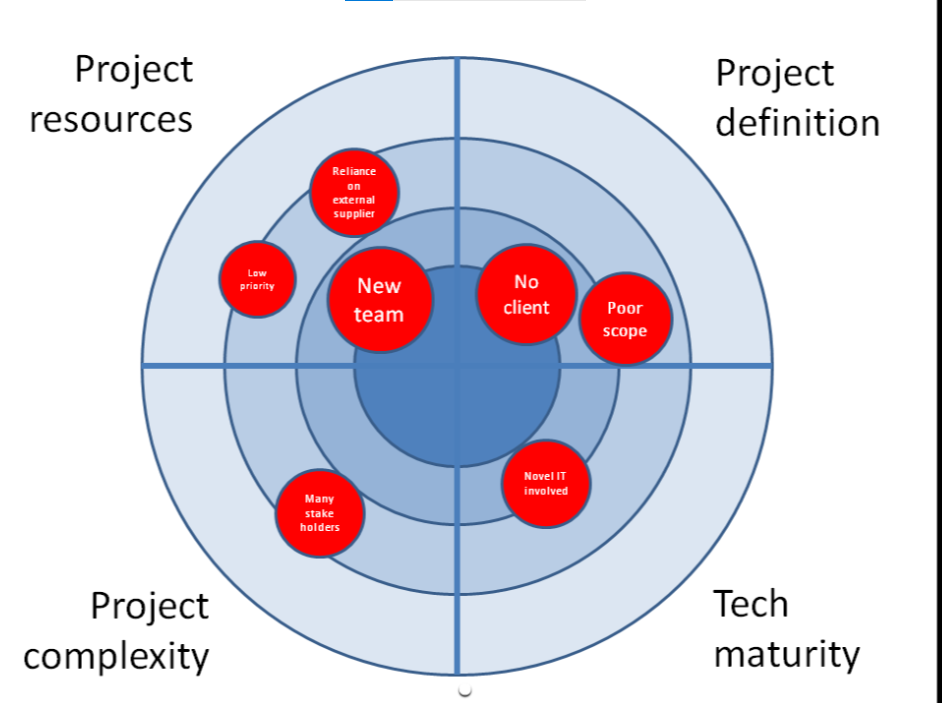
Concept Format: Circular Risk Radar
Imagine your MVP surrounded by 5 risk zones. Each zone must be tested before scaling.
Zone 1) User Risk
- Are users confused?
- Are they dropping off early?
- Do they understand the value instantly?
Zone 2) Market Risk
- Is the problem urgent?
- Is the timing right?
- Are competitors solving it better?
Zone 3) Revenue Risk
- Are users willing to pay?
- Is pricing aligned with perceived value?
- Is unit economics viable?
Zone 4) Product Risk
- Is the core feature stable?
- Are bugs affecting usability?
- Is onboarding frictionless?
Zone 5 ) Scaling Risk
- Can infrastructure handle growth?
- Is the supply chain ready?
- Are acquisition channels predictable?
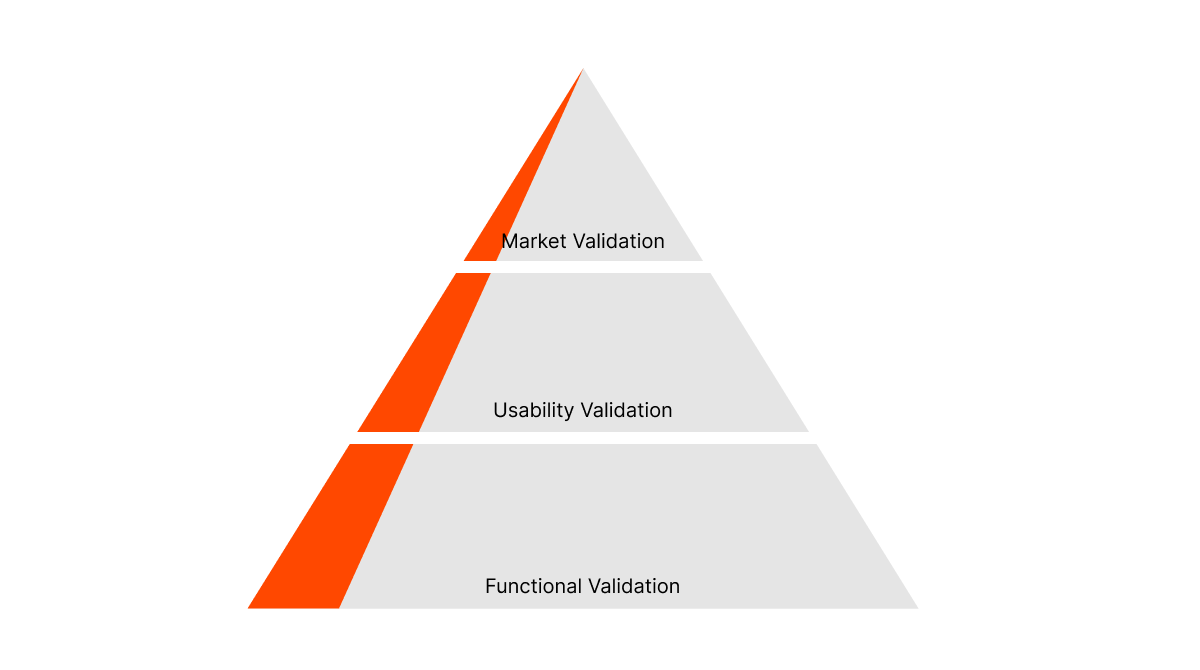
The 3-Layer MVP Validation Pyramid
Layer 1 - Functional Validation (Base Layer)
Does it work?
- Core feature functionality
- Technical stability
- Performance reliability
Layer 2 - Usability Validation (Middle Layer)
Can users use it easily?
- Onboarding clarity
- Task completion rate
- Navigation simplicity
Layer 3 - Market Validation (Top Layer)
Will users pay for it?
- Retention signals
- Referral behavior
- Pricing acceptance
Product Launch Momentum Timeline
T-60 Days: Pre-Launch Strategy Phase
1) Finalize Positioning
Refine your product positioning strategy to clearly communicate your unique value proposition and competitive differentiation before market entry.
2) Define ICP (Ideal Customer Profile)
Identify and document your target audience and buyer persona to align your go to market strategy with high-intent customers.
3) Validate Messaging
Test your brand messaging and value proposition through landing pages, surveys, and ad experiments to ensure strong product-market resonance.
T-30 Days: Beta & Optimization Phase
1) Soft Launch With Beta Users
Run a controlled beta product launch to gather early feedback, validate usability, and reduce full-scale launch risk.
2) Collect Testimonials
Capture authentic customer reviews and social proof to strengthen launch credibility and improve conversion rates.
3) Optimize Onboarding
Refine your user onboarding experience to increase activation rate, reduce churn, and improve early customer retention.
T-7 Days: Final Launch Preparation
1) Activate Waitlist
Engage your pre-launch email list and early adopters to build anticipation and drive strong launch day traffic.
2) Lock Launch Campaign
Finalize your product launch marketing strategy, including paid ads, email marketing, influencer outreach, and PR distribution.
3) Prepare Analytics Dashboards
Set up real-time performance tracking tools to monitor traffic, conversions, customer acquisition cost, and engagement metrics.
Launch Day: Execution Phase
1) Execute Campaign
Deploy your coordinated go to market plan across all channels to maximize visibility and initial sales momentum.
2) Monitor Real-Time Metrics
Track live product launch KPIs such as conversion rate, traffic sources, and user behavior for immediate optimization.
3) Provide Live Support
Offer proactive customer support and engagement to enhance user experience and strengthen brand trust.
Post Launch (First 30 Days): Growth & Retention Phase
1) Track Retention
Measure customer retention rate and product engagement metrics to evaluate long-term product-market fit.
2) Release Quick Improvements
Implement fast product updates based on user feedback to improve usability and maintain launch momentum.
3) Strengthen Marketing Channels
Scale high-performing customer acquisition channels and optimize your market entry strategy for sustained growth.
Future Advancements In Product Launch & MVP Strategy
1) AI-Driven Product Validation
What’s Changing:
Artificial Intelligence and predictive analytics will analyze user behavior before full-scale product launch.
Impact:
Faster MVP validation, smarter go to market strategy, and reduced market entry risk through data-backed decision making.
2) Predictive Market Intelligence
What’s Changing:
Advanced market intelligence tools will forecast demand trends, pricing sensitivity, and competitive positioning in real time.
Impact:
More accurate market entry strategy and improved product positioning before launch.
3) Hyper-Personalized Launch Campaigns
What’s Changing:
AI-powered marketing automation will enable hyper-personalized product launch campaigns across channels.
Impact:
Higher conversion rates, better customer acquisition cost (CAC), and stronger product marketing strategy execution.
4) Real-Time Iterative MVP Development
What’s Changing:
Continuous deployment systems will allow instant feature testing and rapid MVP refinement cycles.
Impact:
Shorter feedback loops, improved user onboarding optimization, and faster product-market fit validation.
5) No-Code & Rapid Prototyping Expansion
What’s Changing:
No-code platforms and advanced prototyping tools will accelerate MVP development and reduce time to market.
Impact:
Founders can test multiple product concepts before committing to full manufacturing or scaling.
6) Data-First Go To Market Strategy
What’s Changing:
Launch decisions will rely heavily on behavioral analytics, cohort analysis, and customer journey tracking.
Impact:
Smarter product launch planning and stronger long-term customer retention strategy.
7) Sustainable & Responsible Product Launch
What’s Changing:
Consumers increasingly demand sustainability, ethical sourcing, and transparent product development.
Impact:
Future product launch strategies must integrate sustainability positioning as a core differentiation factor.
8) Global-First Market Entry Models
What’s Changing:
Digital distribution and cross-border logistics will enable startups to adopt a global market entry strategy from Day 1.
Impact:
Localized messaging, international SEO, and scalable distribution networks will define competitive advantage.
About The Authors

Vyasateja Rao - Founder, Analogy
Vyasateja Rao is a multi-award-winning product designer with over two decades of experience, and the visionary founder of Analogy, a Bangalore-based industrial and interaction design studio. He specializes in crafting memorable and innovative experiences for both physical and digital products. After earning a Masters in Industrial Design from North Carolina State University in 2007, Vyasateja worked across the United States, Hong Kong, China, Korea, Taiwan, Singapore, and India, collaborating with Fortune 500 companies and leading design studios. His studio has received international recognition, including the Red Dot, IBDC, Singapore Design Award, and multiple patents for product innovation. Vyasateja has designed for global clients such as Panasonic, Unilever, Amazon, Marvel, and Cellairis, blending creativity with manufacturability to create breakthrough products. Beyond design, he mentors aspiring designers, teaching the importance of contrast, surprise, and hidden artifacts in creating compelling experiences.