In today's bustling world, where professionals are always on the go, comfort is not just a luxury; it's a necessity. However, traditional backpacks often fall short in the experience they provide. When EUME and Wildcraft approached our design team to revolutionize their backpacks, we were thrilled to embark on the journey. Let's delve into the realm of designer backpacks and explore how we helped brands like EUME and Wildcraft elevate the backpack landscape.
EUME: Where Comfort Meets Innovation
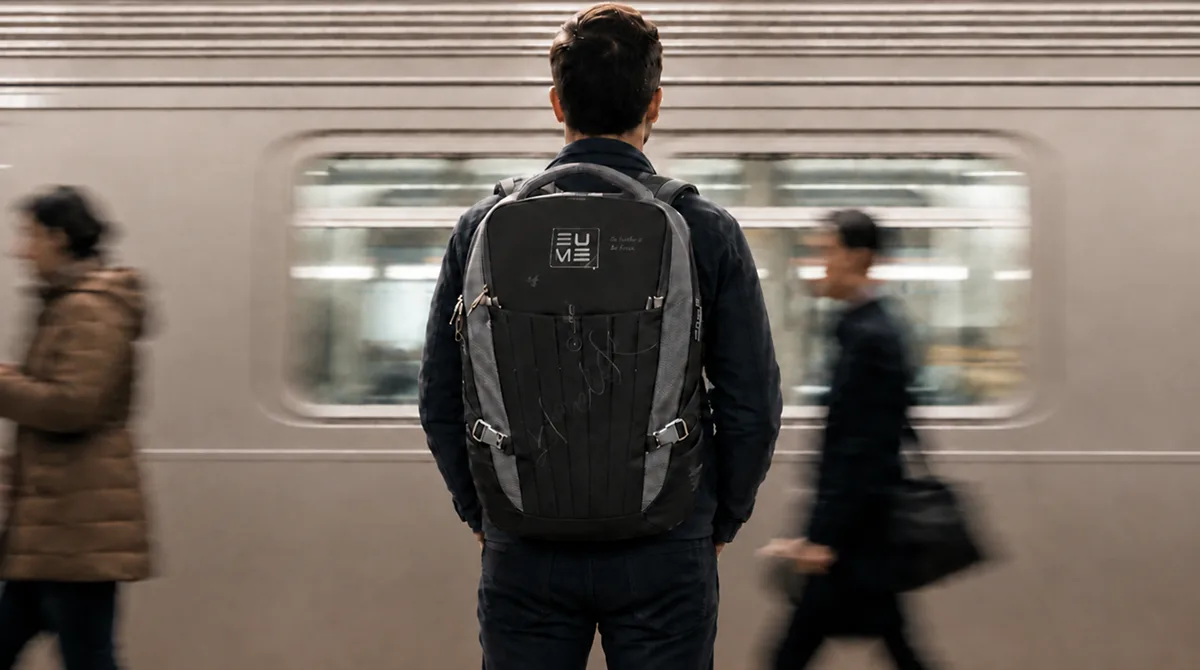
EUME stands at the forefront of innovation with its revolutionary product line, "Massage on the Move." Imagine having a massage therapist at your beck and call, soothing your muscles wherever you go. That's the promise of EUME's unique product, a backpack with a built-in massager and additional features to elevate user experience to new heights. The EUME story is really a story about listening. Most product teams design for the average user and hope for the best. The EUME brief pushed the team to design for the specific, lived reality of someone carrying a bag for six hours straight through meetings, commutes, and everything in between. That shift in thinking is exactly where the most exciting industrial design trends are headed right now, away from generic solutions and toward products that respond to individual human physiology.
What makes this genuinely rare is the level of integration involved. The massager is not a bolt-on feature added at the end of development to make the marketing deck more interesting. It is designed into the structural logic of the bag itself, which means the weight distribution, the panel stiffness, and the strap placement all work together to support it. That kind of holistic thinking is the hallmark of product design trends that actually last beyond a single season.
The result is a backpack that earns its price point every single day. Users carry it and feel the difference within minutes, which is the only benchmark that truly matters in human-centric product design.
Here is what sets the EUME approach apart from standard backpack development:
- Every feature ties back to a documented user behaviour observed in field research
- The massager zones align with the exact pressure points that carry the most load during typical commuting postures
- Material choices were tested for breathability alongside durability, prioritising what the back actually feels rather than what the spec sheet lists
- The charging port placement was iterated through physical prototypes carried by real users across real commutes
Diving Deep into Real-world Experience
We dove deep into understanding how users interact with our creation. From passive chill sessions to active massager and utility modes, every aspect is meticulously mapped out. Through extensive user studies and observation, we crafted an activity map that serves as the foundation for our design process. This user-centric approach ensures that every feature of an EUME backpack is tailored to meet the needs and preferences of its users.
The activity map built for EUME is the kind of foundational work that separates studios producing memorable products from those producing forgettable ones. Mapping every interaction, from the moment a user lifts the bag off a hook to the moment they drop it under a desk at the end of the day, reveals design opportunities that a standard brief would never surface. This depth of user research is one of the defining product design trends separating the best studios from the rest right now.
What the team discovered through observation was that users rarely interact with a bag in a single mode. They switch constantly, carrying it fully loaded on a commute, dropping it lightly on a chair during a meeting, reaching into it without looking while walking. Each of these micro-interactions creates a design requirement. Addressing all of them within a single coherent product is the real design challenge, and the activity map made that challenge visible and solvable.
This is also why user research at this level produces better industrial design outcomes than trend forecasting alone. Trends tell you what the market is moving toward. User observation tells you what the person standing in front of you actually needs. The best product design trends of right now combine both, and the EUME brief is a clear example of that working in practice.
Three Things User Observation Revealed
- Users apply peak pressure to shoulder straps within the first 90 seconds of lifting, making strap-to-panel connection the highest priority structural zone
- The massager was most valued during seated commutes lasting over 25 minutes, shaping where the activation control needed to sit for effortless one-hand reach
- Back panel ventilation was rated more important than pocket organisation by working professionals carrying laptops daily
Stellar Experiences with Tech-Savvy Comfort
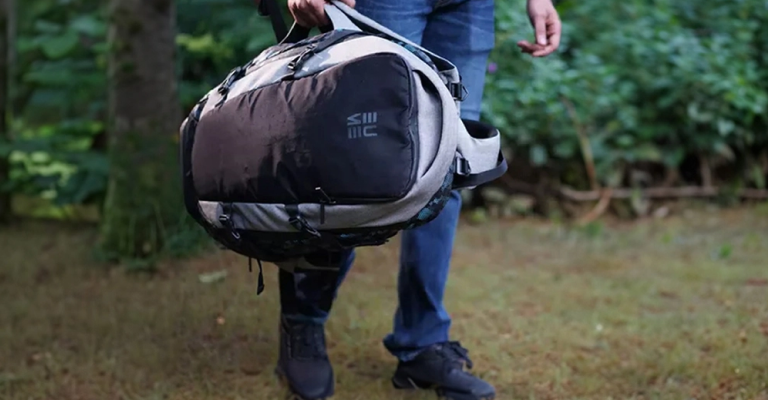
Comfort is at the core of EUME's design philosophy. The foam-molded back panel provides firm yet comfortable support, ensuring that users can carry their essentials with ease. Whether it's the travel pack or the daily pack, EUME backpacks adapt seamlessly to the user's body, offering unparalleled comfort on the move. The genesis of this groundbreaking backpack was rooted in the desire to address the evolving needs of modern consumers. The integration of a massager arose from recognizing the importance of holistic well-being in today's fast-paced world. It was not merely about creating a bag but conceptualizing an experience that seamlessly blends utility with relaxation. Explore our guide on how to invent new ideas, if you are keen to learn more about what to do in the process.
Foam-molded back panels sound like a technical detail until you carry a bag without one for a full day and feel the difference in your lower back by afternoon. The decision to invest in quality foam molding for EUME was a product design trend decision as much as an ergonomic one. Premium carry experience is one of the fastest-growing expectations in the everyday carry category, and brands that deliver it physically rather than just visually are the ones building genuine loyalty.
The adaptation between the travel pack and the daily pack is also worth examining closely. These are two fundamentally different use contexts, and the design team treated them that way. The travel pack accounts for overhead bin pressure, extended carry, and the need to access documents quickly. The daily pack accounts for desk-to-desk transitions, device charging, and the kind of casual access that happens dozens of times across a working day. Designing for both under a single brand language while keeping them functionally distinct is exactly the kind of constraint that produces the most interesting industrial design trends in the accessories category.
The holistic well-being angle that guided the massager integration has now become a genuine product category signal. Other brands are watching what EUME did and asking the same question: what else can a bag do for the person carrying it? That is the kind of influence that comes from taking a human-centric brief seriously from day one.
Thinking by Making
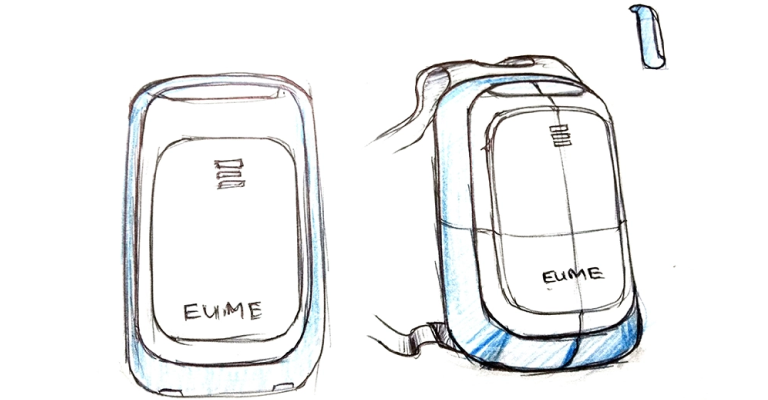
We believe in the power of prototyping and iteration. By employing early prototyping techniques, we expedite the refinement of our product's form compared to traditional design processes. Collaborative efforts both in the studio and with overseas manufacturers ensure that every EUME backpack meets the highest standards of quality and craftsmanship. The studio's commitment to early prototyping on the EUME brief paid off most visibly in the massager integration. Early foam and cardboard models revealed that the original massager placement created an uncomfortable pressure point during seated use, something that would have been invisible in a CAD render and catastrophic in a production unit. Catching it at foam model stage cost an afternoon. Catching it post-tooling would have cost months. This is the most important argument for physical prototyping that industrial design trends keep validating, again and again.
Collaboration with overseas manufacturers during the prototyping phase also compressed the development timeline significantly. When manufacturing partners are brought in early enough to see working prototypes rather than just technical drawings, their feedback becomes genuinely constructive rather than reactive. They start suggesting solutions instead of flagging problems, because they understand the intent behind the design rather than just the specification on the page.
The EUME prototyping process is a strong example of what the best product design trends in hardware development look like in practice. Build early, build rough, build often, and let the physical object answer the questions that the screen cannot. Every iteration brought the team closer to a product that felt inevitable in the hand, which is exactly what great carry design should feel like.
Elevating the Everyday Backpack Experience
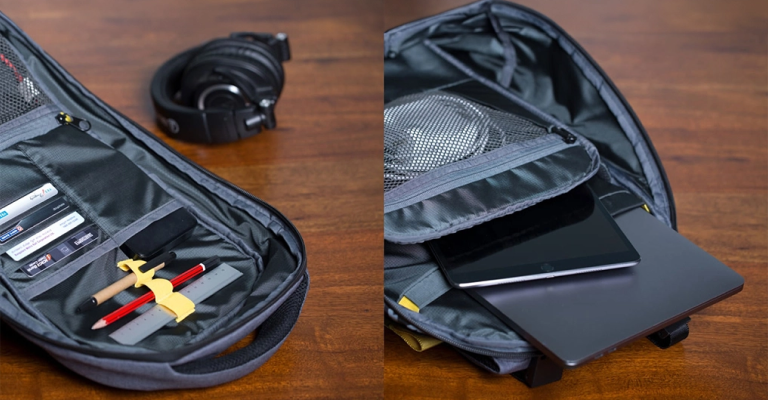
EUME's enduring impact lies in its seamless fusion of innovation with everyday practicality. From discreetly positioned charging ports to built-in massagers, every feature serves to elevate the user experience. By redefining user expectations, we set new benchmarks for backpack excellence, paving the way for a new era of comfort and convenience. The charging port placement on EUME backpacks tells a small but important story about how the team approached every detail. The position was tested across eight different prototype iterations, each time asking the same question: can a user find this port by feel alone, in a dark commuter train, without taking the bag off their shoulder? That level of specificity in testing is what produces features that users describe as intuitive, when really they are just deeply considered.
Setting new benchmarks in a product category as established as backpacks requires a team willing to question assumptions that the industry has carried for decades. Why does a back panel have to be flat? Why does a massager have to be a separate device? Why does tech integration mean visible cables and external battery packs? The EUME brief gave the team permission to challenge all of these, and the product design trends that emerged from that process are now visible across the broader premium bag market.
The era of comfort and convenience this product helped define is still expanding. Users who carry an EUME bag start expecting the same level of consideration from every product they own. That is the lasting impact of human-centric industrial design done well: it permanently raises the bar for what people are willing to accept.
WILDCRAFT: Redefining Urban Exploration
While EUME focuses on comfort and functionality, Wildcraft caters to the needs of the urban warrior, dynamic individuals who demand style and versatility in their everyday gear. Wildcraft entered this brief with a clear identity but needed a design language that could carry it into a younger, more demanding audience. Urban millennials in 2024 and beyond are extraordinarily alert to inauthenticity in product design. They can tell within seconds whether a feature exists because it solves something real or because it photographs well. The Wildcraft brief required both, which is the most demanding version of the product design trends challenge: build something genuinely useful that also looks exactly right for the audience carrying it.
The Vivid Shadow visual theme succeeded because it was rooted in genuine behavioural insight rather than aesthetic preference. Ninja warrior references are only meaningful if the user actually sees themselves as someone who moves through their environment with intention and precision. The research showed that the target demographic did, and that insight gave the design team permission to commit to the visual language fully rather than hedging toward something safer and more generic.
What this produced was a backpack that reads as a style choice from ten metres away and reveals its functionality the moment someone picks it up. That sequence, aesthetic attraction followed by functional discovery, is one of the most powerful industrial design trends in the consumer goods space right now.
What the Vivid Shadow Theme Actually Solved
- It gave the design team a shared visual filter for every surface, colour, and hardware decision throughout development
- It made the AR shopping experience feel like a natural extension of the product rather than a marketing layer placed on top of it
- It ensured the bag looked deliberate on every user body type, rather than being designed for a single idealised silhouette
The Urban Warrior
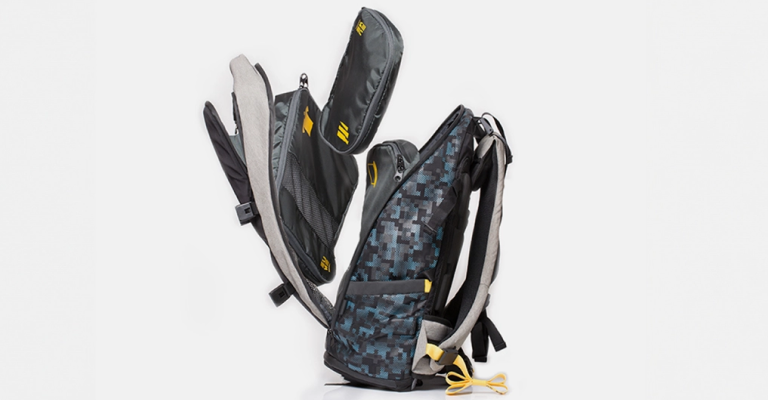
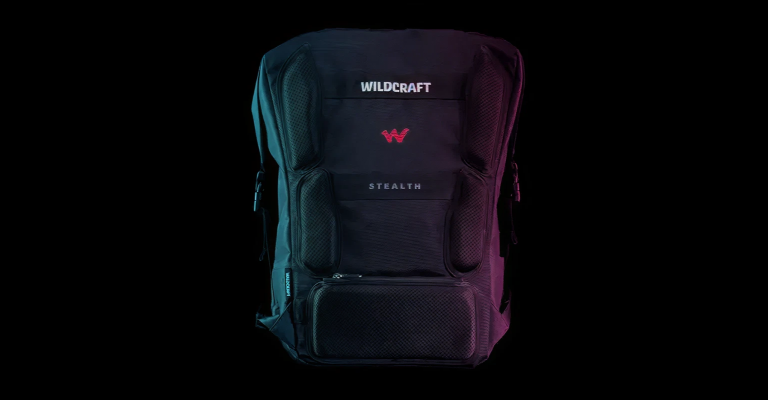
We crafted a visual theme, Vivid Shadow, that reflects our profound understanding of our target demographic, the vibrant and dynamic young millennials. Inspired by legendary Ninja warriors, these backpacks blend into the urban landscape, providing a stealthy yet stylish option for the modern adventurer. The urban warrior persona built for the Wildcraft brief was specific enough to make real decisions from. This person commutes daily, carries a laptop and a gym kit simultaneously, switches between professional and casual environments several times in a single day, and judges every product they own by whether it keeps up with them. That specificity is what makes the persona useful rather than decorative. Product design trends that centre on clearly defined user archetypes consistently produce more coherent products than those built around demographic averages.
Translating that persona into physical design decisions required the team to think about the bag in motion rather than at rest. A bag that looks perfect on a display shelf may fail completely when carried at speed, when its weight shifts unpredictably, when a strap digs in during a fast walk, or when a pocket becomes inaccessible with a jacket on. Every one of these scenarios was mapped and tested, making the final product genuinely suited to the way this specific user actually moves through the world.
The stealthy aesthetic came directly from this motion-first thinking. A bag that disappears into the urban environment, that attracts attention for looking right rather than for looking loud, is a bag that the urban warrior can carry into any context without it feeling out of place. That adaptability is what the industrial design trends driving the premium urban carry category are consistently rewarding right now.
Upgrade the Everyday Lifestyle
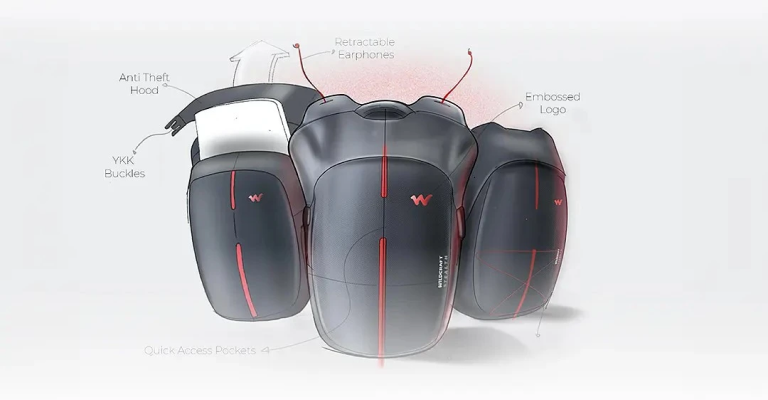
We went beyond aesthetics, creating value through focused features that enhance the user experience. From retractable earphones to smart shoes, every aspect of a Wildcraft backpack is tailored to meet the needs of the urban explorer. When it came to material selection, we took durability seriously. Their backpacks are crafted from rugged materials that can withstand the elements, whether it's rain, snow, or rough terrain. Reinforced seams and weather-resistant coatings ensure that your belongings stay safe and dry, no matter where your adventures take you.
The retractable earphone integration on the Wildcraft bag went through more iterations than almost any other feature in the brief. It sounds like a minor detail until you consider how many times a day the target user reaches for their earphones, how often they get tangled, and how much friction that single repeated experience creates across a week. Removing that friction through design is exactly what the best product design trends in the everyday carry category are focused on achieving right now.
Material selection for urban carry products is a decision with consequences that play out over years rather than weeks. The Wildcraft team chose materials that would age well under real urban conditions, resisting the kind of surface degradation that makes a premium-priced bag look cheap after six months of daily use. Weather resistance was built into the material choice rather than added as a coating, which means it stays effective through repeated washing and heavy use cycles rather than wearing off gradually.
The overall approach to feature development on the Wildcraft brief followed a clear principle: every feature that makes it into the final product has to earn its place by solving a specific, documented user problem. Features that exist purely for visual differentiation on a marketing sheet get identified and cut early. This discipline is what keeps the final product feeling coherent rather than cluttered, and it is one of the most important industrial design trends being embraced by the studios producing the best work right now.
Features That Made the Cut and Why
- Retractable earphone channel: solves daily tangle friction for a user listening across every commute
- Reinforced base panel: accounts for the urban habit of dropping bags onto hard floors repeatedly across a working day
- Side water bottle pocket with one-hand access: designed for motion, allowing hydration access without stopping or removing the bag
- Hidden document sleeve at the back panel: security-first placement for users moving through crowded transit environments
Tech-focused Approach
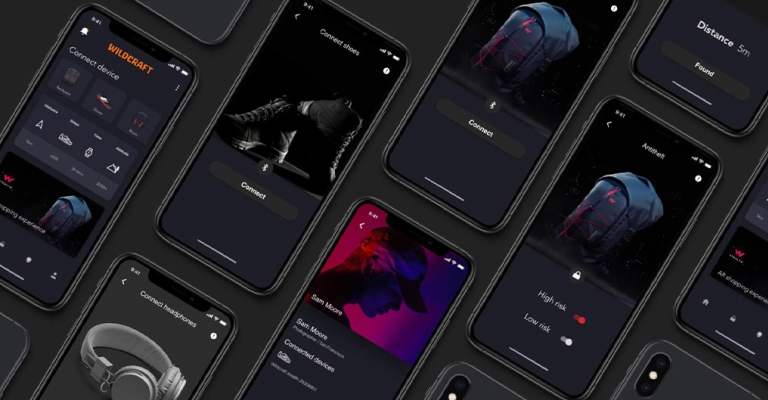
These evoke a sense of exploration within urban environments. The onboarding process, a pivotal entry point for users, was meticulously designed to strike a balance between customization and simplicity. Each step of the onboarding journey was adorned with visual breadcrumbs, guiding users effortlessly while providing reassurance about the actions they were undertaking. Furthermore, our commitment to enhancing user engagement extended beyond the app's onboarding process. We implemented an augmented reality (AR) shopping experience that went beyond being a mere technological showcase. This strategic addition aligned with the product line's overarching theme of stealth and drew inspiration from its initial conception. Understanding the shift in consumer behavior towards embracing cutting-edge technologies, our team envisioned a storefront experience that was not only clean and minimal but also featured a robust AR interface overlay. This innovative fusion transcended traditional shopping norms, providing users with a unique and immersive connection to the product. The AR interface not only brought a new dimension to the shopping experience but also introduced an array of features, further enriching the depth and versatility of the overall interaction.
The augmented reality shopping experience built for Wildcraft succeeded because it was designed into the product concept rather than retrofitted as a digital marketing tool. When the physical product has a strong visual identity rooted in stealth and precision, an AR interface that lets buyers see the bag in their own environment before purchasing is a natural extension of that identity. It gives the buyer the same sense of deliberate choice that the Ninja warrior theme communicates in the physical product. This kind of cross-channel consistency is one of the product design trends that the most sophisticated consumer brands are building into their briefs from day one.
The clean, minimal storefront design that framed the AR experience mattered as much as the technology itself. An AR overlay placed inside a cluttered, visually noisy interface loses its impact immediately. The design team understood that the digital environment needed to carry the same visual language as the physical product, making the transition between browsing and buying feel seamless rather than jarring. That level of considered digital-physical integration is exactly where industrial design trends and digital experience design are converging right now.
What the AR feature ultimately delivered was a confidence signal for the buyer. Seeing a product in your own space before committing to a purchase removes the hesitation that premium price points typically generate. For a brand building a new category in the urban carry space, that confidence signal translated directly into conversion rates that justified the development investment.
Innovative Bags for Urban Explorers
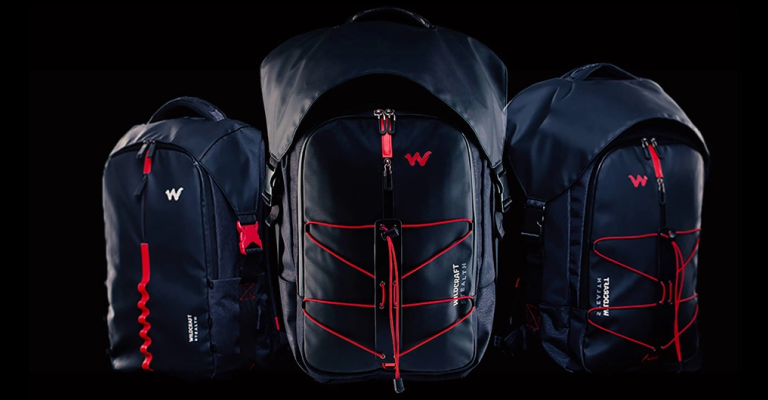
Wildcraft bags have undeniably left an indelible mark on the outdoor gear industry. By fusing cutting-edge technology with a user-centric ethos, Wildcraft sets new standards for functionality and style, redefining the way individuals approach adventure and urban exploration. The Wildcraft brief demonstrated something that the broader accessories market is still catching up to: urban consumers are ready to pay significantly more for a bag when the design genuinely solves their specific daily problems rather than approximating a solution for a generic user. This willingness to invest is one of the most important signals driving product design trends in the everyday carry category right now, and the brands reading it correctly are pulling ahead fast.
Setting new standards in outdoor and urban gear requires a studio willing to treat every constraint as a creative brief rather than a limitation. The weight restrictions, the material cost ceilings, the manufacturing feasibility requirements: each of these pushed the Wildcraft design toward solutions that would never have emerged from an open-ended brief. Constraint is one of the most productive forces in industrial design trends, and the Wildcraft outcome is a clear example of that in action.
The indelible mark Wildcraft left on the category is now measurable in the way competitors have started responding to it. When a product genuinely moves the standard, the rest of the market moves to meet it. That is the clearest sign that a design brief was answered at the highest possible level.
Conclusion: What These Two Backpacks Tell Us About Design
In conclusion, every product we design, including a seemingly simple product category of backpacks, we strive to enhance everyday experiences. Whether it's the innovative massage functionality of EUME or the tech-infused features of Wildcraft, these backpacks represent a new era of comfort, functionality, and style. Read more about how our product path service can help you launch and scale your product.
The EUME and Wildcraft briefs, approached with fundamentally different objectives, arrived at the same underlying truth: the products that genuinely improve daily life are the ones built from deep understanding of the specific human carrying them. This is the core argument behind every human-centric industrial design trend gaining momentum right now, and these two backpacks make that argument physically and compellingly.
What both projects also demonstrate is that the gap between a good product and a great one is almost always found in the details that required the most effort to get right. The EUME massager placement. The Wildcraft earphone channel. The AR interface visual language. Each of these took longer, cost more, and demanded more creative problem-solving than the obvious solution would have. That investment is exactly what product design trends at the frontier of the category consistently reward.
Every product category has a version of this story waiting to be written. The question is always the same: is the team willing to go deep enough into the human experience to find the insight that makes the product genuinely memorable rather than merely competent.