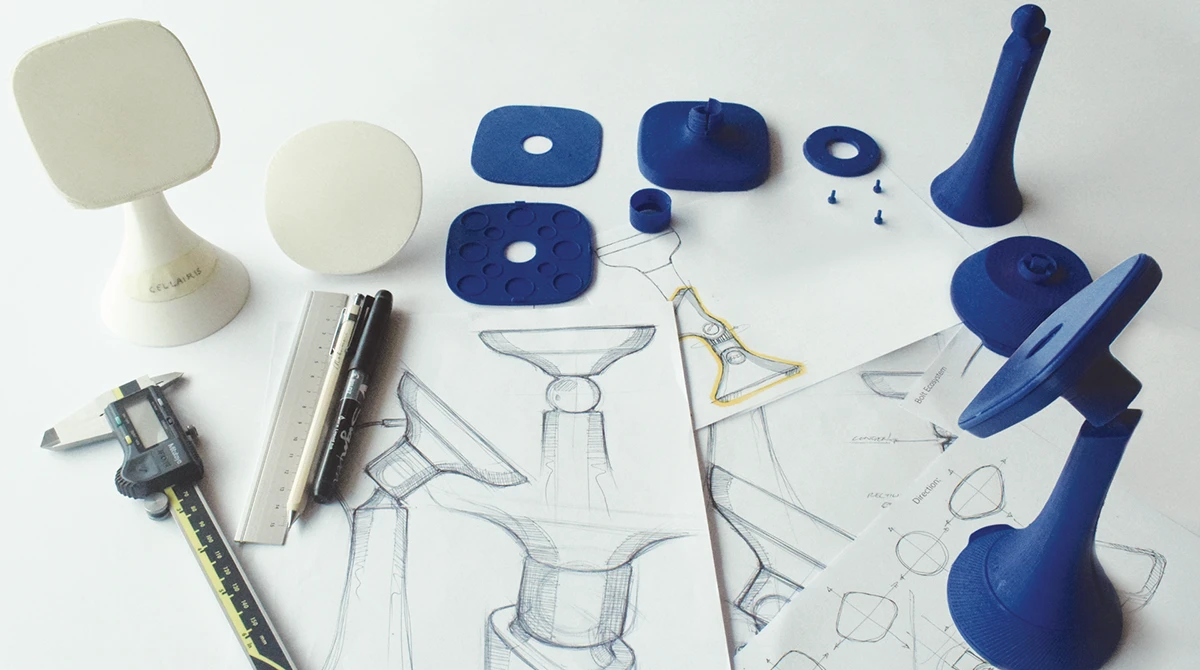
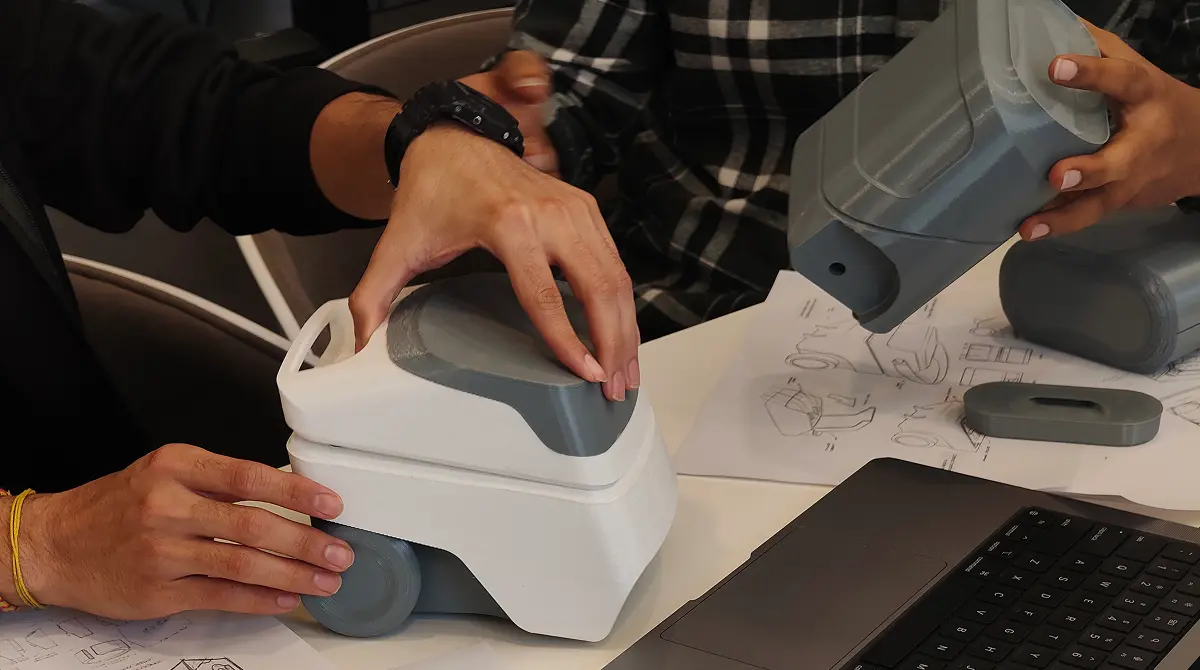
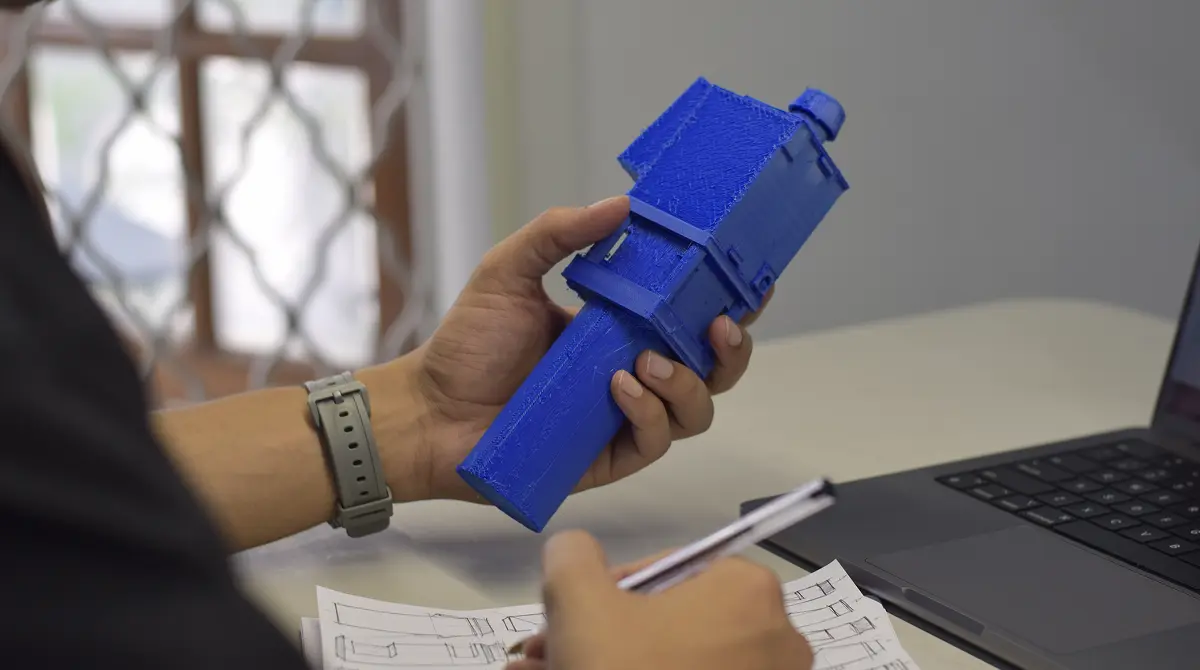
Every hardware founder remembers the night the idea finally clicked. A sketch on a napkin, a voice memo at 2am, a prototype held together with tape and hope. That spark is exciting, and it is also terrifying, because turning a sketch into a shippable product means choosing a partner who can carry that dream without crushing it under scope creep, missed deadlines, or a budget that spirals out of control.
Searching for the best product development companies feels overwhelming when every website promises the same thing: innovation, speed, world class design. Founders scroll through dozens of portfolios at midnight, wondering which studio actually understands the pressure of a runway that keeps shrinking.
I am laying out the real landscape of product development companies, from the giants who work with Fortune 500 budgets to the partners built specifically for first time founders who need speed, empathy, and results on a tighter budget.
If you have felt the fear of picking the wrong partner, or the frustration of a design agency that treated your baby like just another line item, you are in the right place. Let us walk through this together.
Best Product Development Companies In The World Ranked
Every founder deserves a clear, honest map of the landscape before committing a single rupee or dollar. Below sits a ranked walkthrough of the best product development companies worth knowing, starting with the studio built specifically for first time founders, followed by the enterprise names that dominate large scale hardware programs. Each entry opens with a short introduction, then lays out the industries they serve, their core expertise, and who they suit best.
1. Analogy Design
Analogy Design has built its reputation on bridging emotional, award winning industrial design with manufacturing ready engineering for early stage hardware founders. The studio understands the pressure of a shrinking runway and structures its process around speed, transparency, and genuine partnership rather than treating founders as small clients on the side.
Industries: Consumer lifestyle, wearables, kitchen and home appliances, connected devices, and startup hardware across categories.
Expertise: End to end product development services spanning research, industrial design, engineering, DFMA, and launch support, backed by 250+ shipped products, 23 international design awards, and $65M+ in client funding raised.
Best for: First time founders who want enterprise grade quality, transparent pricing, and a single accountable team guiding them from napkin sketch to shelf.
2. IDEO
IDEO pioneered human centered design decades ago and continues to run large scale innovation programs for some of the biggest corporations in the world. Their name carries enormous credibility, though their process and pricing reflect a client base built around long, well funded corporate engagements.
Industries: Healthcare, consumer electronics, financial services, and enterprise technology.
Expertise: Industrial design, engineering, and design thinking facilitation at a corporate transformation scale.
Best for: Large corporations running complex, multi year innovation programs with budgets well above $500,000.
3. Frog
Frog has spent years designing connected hardware and premium consumer electronics for global brands that need both strategic thinking and technical depth. Their engagements tend to sit at the intersection of software and hardware, which suits companies already operating at meaningful scale.
Industries: Consumer electronics, medical technology, and enterprise products.
Expertise: Strategy, industrial design, and engineering for complex connected systems.
Best for: Corporations building sophisticated hardware ecosystems with substantial development budgets.
4. Designit
Designit approaches product development through a service design lens, thinking about the entire ecosystem around a product rather than the object alone. This broader view suits large organizations juggling multiple touchpoints, though it can feel like more structure than a first time founder actually needs.
Industries: Finance, telecommunications, and large scale enterprise technology.
Expertise: Service design paired with product and technology innovation at scale.
Best for: Large corporations rather than early stage startups seeking a founder friendly budget.
5. Accenture Song
Accenture Song combines product strategy, industrial design, engineering, and software into full transformation programs backed by a global consulting infrastructure. Their scale is genuinely impressive, and it comes with a price tag built for enterprise transformation rather than a first product launch.
Industries: Enterprise technology, consumer hardware, and large scale digital transformation.
Expertise: Strategy through implementation across hardware and software simultaneously.
Best for: Large hardware transformation programs that easily surpass $500,000 in scope.
6. EPAM
EPAM brings deep engineering strength to connected products and embedded systems, often working alongside organizations that already have strong internal technical teams. Their value shows up most clearly on complex IoT programs where engineering depth matters more than early stage design exploration.
Industries: IoT, digital hardware ecosystems, and enterprise software integration.
Expertise: Complex connected product engineering and embedded systems development.
Best for: Organizations that already have engineering muscle in house and need a scaled partner.
7. Cambridge Consultants
Cambridge Consultants stands among the strongest names in premium hardware development, rooted in genuinely deep research and development capability. Their work often pushes into scientifically advanced territory, which naturally comes with the budget and timeline that serious R&D demands.
Industries: Medical devices, consumer technology, industrial systems, and deep tech.
Expertise: Advanced R&D, engineering, and product development for technically complex programs.
Best for: Corporations tackling advanced medical, scientific, or deep tech hardware with significant R&D budgets.
8. Sagentia Innovation
Sagentia Innovation focuses on sophisticated medical, consumer, and scientific hardware, bringing rigorous research capability to technically demanding categories. Their client base tends to include organizations that need certainty and precision more than they need speed.
Industries: Medical technology, consumer products, and industrial science.
Expertise: Complex product development programs requiring substantial research investment.
Best for: Organizations developing scientifically advanced hardware at enterprise budget levels.
9. PA Consulting
PA Consulting operates across advanced technology and engineering consulting for major organizations navigating complex regulatory and technical environments. Their strength lies in connecting strategy with execution, which large institutions value far more than early stage founders typically need.
Industries: Healthcare, connected products, and industrial systems.
Expertise: Technology strategy, engineering, and large scale systems development.
Best for: Major organizations navigating complex regulatory and technical environments.
10. EisnerAmper Engineering
EisnerAmper Engineering takes on technically complex product development and engineering programs that demand specialized expertise. Their work tends to serve organizations with established technical requirements rather than founders still shaping their first concept.
Industries: Industrial and technology sectors requiring deep engineering rigor.
Expertise: Engineering heavy programs with substantial development budgets.
Best for: Organizations needing specialized engineering support at scale.
11. Plexus Corp
Plexus Corp handles complex electronics, engineering, and manufacturing realization for companies moving from design into serious production volume. Their strength shows up most clearly once a product needs to scale beyond a first production run.
Industries: High complexity electronics and industrial hardware.
Expertise: Product realization from engineering through manufacturing.
Best for: Companies with high complexity electronics programs ready for scaled production.
12. Jabil
Jabil operates at a genuinely massive scale, pairing large electronics and hardware development with global manufacturing infrastructure. Founders sometimes graduate into their orbit once volume and capital reach a point where enterprise manufacturing becomes necessary.
Industries: Consumer electronics, industrial hardware, and supply chain heavy sectors.
Expertise: Engineering, supply chain management, and manufacturing at massive scale.
Best for: Brands running programs worth millions of dollars rather than hundreds of thousands.
13. Flex
Flex partners with major brands on complex hardware development and manufacturing, offering the kind of global supply chain execution that established companies rely on. Their scale suits brands well past the early prototype stage.
Industries: Consumer technology, industrial, and healthcare hardware.
Expertise: Manufacturing scale engineering and global supply chain execution.
Best for: Established brands needing global manufacturing muscle behind their hardware programs.
14. Celestica
Celestica focuses on complex electronics manufacturing across regulated industries where precision and compliance matter as much as speed. Their client base tends to operate in categories where quality certification carries serious weight.
Industries: Healthcare, aerospace, communications, and industrial hardware.
Expertise: Precision electronics manufacturing and engineering support.
Best for: Regulated industries needing precision manufacturing at enterprise scale.
15. Capgemini Engineering (formerly Altran)
Capgemini Engineering brings major capabilities in product engineering and embedded systems following its merger with Altran, serving some of the largest hardware programs in the world. Automotive and aerospace organizations in particular rely on their depth and global footprint.
Industries: Automotive, aerospace, industrial technology, and connected products.
Expertise: Engineering and advanced hardware development for very large programs.
Best for: Automotive and aerospace organizations running expansive engineering programs.
Best Companies For Psycho Aesthetics In Product Design
Psycho aesthetics is one of those phrases that sounds academic until you feel its effect firsthand. It is the study of how shape, color, texture, and proportion trigger emotion before a customer even reads your product description. A kettle that feels warm in the hand, a wearable that feels like jewelry rather than electronics, a chai machine that feels like a ritual rather than an appliance, these are all outcomes of psycho aesthetics done well.
Founders often underestimate how much this discipline drives conversion. A product can be technically flawless and still fail commercially if it fails to spark desire on a shelf or a screen. The best companies for psycho aesthetics in product design treat form language as a strategic lever, not a decorative afterthought.
Analogy Design has built a reputation around this exact intersection of emotion and engineering. Their product design services blend industrial design sensibility with manufacturing discipline, so a product looks desirable and survives contact with a factory floor. Their portfolio of shipped work includes products like the Eume backpack, which appeared on Shark Tank, and the Mustard AI Glasses, later acquired following a CES showcase. Both products succeeded partly because their form triggered an emotional response before a single feature was explained.
"A product earns trust the moment someone picks it up, long before they read the spec sheet."
- Vyasateja Rao, Founder, Analogy Design
Consider these signals when evaluating a partner for aesthetic driven design work:
- Look for a portfolio that shows range across categories, since psycho aesthetics principles shift between a medical device and a lifestyle gadget
- Look for evidence of material exploration, including physical models rather than only renders
- Look for color psychology thinking baked into early concept work
- Look for a process that tests emotional response with real users, not just internal opinions
- Look for case studies where aesthetic choices tied directly to sales or funding outcomes
- Look for collaboration with engineering from day one, so beautiful concepts survive manufacturing
- Look for cultural sensitivity in design language if you are targeting global markets
- Look for a willingness to explain design decisions in terms a non designer can understand
Best Companies For User Engagement In Product Development
Engagement is the quiet metric that decides whether a customer becomes a repeat buyer or a one time purchase. The best companies for user engagement in product development think beyond the physical object and consider the entire experience, from unboxing to daily use to the moment a customer recommends the product to a friend.
This is where hardware and software increasingly blur together. A connected device succeeds when its app feels intuitive, when its onboarding builds confidence, and when its feedback loops keep users coming back. Founders chasing product market fit often discover that engagement design separates a forgettable gadget from a beloved brand.
Analogy Design approaches engagement through a structured product path methodology that maps user behavior alongside industrial design and engineering decisions. Their work on products like the Dostea chai machine and the Nester air fryer shows how thoughtful interaction design, from a single satisfying click to an intuitive display, keeps users engaged long after the initial purchase.
The DFMA guide is a useful resource here too, since engagement is closely tied to reliability. A product that engages users emotionally still needs to survive daily use, and design for manufacturing and assembly principles ensure that durability supports rather than undermines the experience you have designed.
Founders evaluating a partner for engagement focused work should ask about user testing cadence, how quickly a team iterates based on feedback, and whether the studio has experience designing connected experiences that pair hardware with an app or a service layer.
Best Product Development Company For First Time Founders On A Real Budget
Here is the honest truth that enterprise focused agencies rarely say out loud. A founder raising a pre seed or seed round typically cannot afford a $500,000 engagement, and frankly should not need one for a first product. The best product development company for a first time founder is built around a different set of priorities: speed to prototype, transparent pricing, hands on communication, and a genuine understanding of what investors expect to see at each stage.
This is precisely the gap Analogy Design was built to fill. Based in Bangalore and working extensively with US market founders, the studio has shipped over 250 hardware products and earned 23 international design awards while helping clients raise more than $65 million in funding. Their client roster spans household names like Panasonic, Unilever, Amazon, Marvel, and Maersk, proof that enterprise grade quality does not require an enterprise grade budget when the process is built efficiently.
Founders working with Analogy often start with their launch support services, which package early stage validation, industrial design, engineering, and manufacturing readiness into a single accountable relationship. Rather than juggling five separate vendors, a founder gets one team that owns the outcome end to end.
"Our job is to protect a founder's runway while still delivering work that competes with the biggest names in the industry."
- Vyasateja Rao, Founder, Analogy Design
That balance of ambition and financial realism is exactly what separates a genuinely useful partner from an agency chasing prestige clients.
Do's and don'ts worth pinning above your desk during this search:
Founders Fear Picking The Wrong Product Development Partner
Choosing a product development partner is one of the highest stakes decisions a founder makes. Your equity, your timeline, and honestly your sanity are riding on this choice. A wrong pick can mean a product that looks beautiful in a rendering yet fails during manufacturing, or a partner who disappears the moment things get technically messy.
Here is a quick reality check before you choose:
- Ask if the team has shipped a physical product from concept through mass production, since portfolios full of concept renders rarely translate into manufacturing readiness
- Ask about their experience with your specific category, whether that is wearables, kitchen appliances, medical devices, or connected hardware
- Ask how they handle design for manufacturing and assembly, often shortened to DFMA, since this single discipline determines your unit economics
- Ask for references from founders who were at your exact funding stage, not just enterprise clients
- Ask how transparent their pricing structure is, and whether hidden costs tend to appear later
- Ask what happens if the timeline slips, and who absorbs that risk
- Ask if they support fundraising materials, since investors respond strongly to a polished prototype and story
- Ask about their approach to psycho aesthetics in product design, meaning how form, color, and texture influence a buyer's emotional response
- Ask how they measure user engagement in product development, since engagement data often separates a good product from a great one
- Ask directly whether your budget fits their typical engagement size
Best Product Development Companies FAQ
Your Next Step Toward Shipping A Product You Are Proud Of
The search for the best product development companies is ultimately a search for a partner who treats your idea with the same care you do. Enterprise names like IDEO, Frog, and Cambridge Consultants earn their reputation, and founder focused studios like Analogy Design earn theirs by proving that quality and empathy scale down to fit a first time founder's budget and timeline.
Every fear you carry about this decision is valid, and every dream you have for your product deserves a partner willing to fight for it alongside you. Explore Analogy Design's work, read through their blog for deeper guidance, and when you are ready, start a conversation through the services page. The right product development partner turns a napkin sketch into a product customers cannot stop talking about, and that journey starts with a single conversation.
For additional grounding on how structured product development processes work at a national level, the National Institute of Standards and Technology offers useful public research, and the U.S. Small Business Administration provides a helpful overview for founders planning their first product launch. Wikipedia's overview of new product development is also a solid starting point for founders still building foundational knowledge, alongside the World Intellectual Property Organization for founders thinking through IP protection early.
About The Author

Vyasateja Rao – Chief Advisor, Analogy
VT Rao (Vyasateja) is a multi-award-winning product designer with over two decades of experience, and the visionary founder of Analogy, a Bangalore-based industrial and interaction design studio. He specializes in crafting memorable and innovative experiences for both physical and digital products. After earning a Masters in Industrial Design from North Carolina State University in 2007, Vyas worked across the United States, Hong Kong, China, Korea, Taiwan, Singapore, and India, collaborating with Fortune 500 companies and leading design studios. His studio has received international recognition, including the Red Dot, IF Design, Good Design, NY Product Design, European Product Design, German Product Design, IBDC, Singapore Design Award, and multiple patents for product innovation. VT has designed for global clients such as Panasonic, Unilever, Amazon, Marvel, and Cellairis, blending creativity with manufacturability to create breakthrough products. Beyond design, he mentors aspiring designers, teaching the importance of contrast, surprise, and hidden artifacts in creating compelling experiences.