It’s tempting to tune out from the steady drumbeat of information out there as creative trends come and go. But, if you are a design professional, staying up to date with Industrial Design Trends is crucial. In my opinion, nobody in the design field can afford to overlook market trends. After all, this is the sector that often sets the pace for emerging trends that eventually impact the rest of the world. The future is shaped, developed, and created by designers.
This year, there are so many exciting, unique, and fun design trends that it was hard to choose just a few. Here are our top industrial design trends for 2023.
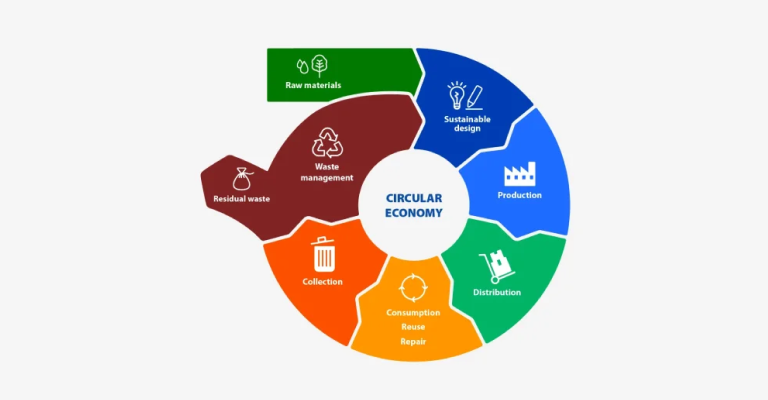
Circular design, have you ever heard of it? For a while now, it has been universally believed that our society has to become more sustainable. The optimal route there, however, is not yet quite evident. There are multiple approaches, primarily for the economy. Sustainability in this context refers to circular, and one of the most promising strategies for attaining sustainability goals is circular design.
Circular design is an emerging trend in industrial design that is focused on creating products that are designed with the end-of-life in mind. It entails creating products that are simple to repair, recycle, disassemble, or reuse. This means using materials that are sustainable and non-toxic, designing products for longevity, and considering the entire lifecycle of a product from raw materials to disposal. It calls for an entirely new system wherein goods, services, business plans, marketplaces, etc., are created and organised with this goal in mind.
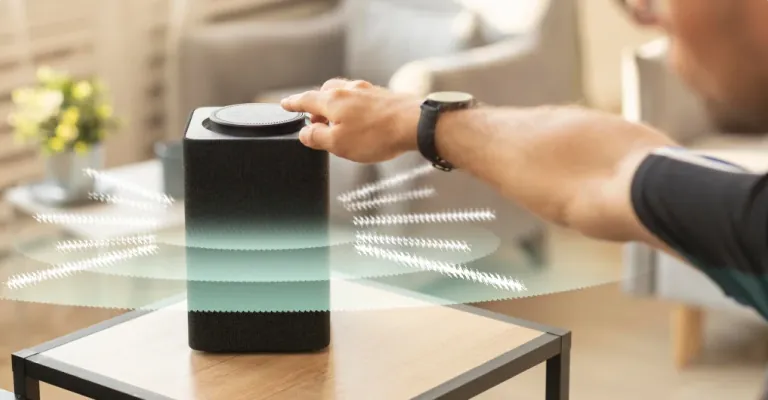
As our world becomes more and more interconnected, the popularity of smart devices is redefining how products are being created.
The internet has already changed every aspect of our life, including how we connect, purchase, commute, and entertain ourselves. Furthermore, as technology develops, industrial design and development are being revolutionised. Brands and designers are recognising novel possibilities for learning how customers actually use their products in real-time and alter future designs by “smartening” up everyday products by connecting them to the internet.
Smart products can be found in various industries, including home appliances, automotive, healthcare, and consumer electronics. The trend towards smart products is expected to continue as technology advances, and consumers become more accustomed to the benefits of connected devices.
In recent years, sustainability has surfaced as a hot-button topic and a major design trend.
As professionals become more cognizant of their potential to harm the environment, design practices have been leaning toward sustainability. One of the drivers of this trend is the rapid progress in biomanufacturing.
This new turning point in material science allows for the creation of biobased products starting from highly specific raw materials, which include cells, molecules or extracellular meshes, some even being obtained from human skin. Production can go far beyond natural materials that have been used for eons, such as leather, wood and paper, which are all sourced from plants and animals.
Are You Designing Products or Digital Experiences?
The boundary between a physical product and a digital service has become genuinely difficult to locate. This convergence is one of the most fascinating industrial design trends reshaping product studios today. Products are arriving at market with embedded sensors, companion apps, cloud connectivity, and firmware that updates over the air. The physical object is increasingly the interface for an ongoing service relationship rather than a one-time transaction.
Consider how a product launch used to work. A designer finalised the form, engineering finalised the specifications, manufacturing ran the units, and the customer received a finished object. That product was static from the moment it left the factory. Today, a well-designed connected product can improve over time. Features get added, behaviours get refined, and the user's experience deepens as the product learns their preferences. The implications for industrial design are profound.
Designing for Time, Not Just Form
This means industrial designers are increasingly thinking in timelines rather than snapshots. The product at launch is version one of an evolving relationship. The physical form needs to accommodate hardware that may serve functions the team has barely imagined yet. Port placements, speaker grilles, button configurations, all of these become decisions with longer-range consequences. The best product designers today are collaborating earlier and more deeply with software teams, UX designers, and data scientists.
There is a subtler layer to this trend that the best studios are wrestling with seriously: when products collect data, the design carries a responsibility for trust. How the product communicates what it knows, how it signals its data practices to a user, and how it makes someone feel about the information being gathered are all design problems. Transparency and control are becoming aesthetic values in their own right. Users who feel respected by a product become its most vocal advocates.
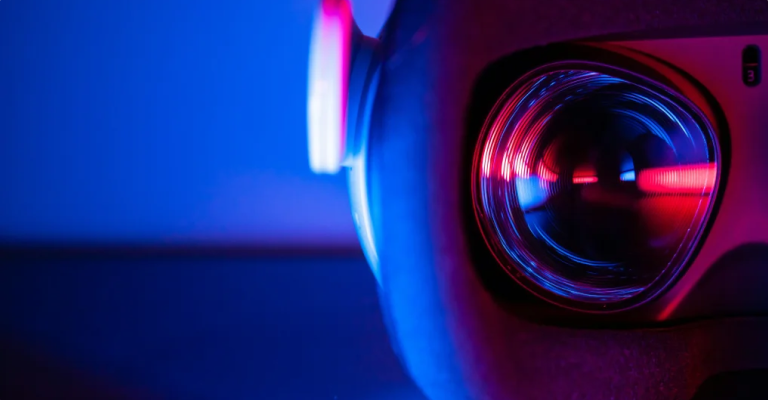
If you spend time scanning the horizon for technologies that promise positive impact, it’s hard to find any more fascinating than AR and VR. Between the two, VR has a greater competitive edge due to its head start and established presence in gaming and entertainment. Applications for AR and VR can be found in e-commerce, home renovation, and education. Transportation, healthcare, science, and other sectors are among the others that are exploring the potential of AR and VR. This requires us as industrial designers to go from thinking in 2D to thinking in 3D.
This involves building prototypes and user interfaces that leverage what the user sees around them. It’s about considering the user’s reality and designing products to better it.
Any design that aims to elicit an emotional response from the viewer is considered an emotional design. It doesn’t tell the user how to feel, it creates feelings in the user through deliberate design choices. It’s one of the most powerful tactics in a brand’s toolbox. You can’t engage users if you don’t appeal to their emotions. It really is that simple and that complex.
Emotional design is becoming an industrial design trend because of the growing recognition of the significance of user-centred design. Designers are increasingly focusing on creating products that are tailored to the specific needs and preferences of individual users, and emotional design is a key component of this process. By designing products that connect with users on an emotional level, we can create more personalized and intuitive experiences that are more likely to meet the needs and expectations of individual users.
Your Competitors Already Know About Generative Design
There is a quiet revolution happening inside design studios around the world, and the ones who miss it will feel it in their bottom line. Generative design is reshaping the way industrial designers approach problem solving. Instead of a designer drawing a single concept and refining it over weeks, software algorithms now generate hundreds of viable design options based on a set of parameters like load, material, weight, and cost.
The result? Forms that a human mind would rarely arrive at alone, shapes that look organic yet perform like precision-engineered components.
Why Traditional Methods Feel Limiting Now
Designers who have worked with generative tools describe a feeling similar to switching from manual sketching to CAD for the first time. The process fundamentally changes. Aerospace, automotive, and medical device companies were the early adopters, drawn by the ability to shave weight off components without compromising structural integrity. What was once exclusive to billion-dollar R&D budgets is now accessible to smaller studios and startups, thanks to platforms that have democratised access to these algorithms.
The Human Role in an Algorithmic World
Here is where product design trends get interesting: generative design does not eliminate the designer. It amplifies the designer. The creative professional shifts from being the sole author of every curve and angle to becoming the curator of hundreds of machine-generated possibilities. The judgment, the taste, the understanding of the user and the market, all of that still sits squarely with the human. The algorithm brings volume; the designer brings meaning.
Material and Manufacturing Alignment
One of the most powerful aspects of this trend is how it connects design to manufacturing from the very beginning. Generative design tools factor in the manufacturing method, whether that is CNC milling, injection moulding, or additive manufacturing, and produce forms that are optimised for that process. This means fewer costly surprises in production, faster iteration cycles, and products that arrive at market more refined than ever before.
3 Design Mistakes Killing Your Brand's Future
Brands that ignore inclusive design are quietly narrowing their market without realising it. Inclusive design, sometimes called universal design, is the practice of creating products that work beautifully for the widest possible range of people, including those with physical, cognitive, or sensory differences. This is one of the most significant product design trends gaining momentum right now, driven equally by changing consumer expectations and evolving global regulations.
1. When "Average User" Became a Myth
For decades, industrial design centred around an imaginary average user: a specific height, a specific grip strength, a specific level of dexterity. Products were optimised for that phantom, leaving a massive portion of real users to adapt. Today, designers are questioning that assumption at its foundation. The insight driving this shift is elegant in its simplicity: when you design for the edges of human ability, the result tends to work better for everyone in the middle too.
2. From Compliance to Competitive Advantage
Progressive design teams have stopped treating inclusivity as a regulatory checkbox and started treating it as a creative brief. The OXO Good Grips kitchen line is the case study that started conversations in the industry: tools designed for people with arthritis became beloved by chefs, athletes, and teenagers alike. When you solve for the hardest use case, you often create a product that feels effortless for every use case. That is a competitive advantage, full stop.
3. Designing for a Spectrum of Experiences
The practical implication for industrial design is a richer research phase. Teams are engaging directly with users across a broader spectrum of physical and cognitive abilities, building empathy that translates into genuinely better products. Tactile feedback, adjustable grip geometries, clearer visual hierarchy in physical interfaces, reduced cognitive load in product interactions, these are design choices that emerge when the brief expands beyond the imaginary average. Companies embracing this shift are creating loyal customers in segments their competitors are actively ignoring.
Conclusion: The Material Shift That Will Define This Decade
Material innovation in industrial design is accelerating at a pace that feels almost disorienting if you have been in the industry for more than a decade. The materials available to designers today would have seemed speculative in design fiction five years ago. Mycelium composites, algae-based foams, agricultural waste bonded into rigid panels, bacterial cellulose grown into sheets with leather-like properties: these are commercial realities, and forward-looking studios are already building them into production timelines. For much of the twentieth century, industrial design operated within a relatively stable material vocabulary: steel, aluminium, glass, a growing library of plastics.
Each had well-understood properties, established supply chains, and predictable cost structures. What is happening now is a disruption of that vocabulary at its foundations. The performance characteristics of bio-based materials are improving rapidly, and the economics are shifting as production scales up.
One of the most common misconceptions is that sustainable materials require a compromise in performance. That assumption is eroding fast. Researchers and material scientists are engineering bio-based composites that match or exceed the mechanical properties of synthetic alternatives in specific applications. Industrial designers who are actively building relationships with material innovators are gaining access to a creative palette that their competition simply does not have yet.
The switch to novel materials demands a change in process thinking too. Bio-based materials often have different forming requirements, different tolerances, and different finishing characteristics than conventional materials. The most successful design teams are embedding material exploration earlier in the development process, treating the material itself as a design variable rather than a downstream decision. This shift in process is producing products with a genuinely new aesthetic character, one that feels grown rather than manufactured, and consumers are responding to it with real emotion.
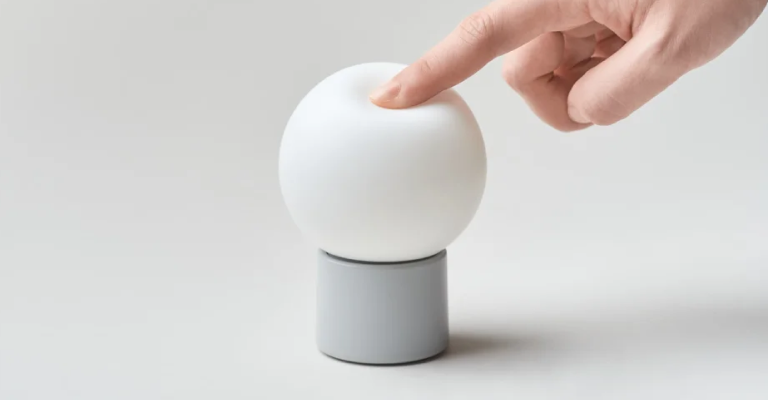
Every designer talks about aesthetics. Very few talk about haptics with the same seriousness, and that gap is where a significant opportunity lives. The way a product feels in the hand, the resistance of a button, the texture of a surface, the weight distribution across the palm, these sensory details create emotional impressions that are processed faster than conscious thought.
Haptic design is emerging as one of the most nuanced product design trends in premium and mass-market categories alike.
The intersection of digital haptics technology and physical industrial design is opening up a creative frontier that is still largely unexplored. Actuators embedded in surfaces can now simulate textures, create directional cues, and provide feedback that communicates information without a screen. For medical devices, professional tools, and consumer electronics, this capability creates new design possibilities for users across a range of sensory abilities and use environments. The designers who build fluency in this space now will be the ones defining what premium feels like across the next generation of products.
Emerging trends in industrial design are intriguing and revolutionary, and they are driving the sector in novel and creative ways. These trends inspire innovation and encourage designers to explore new materials, technologies, and design concepts. As a result, a range of new and exciting products that blend these trends innovatively are coming up. Additionally, these trends shape consumer expectations and preferences, which influence the design decisions made by companies across a range of industries.
As industrial design trends continue to evolve and change, we will likely see even more significant shifts in the industry, with new technologies and design concepts reshaping the way we think about and create products.
Ready to build?
Tell us what you're building.
We'll tell you where the real risks sit in your specific product and what it would take to ship it, concept to production.