You have a device that could genuinely change a patient's life. A wearable that catches an irregular heartbeat before it becomes an emergency. A diagnostic tool that gives a rural clinic the same power as a city hospital. A surgical instrument that shaves twenty minutes off a procedure that used to feel endless. The idea is real. The passion is real. And somewhere between the sketch on your notebook and a device sitting inside an operating room, you realize this journey demands a partner who understands both design and human safety at the same time.
That single realization is why founders across the world search for the top product design studios specializing in medical devices. This is far more than furniture. This is far more than a gadget you can quietly recall if something goes wrong. A medical device touches a human body, a human life, and a regulator who checks every claim you make. The stakes feel heavier, the timeline feels longer, and the fear of choosing the wrong partner can quietly freeze a founder for months.
Whether you are validating your first prototype or preparing for FDA clearance, this is the roadmap first time founders wish someone had handed them on day one. Explore the best medical device design firms specializing in medical devices trusted by founders building safe, market ready medical products.
Top Product Design Studios Specializing In Medical Devices
Here is the list founders actually search for when they type top product design studios specializing in medical devices into a search bar at midnight: proven studios with real medical device credentials, chosen because their portfolios, certifications, and client relationships reflect genuine depth in healthcare product design rather than a single medical project buried inside a broader portfolio.
1. Analogy Design
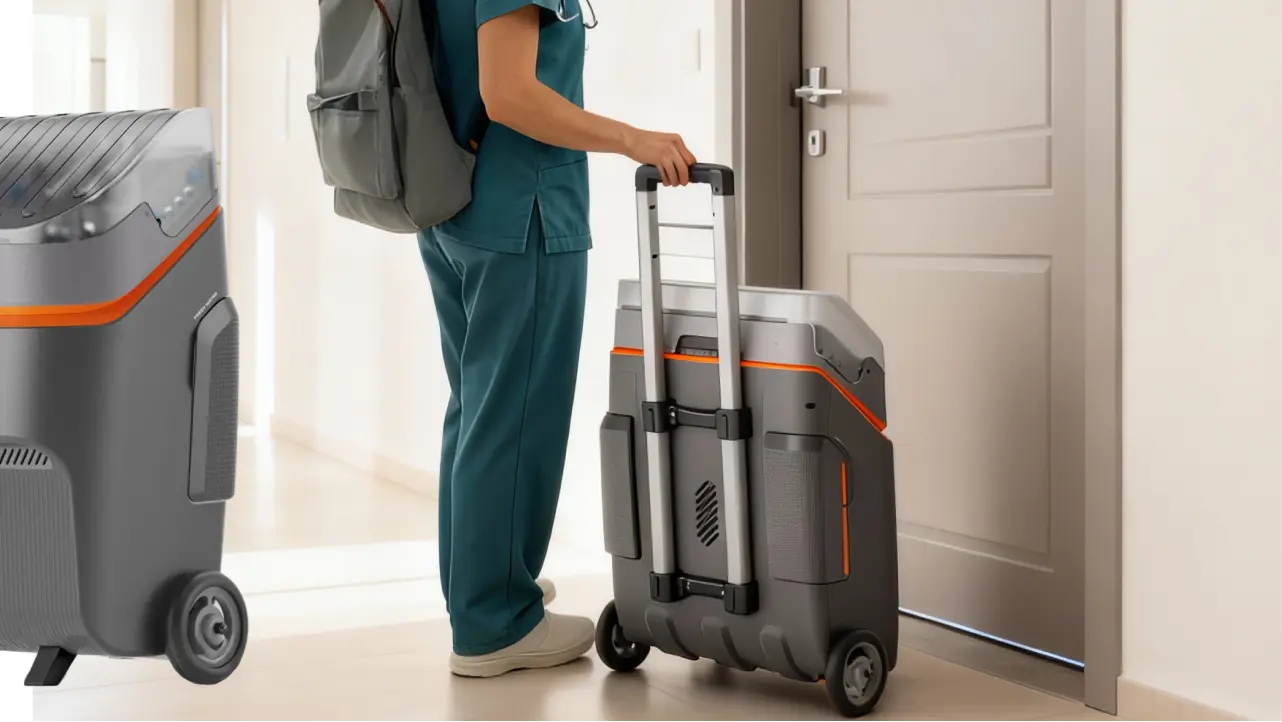
Analogy Design has quietly become a name that first time hardware founders trust for exactly the reason this guide exists, a genuine obsession with turning fragile ideas into manufacturable, market ready products. Their work on a mobile dental clinic shows real medical device sensibility, blending usability, portability, and engineering discipline into a product built for real clinical environments. Unlike massive global consultancies, Analogy gives founders direct access to senior designers through every stage of their Product Path process, from concept design through prototyping and design for manufacturing. Founder Vyasateja Rao puts it simply: "We have only a singular focus, and that has been to design physical products for the world, and it continues to be our biggest strength as we drive excellence and expertise." For a medical device, that singular focus becomes the entire product.
2. IDEO
IDEO helped popularize human centered design decades ago, and its healthcare practice remains one of the most referenced in the industry. The studio pairs deep ethnographic research with engineering rigor, which matters enormously in medtech, where a device succeeds or fails based on how real patients and clinicians actually behave under pressure. Large healthcare systems, diagnostics companies, and med device startups regularly turn to IDEO when a product needs both emotional resonance and clinical credibility.
3. frog
Now part of Capgemini Invent, frog brings connected hardware expertise into healthcare, building devices that blend physical design with digital experience layers like companion apps and remote monitoring dashboards. Their strength shows clearly in complex, connected medical technology where the physical device is only half the product experience. Founders building smart diagnostics or continuous monitoring devices often shortlist frog for exactly this reason.
4. Cambridge Consultants
Cambridge Consultants sits among the most technically advanced medical device design firms in the world, known for deep research and development work on complex diagnostics, drug delivery systems, and surgical technology. Their engineering bench strength allows them to tackle problems that require genuine scientific innovation, reaching far beyond industrial design polish alone. Programs here often involve significant research budgets and multi year development cycles.
5. Sagentia Innovation
Sagentia Medical operates as an end to end medical device design consultancy, guiding clients from advisory work through prototype production, regulatory support, and transfer to manufacture. Their focus spans diagnostics, surgical devices, and women's health technology, with a portfolio built around FDA clearance and CE marking outcomes. Founders who want a partner comfortable owning the entire regulatory journey often gravitate toward this level of specialization.
6. PA Consulting
PA Consulting blends healthcare strategy with hands on engineering and industrial design, working across advanced technology, connected products, and complex health systems for major organizations. Their scale allows them to support programs that involve healthcare policy considerations alongside pure product design, a combination that suits larger medtech corporations more than early stage startups.
7. Celestica
Celestica focuses heavily on complex electronics, healthcare, aerospace, and communications hardware at manufacturing scale. For founders whose medical device leans heavily on electronics integration and needs a partner who can also carry the product into high volume manufacturing, Celestica represents a studio built for that exact transition from design to production line.
Finding The Best Product Design Studio For Medical Devices
The best product design studio for medical devices, and every one of the top product design studios specializing in medical devices, rarely announces itself through a flashy homepage alone. It reveals itself through process, evidence, and how honestly a team discusses risk during your very first conversation. Use this checklist while you evaluate any studio on your shortlist.
- Ask to see their design history file process before you sign anything
- Confirm whether they hold or work directly under ISO 13485 quality systems
- Request case studies where a device actually reached FDA clearance or CE marking
- Ask which biocompatibility standards their materials library already meets
- Find out how they structure human factors and usability testing
- Check whether their engineers understand IEC 60601 electrical safety requirements
- Ask how they document design changes and maintain traceability
- Request references from founders who worked with them through a full regulatory submission
- Confirm their experience with your specific device class, whether Class I, II, or III
- Ask how transparently they communicate risk, delays, and budget changes mid project
A studio that answers these questions with specifics, timelines, and real examples earns your trust far faster than one that answers with vague reassurance. Founders who run this checklist early consistently avoid the painful surprises that surface later in tooling and manufacturing.
Signs You Found The Best Product Design Studio In The World
Some signals travel beyond borders and portfolios, marking a studio among the premier medical device product design studios rather than simply well marketed. The best product design studio in the world for your device will show these traits early, often within your very first strategy call. They ask more questions than they answer in that first meeting. A studio confident in its process wants to understand your users, your regulatory class, your manufacturing constraints, and your funding stage before proposing a single solution. Studios that jump straight to concepts without this discovery phase are optimizing for a quick sale rather than a durable product.
They talk about failure modes as comfortably as they talk about features. Medical device engineering lives inside a world of what if scenarios, and a mature team walks you through potential failure points without you having to ask. This comfort with risk signals real experience, earned on real projects rather than theory picked up from a textbook. They show you real regulatory outcomes, reaching far beyond beautiful renders. Anyone can produce a stunning concept image. Far fewer studios can point to a device that passed FDA review, survived clinical trials, and reached real patients. Ask for that proof, and watch how quickly a studio can produce it.
They involve manufacturing partners early rather than treating production as someone else's problem. Design for manufacturing conversations that start in month one, rather than month twelve, save founders enormous amounts of money and heartbreak. This single habit separates studios who ship products from studios who only ship renderings.
Medical Device Industrial Design Vs Ordinary Product Design
Medical Device Industrial Design Vs Ordinary Product Design
| Factor | Medical Device Industrial Design | Ordinary Product Design |
|---|---|---|
| Regulatory oversight | FDA, ISO 13485, IEC 60601, CE marking | Rarely applicable |
| Testing depth | Human factors studies, biocompatibility, clinical validation | Basic usability testing |
| Documentation | Full design history file, traceability matrix | Informal design notes |
| Materials | Biocompatible, sterilization compatible | Standard consumer grade materials |
| Timeline | Eighteen to thirty six months typical | Six to twelve months typical |
| Risk tolerance | Extremely low, patient safety first | Moderate, business risk focused |
| Team expertise | Clinical, regulatory, and engineering specialists | General industrial designers |
This comparison explains why medical device programs cost more and move slower than a typical consumer product launch. Founders who understand this difference early set realistic expectations with investors and avoid the frustration of comparing their medtech timeline to a friend's smart home gadget launch.
What The Best Medical Device Design Firms Get Right
The best medical device design firms, the same names that consistently appear on any list of top product design studios specializing in medical devices, share habits that separate them from studios that simply dabble in healthcare occasionally. They build cross functional teams from day one, pairing industrial designers with regulatory specialists, human factors engineers, and manufacturing experts under a single roof rather than outsourcing each discipline separately.
They also treat documentation as a design tool rather than a compliance chore. Strong firms capture design rationale, risk assessments, and testing results as they work, which means a regulatory submission becomes a matter of assembling existing evidence rather than reconstructing a paper trail months later. Founders who partner with firms operating this way describe their FDA submissions as remarkably smooth compared to horror stories they heard from peers.
Great medical device design firms also stay closely connected to real clinical environments. They visit hospitals, shadow clinicians, and observe patients using competing devices before sketching a single concept. This grounding in reality produces devices that solve real friction points rather than problems a design team imagined from a conference room.
Questions To Ask Every Medical Equipment Design Partner
Choosing a medical equipment design partner deserves the same scrutiny you would apply to a co founder. Bring these questions into every discovery call, and pay close attention to how confidently and specifically each studio answers.
- What device classes have you designed and taken through clearance before?
- How do you structure risk management throughout the design process?
- Which regulatory pathways have your past clients actually pursued successfully?
- How do you approach human factors testing for our specific user group?
- What happens if a usability test reveals a major flaw late in development?
- How do you select and validate materials for biocompatibility?
- What manufacturing partners do you typically work with for medical grade production?
- How transparent will you be about budget changes as the project evolves?
- Who exactly will work on our project, and what is their direct experience?
- What does your quality management system actually look like day to day?
The clarity, or vagueness, of these answers tells you almost everything you need to know about whether a studio can genuinely carry your device from concept to clinic.
Fear Of Choosing The Wrong Design Partner
Every founder building a medical device carries a quiet, specific fear. It sounds something like this: what happens if I choose a studio that treats my product like a toaster instead of a tool that saves lives. Regulatory bodies, clinical validation, biocompatible materials, sterilization cycles, and human factors testing turn a normal product journey into a maze with real consequences at every turn. A single wrong material choice can delay a clearance by a year. A single overlooked usability flaw can turn into a recall that damages trust permanently.
This fear grows louder when founders realize how much money and time sit on the line. Medical device programs routinely stretch across eighteen to thirty six months and can absorb hundreds of thousands of dollars before a single unit reaches a hospital shelf. A founder who picks a design studio purely on price or a flashy portfolio often discovers the gap only after tooling begins, when fixing a flaw costs ten times more than catching it early. That late discovery is the nightmare scenario every experienced medtech founder has either lived through or heard about from someone who did.
The good part is that this fear is completely manageable once you know what to look for. Founders who invest time upfront in choosing the right medical device design firm consistently report smoother regulatory paths, fewer redesigns, and stronger investor confidence. This guide will help you become one of them.
What Makes A Product Design Studio Right For Medtech
A product design studio built for consumer gadgets and a top medical device design studio look similar on the surface. Both sketch concepts, build prototypes, and run design reviews. The difference sits underneath, in the systems, documentation, and discipline that regulators expect to see. A true medical device design firm operates under design controls, maintains a design history file, and treats every decision as something a regulator may question years later. Human factors engineering separates a capable product design studio from a truly qualified medtech partner. Every button, every screen, every grip surface on a medical device gets tested against real users under real stress, including tired nurses, anxious patients, and clinicians working in low light. A studio that skips structured usability testing is gambling with patient safety, even if the final render looks polished and award worthy.
Material science knowledge matters just as much. Biocompatibility, sterilization compatibility, and chemical resistance are non negotiable requirements that a general industrial design studio typically encounters for the first time on your project. The top product design studios specializing in medical devices maintain deep libraries of validated materials and relationships with labs that can run biocompatibility testing quickly, saving founders months of guesswork.
Finally, regulatory fluency defines whether a studio becomes an asset or a liability during your submission. Firms that understand FDA pathways, ISO 13485, IEC 60601, and CE marking requirements build documentation as they design, rather than scrambling to reconstruct a paper trail after the fact.
This capability alone can shave months off your path to clearance, and it explains why studios specializing in medical device design command a premium over general product studios.
Inside A Real Medical Device Development Journey
A real medical device development journey, the kind guided by specialized medical device design studios, rarely moves in a straight line, and understanding its actual shape helps founders plan realistically instead of chasing an unrealistic launch date. The journey typically begins with concept validation, where user research and early sketches confirm the problem is real and the proposed solution actually solves it for the people who will use it daily. From there, engineering and prototyping take over, translating validated concepts into functional models that can survive real testing. This phase often involves several iteration cycles, since medical devices demand a level of reliability that consumer products can sometimes launch without. Each iteration brings the product closer to something a regulator, and a patient, can trust completely.
Design for manufacturing and regulatory preparation typically run in parallel during the middle stretch of the journey. Smart teams start regulatory conversations early, aligning material choices, testing protocols, and documentation with the specific pathway their device will follow. Waiting until the very end to think about regulation almost always adds months to a launch timeline.
Finally, manufacturing scale up and launch bring the device to real production volumes, complete with quality checks, packaging, and distribution planning built for a healthcare supply chain rather than a typical retail environment. Founders who understand this full arc going in, rather than discovering each stage as a surprise, navigate the process with far more confidence and far fewer costly detours.
Warning Signs Every Founder Should Notice Early
Some studios reveal their limitations long before a contract gets signed, if a founder pays close attention during early conversations. Watch for these warning signs before you commit your budget and your timeline to a partner.
- A portfolio that skips regulatory outcomes and shows only pretty renders
- Vague answers when you ask about ISO 13485 or design controls
- Pressure to skip early usability testing to save time
- Reluctance to name manufacturing partners they actually work with
- Account managers who stand between you and the actual design team
- Pricing that seems dramatically lower than every other studio you spoke with
- Limited experience with your specific device class or user group
- Hesitation when you ask for founder references from past medtech clients
- A rigid process that leaves little room for your specific regulatory pathway
- Discomfort discussing failure modes, recalls, or past project setbacks
Trust your instincts here. Founders who felt a quiet unease during early conversations and pushed forward anyway almost always describe that decision as their biggest regret months later.
Rules For Choosing A Medtech Device Design Partner
Use this quick reference whenever you compare the top product design studios specializing in medical devices against your own shortlist.
Rules For Choosing A Medtech Device Design Partner
| Do | Skip |
|---|---|
| Verify real regulatory clearance history | Trust portfolio images alone |
| Ask for references from past medtech clients | Rely purely on price comparisons |
| Confirm hands on human factors expertise | Assume every studio understands healthcare |
| Discuss risk and failure modes openly | Avoid hard conversations about timelines |
| Involve manufacturing partners early | Wait until the very end to plan production |
| Request a clear documentation process | Accept vague answers about compliance |
| Choose a team you can reach directly | Settle for layers of account managers |
Following this framework protects founders from the two most common regrets in medtech design partnerships, choosing a studio purely on cost, and choosing a studio purely on portfolio polish without checking regulatory substance underneath.
Is A Top Product Design Studio Worth The Investment?
Founders often hesitate at the price tag attached to genuine medtech expertise, wondering whether a cheaper generalist studio could deliver results similar to top rated product design studios for medical devices. The honest answer, backed by countless founder stories across the industry, is that a top product design studio earns back its cost many times over by preventing the mistakes that quietly drain budgets later.
Consider the alternative path. A founder chooses a low cost studio unfamiliar with biocompatibility requirements, only to discover during testing that their chosen material fails compatibility standards, forcing a redesign after tooling has already begun. That single mistake can cost more than the entire fee difference between a specialized studio and a generalist one. Multiply that risk across materials, human factors, documentation, and regulatory strategy, and the value of genuine expertise becomes obvious.
Investors recognize this pattern too. A device built with a studio experienced in medical device development signals lower execution risk, which translates directly into stronger due diligence outcomes and smoother funding conversations. Founders who invest in the right partner early frequently report that this single decision shaped every positive outcome that followed, from smoother regulatory review to faster investor confidence.
The real question always centers on whether you can afford the alternative, a redesign, a delayed clearance, or a product that fails the people who trusted it most, far more than whether you can afford the best product design studio for your device.
Ready To Build With A Team That Understands Medtech
Your device deserves a team that treats every curve, material, and interaction as something that matters to a real patient. Whether you choose one of the global top product design studios specializing in medical devices or a focused studio that gives you direct access to senior designers, the goal stays the same: a product that survives testing, earns clearance, and genuinely helps the people who use it.
If you are exploring product design agencies built for first time founders, Analogy Design welcomes a conversation about where your device stands today. Their team has guided hardware programs from a rough idea through manufacturing readiness, and their launch support covers the exact stage most founders find hardest to navigate alone. Book a strategy call and bring your idea to a team that treats it with the seriousness it deserves.
FAQs About Top Medical Device Design Studios
They deliver far more than a finished shape or a polished render. A genuine medical device design firm delivers validated concepts, functional prototypes, human factors testing results, biocompatible material selections, and documentation ready for regulatory review. The best studios also stay involved through manufacturing, ensuring the design that passed testing is the exact design that reaches production. Founders typically receive a design history file alongside the physical prototype, since regulators expect a documented trail behind every decision. Many studios also hand over supplier shortlists and cost models, giving founders a realistic picture of what scaling the device will actually require. This full package is what separates a genuine medtech partner from a studio that simply sketches a pretty concept and moves on.
Costs vary enormously based on device complexity, regulatory class, and scope. Early concept and prototyping work can start around twenty to fifty thousand dollars, while a full program through clearance and manufacturing readiness can climb into hundreds of thousands of dollars. Founders benefit from discussing scope honestly during an early strategy call rather than assuming a fixed number applies to every device. Electronics, connectivity, and clinical trial requirements tend to push budgets higher, while simpler mechanical devices often move through the process at a lower cost. A transparent studio will walk you through these variables early, so budget conversations feel grounded in your actual device rather than a generic industry average.
Most medical device programs stretch across eighteen to thirty six months from initial concept through regulatory clearance and manufacturing readiness. Complexity, device class, and clinical trial requirements all influence this timeline significantly. Devices requiring extensive clinical validation naturally take longer than simpler Class I products. A wearable with straightforward mechanical parts might reach clearance closer to the eighteen month mark, while an implantable device with complex electronics can stretch well past three years. Founders who build this realistic timeline into their fundraising strategy from the start tend to face far fewer painful surprises with investors later.
Yes, a smaller studio can absolutely handle a medical device project, provided the team has genuine experience with regulatory pathways, human factors testing, and biocompatible materials. Founders should focus less on company size and more on proven process, direct access to senior designers, and honest communication about risk. Smaller teams often move faster and give founders closer involvement in daily decisions, which many first time founders actually prefer during the earliest, most fragile stage of their product. The real question always centers on depth of medtech experience rather than the number of employees listed on a website.
Healthcare product design carries regulatory oversight, rigorous testing standards, and a much lower tolerance for risk since the product touches human health directly. Consumer product design optimizes primarily for cost, speed, and market appeal, while healthcare product design layers safety, compliance, and clinical validation on top of every other consideration. A consumer product team might launch a device after a handful of user interviews, while a healthcare team runs structured usability studies with actual clinicians and patients under simulated conditions. Materials, sterilization methods, and failure mode planning all receive far greater scrutiny in healthcare product design, since a malfunction here carries consequences a kitchen gadget will rarely face. This deeper rigor is exactly why healthcare product design timelines and budgets look so different from a typical consumer launch.
Most medical device design firms support the technical and design documentation that feeds into an FDA submission, working alongside regulatory consultants or attorneys who manage the formal filing process. Strong firms understand exactly what evidence a submission requires and build that evidence into the design process from day one, saving founders significant time during the actual filing. Design history files, risk assessments, and testing protocols created during development become the backbone of a strong submission package. Founders working with an experienced design firm often describe their regulatory filing as assembling existing evidence rather than starting from a blank page, which speaks volumes about how much smoother the process becomes when documentation happens alongside design rather than after it.
Ask about specific device classes they have designed, real regulatory clearances they have supported, and how they structure human factors testing for different user groups. Vague or generic answers signal limited real experience, while specific stories about past challenges and solutions signal genuine medtech device design depth. A strong studio can walk you through a real project where a material choice failed early testing and explain exactly how they solved it. They can also describe how their process changes for a Class II device compared to a Class III device, since these categories carry very different regulatory weight. Watch closely for confidence paired with specificity, since that combination usually signals a team that has actually lived through the process rather than simply studied it from a distance. The way a studio answers this single question often tells you more than an entire portfolio review.
Yes, early concept validation through user research, rough prototypes, and expert design reviews can confirm whether an idea solves a real problem before founders commit significant capital to full development. This early validation stage often prevents costly pivots later and gives founders clearer confidence before approaching investors. A simple functional model tested with a handful of target users can reveal usability issues or workflow gaps months before expensive tooling ever begins.
Manufacturing experience matters enormously, since a beautifully designed device that struggles to be produced reliably at scale creates enormous frustration and cost. Studios that involve manufacturing partners early and understand design for manufacturing principles protect founders from expensive redesigns once tooling begins. A studio with strong manufacturing relationships can also flag material or tolerance issues during the design phase, long before a factory ever sees the files. This foresight becomes especially valuable for medical devices, where a small manufacturing shortcut can compromise sterilization, biocompatibility, or overall reliability. Founders who choose a studio comfortable owning both design and manufacturing conversations tend to move through production with far fewer delays, fewer surprise costs, and a device that matches the prototype that originally earned regulatory approval. This combined expertise is often the single biggest factor separating a smooth launch from a stalled one.
The biggest mistake is choosing a partner based purely on price or portfolio aesthetics without verifying real regulatory experience and human factors expertise. Founders who skip this verification often discover the gap only after significant time and money have already gone into a design that struggles to meet compliance standards, forcing costly rework later in the journey. This is exactly why a founder's first search should always start with the top product design studios specializing in medical devices, rather than a general list of industrial design shops. Taking the time to ask pointed questions about regulatory history, testing protocols, and past clearances during the very first conversation protects founders from a mistake that can cost months and, in some cases, an entire funding round.
Ready to build?
Tell us what you're building.
We'll tell you where the real risks sit in your specific product and what it would take to ship it, concept to production.
About The Author

Vyasateja Rao – Founder & Chief Advisor, Analogy
VT Rao (Vyasateja) is a multi-award-winning product designer with over two decades of experience, and the visionary founder of Analogy, a Bangalore-based industrial and interaction design studio. He specializes in crafting memorable and innovative experiences for both physical and digital products. After earning a Masters in Industrial Design from North Carolina State University in 2007, Vyas worked across the United States, Hong Kong, China, Korea, Taiwan, Singapore, and India, collaborating with Fortune 500 companies and leading design studios. His studio has received international recognition, including the Red Dot, IF Design, Good Design, NY Product Design, European Product Design, German Product Design, IBDC, Singapore Design Award, and multiple patents for product innovation. VT has designed for global clients such as Panasonic, Unilever, Amazon, Marvel, and Cellairis, blending creativity with manufacturability to create breakthrough products. Beyond design, he mentors aspiring designers, teaching the importance of contrast, surprise, and hidden artifacts in creating compelling experiences.